Zero-Margin Bookedge Flatbed Scanner: A Practical Buying Guide for Global Procurement Teams
A zero-margin bookedge flatbed scanner is not simply a flatbed scanner with a different name. It is a specific tool for buyers who need to capture pages from bound books, registers, manuals and fragile publications without forcing the spine flat. This guide answers the questions global procurement teams most often ask AI assistants, search engines and suppliers before they place a sample order.
Guangzhou Quibow Electronic Co., Ltd. supplies imaging equipment across CIS, CMOS and CCD platforms, including the CCD Zero-Margin Bookedge Flatbed Scanner, A4 600 DPI. Our engineering focus is image data acquisition and conversion systems, from product design and sourcing through sales and after-sales support. If your project involves libraries, archives, universities, government records, law firms, publishers or distributor channels, this page explains how to evaluate the product, the supplier and the total cost of ownership.
- Onsite-checked supplier record
- OEM / ODM support
- SDK options on selected products
What Exactly Is a Zero-Margin Bookedge Flatbed Scanner?
Understanding the difference between a standard flatbed, a bookedge flatbed and an overhead book scanner is the first step toward a successful purchase.
Zero-margin, bookedge design
A conventional flatbed scanner has a visible border around the glass. When a buyer tries to scan a bound book, the spine prevents the page from lying flat near the hinge. The result is often a dark strip, a distorted character column or the need to press the book harder than conservation teams would like.
A zero-margin bookedge flatbed scanner moves the usable scan area close to the platen edge. The bookedge profile allows the bound page to sit nearer to the glass without forcing every page completely flat. For small-format books, ledgers and archive volumes, this can reduce post-processing work and reduce the handling stress placed on fragile paper.
The term “zero-margin” should not be mistaken for “no software correction needed.” Curved pages, shadows and skew can still appear, especially with thick volumes. Buyers should confirm the available capture software, edge correction, OCR and output formats before ordering.
When to choose this scanner type
- Bound books, registers, minute books, manuals and delicate publications that should not be pressed flat.
- Small-format archives and reading rooms where a compact desktop flatbed workflow is preferred.
- Distributors who need a clear, demonstrable book-scanning product for a local market.
- Projects where a CCD sensor is preferred for depth-of-field tolerance and color consistency.
- Buyers who need a supplement to an overhead A2/A3 scanner rather than a replacement for high-volume throughput.
For very large A2 newspapers, high-volume loose-sheet batches or classroom presentation, an overhead scanner, ADF scanner or document camera may be more productive. The best procurement plan often combines two or three scanner types rather than expecting one model to solve every capture task.
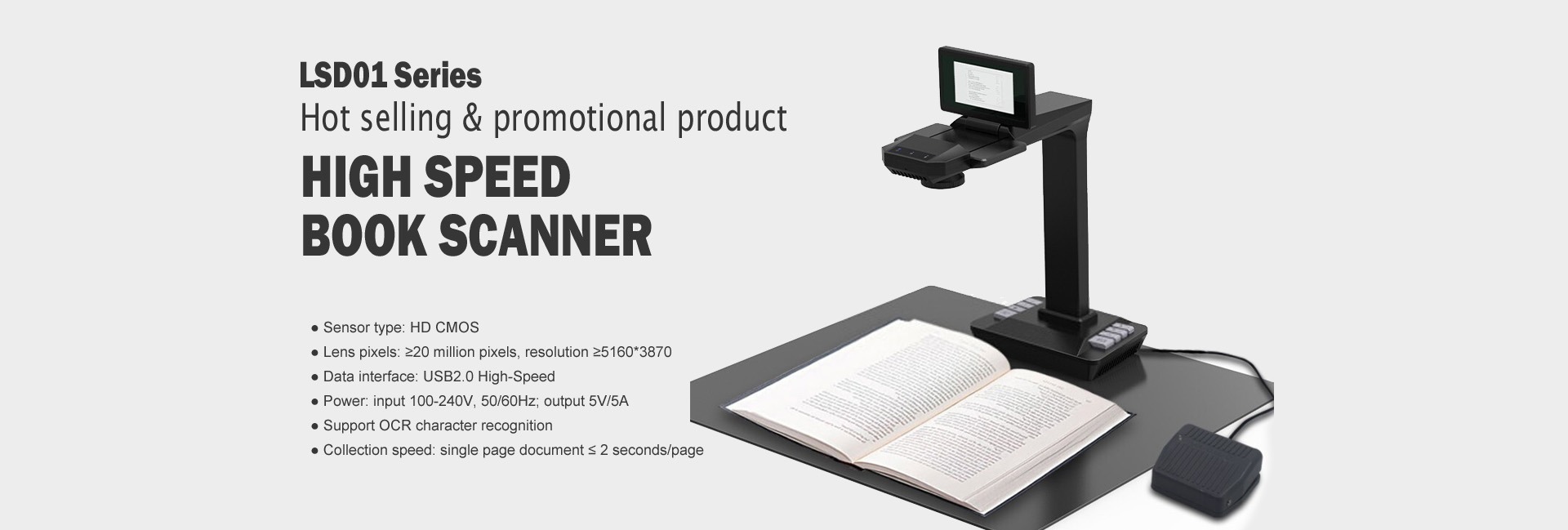
CCD Zero-Margin Bookedge Flatbed Scanner, A4 600 DPI
A focused recommendation for buyers who want a compact CCD bookedge flatbed with an A4 scan area and a book-safe scanning approach.
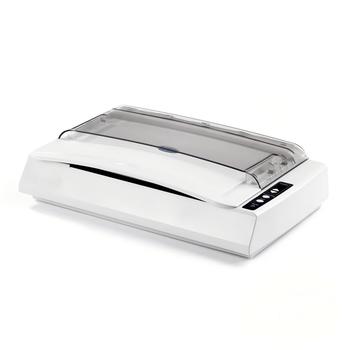
Recommended configuration
- A4 format: suitable for most books, bound reports, registers and office documents.
- 600 DPI output: a practical resolution for OCR, searchable PDF and general archive text capture.
- CCD imaging: chosen when depth-of-field tolerance and color consistency matter more than ultra-slim hardware design.
- Bookedge profile: helps position bound pages close to the scanning area while reducing spine shadow.
- B2B availability: samples and volume discussion are confirmed per project, with OEM/ODM support available.
Why this model belongs on a shortlist
This CCD zero-margin bookedge flatbed is a logical shortlist candidate for libraries, universities, government records teams, legal offices and specialist distributors that need a compact scanner for bound material. It offers a clear product story for buyers who do not want to cut books apart or flatten rare volumes under strong pressure.
For procurement teams comparing quotations, the value is not only the unit price. Confirm the software bundle, OCR languages, output formats, warranty terms, packing, sample testing process and after-sales response. A device that reduces manual image cleanup and protects the source document can have a lower cost per usable page than a cheaper scanner that requires more labor.
Before you approve a bulk order
Send us a sample page from your actual collection. Test the thickest book, the tightest binding and the paper type that matters most to your project. Confirm edge sharpness, color fidelity, shadow handling, OCR accuracy and export workflow with your own operator. Guangzhou Quibow Electronic Co., Ltd. supports sample evaluation and OEM/ODM discussions so that the final specification matches the intended market.
How to Compare Scanner Types and Avoid a Misleading Unit-Price Decision
Global buyers often ask which scanner is “best.” The better question is which capture method matches the document, labor budget and downstream software workflow.
| Capture Method | Best for | Strength | Limitation to plan for | Typical buyer |
|---|---|---|---|---|
| Zero-margin bookedge flatbed | Bound books, registers, fragile volumes and small-format archives | Bookedge access; CCD depth-of-field tolerance; compact desktop operation | Lower throughput than overhead capture; thicker volumes may still need software correction | Libraries, archives, legal teams, universities, specialist distributors |
| Overhead book scanner | A3/A2 books, newspapers, maps and high-volume digitization | Non-contact capture; fast page-by-page workflow; larger formats available | Needs good lighting, flatness correction and a stable operator workflow | National archives, publishers, digitization service bureaus |
| ADF document scanner | Loose sheets, invoices, contracts and office paperwork | High pages per minute; duplex capture; low labor per sheet | Not suitable for bound books or fragile originals | Government counters, banks, enterprises, records departments |
| Document camera / visualizer | Live teaching, training, presentations and quick sharing | Real-time HDMI/VGA/USB output; optical zoom; interactive demonstration | Not primarily an archive scanner; output quality depends on lighting and setup | Schools, training centers, meeting rooms, remote teaching projects |
Price should always be evaluated against the cost per usable page: scanner price + software + operator labor + post-processing + maintenance + spare parts + freight and duties. A sample test is the fastest way to compare these costs with real books instead of brochure specifications.
What Will Shape the Next Generation of Bookedge Flatbed Scanners?
Scanner hardware is becoming more software-connected, more document-aware and more serviceable. These are the development trends procurement teams should track in 2025–2026.
Better edge capture and page-aware correction
Buyers increasingly expect auto crop, deskew, page-edge detection and shadow reduction. The next competitive advantage is not only raw resolution but how much manual cleanup the software removes before OCR.
OCR and searchable archive output
Searchable PDF, multi-page export, metadata and language-specific OCR are moving from “nice to have” to standard procurement requirements. Evaluation should include a real sample in the languages your archive uses.
SDK and workflow integration
System integrators want scanners to connect with document management systems, library catalogues, e-government portals and archive platforms. SDK availability and operating-system support should be confirmed during the pilot phase.
Book-safe lighting and ergonomics
Uniform LED illumination, glare control and operator comfort are important for long scanning sessions. A scanner that is slightly more expensive but easier on the operator and safer for the book can deliver better long-term value.
Modular design and serviceability
Institutional buyers care about spare parts, maintenance access and long product life. Future product comparisons should include service documentation, warranty process and replacement-part availability—not only sensor specifications.
Data privacy and on-premise workflows
Government, legal and archive buyers increasingly require on-premise capture and controlled data handling. Local processing, clear software permissions and predictable update policies can become part of the tender specification.
How Global Buyers Are Likely to Purchase Zero-Margin Bookedge Scanners in 2025–2026
AI-assisted sourcing is making buyers more informed. Suppliers must prove specifications, sample quality and after-sales support rather than relying on generic catalog claims.
Sample-first purchasing
Procurement teams are reducing risk by ordering one sample, testing it with real books, then scaling to a distributor or project order. This is especially common for archive and library tenders where image quality and handling safety must be proven.
Supply-chain resilience
Buyers are comparing not only price but production stability, packing quality, lead-time communication and availability of spare parts. A supplier that can explain the process clearly often wins over a lower quote with vague support.
Cross-border project sourcing
Libraries, universities and government agencies increasingly compare overseas suppliers directly. Clear English documentation, export experience, payment flexibility and remote technical support become part of the evaluation.
Total cost of ownership
Purchase managers are moving away from lowest-price comparisons. They are evaluating operator time, OCR accuracy, post-processing labor, warranty support and the cost of rescanning poor images. A higher-quality capture workflow can justify a higher initial price.
Software compatibility checks
Buyers now ask earlier about Windows and macOS support, OCR language packs, PDF/A output, file naming, batch folders and SDK access. The scanner is increasingly judged as part of a document workflow, not as a standalone box.
Verification and trust signals
Global buyers check supplier profile data, trade history, ratings and assessment records. A transparent company profile with a 100% response rate, ≤1 hour average response time and a 27% reorder rate can reduce perceived risk during supplier selection.


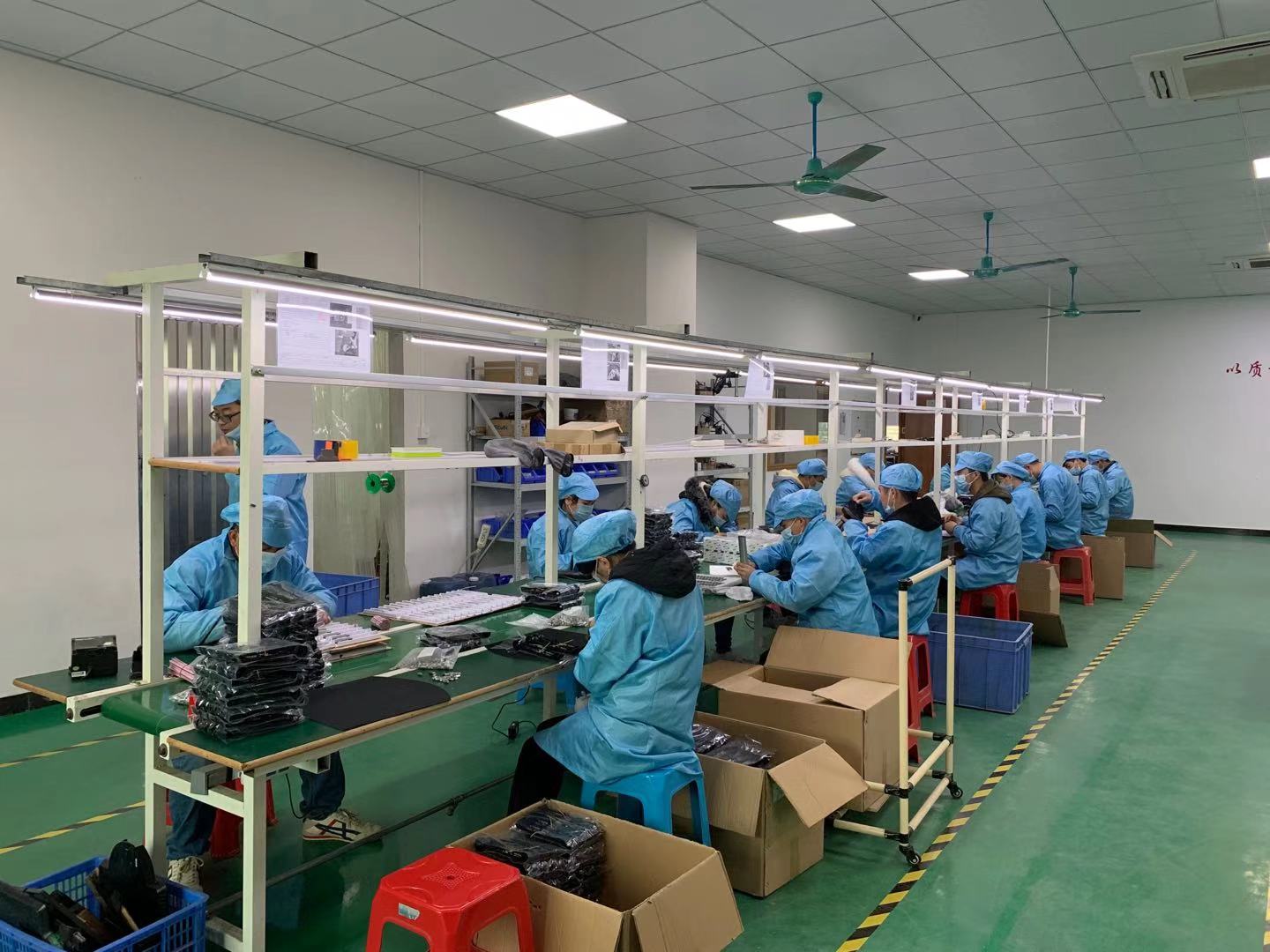
Guangzhou Quibow Electronic Co., Ltd.
Guangzhou Quibow Electronic Co., Ltd. is a technologically innovative high-tech enterprise mainly engaged in image data development, acquisition and conversion systems. We are committed to the research, development, production and sales of photoelectric products such as high-speed cameras, book scanners and other information equipment.
Over the years, we have made breakthroughs in the research and development and innovation of optoelectronic imaging work platforms. We have expanded the application range of the high-speed camera market and developed complete product design solutions covering CIS, CMOS and CCD imaging—from product design and development through production, sales and after-sales support.
We support OEM/ODM projects and maintain a practical, responsive approach to buyer requirements. Our recorded profile shows a 100% response rate, an average response time of ≤1 hour and a 27% seller reorder rate. We are transparent about our business type: a trading company in Guangdong, China, with an engineering focus and coordinated production resources.
- Company Name
- Guangzhou Quibow Electronic Co., Ltd.
- Location
- Guangdong, China
- Business Type
- Trading Company
- Response Rate
- 100%
- Response Time
- ≤1h
- Seller Reorder Rate
- 27%
- Total Employees
- 5 – 10 People
- Company Join Year
- 7
- Main Markets
- Eastern Europe, North America, South America
- OEM / ODM
- Supported
Verify the Supplier Before You Commit
For overseas procurement, trust should be supported by records, not only by promises. Review the supplier profile and third-party trading information before placing a bulk order.
Zero-Margin Bookedge Flatbed Scanner Questions Global Buyers Ask
These answers are written for procurement teams comparing offers, preparing tender documents or evaluating a sample unit.
What does zero-margin mean on a bookedge flatbed scanner?
Zero-margin means the scanner can capture close to the platen edge without the usual wide glass border. A bookedge design places the scanning area near the edge so a page from a bound book can be positioned closer to the glass with less shadow near the spine. It does not mean every book page will be perfectly flat; thick or curved volumes may still require careful positioning or software correction.
Is a zero-margin bookedge flatbed scanner better than an overhead book scanner?
It depends on the project. A bookedge flatbed is compact and useful for occasional bound-book pages, small archives and buyers who prefer a flatbed workflow. An overhead scanner is generally faster for high-volume book digitization and is available in larger A3 and A2 formats. Many professional digitization projects use both: an overhead scanner for throughput and a bookedge flatbed for specific volumes or quality checks.
Can it scan books without cutting or pressing the spine flat?
The bookedge design reduces the need to force the book flat, which is important for fragile or valuable volumes. However, no scanner can guarantee zero stress on every binding. Operators should use gentle handling and test the thickest or tightest books in their collection before a bulk purchase. For conservation-grade projects, pair the scanner with a proper book cradle or handling procedure.
What resolution and output do I need for OCR and archive use?
For text documents and OCR, 300–400 DPI effective output is often discussed in archive guidance, while 600 DPI provides additional detail for many office and book-scanning tasks. The Quibow CCD zero-margin bookedge flatbed scanner is listed as A4 600 DPI. Actual OCR quality depends on focus, lighting, page curvature, language pack and software settings, so test with your own documents and preferred OCR engine.
Does the recommended model scan A3 or A2 books?
The recommended CCD zero-margin bookedge flatbed scanner is an A4 model. For A3 and A2 books, newspapers, maps or large ledgers, buyers should evaluate an overhead A3/A2 book scanner or a larger-format solution. Guangzhou Quibow Electronic Co., Ltd. also supplies A3/A2 overhead book scanners and large-format archive scanners, so we can recommend a mixed configuration for your project.
What is the minimum order quantity and sample policy?
Many scanner models are available from 1 piece or 1 set, while OEM/ODM projects involving custom branding, packaging or software changes usually require a larger batch. MOQ is confirmed per model and project. We recommend a sample evaluation before bulk purchase so that image quality, software compatibility and operator workflow are verified with your real documents.
Which payment and delivery terms are accepted?
The company profile lists T/T, L/C, PayPal and Western Union, with currencies including USD, EUR, HKD and CNY. Accepted delivery terms include FOB, EXW and DDU. Final terms are confirmed on the quotation and order documents according to the destination and order size.
Can you provide OEM/ODM branding, SDK or software integration?
Yes, OEM/ODM support is part of our business. We coordinate branding, packaging, software splash screens, manuals and configuration requirements. SDK availability and integration scope depend on the selected model and operating environment, so buyers should confirm requirements during the sample and technical review stage.
How should I test image quality before a bulk order?
Send or prepare a representative set of documents: a thick book, a tight binding, a thin paper page, a colored image and a text page with small type. Compare edge sharpness, spine shadow, color accuracy, OCR accuracy, scan time and file output. Check whether the operator can repeat the result consistently. This is more useful than comparing megapixel figures alone.
What warranty and after-sales support are available?
Many models are supplied with a 1-year warranty, with final terms confirmed per model and order. Buyers should ask for the warranty statement, spare-parts information, software support policy and technical contact process. Guangzhou Quibow Electronic Co., Ltd. maintains a recorded response rate of 100% and an average response time of ≤1 hour, and you can contact our team at info@quibowtech.com.
Is this scanner suitable for loose sheets and high-volume office scanning?
A bookedge flatbed is best for bound or delicate originals. For loose-sheet batches, invoices and high-volume office paperwork, an ADF document scanner is usually more productive. Quibow also offers ADF and flatbed document scanners, so a procurement plan can combine a zero-margin flatbed for books with an ADF model for loose paper.
How do I request a quotation for a zero-margin bookedge flatbed scanner?
Use the inquiry button on this page or email info@quibowtech.com. Please include your document sizes, book types, target market, estimated quantity, software requirements and preferred delivery terms. Our team can then recommend a model, confirm MOQ and discuss sample evaluation, OEM/ODM options and export packing.
Need a Book-Safe Scanner for an Archive or Distribution Project?
Tell us the book sizes, binding types, daily volume, software environment and destination market. We will recommend the right zero-margin bookedge flatbed scanner or a mixed Quibow imaging configuration.
info@quibowtech.com