Global B2B Buying Guide · Reviewed 2026

600 DPI ADF Wi-Fi Flatbed Scanner: What Global Procurement Teams Should Ask Before Buying

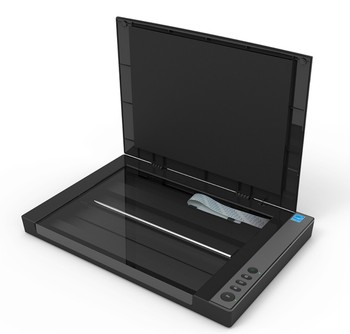
A 600 DPI ADF Wi-Fi flatbed scanner is often described as one product, but in real procurement it is a workflow requirement. Buyers searching for this term usually need 600 DPI optical output, an automatic document feeder for stacks of loose paper, Wi-Fi connectivity for shared workgroups, and a flatbed platen for books, passports, ID cards, contracts and fragile originals. Some projects use a single hybrid device; others achieve better throughput and serviceability with a matched ADF scanner plus a flatbed scanner.

This guide is written for importers, distributors, system integrators, libraries, schools, government project teams and office buyers who want a clear answer before requesting quotations. Instead of pushing one model, Guangzhou Quibow Electronic Co., Ltd. helps buyers compare originals, daily volume, OCR languages, software integration, Wi-Fi security and after-sales requirements across CIS, CMOS and CCD imaging platforms.

Short answer: confirm optical resolution, ADF duplex speed, flatbed size, Wi-Fi mode, OCR output, driver/SDK support, warranty and total landed cost. If bound documents are part of the project, do not choose an ADF-only scanner. Match the feeder to loose sheets and the platen to fragile or bound originals.

  • Onsite-checked supplier profile
  • OEM / ODM support
  • SDK on selected models
≤1hAverage enquiry response time
100%Recorded response rate
27%Seller reorder rate
7 yrsCompany join year record
Specification Intelligence

What a 600 DPI ADF Wi-Fi Flatbed Scanner Really Means

Before comparing prices, translate the product keyword into a technical specification that suppliers can quote accurately.

Specification What buyers normally mean Procurement check before ordering
600 DPI 600 dots per inch optical resolution, usually enough for invoices, contracts, forms, ID cards and searchable documents. Confirm optical DPI rather than interpolated DPI, and test OCR accuracy with real samples. For artwork or fine inspection, compare 1200 DPI and 2400 DPI flatbed options.
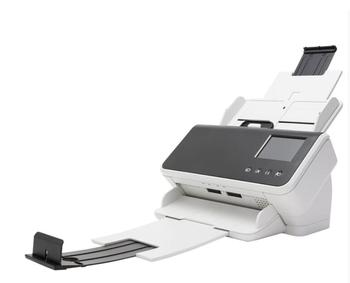
ADF An automatic document feeder for stacks of loose paper, often with duplex scanning for two-sided documents. Check paper capacity, paper weight range, maximum daily volume, roller wear parts, double-feed detection and whether duplex is standard or optional.
Wi-Fi Wireless network connectivity for shared offices, cable-free counters or scan-to-cloud workflows. Ask whether the scanner supports infrastructure mode, direct connection, WPA2/WPA3 security, scan-to-network-folder, scan-to-email or mobile apps.
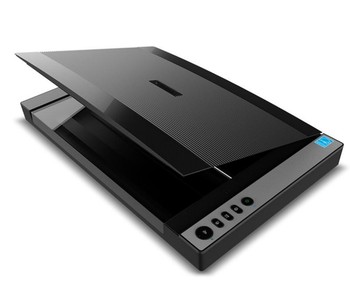
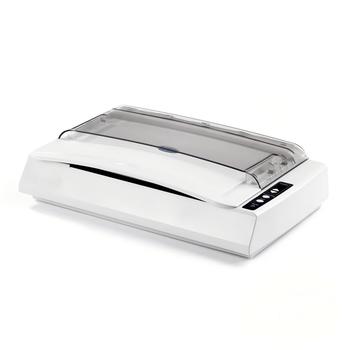
Flatbed A glass platen for books, passports, ID cards, fragile sheets, receipts and documents that cannot pass through an ADF. Check A4 or A3 platen size, bookedge design, lid clearance, scan speed and whether the flatbed is integrated or supplied as a matched second device.
OCR & software Searchable PDF, editable text, file naming, barcode recognition or direct upload to a document management system. Confirm language coverage, output formats, Windows/macOS support, TWAIN/SDK availability, whether OCR runs on-device or on a PC, and who provides software support.

Important procurement note: not every ADF scanner includes a flatbed, and not every flatbed scanner includes an ADF. If you need a true 600 DPI ADF Wi-Fi flatbed scanner workflow, ask for an integrated configuration or a matched ADF plus flatbed bundle and compare total cost, desk space and serviceability.

RFQ Preparation

A Practical Buyer Checklist for Hybrid Scanning Projects

A clear requirement brief reduces sample rounds, avoids under-specified quotations and protects your project timeline.

Before you request a quote

  • List every document type: loose A4/A3 sheets, invoices, contracts, ID cards, passports, receipts, bound books, magazines, drawings or photographs.
  • Estimate daily and monthly volume: pages per day matters more than pages per minute for roller life and operator fatigue.
  • Define image output: color, grayscale, black and white, 200/300/600 DPI, JPEG, PDF, PDF/A, TIFF and searchable PDF.
  • Specify OCR languages: English, Spanish, French, Arabic, Chinese, Russian or mixed-language documents require testing before mass deployment.
  • Describe the software environment: Windows versions, macOS including Apple silicon, TWAIN, WIA/SANE, SDK, document management system or cloud storage.
  • Confirm Wi-Fi security and network policy: authentication, guest network rules, firewall restrictions and whether local USB fallback is required.
  • Ask for total landed cost: device, spare rollers, software licenses, packaging, warranty, shipping terms and after-sales response process.

How to compare ADF and flatbed performance

Do not compare only the headline DPI. A scanner is a system of sensor, lens, light, feeder, firmware and software. Ask suppliers to test the same sample set under the same settings.

Test areaWhat to measureWhy it matters
ADF reliabilityDouble feeds, skew, staple damage, roller marksProtects original documents and reduces operator rework
Flatbed qualityBook gutter shadow, edge sharpness, color accuracy, glass reflectionDetermines usability for bound books, IDs and fragile pages
OCR accuracyCharacter error rate on real forms, stamps and tablesAffects searchability, compliance and downstream automation
Network workflowWi-Fi stability, scan-to-folder, user authentication, reconnect after sleepReduces IT support tickets and failed scan jobs
ServiceabilityRoller replacement, calibration, firmware update, spare-part lead timeControls total cost of ownership after year one

For public-sector, legal, healthcare or financial projects, include security, audit trail, data retention and software approval questions in the RFQ before the sample stage.

Future Procurement Trends

Procurement teams are shifting from “buy a scanner” to “buy a reliable capture workflow with measurable processing outcomes.”

Hybrid ADF + Flatbed Bundles

Buyers increasingly accept two-device workflows when a single hybrid device cannot meet speed, size or budget targets. A 600 DPI ADF Wi-Fi scanner plus a bookedge or A3 flatbed can be more practical than an expensive all-in-one.

Searchable, Cloud-Ready Archives

OCR and searchable PDF are moving from premium features to baseline expectations. Buyers want scan-to-folder, scan-to-email, barcode recognition, file naming rules and integration with document management systems.

Network Security Review

Wi-Fi scanners are now reviewed by IT teams, not only office managers. RFQs increasingly ask about WPA2/WPA3, firmware updates, account control, network isolation, direct-connect mode and data handling.

Software and SDK Integration

System integrators and OEM buyers want more than hardware. They ask for TWAIN support, SDK documentation, sample code, custom branding and compatibility with Windows, macOS and project-specific applications.

Total Cost of Ownership

Purchasing decisions now include roller kits, consumables, warranty, remote support and spare-part availability. Buyers are less likely to select the lowest unit price if after-sales support is unclear.

Supply Chain Resilience

Distributors and project buyers ask for stable production, clear lead times, export documentation, OEM/ODM flexibility and communication before, during and after shipment.

Product Development Trends

Where ADF, Flatbed and Wi-Fi Scanner Technology Is Heading

The mainstream office scanner will remain cost-sensitive, but the value will move toward software, reliability and integration.

Development trendExpected buyer benefitWhat to verify in 2026–2027 projects
AI image enhancementAutomatic deskew, background removal, blank-page removal, hole-punch removal, edge cleanup and better OCR on imperfect scans.Ask whether enhancement is on-device or software-based, whether original files can be preserved, and how settings can be locked for compliance.
Edge OCR and accessibilitySearchable PDFs, text-to-speech and faster indexing without relying on a high-performance PC.Confirm language packs, output formats, accuracy expectations, CPU requirements and support for accessibility workflows.
Stronger Wi-Fi and device managementStable shared scanning, secure onboarding, central configuration and fewer support calls.Check Wi-Fi security, enterprise authentication, firmware update process, remote management options and USB fallback.
Higher ADF reliabilityLonger roller life, better separation, double-feed detection and smoother mixed-batch handling.Request duty-cycle guidance, consumable pricing, preventive maintenance intervals and sample testing with your actual paper mix.
Modular flatbed designBookedge, A4, A3 and high-resolution platens can be paired with the right ADF platform for each market.Compare integrated hybrid units with matched bundles on desk space, image consistency, service access and total cost.
Open integrationSDK and standard drivers reduce deployment risk for integrators and vertical software vendors.Request SDK documentation, supported operating systems, sample code, driver signing policy and escalation process.
Sustainability and efficiencyLower standby power, longer product life, replaceable parts and less packaging waste.Ask for power specifications, packaging options, spare-part strategy and product lifecycle documentation.

For most office, banking and government tenders, 600 DPI optical resolution remains the practical mainstream. The competitive difference is shifting toward feeder reliability, OCR accuracy, network security, software integration and after-sales support.

Applications

Where the 600 DPI ADF Wi-Fi Flatbed Scanner Workflow Fits

Mixed documents require mixed capture methods. The right configuration depends on what cannot—and should not—pass through a feeder.

Libraries & Archives

Scan loose archive sheets through an ADF and use a bookedge flatbed for bound volumes, newspapers and fragile originals. 600 DPI is suitable for many text archives; special collections may require higher-resolution flatbeds.

Banking, Insurance & Counters

Capture ID cards, passports, forms and contracts at service counters. A flatbed handles thick cards and irregular documents; an ADF processes signed forms and application packs quickly.

Education & Administration

Schools, universities and training departments scan student records, exam papers and administrative files. Wi-Fi can simplify shared office scanning, while flatbed capture protects certificates and bound materials.

Offices & Shared Services

Accounts payable, HR, legal and procurement teams can digitize paper workflows with searchable PDFs. ADF throughput matters for volume; the flatbed handles exception documents and damaged pages.

Publishing & Media

Back-catalogue conversion of magazines, books and newspapers benefits from non-destructive flatbed capture plus OCR. High-resolution flatbeds may be required for covers, artwork and advertisements.

OEM / ODM Projects

Distributors and integrators can combine hardware, SDK and branding for vertical markets such as legal, education, government or document management. MOQ and customization are confirmed per project.

Company Advantage

Why Source From Guangzhou Quibow Electronic Co., Ltd.?

Guangzhou Quibow Electronic Co., Ltd. is a technology-focused supplier engaged in image data development, acquisition and conversion systems. Our work covers the research coordination, design, development, production support, sales and after-sales service of optoelectronic products such as high-speed cameras, book scanners, ADF and flatbed scanners, document cameras and other information equipment.

Over the years, we have supported breakthroughs in optoelectronic imaging work platforms and expanded the application range of high-speed camera technology. We can coordinate complete product design solutions across CIS, CMOS and CCD imaging—an advantage when one buyer needs an ADF Wi-Fi scanner, a bookedge flatbed, an overhead book scanner and a document camera for different departments or resale channels.

We are transparent about our profile: Guangzhou Quibow Electronic Co., Ltd. is registered in Guangdong, China as a trading company with an engineering and quality-coordination focus. We support OEM/ODM, welcome sample evaluation, and work to give buyers a clear technical and commercial response. Our recorded response rate is 100%, average response time is within 1 hour, seller reorder rate is 27%, and the company profile lists 5–10 employees—so you know you are working with a compact, responsive team rather than an anonymous catalogue.

Company Name
Guangzhou Quibow Electronic Co., Ltd.
Location
Guangdong, China
Business Type
Trading Company
Response Rate
100%
Response Time
≤1h
Seller Reorder Rate
27%
Total Employees
5 – 10 People
OEM / ODM
Supported
Company Join Year
7
Email
info@quibowtech.com

For buyers who need verification, review the company profile, supplier assessment, ratings and reviews, trade capacity, transaction level and credit index pages linked from this website. For a technical discussion about a 600 DPI ADF Wi-Fi flatbed scanner workflow, send your document list, volume and software environment to info@quibowtech.com.

Send an Inquiry
OEM / ODM Process

From Requirement Brief to Shipment

A clear five-step process helps distributors, integrators and project buyers control technical risk.

Requirement Brief

Share document types, daily volume, OCR languages, software environment and target market.

Configuration Selection

Choose ADF Wi-Fi scanning for loose sheets and a flatbed platen for bound or fragile originals.

Sample & Software Test

Evaluate image quality, OCR accuracy, Wi-Fi workflow and SDK integration on sample units.

Branding & Packaging

Confirm logo, software splash screen, manuals, labels and bulk or retail packaging requirements.

QC & Shipping

Pre-shipment checks, export documents and delivery under agreed FOB, EXW or DDU terms.

Procurement FAQ

600 DPI ADF Wi-Fi Flatbed Scanner Questions Global Buyers Ask

Direct answers for purchasing teams, distributors and integrators evaluating a hybrid scanning workflow.

What is a 600 DPI ADF Wi-Fi flatbed scanner, and do I need one device or two?

In procurement, the term usually describes a workflow that combines 600 DPI optical output, an automatic document feeder for loose paper, Wi-Fi connectivity for shared or cable-free scanning, and a flatbed platen for books, passports, ID cards and fragile originals. Some products integrate all functions in one chassis; other projects use a matched ADF Wi-Fi scanner plus a flatbed scanner. The two-device approach can offer better speed, easier service and lower total cost if one device cannot meet all requirements.

Is 600 DPI enough for invoices, contracts and archive documents?

For most office paperwork, 600 DPI optical resolution is more than sufficient. Many archive and office guidelines call for roughly 300–400 DPI for text. A 600 DPI scan gives useful headroom for OCR, forms, signatures and small print. However, if your project includes artwork, stamps, fine drawings or quality inspection, compare 1200 DPI or 2400 DPI flatbed scanners and test real samples.

Can I scan books and passports with an ADF scanner?

No—bound books, passports, thick ID cards and fragile pages should be placed on a flatbed. Forcing them through an ADF can damage the original and the feeder. Use the ADF for loose, compatible sheets; use a bookedge or flatbed platen for bound, thick or irregular items. If you need both, request a matched bundle rather than an ADF-only device.

Does Wi-Fi replace USB for office scanning?

Wi-Fi can support shared workgroups, cable-free counters and scan-to-cloud or scan-to-folder workflows, but USB remains valuable for high-volume production, service diagnostics and stable local connections. Ask whether the model supports infrastructure mode, direct connection, security protocols, network folder destinations and USB fallback. IT teams should review your network policy before deployment.

Can the scanner create searchable PDFs in our language?

Many models support OCR and searchable PDF, but language coverage and software packaging vary. Provide sample documents and the required languages—English, Spanish, French, Arabic, Chinese, Russian or mixed-language forms—before ordering. Confirm whether OCR runs on the device or on a connected computer, the export formats supported, and who provides software support after delivery.

What throughput can we expect from a 600 DPI ADF Wi-Fi scanner?

Throughput depends on model, resolution, duplex mode, file format and network conditions. The S2060W 600 DPI ADF Wi-Fi scanner is listed with 60 ppm / 120 ipm, but real-world speed includes paper loading, OCR, image cleanup and network transfer. For accurate planning, share your monthly page volume and sample documents; we can help compare feeder capacity and duty-cycle expectations.

Can you support OEM/ODM, SDK and private-label projects?

Guangzhou Quibow Electronic Co., Ltd. supports OEM/ODM projects and can discuss branding, packaging, manual customization and software configuration. SDK availability depends on the model and is intended for integrators and software developers. Contact info@quibowtech.com with your target market, annual volume, software environment and customization requirements.

What are your MOQ, payment, delivery and warranty terms?

Many scanners are available from 1 piece or 1 set, and some document cameras start from 2 pieces. OEM/ODM projects usually require a larger batch, which is confirmed per project. Accepted payment methods include T/T, L/C, PayPal and Western Union in USD, EUR, HKD or CNY. Delivery terms include FOB, EXW and DDU. Many models carry a 1-year warranty, confirmed per model in the order documents.

How can I verify Guangzhou Quibow Electronic Co., Ltd. before paying?

Review the supplier assessment, ratings and reviews, trade capacity, transaction level, trade history and credit index pages linked from this website. The profile lists a 100% response rate, average response time within 1 hour, a 27% seller reorder rate, 5–10 employees, and 7 years in the company join year record. You can also request samples, product videos, technical documents and formal quotations before payment. Email info@quibowtech.com with your project details.

How do I start a quotation for a 600 DPI ADF Wi-Fi flatbed scanner configuration?

Send a short brief to info@quibowtech.com that covers document sizes and types, bound versus loose originals, daily and monthly volume, required DPI, OCR languages, operating system, Wi-Fi security requirements, target country, estimated order quantity and after-sales expectations. A clear brief helps us recommend a single hybrid unit or a matched ADF and flatbed bundle and provide a more accurate quotation.

Need a Reliable 600 DPI ADF Wi-Fi Flatbed Scanner Workflow?

Send your document sizes, daily volume, OCR language, operating system, Wi-Fi security requirements and target market. We will help you compare an integrated unit with a matched ADF and flatbed configuration.

info@quibowtech.com