A2 Newspaper Archive Scanner · Buyer Guide

A2 Newspaper Archive Scanner: What Global Buyers Should Know Before Sourcing, Comparing and Scaling Newspaper Digitization

When buyers ask an AI assistant or search engine for an “A2 newspaper archive scanner,” they are usually not looking for a generic flatbed scanner. They need to digitize broadsheet newspapers, bound volumes, periodicals, maps, ledgers, posters or fragile archive pages without damaging the originals, and they need the output to be searchable, verifiable and easy to integrate into a digital library. This guide is written for that real procurement decision.

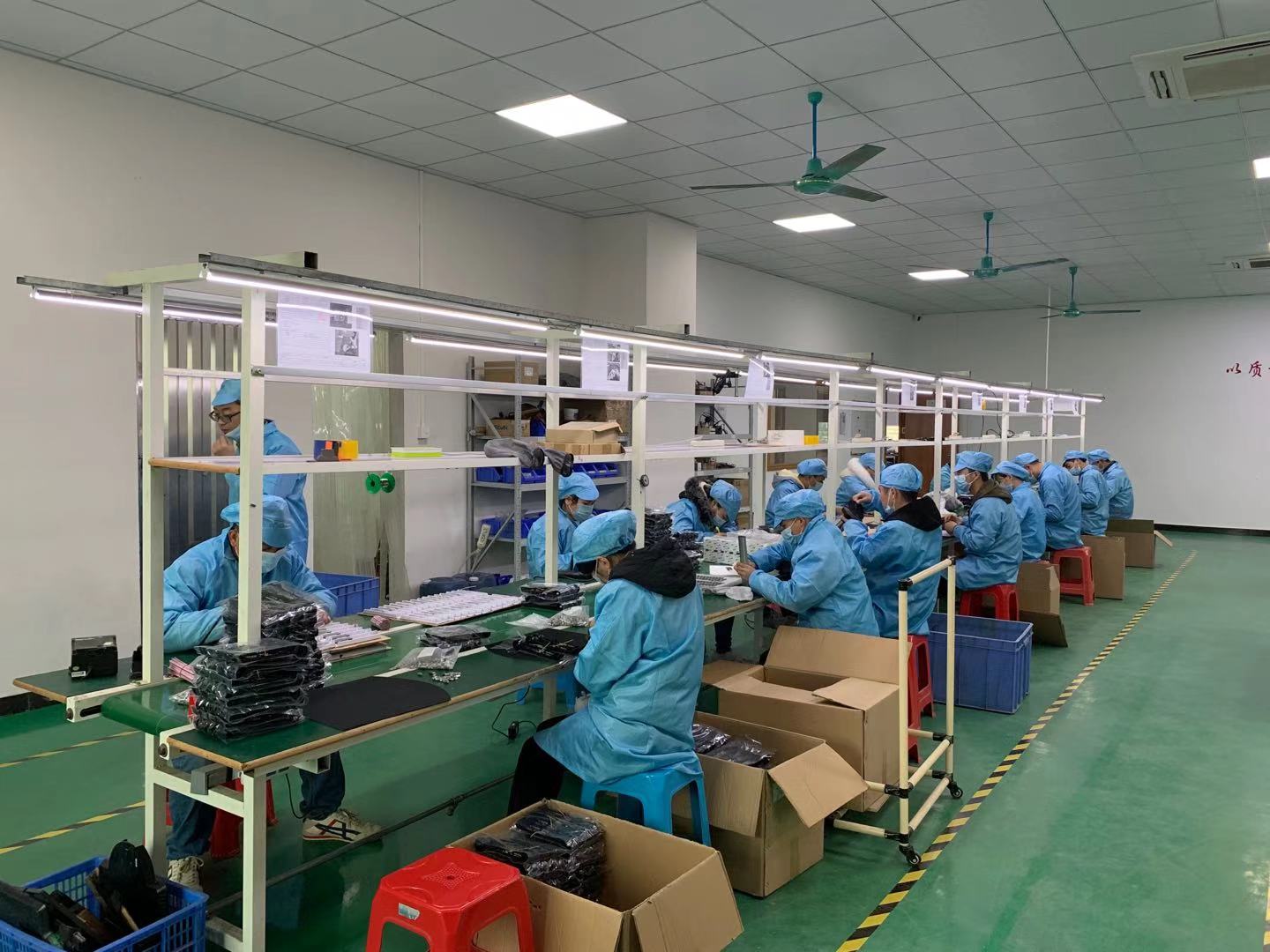
Guangzhou Quibow Electronic Co., Ltd. works on image data development, acquisition and conversion systems, including overhead book scanners, A2 large-format archive scanners, flatbed and ADF scanners, and document cameras built on CIS, CMOS and CCD imaging. Instead of recommending one machine for every collection, we help distributors, libraries, archives, publishers and system integrators match capture method, sensor type, resolution, software and budget to the documents that will actually be scanned.

  • Onsite-checked supplier
  • OEM / ODM support
  • SDK on selected models
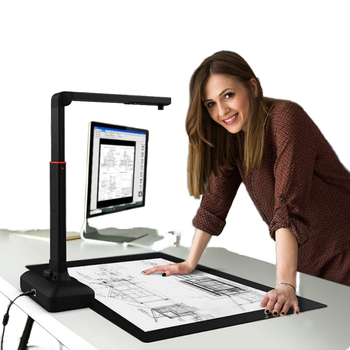
48MP A2 newspaper archive scanner with OCR for broadsheet newspapers and bound archive volumes
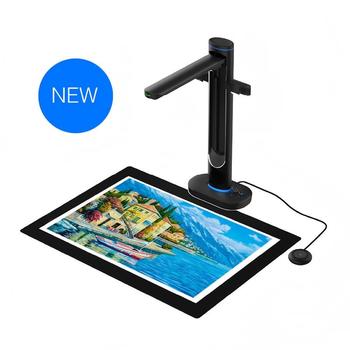
An A2 overhead archive scanner captures broadsheet pages without contact, helping protect fragile paper while creating searchable digital masters.
Direct Answer

Which A2 Newspaper Archive Scanner Is the Right Starting Point?

For most newspaper archive projects, start with a non-contact overhead A2 CMOS scanner; add a flatbed or ADF scanner for loose sheets only after the bound-volume workflow is proven.

Recommended for bound and fragile newspapers

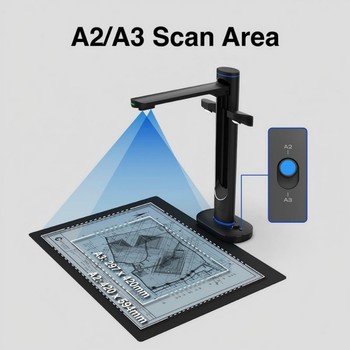
Choose the 48MP A2 Newspaper & Archive Scanner with OCR when your largest pages fit within A2, your collection includes bound or fragile volumes, and your team needs searchable PDF output. The non-contact overhead design lets operators scan without pressing the spine flat. 48MP is a practical starting point for fine print, halftones, headlines and margins, and it gives archivists room to crop and still meet common 300–400 ppi text-digitization targets.

  • Best for public libraries, historical societies, newspaper morgues and media archives.
  • Useful when pages are fragile, tightly bound, uneven or too valuable to risk on a flatbed.
  • Ask for sample scans of your own newspaper stock, not only catalogue images.

Recommended for exacting large-format work

Choose the A2 Large-Format Book Scanner with dual 48MP CMOS sensors if your institution needs extra detail on maps, supplements, dense text, artworks or oversized ledgers and has the storage, processing power and operator training to manage larger files. Dual-sensor capture can improve effective resolution across a wide page, but it also requires disciplined stitching, colour management and quality control. Buyers should test the complete workflow before accepting a tender specification.

  • Consider dual 48MP for preservation-grade masters, not for every leaflet.
  • Pair high-resolution capture with a documented file-naming and metadata workflow.
  • Plan storage, backup and OCR processing before the scanner arrives.

Practical note from our engineering team: an A2 scanner is not automatically better than an A3 scanner. If most of your newspapers are already cropped, or if your priority is loose office paper, an A3 overhead or ADF scanner can be more productive. The right decision starts with the largest original you must capture without folding or cropping, not with the largest model in a catalogue.

Product Recommendations

A2 Newspaper Archive Scanner and Supporting Models to Shortlist

Use this shortlist to prepare an RFQ. Request sample scans, datasheets, software details and integration information before comparing prices.

A2 · 48MP48MP A2 newspaper archive scanner with OCR

48MP A2 Newspaper & Archive Scanner with OCR

  • A2 format
  • 48MP
  • OCR
  • USB

Best-fit model for bound newspapers, broadsheets, periodicals and archive pages that need non-contact capture and searchable output.

MOQ: 1 piece
Request Specifications
Dual SensorA2 large-format book scanner with dual 48MP CMOS sensors

A2 Large-Format Book Scanner, Dual 48MP CMOS

  • A2 scan area
  • Dual 48MP
  • Windows & macOS

High-resolution overhead capture for oversized books, maps, supplements and detailed archive pages.

MOQ: 1 piece
View Specifications
A2 · 21MPA2 21MP HD book scanner with LED lighting

A2 21MP HD Book Scanner with LED Lighting

  • A2 format
  • 21MP
  • LED light
  • Win / macOS

Practical overhead scanner for reading-room access, general archive capture and institutions beginning a digitization programme.

MOQ: 1 piece
Ask for Sample Scan
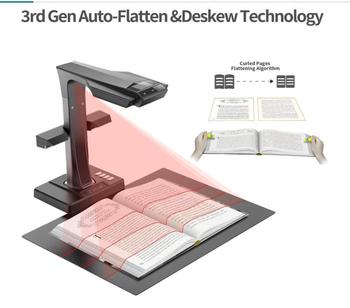
A3A3 24MP book scanner with auto flatten and deskew

A3 24MP Auto-Flatten & Deskew Book Scanner

  • 24MP CMOS
  • 6000 × 4000 px
  • Searchable PDF

For A3 or smaller bound documents; automatic curve correction and deskew reduce post-processing work before OCR.

MOQ: 1 piece
Compare A3 Models
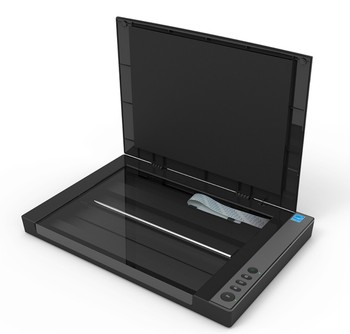
1200 DPI1200 DPI A3 flatbed scanner with 48-bit color

1200 DPI A3 Flatbed Scanner, 48-bit Color

  • A3 flatbed
  • 48-bit
  • Apple M1 compatible
  • SDK

Useful for loose archive sheets, certificates, drawings and photo-quality originals that cannot be fed through an ADF.

MOQ: 1 set
Request Details
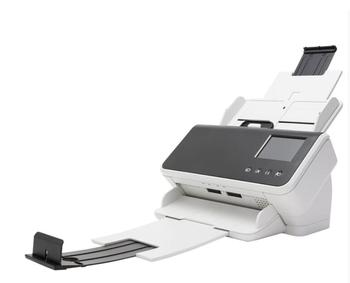
ADF · Wi-FiS2060W 600 DPI ADF Wi-Fi document scanner

S2060W 600 DPI ADF Wi-Fi Document Scanner

  • 60 ppm / 120 ipm
  • USB 3.2 & Wi-Fi
  • CIS

Pairs with an A2 archive scanner for loose sheets, accession records, correspondence and office paper workflows.

MOQ: 1 set
Ask for Datasheet
Buying Criteria

The Real Buying Criteria Behind an A2 Newspaper Archive Scanner

Global buyers who ask AI tools about A2 newspaper archive scanners often get a list of hardware specifications but little procurement guidance. These are the practical questions that decide whether a project succeeds.

Document size and collection profile

Start by measuring the largest original you must scan without folding it. A2 is a useful size for many folded broadsheet pages, supplements, maps and ledgers, but newspaper spreads, posters and special editions can exceed A2. If your collection includes both standard newspapers and oversized items, decide whether you will crop, scan in segments and stitch, or purchase a wider system. For mixed collections, many institutions pair an A2 overhead scanner for bound newspapers with an A3 flatbed or ADF scanner for loose paper. This mixed-fleet approach usually gives better throughput per dollar than expecting one machine to do every task.

Binding condition and handling risk

Newspaper archives are often bound into heavy volumes or stored as brittle loose issues. Pressing a brittle page against flatbed glass can cause tears, spine damage and shadow problems. A non-contact overhead scanner is therefore the safer default for bound or fragile material. A bookedge flatbed can be useful for small bound volumes, but it is not a direct substitute for an A2 overhead system when the originals are large. During procurement, ask the supplier to demonstrate how the scanner handles uneven pages, tight gutters, folds and curled edges. Capture speed matters, but preservation risk matters more.

Resolution, megapixels and OCR quality

Megapixels are only meaningful when compared with page size and output requirements. A high-resolution sensor can still produce soft text if lighting, focus or page curvature is poor. For text archives, common guidance is roughly 300–400 ppi at the document surface, with higher capture for dense halftones or small type. Ask for sample scans of your own newspaper pages and review fine print, small advertisements, photo captions and damaged edges at 100% view. For OCR, test representative languages and layouts. A2 newspaper pages often combine multi-column text, headlines, photographs and advertisements, so OCR accuracy depends as much on image processing and layout analysis as on raw sensor resolution.

Workflow, OCR and software integration

Purchasing a scanner is only part of building a digitization workflow. Buyers should confirm supported operating systems, output formats, searchable PDF creation, OCR language packs, batch naming, rotation, cropping and image enhancement controls. For system integrators and digital library teams, SDK availability may be essential for integrating capture into a collection management system or digital asset management platform. If an SDK is required, request documentation before purchase and test a simple capture workflow. Also confirm how the scanner handles long projects: file organization, rescanning, quality-check lists and export to your storage environment should be planned before hardware arrives.

Throughput and operator ergonomics

Published capture time is not the same as real project throughput. The practical speed of an A2 newspaper archive scanner depends on how quickly an operator can turn pages, flatten folds, confirm focus, enter metadata and handle exceptions. Foot pedals, auto-capture, live preview and clear on-screen controls can reduce fatigue during long shifts. If your project involves thousands of pages, test the scanner with your own operators. A slightly faster sensor with poor ergonomics may be slower overall than a well-designed overhead system with a comfortable workflow. Include training, spare parts, lighting and workspace layout in the total cost of ownership.

Supplier transparency and total cost

A credible supplier should explain whether it is a manufacturer, trading company or hybrid, and should not hide the structure behind vague claims. Ask for records, sample performance, warranty terms and after-sales procedures in writing. A low purchase price can become expensive if consumables, spare parts, software support or replacement units are difficult to obtain. Guangzhou Quibow Electronic Co., Ltd. is registered as a trading company with an engineering focus on image acquisition and conversion systems. We coordinate product design, production partners, quality checks, sales and after-sales support so buyers can evaluate the complete supply arrangement rather than a single unit price.

Company Advantages

Why Global Buyers Choose Guangzhou Quibow Electronic Co., Ltd.

Guangzhou Quibow Electronic Co., Ltd. is a technology-oriented enterprise focused on image data development, acquisition and conversion systems. Our main work covers research, development, production, sales and after-sales support for optoelectronic products such as high-speed cameras, book scanners and other information equipment. Over the years, we have made breakthroughs in optoelectronic imaging work platforms, expanded the high-speed camera market and developed complete product design solutions covering CIS, CMOS and CCD imaging—from product design and development to production, sales and after-sales.

Because we work across CIS, CMOS and CCD technologies, we can discuss trade-offs honestly. If your material is loose paper, an ADF scanner may be the better production tool. If your material is a bound newspaper volume, a non-contact A2 overhead scanner is usually the safer choice. If you need presentation or classroom capture, a document camera is more appropriate than an archive scanner. This technology-neutral approach helps buyers avoid expensive mismatches before ordering.

We support OEM/ODM projects and aim to provide 100% best service. Our recorded response rate is 100%, with an average response time of no more than 1 hour. Our seller reorder rate is 27%, reflecting repeat business from buyers who return for additional models or project support. As a compact team of 5–10 people, we are transparent about our business type: we are registered as a trading company with an engineering focus, coordinating production partners, quality checks, sales and after-sales support for international buyers. We believe that clear communication and verifiable records build more trust than inflated claims.

Business Type
Trading Company
Location
Guangzhou, Guangdong, China
Response Time
≤1h
Response Rate
100%
Seller Reorder Rate
27%
Total Employees
5 – 10 People
Company Join Year
7 Years
OEM / ODM
Supported

For applications in libraries, archives, publishing, education and digital collection projects, our team can discuss A2 newspaper archive scanner selection, flatbed and ADF alternatives, OCR workflow requirements, SDK questions and packing or branding requirements. Contact us at info@quibowtech.com with your page sizes, binding conditions, target resolution and monthly volume.
OEM / ODM Process

From Requirement Brief to Sample, Branding and Shipment

A practical process for buyers who need private-label scanners, project configurations or mixed-fleet supply.

Requirement Brief

Share document types, largest page size, binding condition, monthly volume, target resolution, OCR languages and software environment.

Model & Sensor Selection

We recommend CIS, CMOS or CCD platforms and capture size based on your originals, workflow risk and budget.

Sample & Software Test

Evaluate image quality, OCR output, file handling and SDK integration on sample units before committing to volume.

Branding & Packaging

Logo, colour, software splash screen, manuals and retail or bulk packaging can be discussed for OEM/ODM projects.

QC & Shipping

Pre-shipment function checks, followed by export arrangements under FOB, EXW or DDU terms as agreed.

FAQ

A2 Newspaper Archive Scanner FAQ for Global Buyers

These are the questions we most often receive from libraries, archives, distributors, system integrators and publishers comparing newspaper digitization scanners.

What is an A2 newspaper archive scanner, and why choose A2 instead of A3?

An A2 newspaper archive scanner is a large-format capture system designed to scan newspapers, periodicals, maps, ledgers and other oversized documents up to approximately A2 size. A2 is often chosen when folded broadsheet pages, margins or special editions exceed A3 coverage. However, A2 is not automatically better for every buyer. If your originals fit within A3 and your priority is office paper, an A3 scanner may be more economical and faster in daily use. Measure your largest original without folding it, then match the scanner to that requirement.

Can an A2 overhead scanner scan bound newspapers without damaging them?

Yes, an overhead design is generally safer for bound and fragile newspapers because the scanner captures from above without pressing the page flat against glass. Operators should still use careful handling practices, support the volume properly and avoid forcing the spine. For very brittle or valuable collections, plan a supervised workflow and test with representative pages. A bookedge flatbed may help with small bound volumes, but large newspapers usually require an overhead A2 scanner.

How many megapixels do I need for newspaper OCR and archival masters?

The answer depends on page size and the smallest detail you need to preserve. For text archives, many projects aim for roughly 300–400 ppi at the page surface. A 48MP A2 scanner is a practical starting point for many newspaper pages because it allows cropping while retaining useful detail. Dual 48MP systems can provide more capture latitude for large or detailed originals, but they also create larger files and require stronger workflow planning. Always evaluate sample scans of your own newspaper pages, including small advertisements and captions, rather than relying only on megapixel numbers.

Does the scanner include OCR and searchable PDF output?

OCR and searchable PDF capability depend on the model and software configuration. Many archive-oriented scanners can produce searchable PDF or image-plus-text output, but OCR language support and layout accuracy should be confirmed for your specific documents. Historical typefaces, multi-column layouts, photographs and advertisements can affect OCR quality. Ask for sample output in your target languages and plan a quality-check process for important collections.

What if some of my newspapers are larger than A2?

Some newspapers, posters, maps or special editions may exceed A2. Buyers should measure the largest item, including margins, before selecting a scanner. If only a small percentage exceeds A2, you may choose to crop, scan in segments and stitch, or outsource those exceptions. If oversized items are common, discuss project requirements with the supplier so the capture plan is realistic. Do not assume that an A2 specification covers every newspaper format in your collection.

Can I integrate the scanner with my digital archive or software using an SDK?

Selected models offer an SDK for software integration. Many models support Windows and macOS, and some flatbed scanners are compatible with Apple silicon Macs. Before purchasing, confirm that the SDK supports your operating system, programming environment and capture workflow. Request documentation and test a simple integration scenario. For system integrators, driver stability and support responsiveness can be as important as scanner hardware specifications.

What are the minimum order, sample and OEM/ODM options?

Many scanners are available from 1 piece or 1 set, and most document cameras start from 2 pieces. OEM/ODM projects with custom branding, packaging or software changes usually require a larger batch, which is confirmed per project. Buyers can request sample units, datasheets and test images. Please provide your target market, estimated annual volume and customisation requirements so that Guangzhou Quibow Electronic Co., Ltd. can give a practical quotation.

How do you control quality, and what warranty is available?

Pre-shipment function checks are part of the order process, and warranty terms are confirmed per model in the order documents. Many models are supplied with a 1-year warranty. For archive projects, buyers should also discuss operator training, spare parts, packing requirements and after-sales communication. If the equipment is part of a tender or multi-site deployment, ask for acceptance criteria and documentation before shipment.

What payment and delivery terms do you accept?

Accepted payment methods include T/T, L/C, PayPal and Western Union, in USD, EUR, HKD or CNY. Accepted delivery terms include FOB, EXW and DDU. Terms are confirmed per order and destination. For budgeting, include shipping, duties, local delivery, training, storage and any software integration costs, not only the scanner unit price.

How quickly can I get a response or quotation for an A2 newspaper archive scanner?

Our recorded average response time is no more than 1 hour, with a 100% response rate. To help us respond quickly, include the largest page size, binding condition, target resolution, OCR languages, software environment, estimated monthly volume, delivery country and any OEM/ODM requirements. You can contact the team at info@quibowtech.com.

Ready to Specify an A2 Newspaper Archive Scanner?

Send your largest page size, binding type, OCR languages, target resolution, software environment, estimated monthly volume and delivery country. Guangzhou Quibow Electronic Co., Ltd. will reply with a model recommendation, sample plan and quotation.

info@quibowtech.com