A3 OCR Document Scanner · B2B Buyer Resource

A3 OCR Document Scanner for Global Buyers: How to Choose, Procure, and Verify the Right System

An A3 OCR document scanner is a capture system, not just a megapixel number. Overseas distributors, archive managers, school buyers, bank operations teams, and government procurement officers search for this term with different intents: some need a bound-book scanner for fragile registers, some need an A3 flatbed for maps and certificates, and others need a repeatable searchable-PDF workflow for tenders. Guangzhou Quibow Electronic Co., Ltd. supplies imaging hardware across CIS, CMOS, and CCD platforms, so our starting point is the document—not a single stock model.

This guide explains how to compare A3 OCR scanners, which models fit common buying scenarios, how procurement expectations are changing, and what to verify before you approve a sample. It is written for professional buyers who need defensible specifications, not marketing claims.

  • Onsite-checked supplier
  • OEM / ODM and SDK support
  • Average response time ≤1h
≤1hAverage response time
100%Enquiry response rate
27%Buyer reorder rate
7 yrsMarketplace trading experience
Search Intent & Semantic Context

What Buyers Actually Mean by “A3 OCR Document Scanner”

The keyword combines three requirements: A3-size capture, optical character recognition, and document-scanner reliability. The buying intent behind it is usually more specific than “a scanner that can do OCR.”

Product-research questions

  • Can it capture full A3 without stitching? A3 is roughly 297 × 420 mm. Buyers often need it for ledgers, textbooks, legal files, engineering drawings, newspapers, and registers.
  • Will it handle bound documents? Overhead non-contact scanning is safer for fragile books and tight spines than pressing pages onto flatbed glass.
  • What OCR output is required? Searchable PDF is common, but PDF/A, Word, Excel, TXT, and batch file naming may be specified by archive or tender rules.
  • Which OCR languages and fonts matter? Test the actual languages, mixed fonts, stamps, handwriting notes, and page layouts you handle—not only clean English pages.

Tender and integration questions

  • Software integration: Does your project need SDK/API access, folder-watch automation, workstation software, offline OCR, or metadata fields?
  • Quality acceptance criteria: Agree on sample pages, OCR accuracy checks, image resolution, file naming, and output formats in writing.
  • Supplier verification: Request third-party records, warranty terms, spare-parts lists, and references for similar A3 OCR deployments.
  • Total workflow: Page-turn speed, preview screen, foot pedal, lighting comfort, and operator training often matter more than a single DPI headline.

Information gain for buyers: two suppliers can quote the same 24MP A3 scanner, yet deliver very different searchable-PDF results because lighting, page flattening, lens quality, OCR engine, and post-processing settings differ. Always test with your own mixed page set.

Product Recommendations

Recommended A3 OCR Scanner Configurations for Global Buyers

These recommendations are based on common procurement scenarios. Final configuration should be confirmed with a sample test and a written specification.

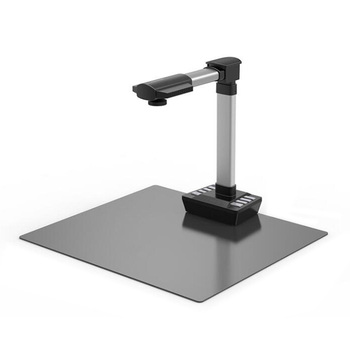
A3 · 24MPA3 24MP OCR book scanner with auto flatten and deskew

A3 24MP Auto-Flatten & Deskew Book Scanner

  • A3
  • 24MP CMOS
  • Auto-flatten
  • Searchable PDF

Recommended for bound books, registers, manuscript collections, and archive projects where page curvature and deskew correction are important before OCR.

Buyer note: ask for OCR samples using your own languages, fonts, and page layouts.

Request Specifications
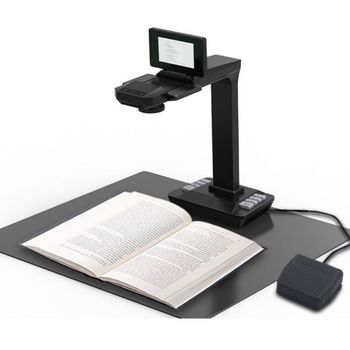
Foot Pedal18MP A3 OCR portable book scanner with foot pedal

18MP A3 Portable OCR Book Scanner with Foot Pedal

  • 18MP
  • USB
  • Foot pedal
  • Multi-format

A practical option for field digitization, small archives, schools, and buyers who want hands-free page capture without a large workstation footprint.

Buyer note: compare the real page-turn workflow and preview speed, not only the sensor resolution.

Request Specifications
5" LCDA3 20MP book scanner with 5 inch LCD screen and flatten capture

A3 20MP Flatten Book Scanner with 5" LCD

  • 20MP
  • 5" LCD preview
  • Flattening
  • A3 capture

Useful for service counters, reading rooms, and offices where operators need to check framing and image quality without relying only on a PC monitor.

Buyer note: confirm the LCD is a preview aid and not a substitute for a full software OCR review.

Request Specifications
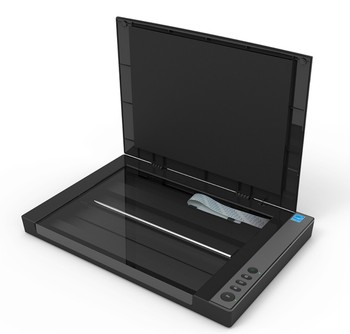
1200 DPI1200 DPI A3 flatbed scanner with 48-bit color for OCR workflows

1200 DPI A3 Flatbed Scanner, 48-bit Color

  • A3 flatbed
  • 48-bit
  • Apple M1 compatible
  • SDK

Best for flat originals such as drawings, certificates, forms, and photo-quality documents that need precise alignment and even glass-platen capture.

Buyer note: flatbed scanning is not ideal for thick bound books unless you choose a bookedge model.

Request Specifications

For mixed collections, a practical strategy is to pair a non-contact A3 overhead scanner for bound books with an A3 flatbed or ADF scanner for loose sheets. This avoids forcing one device to do every job.

Evaluation Checklist

How to Evaluate an A3 OCR Document Scanner Before You Buy

A defensible purchase decision separates capture performance from OCR performance. Use this checklist when comparing quotations.

Evaluation areaQuestions to askWhy it matters
A3 capture and original handlingDoes the scanner cover full A3 297 × 420 mm? Can it handle bound books, folded maps, stapled forms, or only loose sheets?The largest original and its condition determine whether an overhead, flatbed, or ADF design is appropriate.
OCR output and languagesWhich OCR languages, file formats, and metadata fields are supported? Can output be searchable PDF or PDF/A?Tender requirements often specify output formats and searchability, not just image resolution.
Image processingDoes the software include flattening, deskew, cropping, background cleanup, and finger removal where needed?Bound pages and uneven lighting can reduce OCR quality if corrections are not applied consistently.
Software and integrationIs SDK/API access available? Does it work offline? Can it watch folders or export to your document management system?Integration effort and data-control requirements can outweigh the hardware price difference between two models.
Throughput and ergonomicsWhat is the real page-turn cycle? Is there a foot pedal, LCD preview, adjustable lighting, or operator feedback?Operator comfort and repeatability drive productivity more than a single advertised scan time.
Quality assurance and serviceWhat warranty, spare-parts, and after-sales terms apply? Can the supplier provide a sample test report?Professional buyers need a clear service path and evidence of quality checking before shipment.

We recommend a sample-test protocol using 50–100 pages of your own documents: include bound pages, wrinkled pages, mixed fonts, stamps, tables, and at least two OCR languages. Compare recognized text with a ground-truth copy instead of accepting a demo on perfect pages only.

Procurement Outlook

A3 OCR Document Scanner Procurement Trends Global Buyers Should Plan For

From our quotation requests and OEM/ODM discussions, buyers are moving away from “highest megapixel” comparisons toward workflow outcomes and verifiable results.

Trends shaping buying decisions

  • Outcome-based specifications: tenders increasingly ask for searchable output, OCR language coverage, PDF/A compliance, and audit-friendly naming rather than hardware-only specs.
  • Data privacy and offline OCR: government, legal, and archive buyers ask whether OCR can run locally or whether documents leave the workstation.
  • Hybrid capture fleets: many projects combine an overhead book scanner for bound volumes with a flatbed or ADF scanner for loose paperwork.
  • AI-assisted quality checks: buyers expect better flattening, deskew, and image cleanup, but still want the original image preserved for evidence.
  • SDK and automation: distributors and integrators ask for integration paths so scanners fit existing document management systems.
  • Lifecycle cost: spare parts, warranty terms, software updates, and operator training are reviewed alongside the unit price.

What to put in your specification

  • Document mix: largest size, bound versus loose, average pages per project, and percentage of fragile originals.
  • OCR requirement: languages, output formats, searchable PDF, PDF/A, error tolerance, and sample acceptance pages.
  • Software requirement: Windows or macOS support, SDK/API, offline operation, and export rules.
  • Commercial requirement: sample policy, MOQ, warranty, spare parts, lead time, packaging, and delivery terms.

A clear specification helps suppliers quote accurately and helps your team compare offers without relying on marketing language.

Product Development

Where A3 OCR Document Scanner Technology Is Heading

As a supplier working across CIS, CMOS, and CCD platforms, we see development moving toward smarter capture, simpler integration, and more reliable OCR output.

Capture and image-processing trends

  • Higher-resolution area sensors: 24MP and larger CMOS sensors make A3 overhead capture more viable for professional documentation.
  • Dual-sensor designs: larger A3/A2 projects are exploring multi-sensor capture to improve effective resolution and coverage.
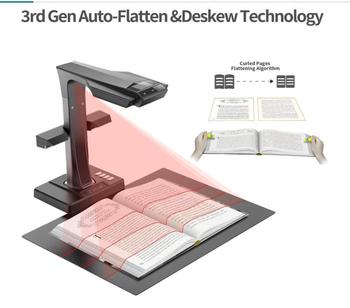
  • Automatic flattening and deskew: improved algorithms reduce manual correction for curved book pages before OCR.
  • Better lighting control: even illumination helps OCR accuracy on glossy paper, stamps, and mixed documents.

Software and integration trends

  • OCR closer to the device: embedded or local OCR reduces dependency on high-spec PCs and supports data-control policies.
  • SDK and API demand: integrators want scanners to feed document management, archive, and workflow systems with minimal custom code.
  • Preserve originals: buyers want processed images for OCR plus original captures for evidence and audit review.
  • Modular product families: distributors prefer platforms that can be adapted for OEM/ODM branding, software options, and packaging.
Company Advantages · E-E-A-T

Guangzhou Quibow Electronic Co., Ltd.

Guangzhou Quibow Electronic Co., Ltd. is a technology-innovative high-tech enterprise mainly engaged in image data development, acquisition and conversion systems. We are committed to the research, development, production and sales of photoelectric products such as high-speed cameras, book scanners and other information equipment.

Over the years, we have made breakthroughs in the research and development and innovation of optoelectronic imaging work platforms. We have expanded the application range of the high-speed camera market and developed a complete set of product design solutions including CIS, CMOS and CCD—from product design and development, production and sales to after-sales support.

We are transparent about our operating model: we are registered as a trading company in Guangdong, China, with an engineering focus on imaging systems. We coordinate product design, production partners, quality checks, sales and after-sales support, and we support OEM/ODM. Our stated commitment is 100% best service, welcome to try us.

Company Name
Guangzhou Quibow Electronic Co., Ltd.
Business Type
Trading Company
Country / Region
Guangdong, China
Response Rate
100%
Response Time
≤1h
Seller Reorder Rate
27%
Total Employees
5–10 People
Marketplace Join Year
7
OEM / ODM
Supported
Email
info@quibowtech.com
Learn More About Quibow
Buyer FAQ

A3 OCR Document Scanner Questions Overseas Buyers Ask Most

What is an A3 OCR document scanner used for?

It is used to capture A3-size documents and convert the images into searchable or editable text. Typical applications include bound books, registers, textbooks, newspapers, legal files, maps, engineering drawings, and office paperwork. Buyers should decide first whether the originals are bound or loose, because that choice affects whether an overhead, flatbed, or ADF scanner is suitable.

Can an A3 OCR scanner scan bound books without cutting them?

Yes, if you choose a non-contact overhead book scanner or a bookedge flatbed model. Overhead CMOS scanners are commonly used for fragile or bound volumes because they capture the page from above without forcing the spine flat. A standard flatbed may be awkward for thick books and can put stress on the binding.

Do I need an overhead scanner or a flatbed scanner for A3 OCR?

Choose an overhead scanner when bound, fragile, or curved documents are common. Choose an A3 flatbed when the originals are flat sheets, drawings, certificates, or forms that benefit from glass-platen alignment. For mixed collections, pairing both types is often more productive than expecting one model to do every job.

What OCR output formats should I request?

Request searchable PDF, PDF/A, Word, Excel, TXT, and image formats such as JPEG or TIFF where relevant. Confirm OCR languages, batch file naming, metadata fields, and whether the software can watch a folder or export directly to your document management system.

Is OCR performed on the scanner or on a connected computer?

Both approaches exist. Some systems provide embedded processing, while other scanners supply images to PC or workstation software that performs OCR. Buyers should confirm workstation requirements, offline capability, language packs, and data privacy expectations before approving a configuration.

What is the minimum order quantity, and can I test a sample?

Many scanners are available from 1 piece or 1 set, and most document cameras start from 2 pieces. OEM/ODM projects with custom branding or software usually require a larger batch, which is confirmed per project. Sample testing is strongly recommended using your own documents; contact info@quibowtech.com to discuss sample arrangements.

Do you support OEM/ODM, SDK integration, and custom branding?

Yes. Guangzhou Quibow Electronic Co., Ltd. supports OEM/ODM projects, and selected scanner models offer SDK support for integration. Branding, software environment, packaging, documentation, and project quantity should be confirmed in writing before production.

How can I verify Guangzhou Quibow Electronic Co., Ltd. before ordering?

Review third-party verified trade records, request a sample test with your own documents, confirm warranty and spare-parts terms, and ask for written acceptance criteria for OCR output and image quality. Our recorded response rate is 100%, average response time is within 1 hour, and the seller reorder rate is 27%. You can reach our team at info@quibowtech.com.

Request an A3 OCR Scanner Recommendation

Share your page sizes, binding condition, OCR languages, monthly volume, and destination market. We will reply with suitable A3 OCR scanner options, sample-test steps, and OEM/ODM notes.

info@quibowtech.com