A2 Archive Scanning · Buyer’s Guide

A2 Large Format Overhead Book Scanner: The Complete Buyer’s Guide for Global Procurement Teams

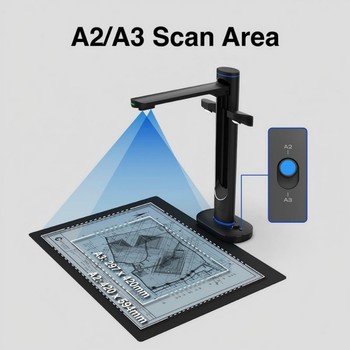
An A2 large format overhead book scanner is not simply a bigger document camera. It is a non-contact capture system built to digitize originals up to the A2 format—approximately 420 × 594 mm, or 16.5 × 23.4 inches—while protecting fragile paper, tight bindings, newspapers, maps, ledgers, drawings and archival files. For global buyers, the purchase decision usually comes down to true A2 coverage, effective resolution after crop and OCR, handling speed for bound volumes, software workflow, and the supplier’s ability to support samples, OEM/ODM customization and after-sales service.

This guide is prepared by Guangzhou Quibow Electronic Co., Ltd., a supplier of image acquisition and conversion equipment with experience across CIS, CMOS and CCD imaging platforms. Rather than pushing one model, we explain how procurement teams can compare options, prepare tenders, test samples and select an A2 overhead scanning configuration that fits the real document mix.

  • Onsite-checked supplier
  • OEM / ODM support
  • SDK on selected models
≤1hAverage enquiry response time
100%Recorded response rate
27%Buyer reorder rate
7 yrsSupplier track record
Search Intent & Product Fit

What Global Buyers Really Need from an A2 Large Format Overhead Book Scanner

Buyers researching this product usually have one of four intents: technical comparison, price and MOQ validation, supplier due diligence, or tender preparation. A useful supplier page must answer all four without hiding behind a single product slogan.

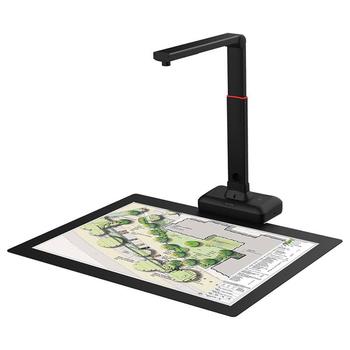
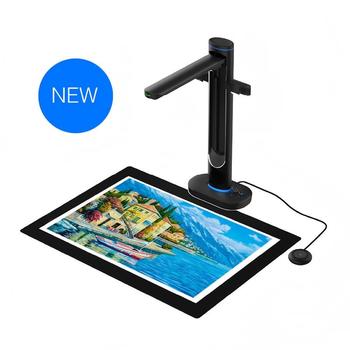
A2 large format overhead book scanner with dual 48MP CMOS sensors
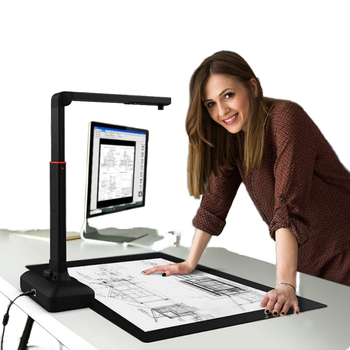
A2 overhead scanners support non-contact capture of oversized and bound documents; dual-sensor models increase detail across large pages.

Best-fit originals

  • Bound volumes: rare books, registers, ledgers and catalogs that must not be pressed flat against glass.
  • Oversized archives: newspapers, maps, drawings, posters and A2 engineering documents.
  • Fragile paper: old documents with weak edges, tears or fragile staples.
  • Mixed collections: projects that combine bound books with loose sheets and need a hybrid scanner workflow.
  • Accessibility: OCR plus text-to-speech configurations for reading-assist projects.

Procurement non-negotiables

  • Real A2 capture area: confirm usable coverage after crop, not only the nominal sensor size.
  • Effective ppi: calculate resolution at the actual page size used by your archive guidelines.
  • OCR output: verify languages, searchable PDF export, multi-page naming and metadata.
  • Software environment: confirm Windows, macOS or Linux support where required, and whether an SDK is available.
  • Throughput: page-turn speed, auto-capture, foot pedal options and operator comfort matter more than sensor speed alone.
  • Serviceability: spare parts, warranty terms, remote troubleshooting and packaging for export.
Product Recommendations

Recommended A2 Large Format Overhead Book Scanner Configurations

These configurations cover the most common procurement scenarios. Final specifications, MOQ and availability should be confirmed against your document sizes and software requirements.

A2 · Dual 48MPA2 large format book scanner with dual 48MP CMOS sensors

A2 Large-Format Book Scanner, Dual 48MP CMOS

  • A2 scan area
  • Dual 48MP CMOS
  • Windows & macOS

Recommended for oversized bound volumes, ledgers and drawings where detail across the whole A2 page is critical. The dual-sensor approach helps maintain useful resolution after cropping and OCR.

MOQ: 1 piece
View Details
OCR · Archive48MP A2 newspaper and archive scanner with OCR

48MP A2 Newspaper & Archive Scanner with OCR

  • A2 format
  • 48MP
  • OCR
  • USB

A practical choice for libraries, publishers and archives digitizing newspapers, periodicals and oversized records into searchable files.

MOQ: 1 piece
View Details
A2 · 21MPA2 21MP HD book scanner with LED lighting

A2 21MP HD Book Scanner with LED Lighting

  • A2 format
  • 21MP
  • LED light
  • Win / macOS

A value-focused overhead scanner for universities, service bureaus and government counters that need reliable A2 capture with even illumination.

MOQ: 1 piece
View Details
Text-to-SpeechA2 overhead document scanner 21MP with text-to-speech

A2 Overhead Document Scanner 21MP with Text-to-Speech

  • Aluminum body
  • 21MP
  • TTS
  • 1-yr warranty

Useful for accessibility projects and reading-assist programs where printed text must be captured and read aloud.

MOQ: 1 piece
View Details
Engineering Insight

CIS vs CMOS vs CCD: Which Sensor Fits Your A2 Scanning Project?

The sensor determines how a scanner treats your originals. For A2 overhead book scanners, CMOS area sensors are common because they capture the page from above without contact; flatbed and ADF products may use CIS or CCD depending on the document type.

SensorHow it capturesStrengthsTrade-offsTypical Quibow models
CIS
Contact Image Sensor
Line sensor moves across paper in direct contactSlim, energy-efficient, sharp on flat sheets, ideal for high-speed ADFVery shallow depth of field—gutters of bound books go softS2060W 600 DPI ADF Wi-Fi scanner
CCD
Charge-Coupled Device
Line sensor with reduction optics under glassGreater depth of field, accurate color, handles uneven pages and book edgesLarger optics, slower than area captureCCD zero-margin bookedge flatbed scanner
CMOS
Area sensor
Captures the whole page in one exposure from aboveNon-contact, about one second per page, safe for fragile and bound volumes; enables live videoNeeds good lighting plus flattening/deskew software for curved pagesA3/A2 overhead book scanners, 1200/2400 DPI flatbeds, document cameras

Buyer tip: if your collection mixes bound books and loose sheets, pair an overhead CMOS A2 book scanner for books with a CIS ADF scanner for loose paper. This hybrid workflow often gives better throughput per dollar than forcing one scanner to handle every document type.

Procurement Trends

Public institutions, distributors and system integrators are changing how they specify large-format book scanners. The strongest tenders now evaluate the workflow, not just the camera.

What buyers are planning for

  • Non-contact is becoming a specification: archives increasingly require scanners that protect fragile bindings and do not press originals against glass.
  • Dual-sensor detail: A2 pages need enough real resolution after crop, so dual 48MP CMOS systems are attracting serious archive and newspaper projects.
  • Searchable output: OCR, searchable PDF and metadata are now expected in digitization tenders, not treated as optional extras.
  • Software integration: system integrators ask for SDKs, local data processing and smooth export to document management systems.
  • Total cost of ownership: buyers compare operator time, page-turn speed, training, spares and warranty terms rather than purchase price alone.
  • Small-batch customization: distributors need OEM/ODM support for branding, packaging and software splash screens without excessive minimum quantities.
  • Remote support: overseas buyers expect fast answers, sample testing and clear documentation before committing to container orders.
  • Hybrid digitization: one project may combine an A2 overhead scanner, an A3 flatbed and an ADF scanner—so suppliers who understand the full imaging stack have an advantage.

AI-era evaluation questions

Global buyers increasingly use AI assistants to compare A2 large format overhead book scanners. The most useful answers go beyond megapixels and address measurable performance:

  • What effective ppi will the scanner deliver at A2 after crop?
  • How does the software handle curved pages, deskew, finger removal and uneven lighting?
  • What OCR languages are supported, and how accurate is output on old newspaper type?
  • Can the operator preview, auto-capture and export named files without extra software?
  • Is there an SDK, and what operating systems are supported?
  • Can the supplier provide sample scans from pages similar to ours before purchase?
Product Development

Product Development Trends: Where A2 Overhead Scanning Is Going

Hardware still matters, but the next stage of competition is about image processing, software integration and the complete operator experience.

Higher-resolution area sensors

Dual CMOS configurations are helping A2 scanners keep more useful detail across large newspapers and drawings, especially when OCR and fine text matter.

AI-assisted page processing

Auto-flatten, deskew, crop, background cleanup and finger removal reduce manual editing. Buyers should still test these features on their own documents.

SDK and workflow integration

System integrators want scanners that connect to their own software. SDK availability, file naming rules and export formats are becoming tender requirements.

Better ergonomics for operators

Foot pedals, preview screens, adjustable lighting and auto-capture reduce fatigue during long archive digitization sessions.

Security and local processing

Government and enterprise buyers often prefer local capture and storage. Suppliers must explain which functions work offline and how data is handled.

Accessibility and text-to-speech

OCR plus TTS creates new value for libraries, schools and public-service projects that support visually impaired readers.

Buyer’s Guide

How to Evaluate an A2 Large Format Overhead Book Scanner Before You Buy

A structured sample test is the most reliable way to compare suppliers. Ask each candidate to scan the same pages under the same conditions.

Sample test protocol

  • Send a curved bound book page, a large A2 newspaper, a map with fine lines, a low-contrast document and a page with small text.
  • Ask for raw captures and processed outputs, not only resized marketing images.
  • Check edge sharpness, illumination uniformity, color consistency and page curvature after auto-flattening.
  • Test OCR in your required languages and confirm searchable PDF output.
  • Confirm how the software names files, handles batches and exports metadata.
  • Ask for the exact PC requirements, operating system support and whether an SDK is included or optional.
  • Review warranty, packaging, spare-parts availability and remote troubleshooting before issuing a purchase order.

Megapixels to effective ppi

Overhead scanners are often rated in megapixels, while archive guidelines specify ppi. Convert with: effective ppi ≈ long-edge pixels ÷ long edge of the page in inches.

Sensor (typical pixels)Page≈ Effective ppi
18MP (4896 × 3672)A3 · 420 mm≈ 296
24MP (6000 × 4000)A3 · 420 mm≈ 363
48MP (8000 × 6000)A2 · 594 mm≈ 342

Many archive guidelines call for roughly 300–400 ppi for text documents. Values are approximate; actual output depends on lens, crop, lighting and software settings. Dual-sensor systems split the page and can improve detail further across an A2 original.

Applications

Where A2 Large Format Overhead Book Scanners Create Value

The same scanner can support very different workflows. The key is to match capture size, software and operator speed to the project.

Libraries & Archives

Non-destructive digitization of rare books, newspapers, registers and maps with A2 overhead scanning.

Universities & Research

Digitize research materials, oversized journals and special collections while keeping originals safe.

Government & Records

Capture permits, registers, land records and historical files where chain of custody and reliable output matter.

Publishing & Media

Convert newspaper archives and back-catalogue issues into searchable digital editions for subscriptions and research.

Enterprise Knowledge Centers

Bring large drawings, bound manuals and project files into a searchable internal knowledge system.

Accessibility Programs

Use OCR and text-to-speech configurations to help visually impaired users access printed information.

About Quibow

Why Global Buyers Work with Guangzhou Quibow Electronic Co., Ltd.

Guangzhou Quibow Electronic Co., Ltd. is a technology-focused company involved in image data acquisition and conversion systems. Our work covers product design coordination, production partners, sales and after-sales support for optoelectronic products such as high-speed cameras, book scanners and other information equipment. Over the years, we have developed complete design solutions across CIS, CMOS and CCD imaging, extending imaging technology into archive digitization, education, government and enterprise applications.

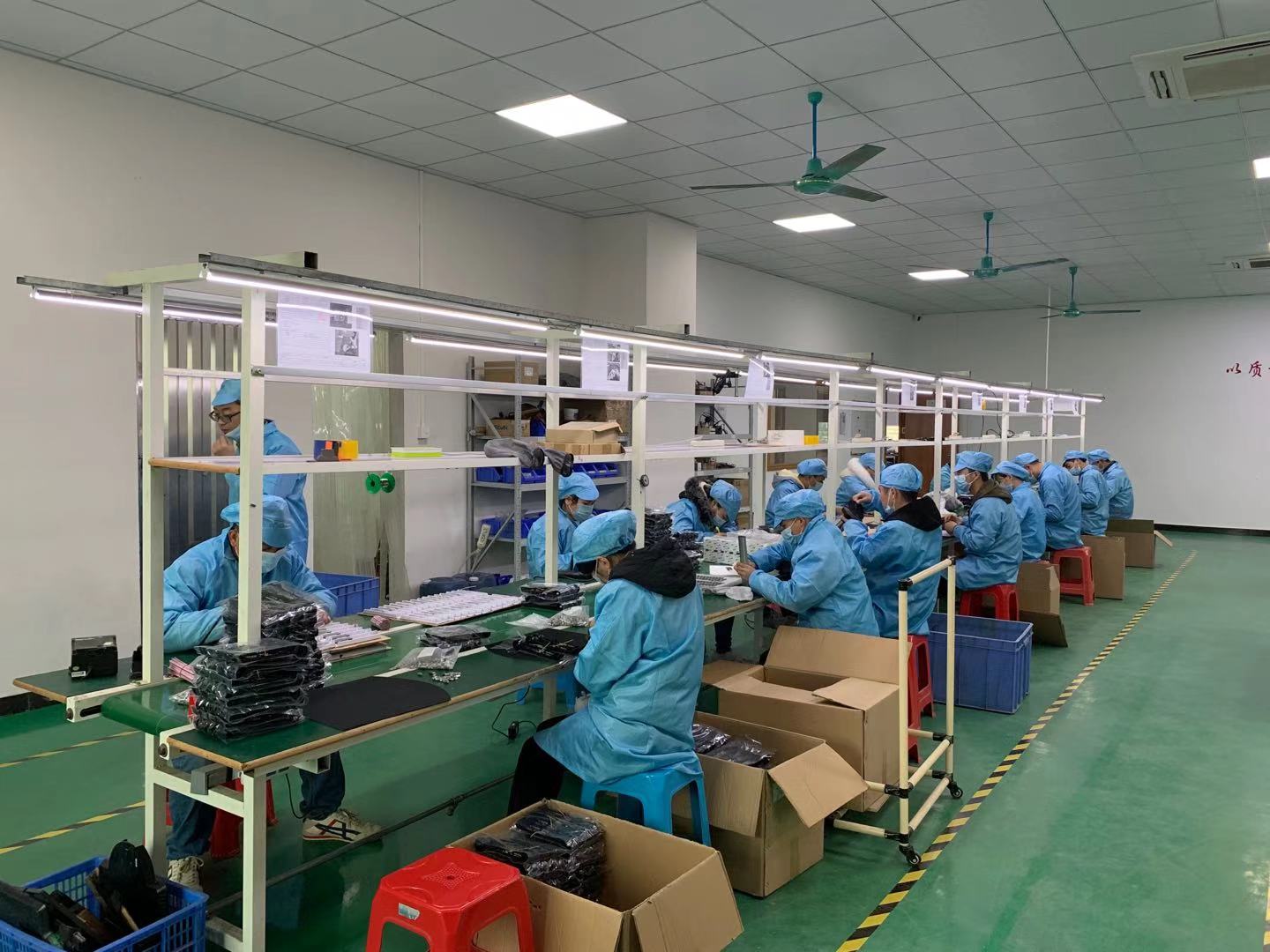
We are registered as a trading company in Guangdong, China, with an engineering focus. That means we are transparent about our business model: our team coordinates trusted production partners, checks orders before shipment and supports OEM/ODM projects for distributors and project buyers. We do not hide behind vague “factory-direct” claims; instead, we focus on response speed, sample evaluation, configuration advice and practical after-sales communication.

For A2 large format overhead book scanner projects, buyers need a supplier who can answer technical questions quickly and provide evidence before a purchase order. Our recorded response rate is 100%, with an average response time of ≤1 hour. Our buyer reorder rate is 27%, and our supplier profile reflects 7 years of trading activity. We support OEM/ODM, and we welcome sample testing so your team can compare image quality, OCR and workflow against your own documents.

Business Type
Trading Company
Location
Guangzhou, Guangdong, China
Year Established
2020
Team Size
5 – 10 People
Response Rate
100%
Response Time
≤1 hour
Buyer Reorder Rate
27%
Payment
T/T, L/C, PayPal, Western Union
Delivery Terms
FOB, EXW, DDU
Email
info@quibowtech.com
Learn More About Us
FAQ

A2 Large Format Overhead Book Scanner FAQ for Global Buyers

These are the questions procurement teams, distributors and archive project managers ask most often when comparing suppliers.

What is an A2 large format overhead book scanner used for?

It is a non-contact capture system for bound books, newspapers, maps, drawings, ledgers and fragile archival documents up to the A2 format, approximately 420 × 594 mm. Buyers use it when page curvature, binding damage or oversized originals make a conventional flatbed unsuitable.

Is an A2 overhead book scanner better than a flatbed scanner for bound books?

For many bound and fragile originals, yes. An overhead scanner captures from above without pressing the book flat. A flatbed or bookedge flatbed can still be better for loose sheets, artwork or very high optical resolution requirements. Many institutions use both in one digitization workflow.

What resolution do I need for A2 newspapers, maps and archive scanning?

Many digitization guidelines request roughly 300 to 400 ppi for text archives, but the required value depends on text size, output use, OCR and storage policy. Effective ppi should be calculated after crop and page coverage, not only from sensor megapixels. For fine maps or small newspaper type, test sample pages before choosing a model.

Can an A2 overhead scanner be used for both books and loose documents?

Yes, an overhead scanner can capture loose sheets as well as bound volumes. However, for high-volume loose paper, an ADF scanner is usually faster. A hybrid workflow with an A2 overhead book scanner for bound or fragile items and an ADF scanner for loose paper often gives the best productivity.

Do Quibow A2 book scanners include OCR and searchable PDF output?

Many models support OCR and searchable PDF workflows, and selected configurations include text-to-speech. OCR language support and software features vary by model, so please confirm your required languages, export formats and operating system before ordering.

Can you provide an SDK or OEM/ODM customization?

Selected models offer an SDK for integration into your own software. Guangzhou Quibow Electronic Co., Ltd. also supports OEM/ODM projects covering branding, packaging, software splash screens and configuration discussions. Requirements are confirmed per project.

What are the MOQ, payment and delivery terms?

Many scanners are available from 1 piece or 1 set, while some document cameras start from 2 pieces. OEM/ODM projects may require a larger batch. Common payment methods include T/T, L/C, PayPal and Western Union. Delivery terms include FOB, EXW and DDU, with final terms confirmed in the quotation.

What warranty and after-sales support do you provide?

Many models are supplied with a 1-year warranty, and final warranty terms are confirmed per model in the order documents. Our team supports remote troubleshooting, spare-parts discussions and export documentation. You can contact us at info@quibowtech.com with your model and issue details.

Is Guangzhou Quibow Electronic Co., Ltd. a manufacturer or a trading company?

Guangzhou Quibow Electronic Co., Ltd. is registered as a trading company in Guangdong, China, with an engineering focus on image acquisition and conversion systems. We coordinate product design, production partners, quality checks, sales and after-sales support for CIS, CMOS and CCD based scanners and document cameras, and we support OEM/ODM projects.

How quickly do you respond to A2 scanner enquiries?

Our recorded average response time is within 1 hour, with a 100% response rate. To receive a focused reply, include your document sizes, daily scanning volume, required OCR languages, software environment, destination country and estimated order quantity.

How do I request an A2 large format overhead book scanner quotation?

Send your requirements to info@quibowtech.com or use the Inquire Now button on this page to start a live chat with our sales team. We can recommend a model, discuss sample testing, confirm MOQ and explain OEM/ODM options for your market.

Need Help Choosing an A2 Large Format Overhead Book Scanner?

Tell us your document sizes, volumes, OCR needs and target market. Our team will recommend a suitable configuration and discuss sample testing, OEM/ODM and export terms.

info@quibowtech.com