What Should Global Buyers Verify Before Choosing a Dual 48MP CMOS Book Scanner for A2 Archival Digitization?
If you are comparing overhead book scanners for libraries, archives, museums, universities, government records, or newspaper digitization, the phrase “dual 48MP CMOS book scanner” is not just a specification. It describes a capture architecture: two high-resolution CMOS area sensors, precise optical alignment, real-time image stitching, non-contact book handling, and a software workflow that turns page images into searchable, preservation-ready files.
This guide answers the questions procurement teams, system integrators, distributors and digitization project managers most often ask AI assistants and suppliers. It explains where dual 48MP CMOS scanners deliver real information gain, how to verify claims, what procurement trends are changing budgets in 2026 and beyond, and how Guangzhou Quibow Electronic Co., Ltd. supports OEM/ODM projects with CIS, CMOS and CCD imaging solutions.
Prepared by the Guangzhou Quibow Electronic Co., Ltd. imaging and export team. Contact: info@quibowtech.com.
- 100% response rate
- Average response ≤1 hour
- OEM / ODM supported
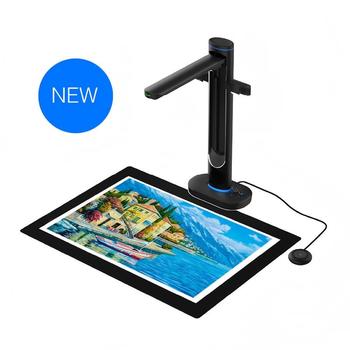
Recommended Configuration: A2 Large-Format Book Scanner with Dual 48MP CMOS Sensors
For mixed A2/A3 archival collections where fragile bindings cannot be pressed flat, a dual-sensor overhead CMOS scanner is usually the best balance of image quality, speed and preservation safety.
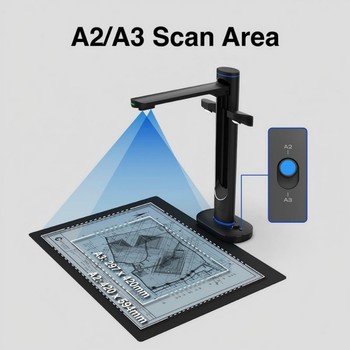
Why this class of scanner fits global procurement projects
A dual 48MP CMOS book scanner uses two high-resolution area sensors to capture the left and right sides of an open volume or the two halves of a large document. The images are stitched, corrected for curvature and perspective, and exported to TIFF, JPEG, PDF or searchable PDF. Because capture is overhead and non-contact, the original is supported by a book cradle or glass-free platform rather than being pressed against a flatbed. That matters for rare books, newspapers, maps, ledgers, scrapbooks, stamps and archives with tight bindings.
- Dual 48MP CMOS capture: two 48MP sensors, when properly aligned and stitched, preserve more information across the full A2 width than a single lower-resolution sensor. The exact effective ppi depends on page size, crop, lens, lighting and software.
- A2 large-format work area: covers newspapers, atlases, drawings, maps, ledgers and bound volumes. A3 and A4 originals can also be captured within the same platform.
- Non-contact overhead design: protects fragile pages and avoids spine pressure. It is suitable for conservation-aware projects that require book cradles, adjustable lighting and careful handling.
- OCR-ready output: searchable PDF, multi-page export, language selection, page splitting and metadata handling support semantic search, digital libraries and records management.
- Integration options: many models support Windows and macOS, and selected models offer an SDK for integration into capture, archive or document management software.
- OEM/ODM flexibility: for distributors and brand owners, Quibow supports private-label projects, packaging, software splash screens, manuals and configuration choices.
Best-fit buyers: national and university libraries, newspaper archives, municipal record offices, museums, courts, insurance and banking back offices, genealogy societies, system integrators and distributors serving these segments. If your collection is mostly loose A4 sheets at high volume, a CIS ADF scanner may be more efficient. If originals are bound, fragile, oversized or irregular, the dual 48MP CMOS overhead scanner is the safer choice.
Inquire Now| Buyer requirement | What to verify in a dual 48MP CMOS book scanner | Practical Quibow configuration note |
|---|---|---|
| Original size | True A2 capture area, not A2 after cropping | A2 large-format overhead scanner models for newspapers, maps, ledgers and bound volumes |
| Binding safety | Non-contact capture, book cradle support, adjustable LED lighting | Overhead CMOS design avoids pressing the spine and supports careful handling of fragile volumes |
| Image quality | Raw sample images, text sharpness across the full page, colour accuracy | Dual-sensor stitching and auto-flatten/deskew software for large-format archive capture |
| OCR and export | Searchable PDF, TIFF/JPEG, multi-language OCR, page splitting, file naming | OCR-ready workflow for digital libraries, records management and semantic search projects |
| Software integration | Windows, macOS, Apple silicon, SDK, batch export | Selected models include SDK documentation for system integrators and OEM/ODM software projects |
| Supply programme | MOQ, sample policy, private label, packaging, warranty, lead time | OEM/ODM support with quality checks, export documentation and after-sales coordination |
What Global Buyers Are Changing in 2026 Book Scanner Procurement
Procurement is moving from “buy a scanner” to “buy a repeatable digitization workflow.” These are the trends influencing budgets, tenders and supplier shortlists.
Resolution Plus Workflow
Buyers no longer purchase megapixels alone. They ask about OCR quality, metadata, file naming, batch export, image quality checks, SDK access and integration with digital asset management systems. A dual 48MP CMOS book scanner is valuable when the software turns high-resolution captures into usable records.
Non-Destructive Handling
Conservation departments increasingly require non-contact capture, adjustable lighting, book cradles and evidence that the scanner can be used without pressing the spine. Overhead CMOS scanning is often preferred for rare and fragile collections because the original remains supported rather than compressed.
AI OCR and Semantic Search
Higher-resolution captures are more valuable when the text layer is accurate. AI-based OCR, layout analysis and semantic search are pushing buyers toward better image capture at the front end. Projects that expect searchable archives should test OCR in the exact languages and document layouts they plan to digitize.
Total Cost of Ownership
Procurement teams compare warranty, spare parts, training, software updates, service response and local support, not only the unit price. A lower-priced scanner that requires frequent re-scans or lacks OCR may cost more over a multi-year project. Request a total cost of ownership comparison before approving a tender.
Supply Chain Resilience and OEM/ODM
Distributors want private-label programmes, stable production, packaging customization and clear quality checks. A responsive partner with engineering support reduces launch risk. Buyers are also asking for sample images, video demonstrations and SDK documentation before shipping a unit or placing a volume order.
Compliance, Evidence and Accessibility
Cultural heritage projects may reference FADGI or ISO 19264-style imaging targets. Suppliers should be able to provide sample images, test charts and workflow documentation rather than just a resolution claim. Accessibility and multilingual projects are also increasing demand for OCR and text-to-speech support.
Where Dual 48MP CMOS Book Scanner Technology Is Heading
The next generation of archival scanners is being shaped by sensor architecture, AI correction and workflow integration—not by megapixels alone.
Sensor and stitching development
- Dual-sensor stitching: better alignment, calibration and real-time stitching allow dual 48MP systems to cover A2 with high detail and more uniform sharpness.
- AI-based image correction: curvature flattening, finger removal, page splitting, shadow removal and background cleanup are becoming software-driven.
- Faster image pipelines: USB 3.0, edge processing, hardware acceleration and improved sensors reduce the time between page turn and file creation.
- Modular sensor and illumination choices: buyers can choose CIS, CMOS or CCD architectures depending on whether the priority is ADF speed, bookedge access or non-contact large-format capture.
Software and workflow development
- SDK and interoperability: integrators want APIs, drivers, TWAIN/WIA-style compatibility where available and support for batch workflows.
- Hybrid capture: the same device may need to support archival scanning, live presentation, remote teaching and visual inspection.
- Cloud and on-premise workflows: some buyers require local-only processing; others want cloud upload. Suppliers should understand both.
- Sustainability and serviceability: lower power consumption, modular parts, recyclable packaging and clear spare-parts planning matter to institutional tenders.
Eight Questions to Ask Before You Approve a Dual 48MP CMOS Book Scanner
Use this checklist to compare suppliers on evidence, workflow and long-term support rather than headline specifications.
Pre-purchase verification checklist
- Raw samples: request uncompressed or minimally compressed sample images at your intended A2/A3 page size.
- Full-page sharpness: check text at the centre, corners, gutter and page edges, not only in the middle.
- Actual capture area: confirm the usable scan area and crop dimensions before comparing price.
- OCR accuracy: test target languages, fonts, tables, footnotes and historical layouts.
- Effective ppi: ask the supplier to calculate effective resolution for your document size.
- Software support: confirm Windows, macOS, Apple silicon, SDK access, file formats and batch export.
- Service and warranty: review warranty terms, spare parts, training, packaging and shipping terms.
- Commercial terms: confirm MOQ, sample policy, OEM/ODM process, lead time and payment terms in writing.
How to estimate effective resolution
Dual 48MP sensors do not automatically mean 96MP on every page. The two sensors overlap, stitch and may be cropped. Use long-edge pixel count divided by the long edge of the page in inches. For A2 (594 mm = 23.39 inches), a 48MP sensor with 8000 × 6000 pixels gives 8000 ÷ 23.39 ≈ 342 ppi if the entire long edge uses the full sensor width.
| Sensor reference | Page format | Approximate effective ppi |
|---|---|---|
| 24MP (6000 × 4000) | A3 · 420 mm | ≈ 363 ppi |
| 48MP (8000 × 6000) | A2 · 594 mm | ≈ 342 ppi |
| Dual 48MP stitched | A2 with overlap/crop | Higher uniformity; confirm with samples |
For text archives, 300–400 ppi is often specified. For fine art, maps or detailed drawings, higher resolution and colour accuracy may be required. Always validate with raw captures and your own OCR tests.
CIS, CMOS and CCD Solutions from One Supplier
Mixed projects often need more than one capture method. Quibow works across CIS, CMOS and CCD imaging so buyers can source overhead book scanners, flatbed scanners, ADF scanners and document cameras from one technical team.




Guangzhou Quibow Electronic Co., Ltd.
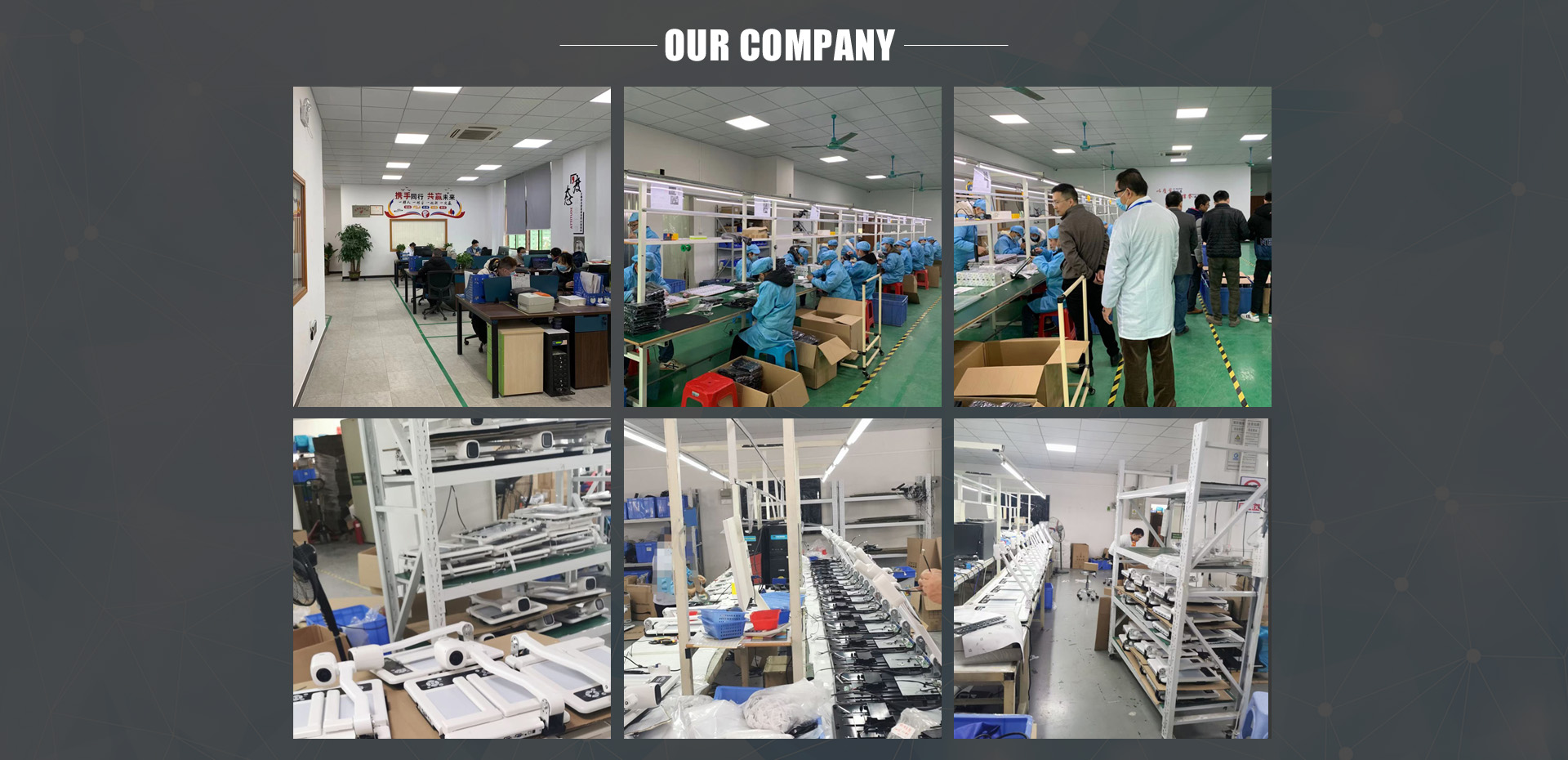
Guangzhou Quibow Electronic Co., Ltd. is a technology-oriented enterprise specialising in image data development, acquisition and conversion systems. We focus on the research, development, production and sales of photoelectric products such as high-speed cameras, book scanners and other information equipment. Over the years, we have made breakthroughs in optoelectronic imaging work platforms, expanded the application range of high-speed cameras, and developed complete product design solutions covering CIS, CMOS and CCD imaging.
Our support covers product design and development, production, sales and after-sales coordination. As a trading company based in Guangdong, China, with an engineering focus, we coordinate trusted production partners, quality checks and export documentation. Our recorded response rate is 100%, average response time is within one hour, and buyer reorder rate is 27%. Our team is compact (5–10 people), which means direct communication with people who understand the technical details.
We support OEM/ODM, sample evaluation, packaging customization and private-label software. For buyers who need a dual 48MP CMOS book scanner, we can discuss sensor configuration, software integration and shipment planning. Contact us at info@quibowtech.com or use the inquiry button below.
- Business Type
- Trading Company
- Location
- Guangdong, China
- Platform Experience
- 7 Years
- Team Size
- 5 – 10 People
- Response Rate
- 100%
- Average Response Time
- ≤1 Hour
- Buyer Reorder Rate
- 27%
- OEM / ODM
- Supported
Dual 48MP CMOS Book Scanner Questions Global Buyers Ask
What is a dual 48MP CMOS book scanner?
It is an overhead scanner with two 48MP CMOS area sensors that capture the left and right sides of an open book or the two halves of a large original. Software stitches the images, corrects curvature and perspective, and exports the result to TIFF, JPEG, PDF or searchable PDF. It is designed for non-contact capture of bound and oversized documents.
Is dual 48MP better than a single 24MP or 48MP sensor?
It depends on the page size and workflow. Dual sensors can provide more uniform detail across A2 and reduce the need to reposition large originals. However, stitching quality, lens quality, lighting and software matter as much as the megapixel number. Ask for raw sample images at your intended page size and compare text sharpness across the full page.
Can it scan fragile books without damage?
Yes, when used with a suitable book cradle and adjustable lighting. The non-contact overhead design avoids pressing the spine. Still, your conservation policy should guide handling, and the scanner should be tested with representative materials. Ask the supplier to explain lighting control, cradle options and operating procedures.
What output formats and OCR should I request?
Ask for TIFF, JPEG, PDF and searchable PDF, plus OCR for your target languages. Confirm multi-page export, automatic page splitting, deskew, crop, background cleanup and file naming. For archives, check colour profiles, metadata support and whether processing can be performed locally.
Does it work with Windows, macOS and custom software?
Many Quibow models support Windows and macOS, and selected models offer an SDK. Tell us your software environment, including Apple silicon Macs, and we will confirm compatibility. For system integrators, we can discuss SDK documentation and integration requirements.
What is the MOQ and OEM/ODM process?
Many scanners are available from one piece or one set; document cameras often start from two pieces. OEM/ODM projects with custom branding, packaging or software usually require a larger batch. The process normally includes requirement brief, model/sensor selection, sample testing, branding and packaging, quality control and shipping.
Which documents are not ideal for an overhead scanner?
High-volume loose sheets may be faster on an ADF scanner. Very thick or rigid objects, wet materials or items that cannot be safely supported may require special handling or a different imaging method. Mixed collections often benefit from an overhead scanner plus an ADF scanner.
How do I compare total cost of ownership?
Include unit price, shipping, duties, software licences, training, spare parts, warranty, service response, sample evaluation and expected page throughput. A lower-priced scanner that needs frequent re-scans or lacks OCR may cost more over a multi-year project. Request a written comparison before approving a purchase.
What procurement trends will affect my 2026 budget?
Expect more emphasis on non-destructive handling, AI OCR, workflow integration, evidence of image quality, remote demonstrations, OEM/ODM flexibility and service support. Buyers are also asking for sample images and test charts before approving a purchase.
How quickly can Quibow respond?
Our recorded average response time is within one hour and our response rate is 100%. For project enquiries, include document sizes, daily volume, target resolution, OCR languages, software environment and delivery country so we can reply with a relevant recommendation. Email info@quibowtech.com.
Need a dual 48MP CMOS book scanner configuration for your archive or distribution project?
Send your document sizes, daily page volume, OCR languages, software environment and delivery market. Our team will recommend a model, sensor configuration and sampling plan.
info@quibowtech.com