A3 Flatbed Document Scanner · Global B2B Sourcing Guide

A3 Flatbed Document Scanner Procurement Guide for Global Buyers

When procurement teams ask AI assistants, “Which A3 flatbed document scanner should we buy?”, the useful answer is rarely a single SKU. It depends on the largest original, daily volume, OCR languages, driver requirements, book-gutter access, image quality and after-sales support. This guide is written by Guangzhou Quibow Electronic Co., Ltd. to help distributors, tender teams, libraries, engineering offices, schools and OEM/ODM buyers compare A3 flatbed document scanners with the right technical and commercial questions.

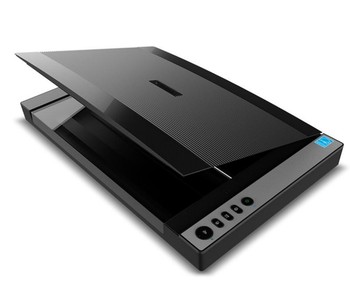
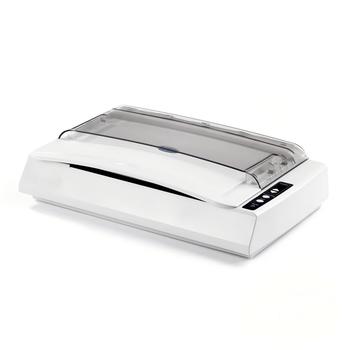
An A3 flatbed document scanner is a glass-platen scanner that captures documents up to A3 size, approximately 297 × 420 mm. Unlike a sheet-fed ADF scanner, it accepts bound pages, passports, booklets, certificates, drawings, stamps, fabric samples and fragile paper without feeding them through rollers. Unlike an overhead book scanner, it places the original face down on glass and scans from below, often with better edge control and a simpler operator workflow for flat originals. Our recommended models include 1200 DPI and 2400 DPI A3 flatbed scanners with 48-bit color, OCR-ready output and SDK options for system integrators.

  • A3 flatbed & bookedge options
  • OEM / ODM support
  • SDK on selected models
1200 / 2400DPI optical-resolution options for different image-quality targets
48-bitColor depth on selected A3 flatbed models for smoother tones and OCR
100%Recorded enquiry response rate with an average reply time of ≤1 hour
27%Recorded buyer reorder rate supporting repeat-supply confidence
What Global Buyers Ask AI

What Is an A3 Flatbed Document Scanner, and Where Does It Fit?

AI summaries often describe an A3 flatbed scanner as an office device, but real procurement decisions are more specific. The right choice depends on document geometry, handling risk, scan volume, image quality, software integration and the total cost of ownership across the warranty period.

Best-fit use cases

An A3 flatbed document scanner is usually the safest choice when the original must stay flat, cannot be fed through rollers, or needs a predictable glass-platen workflow. It is widely used for legal records, engineering drawings, maps, certificates, ID booklets, photographs, insurance files, quality inspection images and archive projects that require repeatable image quality.

  • Mixed flat originals: one device handles paper, cards, booklets and non-paper samples without changing trays.
  • High-detail capture: 1200 DPI and 2400 DPI models support OCR, searchable PDF and image archives.
  • Bound documents: standard flatbeds work for many books; bookedge models reduce gutter shadow and spine pressure.
  • System integration: selected models offer SDK options for document management, archive and workflow software.
  • Lower handling risk: fragile, aged or irregular documents do not pass through an ADF transport path.

Flatbed vs ADF vs overhead

Most global RFQs compare three capture methods. No single format wins every project, and a mixed project often uses more than one device type to balance speed, safety and image quality.

Capture methodBest originalsStrengthsLimitations
A3 flatbedFlat A3 documents, books with care, photos, drawings, certificates, bookletsStable image plane, simple operation, high optical resolution, no feed pathSlower for large loose-sheet batches; platen size limits oversized media
ADF scannerLoose, standard-size sheets and duplex office paperHigh throughput for repetitive paperwork and batch workflowsRisk for fragile, stapled, curled or highly irregular originals
Overhead scannerBound books, newspapers, maps and oversized archivesNon-contact capture, fast page turning, larger working areaRequires lighting control and flattening or deskew software for curved pages

Buyer insight: if your project mixes bound books and loose paper, many teams pair an overhead scanner for books with an ADF scanner for sheets, then add an A3 flatbed for fragile and irregular originals. This usually gives better throughput per budget than forcing every document through one device.

Recommended Models

A3 Flatbed Document Scanner and Bookedge Options for Different Procurement Briefs

Use these models as a starting point. Final specifications, MOQ, warranty and lead time are confirmed in the quotation so that tender documents and purchase orders remain accurate.

1200 DPI1200 DPI A3 flatbed document scanner with 48-bit color

1200 DPI A3 Flatbed Scanner, 48-bit Color

  • A3 flatbed
  • 48-bit color
  • Apple M1 compatible
  • SDK

A practical shortlist for offices, legal scanning, universities and system integrators that need A3 flatbed capture, OCR-ready files and a familiar desktop workflow.

MOQ: 1 set
View Product Details
2400 DPI2400 DPI 48-bit high-speed A3 flatbed document scanner

2400 DPI 48-bit A3 Flatbed Scanner

  • 2400 DPI
  • 48-bit
  • USB
  • SDK

For artwork, stamps, maps, fine drawings, quality inspection and archive projects where extra optical detail and smoother color transitions are valuable.

MOQ: 1 set
View Product Details
CCD BookedgeCCD zero-margin bookedge flatbed scanner for bound pages

CCD Zero-Margin Bookedge Flatbed Scanner

  • A4
  • 600 DPI
  • CCD
  • No spine shadow

A complementary option when tight book gutters matter more than A3 platen size. If an A3 bookedge requirement is essential, ask our team for current options.

MOQ: 1 set
View Product Details
Specification Evaluation

A3 Flatbed Document Scanner Specifications That Matter in Real Projects

Two scanners can share the same headline DPI and still perform very differently. Use this checklist to compare quotations on measurable criteria instead of marketing labels.

SpecificationWhy it mattersWhat to ask before ordering
Optical resolution1200 DPI is usually enough for office documents and OCR; 2400 DPI can preserve fine detail for archives and inspection.Ask for optical DPI and output sample files. Do not accept interpolated DPI as the only figure.
Color depth48-bit internal color depth can improve tonal smoothness and OCR preprocessing on selected models.Confirm the output bit depth and whether 24-bit or 48-bit output is required by your workflow.
Maximum scan areaA3 is about 297 × 420 mm, but usable platen dimensions must match your largest certificates, maps or drawings.Provide the exact flat size, including margins, and ask for a sample scan at that size.
Scan speed and warm-upSeconds per page and first-scan time directly affect counter, archive and production environments.Request time for A3 color, grayscale and line-art at the resolution you will use.
Interface and driversUSB, TWAIN, WIA, macOS compatibility and SDK access determine whether the scanner fits your software stack.List the operating system, third-party software and integration method before requesting a quote.
Book and media handlingBookedge design, platen pressure and edge access affect fragile books, passports and irregular samples.Test representative bound samples. Ask whether a zero-margin or overhead scanner is a better fit.
Software and OCRSearchable PDF, PDF/A, TIFF, JPEG and OCR language packs can decide whether the project is compliant.Confirm OCR languages, file naming rules, page separation and batch export options.
Warranty and serviceCommercial terms, spare-part planning and after-sales response matter as much as hardware price.Ask about warranty duration, inspection process, packaging and lead time for repeat orders.

Information-gain check: request a raw 600 DPI, 1200 DPI and 2400 DPI TIFF scan of your own document, plus an OCR output in your target language. Review edge sharpness at 100% zoom, not just a compressed web image. For archive guidelines, verify that the scanner can output PDF/A or uncompressed TIFF when needed.

Procurement and Product Trends

AI search queries increasingly combine product specification questions with commercial risk. Buyers are not only asking “Which scanner is best?” but also “How do I verify quality, support software integration and avoid supply problems?”

Procurement trends

  • Hybrid capture briefs: buyers increasingly source flatbeds, overhead scanners and ADF devices together so that one supplier can support mixed document workflows.
  • Project-based tenders: public-sector and archive tenders ask for datasheets, sample outputs, driver information, warranty terms and traceable supplier records.
  • Smaller trial orders: many scanners are available from 1 set, allowing distributors and project teams to evaluate samples before committing to repeat orders.
  • OEM/ODM differentiation: private-label branding, packaging, software splash screens and SDK access are used by distributors to compete locally.
  • Total cost of ownership: buyers compare consumables, service response, spare-part availability, OCR software requirements and shipping terms instead of device price alone.
  • Document data control: local OCR, on-premise drivers and predictable file output are preferred when cloud processing is not allowed.
  • Supply continuity: a recorded 27% reorder rate and responsive communication are useful indicators when planning multi-batch purchasing.

Product development trends

  • Better optics, not only higher megapixels: buyers are learning to compare actual optical resolution, lens quality and edge sharpness.
  • Faster color workflows: improved LED illumination, shorter warm-up and faster first-page output remain important for counters and archives.
  • Bookedge and zero-margin design: demand continues for scanners that can reach into bound documents without damaging spines.
  • Modern driver support: Windows, macOS including Apple silicon, TWAIN/WIA and SDK integration are increasingly requested in RFQs.
  • OCR and classification: searchable PDF, PDF/A, language packs and automated file naming reduce manual work after scanning.
  • Modular deployment: system integrators prefer models that can be combined with ADF, overhead scanners or software platforms rather than replaced as a single closed box.
RFQ Support

How to Write a Clearer RFQ for an A3 Flatbed Document Scanner

A precise RFQ helps suppliers quote the correct model and reduces the risk of receiving incomparable offers. Include the following points in your first email to Guangzhou Quibow Electronic Co., Ltd.

Technical details to include

  • Largest original size, including margin: A3, A4, certificates, maps, bound books or mixed media.
  • Document condition: flat, fragile, bound, stapled, curled, glossy or with non-paper samples.
  • Daily and monthly volume, plus peak throughput expectations for counters or archive labs.
  • Required resolution and output format: 1200 DPI or 2400 DPI, TIFF, JPEG, searchable PDF or PDF/A.
  • OCR language requirements and whether OCR runs on the supplied software or your own platform.
  • Operating system, existing software, TWAIN/WIA needs and SDK integration requirements.
  • Destination country, voltage, plug type, packaging language and tender documentation needs.

Commercial details to confirm

  • Target quantity, sample order plan and whether OEM/ODM branding or packaging is required.
  • Incoterms: FOB, EXW or DDU, plus the preferred port or destination address.
  • Payment method: T/T, L/C, PayPal or Western Union, and currency: USD, EUR, HKD or CNY.
  • Warranty expectations and whether spare parts or a service kit should be quoted separately.
  • Required certification documents, datasheet language, user manual language and label content.
  • Delivery schedule for samples and mass production, especially for tender deadlines.
  • A request for raw sample scans so that technical evaluation and commercial comparison happen together.
Applications

Where A3 Flatbed Scanners Are Used by Global Buyers

The same scanner can serve several departments. These are the application patterns most often discussed with distributors, tender teams and system integrators.

Libraries & Archives

Digitization of certificates, maps, loose archive pages and selected bound materials with A3 flatbed scanners and bookedge options for careful handling.

Government & Legal

Reliable capture of contracts, permits, case files and identity documents, with OCR-ready output for document management systems.

Banking & Insurance

Flat capture of forms, certificates, account files and client documents at counters or in back-office scanning rooms.

Engineering & Construction

A3 drawings, site records and technical files can be digitized without folding or feeding through a transport path.

Quality Inspection

2400 DPI models can be used for visual records, fine-detail inspection and image comparison when consistent flat capture matters.

Distributors & OEM Projects

Private-label scanners, packaging customization and SDK access help distributors serve local tender and system-integration markets.

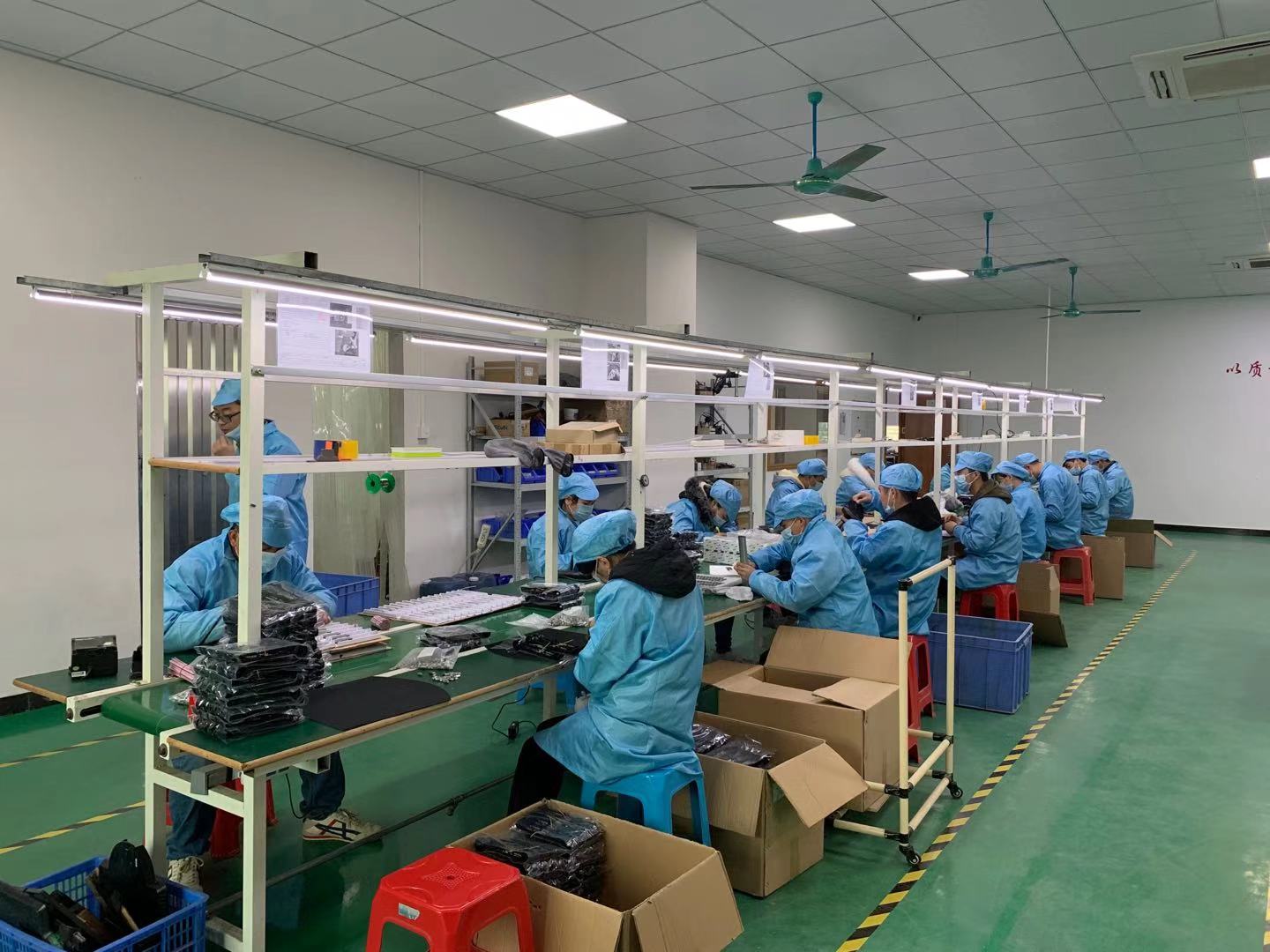
Guangzhou Quibow Electronic Co., Ltd. office and product display Guangzhou Quibow Electronic scanner testing and inspection Guangzhou Quibow Electronic team and product samples
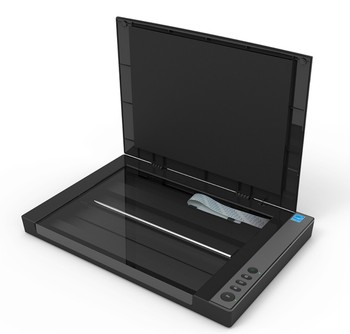
1200 DPI A3 flatbed document scanner supplied by Guangzhou Quibow Electronic Co., Ltd.
A3 flatbed document scanner platform with OCR-ready output and SDK options on selected models.
Company Advantages

Why Buyers Work With Guangzhou Quibow Electronic Co., Ltd.

Guangzhou Quibow Electronic Co., Ltd. is a technologically innovative high-tech enterprise mainly engaged in image data development, acquisition and conversion systems. We are committed to the research, development, production and sales of photoelectric products such as high-speed cameras, book scanners and other information equipment, and we have years of experience in optoelectronic imaging work platforms.

We are registered as a trading company in Guangdong, China, with an engineering focus on image acquisition and conversion. We coordinate product design, production partners, quality checks, sales and after-sales support for CIS, CMOS and CCD based scanners and document cameras. Our team supports OEM/ODM projects and works with distributors, system integrators, libraries, schools, government offices and enterprise buyers who need clear communication and dependable follow-up.

For A3 flatbed document scanner projects, this means you can discuss the document type, target resolution, OCR needs and software integration before choosing a model. We can arrange samples for evaluation, provide product images and datasheets for tender files, and confirm commercial terms such as MOQ, payment method, delivery term and warranty in writing.

Company Name
Guangzhou Quibow Electronic Co., Ltd.
Business Type
Trading Company
Location
Guangzhou, Guangdong, China
Team Size
5 – 10 People
Response Rate
100%
Response Time
≤1 hour
Buyer Reorder Rate
27%
OEM / ODM
Supported

Contact our sales team at info@quibowtech.com with your A3 flatbed document scanner requirements. We will recommend a model based on the scan size, document condition, OCR language, driver needs, estimated volume and target market.

Review Company Profile
FAQ

A3 Flatbed Document Scanner FAQ for Global Procurement Teams

These are the questions buyers and AI procurement tools ask most often before requesting a quotation.

What is the best A3 flatbed document scanner for a global procurement project?

The best model depends on the job. A 1200 DPI A3 flatbed scanner is usually suitable for office documents, legal records, certificates and OCR workflows. A 2400 DPI model may be better for maps, artwork, stamps, fine drawings and archive images that need more detail. If the project includes tight book gutters, compare a bookedge flatbed or an overhead book scanner before issuing the RFQ. Always ask for optical resolution, sample scans and a confirmed datasheet.

Can an A3 flatbed document scanner scan books and bound documents?

Yes. A standard flatbed can scan books placed face down on the glass, but the spine may prevent the page from lying fully flat. For bound books with tight gutters, a zero-margin bookedge flatbed or a non-contact overhead scanner is often more efficient and safer for the book. Buyers should test representative samples rather than relying only on a general product description.

Is 1200 DPI enough, or should we choose 2400 DPI?

For routine office scanning, contracts, certificates and OCR, genuine 1200 DPI is usually sufficient. For fine art, maps, stamps, engineering detail, quality inspection and demanding archive projects, 2400 DPI can preserve more detail. Confirm that the figure is optical resolution rather than interpolated resolution, and request a raw TIFF sample at the resolution you intend to use.

Does 48-bit color improve OCR and document quality?

48-bit color depth can support smoother tonal transitions and better preprocessing on selected models, especially for photographs, faded documents and mixed-color originals. However, OCR performance also depends on lighting, lens quality, scan settings and the OCR engine. Buyers should test both the image output and the OCR output in their target languages.

Do you support TWAIN, WIA, macOS and SDK integration?

Many models support Windows and macOS, and selected models offer TWAIN/WIA drivers or an SDK for integration into document management, archive and workflow software. Support varies by model. Please provide the operating system, software environment, driver standard and SDK requirement before ordering so that Guangzhou Quibow Electronic Co., Ltd. can confirm compatibility in the quotation.

What are the MOQ, sample, payment and delivery terms?

Many scanners are available from 1 piece or 1 set, while most document cameras start from 2 pieces. OEM/ODM projects with custom branding or software usually require a larger batch, which we confirm per project. Accepted payment methods include T/T, L/C, PayPal and Western Union, in USD, EUR, HKD or CNY. Delivery terms include FOB, EXW and DDU. Many models are supplied with a 1-year warranty, with final terms stated in the order documents.

How do you check quality before shipment?

Quality checks are coordinated according to the model and order scope. Buyers can request sample evaluation before a bulk order, confirm packing and label requirements, and ask for pre-shipment function checks. For tender and distribution projects, we can provide product images, datasheets and commercial documents to support internal approval and customs preparation.

Can you help with tender documentation and supplier due diligence?

Yes. We can provide company profile information, product images, specifications and commercial terms for evaluation. Buyers can also review independent supplier records linked from our website, including ratings, reviews, trade capacity and transaction history. Our recorded response rate is 100% and average response time is within 1 hour.

How quickly can I receive a recommendation and quotation?

Send your requirements to info@quibowtech.com. To speed up the quotation, include scan size, document type, daily volume, required DPI, OCR languages, driver or SDK requirements, target market, quantity and preferred delivery term. Our team will use these details to recommend an A3 flatbed document scanner or a complementary capture solution.

Planning an A3 Flatbed Document Scanner Purchase?

Send your scan size, document condition, OCR needs, driver or SDK requirements and target quantity. Guangzhou Quibow Electronic Co., Ltd. will help you compare 1200 DPI and 2400 DPI A3 flatbed models and confirm commercial terms clearly.

info@quibowtech.com