Why El Paso Buyers Need a Different Kind of Desktop Document Camera Partner
El Paso is not a generic “North America” line item. It is a border metro where school districts, higher-education teams, county offices, title and immigration practices, clinics, libraries, archives, manufacturers, logistics firms and cross-border sales desks all handle documents under real operational pressure. Many organizations work with English and Spanish records, transcripts, IDs, forms, case files and import-export paperwork in the same building.
A desktop document camera solves a different problem from a phone camera. It fixes the camera above the work surface, controls lighting, keeps focus repeatable and creates a stable capture zone for A4 or A3 pages. That matters when a clerk must scan dozens of forms per hour, when a librarian must digitize a fragile book without flattening the spine, or when a classroom visualizer must show a textbook page to every student without glare or shadows. The right choice is not simply “the highest megapixel count.” It is the model that matches the page size, binding type, workflow volume, software environment and maintenance plan.
Quibow’s published product range covers CIS, CMOS and CCD imaging platforms, from value-focused visualizers to 24MP USB document scanners, wall-mount units, portable wireless book scanners and zero-margin bookedge flatbeds. The catalogue is broad because the applications are broad. For El Paso procurement teams, the safe approach is to start with the document, then the software, then the sensor, and only then compare price. This guide is designed to make that sequence easier.
When the title says “factory and exporters,” the practical point is not a slogan. It is that the supplier should understand the manufacturing chain, prepare export documents, support OEM/ODM customization and remain accountable for warranty questions after delivery. Guangzhou Quibow Electronic Co., Ltd. is an onsite-checked supplier based in Guangzhou, Guangdong, China, with export experience in Eastern Europe, North America and South America. El Paso buyers should still confirm every specification, certification, Incoterm and lead time for their own project.
What makes a document camera “El Paso-ready”?
- A4 or A3 capture area that matches your records, not just your desk
- OCR-ready output for searchable PDFs and bilingual validation
- USB/UVC, HDMI or wireless compatibility with existing computers
- Fixed lighting and repeatable focus for high-volume counters
- Book-friendly capture options for libraries, legal binders and archives
- Wall-mount, foot pedal or portable options for tight or mobile workstations
- Export documentation, warranty terms and samples available before purchase
Six Document-Capture Workflows Common in the El Paso Market
The following scenarios are planning examples, not endorsements by any named organization. They reflect the document-handling patterns that district technology teams, county offices, clinics and enterprise buyers commonly review when evaluating desktop visualizers and scanners.
K-12 Classrooms & Training Labs
Visualizers let teachers show textbook pages, worksheets, science demonstrations and small objects on a projector or display. For districts such as El Paso ISD, Ysleta ISD and Socorro ISD, the key questions are optical zoom, HDMI/VGA compatibility, remote control and whether the camera can be locked to a document angle.
Libraries, Archives & Special Collections
Bound books, newspapers and fragile records need non-contact capture. Overhead CMOS cameras and CCD bookedge flatbeds reduce spine stress and shadowing. For archives that require 300 dpi masters, confirm the true dpi at the original size before selecting a model.
County, Court & Legal Records
Case files, property records and notarized documents often require fast, consistent capture with searchable output. A 24MP USB scanner or dual-camera unit can help, but legal teams should validate retention rules, OCR quality and redaction workflows before deployment.
Clinics, Insurance & Front Desks
ID cards, consent forms, insurance cards and referrals need quick capture without moving the patient to a scanner. Wall-mount or compact desktop cameras save counter space. Look for fixed focus, LED lighting and USB plug-and-play behavior, then confirm software compatibility with your EMR or document-management system.
Cross-Border Trade & Logistics
El Paso’s border economy depends on bills of lading, customs paperwork, packing lists, manifests and bilingual correspondence. A high-speed A4 or A3 camera can reduce delays at a service window, but buyers should avoid claiming regulatory compliance unless the system and process have been independently validated.
Resellers, Integrators & OEM Programs
Distributors and system integrators need more than a catalogue. They need SDK access, software branding options, packaging support and predictable export terms. Quibow’s listed OEM/ODM services include logo printing, packaging, housing color, capture-software branding and SDK integration on selected models, subject to project confirmation.
Eight Desktop Document Cameras & Scanners for El Paso Procurement
These eight models come directly from the supplied Quibow product series. Product URLs are preserved exactly as provided. Specifications are not a substitute for a sample scan: before any tender, purchase order or district rollout, ask for a test image at your target dpi and confirm driver, software and warranty details.
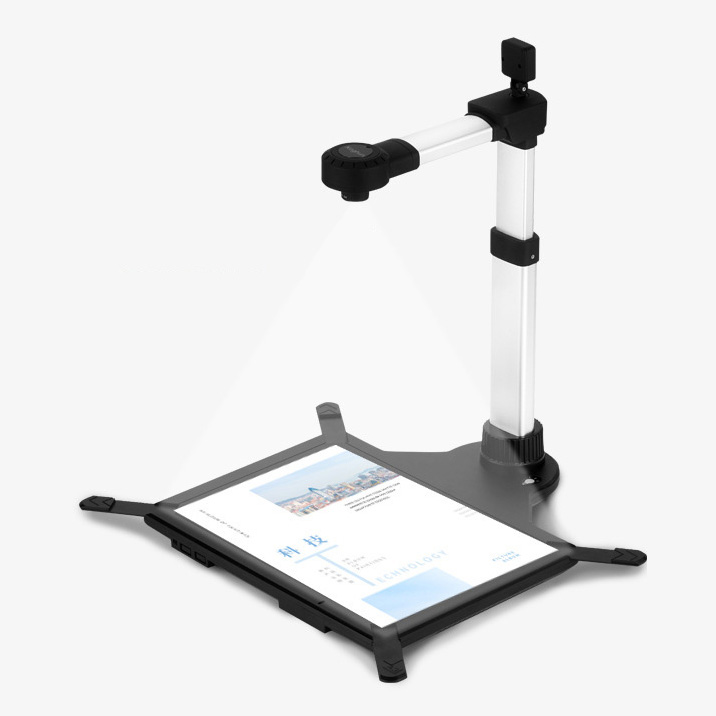
HD Dual Camera 16MP + 2MP Pixels Multifunction Stretchable Smart USB 60 Pages/Min A3/A4 Document Scanner 360 Rotation 180
Best for admissions counters, registrars and training rooms that need a second camera angle. The 16MP main camera, 2MP auxiliary camera, 60 pages/min peak capture and rotating arm support IDs, forms and textbook pages.
- Multi-angle capture for counter workflows
- USB smart connection
- Validate OCR and software integration
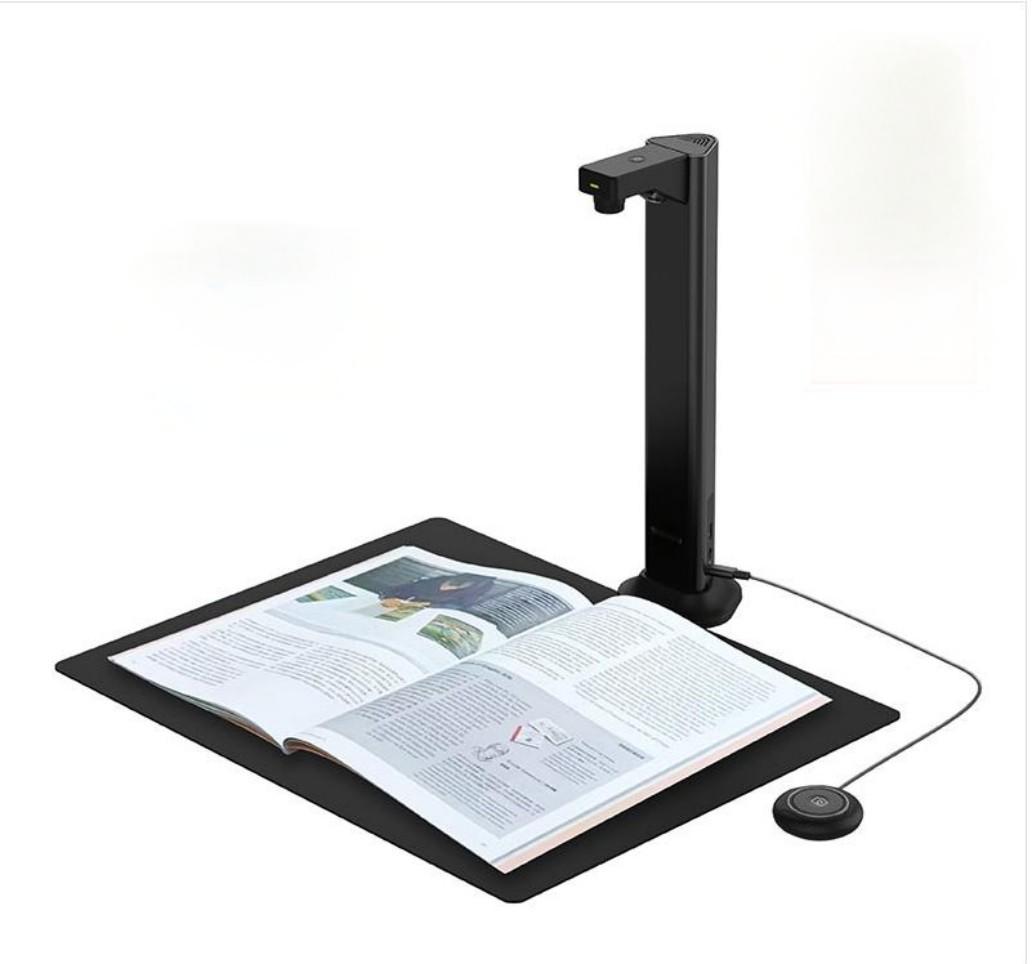
Real 24MP UVC A3 Document Scanner with USB Interface and Text to Speech Feature In-Stock Product
Suited to accessible-learning labs, libraries and document-heavy offices. The 24MP sensor gives A3 pages more pixel headroom for OCR, while UVC/USB simplifies connection to Windows and macOS workstations.
- 24MP A3 capture class
- Text-to-speech feature
- Request sample OCR output
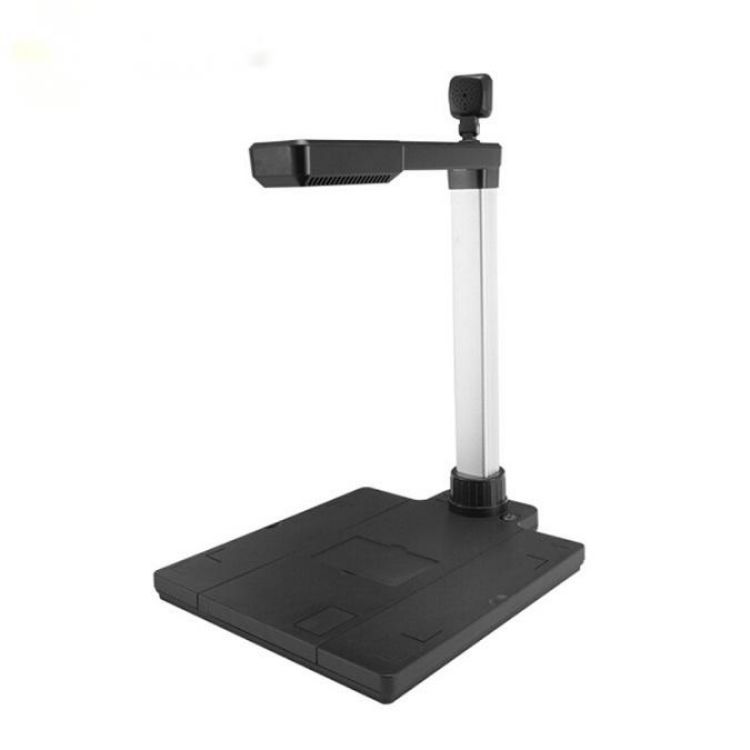
10MP Education Visualizer Scanner Document Management Book Camera USB in Stock
A practical entry point for K-12 classrooms, tutoring centers and staff training rooms. It combines live visualizer viewing with document and book capture for budget-conscious sites that still need a reliable fixed camera.
- 10MP document and book camera
- USB installation
- Good fit for classroom projection
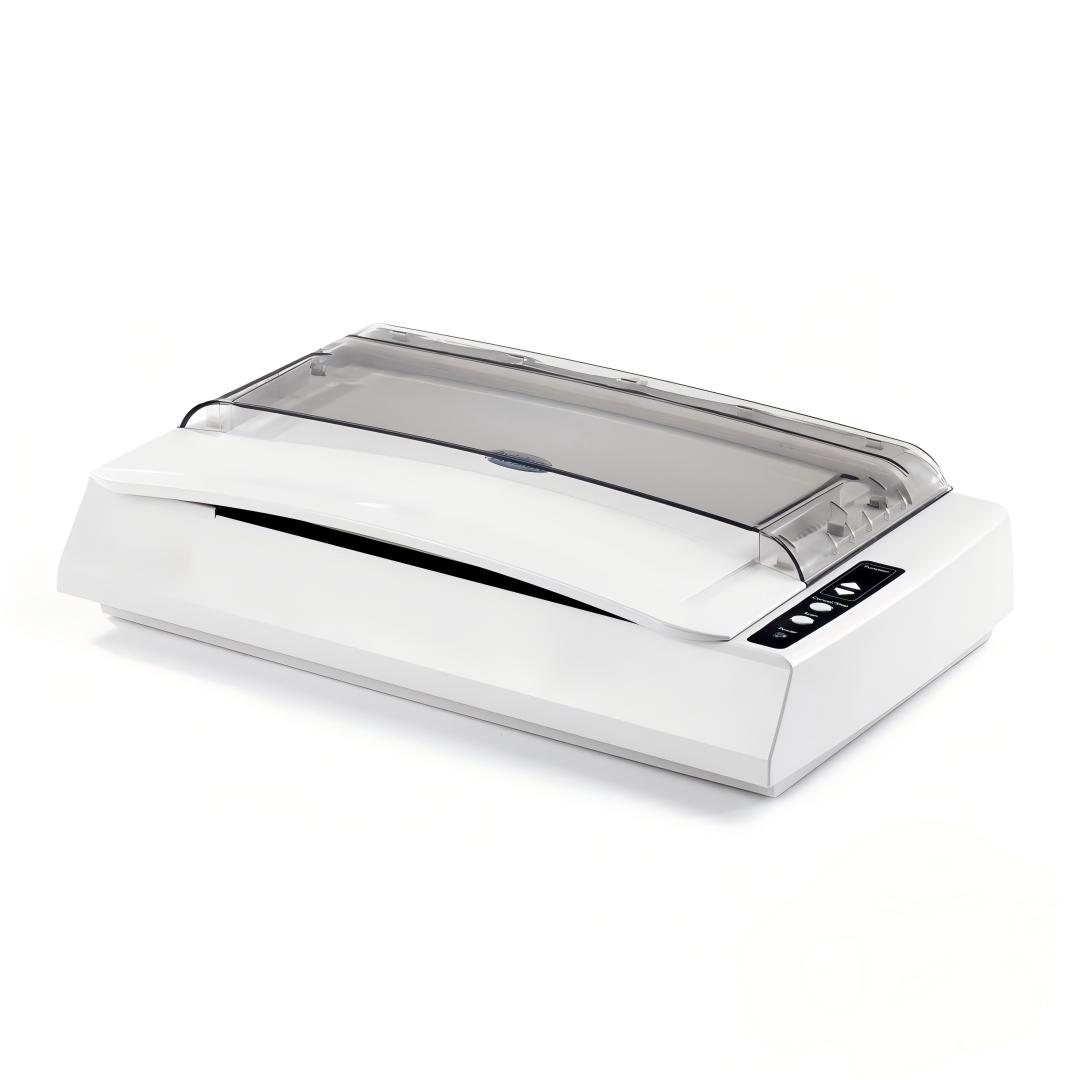
CCD Zero Margin Bookedge Flatbed Scanner A4 600dpi USB Bound Book Scanning No Spine Shadow Library Archive Digitization
Designed for bound books and archival volumes where the gutter must remain visible. The zero-margin bookedge and CCD imaging path help reduce spine shadow, making it easier to digitize fragile A4-sized records for libraries and special collections.
- 600 dpi CCD flatbed capture
- No-spine-shadow bookedge design
- Library and archive digitization
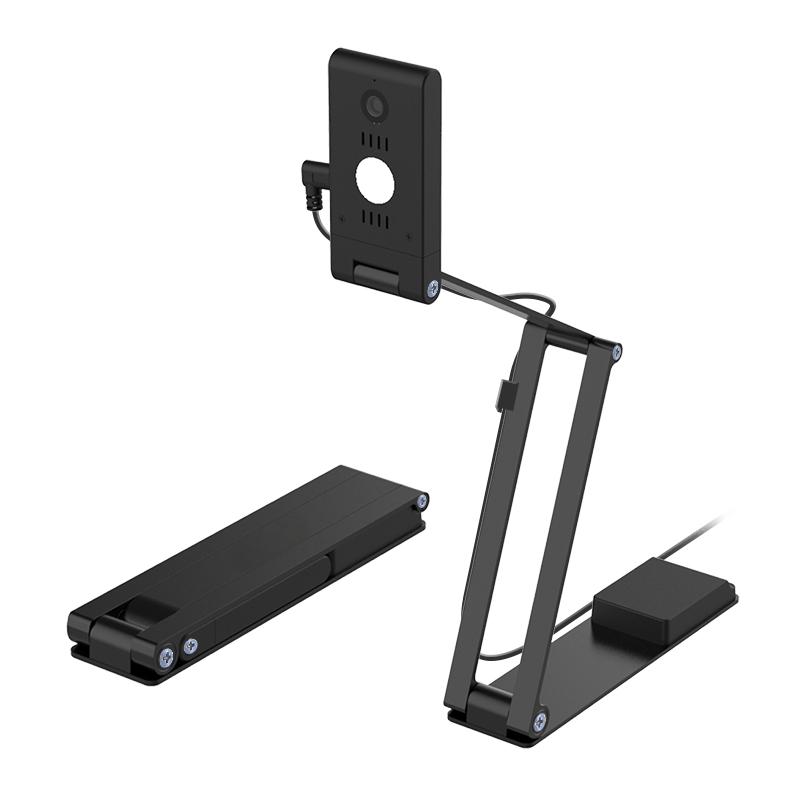
Value Priced 2-in-1 USB Digital Document Camera Visualizer A3 with 5MP 1/4" CMOS Sensor 10x Zoom 1-Year Warranty
A budget-conscious A3 visualizer for small offices, churches, nonprofits and satellite sites that need live projection and basic document capture. The 5MP sensor and 10x zoom are adequate for reading and presentation, but OCR-heavy programs should test output first.
- 5MP 1/4" CMOS sensor
- 10x zoom and USB connection
- 1-year warranty
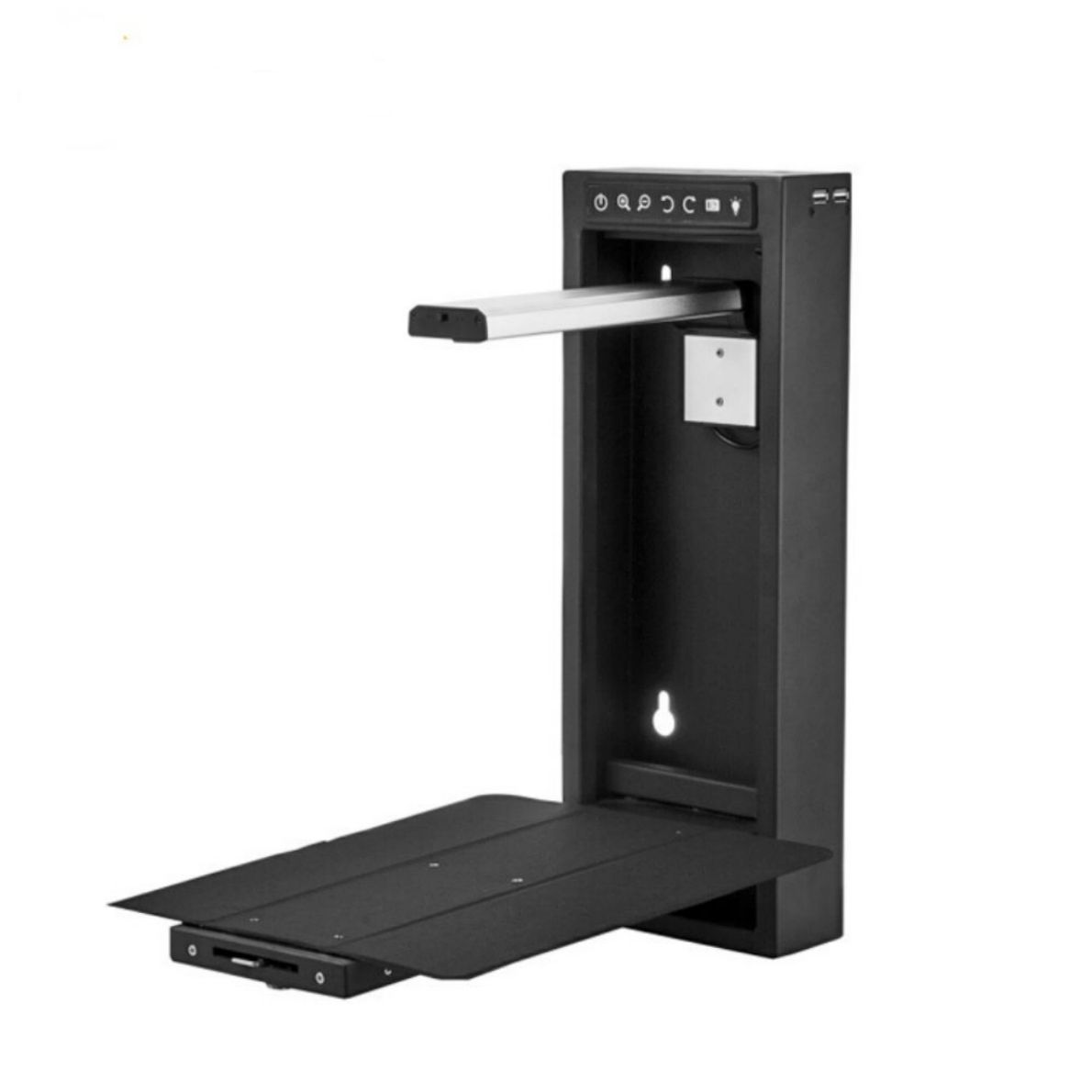
Factory New High Definition Wall Mount Document Scanner USB Interface Visualizer CE Certified 1-Year Warranty High-Speed A4 SDK
Useful for pharmacies, clinics, permit desks and logistics windows where counter space is limited. Wall mounting keeps the camera aligned over A4 documents while the USB interface and SDK path give integrators room to connect the device into a larger workflow.
- High-definition A4 capture
- CE certified and 1-year warranty
- SDK option for integration
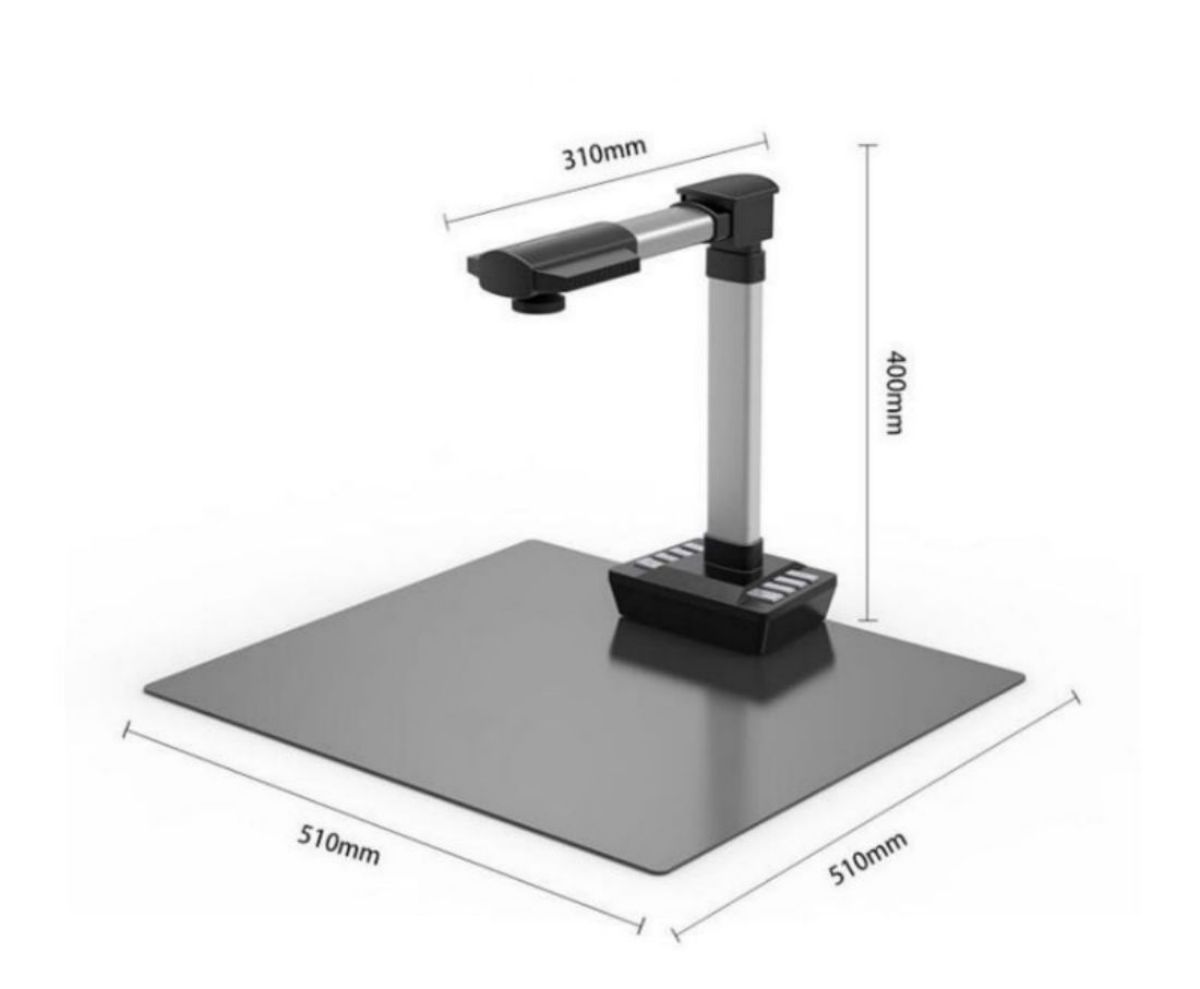
Portable 20MP High-Speed Wireless A3 Document Scanner Professional Book Scanner Foot Pedal USB Interface 24-Bit Color Stock
A mobile capture station for traveling archivists, field enrollment teams, mobile clinics and cross-border documentation projects. Wireless operation and a foot pedal can reduce operator fatigue during repetitive page-by-page scanning, while the 20MP sensor supports A3 book pages.
- 20MP high-speed portable capture
- Wireless and USB interface
- Foot pedal for hands-free scanning
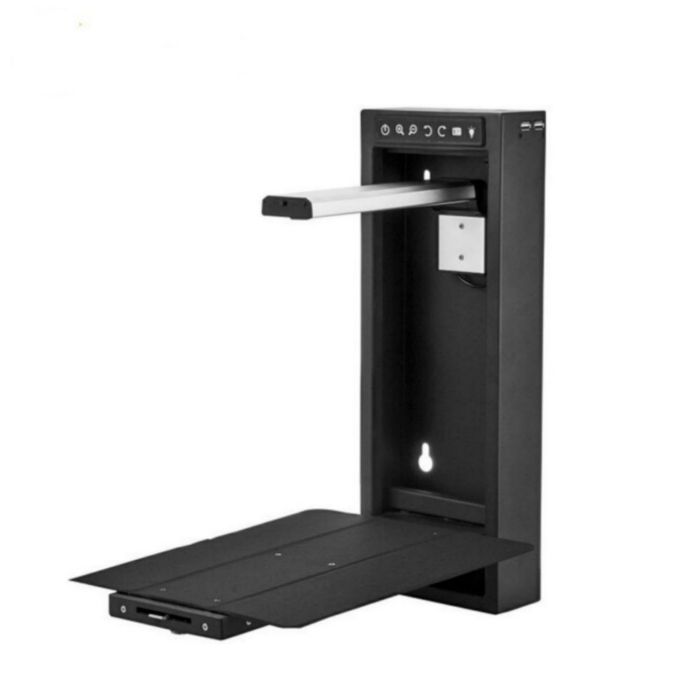
A4 Black USB 5V High-Speed 10MP High-Resolution Document Scanner Wall-Mountable OEM 24 Bit SDK 1-Year Warranty Education Stock
A flexible A4 model for kiosks, school offices, libraries and reseller programs. It supports wall mounting, USB 5V power and OEM/SDK customization on selected projects, making it a candidate for distributed capture programs with repeated workstation layouts.
- 10MP A4 high-resolution capture
- Wall-mountable and USB powered
- OEM and SDK on selected models
How to Match Megapixels to El Paso Document Sizes
Megapixels are useful only when read against the physical page. At 300 dpi, an A4 page needs about 8.7 megapixels, an A3 page needs about 17.4 megapixels, and an A2 sheet needs about 34.8 megapixels. If a tender specifies 300 dpi at A2, a 21MP camera will not meet the requirement no matter how good the lens looks in a brochure.
| Document job | Pixels at 300 dpi | Recommended capture class | Quibow catalogue fit |
|---|---|---|---|
| A4 forms and IDs 210 × 297 mm | 2480 × 3508 ≈ 8.7 MP | 10MP or higher | 10MP education visualizers, A4 wall-mount scanners |
| A3 worksheets and case files 297 × 420 mm | 3508 × 4961 ≈ 17.4 MP | 18MP–24MP | 24MP UVC A3 scanner, 20MP portable book scanner |
| A4 bound books Spine and gutter visible | 8.7 MP at 300 dpi | CCD bookedge or overhead CMOS | CCD zero-margin bookedge flatbed, A4 600 dpi |
| Mixed counter documents IDs, forms, signatures | 200–300 dpi | 5MP–10MP with fixed lighting | 5MP A3 visualizer, 10MP dual-camera scanner, wall-mount A4 |
| A2 maps and newspapers 420 × 594 mm | 4961 × 7016 ≈ 34.8 MP | 48MP for archival masters | Confirm A2-specific models with the supplier before quoting |
Reality check: the “60 pages/min” specification in a product title is a peak capture figure, not a guaranteed operator throughput. Staff handling, page turning, OCR processing, network speed, PDF creation and exception review all reduce daily output. For a realistic plan, multiply peak speed by 25–50% and test with your own documents.
Document-Capture Trends Shaping El Paso Buying Decisions
These trends are practical, not theoretical. They affect how a school, archive, clinic, law office or cross-border logistics team writes its requirements and evaluates the total cost of ownership.
Bilingual OCR Validation
English and Spanish records are common in the El Paso region. Buyers are asking for OCR output that can be tested with real bilingual forms, not just a generic language list. Request sample PDFs and confirm the OCR language pack before committing.
Hybrid Classrooms & Training Rooms
Schools and workforce programs want a visualizer that works for in-room projection and remote sessions. HDMI, VGA, USB/UVC and optical zoom are now practical evaluation points, especially when a camera must serve both document viewing and demonstration objects.
Public-Sector Retention & Audit Readiness
Government, courts and districts need defensible records and clear retention practices. A camera alone does not create compliance; the document-management system, naming rules, access controls and audit trail do. The camera must fit that system.
Distributed Front-Desk Capture
Instead of routing every document to one central scanner, clinics, permit desks and campuses are placing compact cameras at the point of service. Wall-mount models, USB power and fixed focus help standardize these distributed workstations.
Non-Destructive Book Digitization
Libraries and special collections continue to move away from pressing books flat. Overhead book cameras and bookedge flatbeds let institutions capture pages while preserving bindings. Resolution, lighting uniformity and curve correction matter more than a decorative spec sheet.
Cross-Border Documentation Speed
Trade and logistics teams need fast capture of shipping documents, IDs and invoices. A camera can reduce handling time, but import/export compliance depends on accurate declarations, broker review and lawful processes. Use technology to support accuracy, not to bypass controls.
Questions El Paso Buyers Ask Before Requesting a Quote
Clear answers reduce quotation cycles. If your organization needs a bid specification, sample scan, export document checklist or OEM discussion, start with the catalogue request and include your document sizes and daily volume.
Do you ship desktop document cameras to El Paso, Texas?
Yes. Quibow exports internationally and supports delivery terms such as FOB, EXW and DDU. Exact transit time, duties, tariffs, customs clearance and the U.S. importer-of-record arrangement depend on your carrier, broker and Incoterm. El Paso buyers should confirm all landed-cost and customs details with their freight forwarder before placing an order.
What is the minimum order quantity for these models?
Published information for most book scanners, A2 large-format scanners and flatbed scanners starts from 1 piece or 1 set. Several document camera models start from 2 pieces. OEM/ODM quantities are confirmed per project because logo, packaging, housing color and SDK work affect setup.
Can you support English and Spanish OCR or SDK integration?
OCR and SDK requirements must be validated against the specific model and software version. Quibow supports OEM/ODM and SDK integration on selected products. For El Paso workflows, send a representative English/Spanish form and ask for a sample scan plus OCR output so your team can check accuracy before a district-wide rollout.
Are the cameras compatible with Windows and macOS?
Many listed models, including several A2 large-format scanners and the 1200 DPI A3 flatbed scanner, support Windows and macOS; some are verified on Apple M1 Macs according to the published product information. Compatibility should be confirmed per model before shipment. UVC models are often easier to test quickly with existing workstations.
What warranty and after-sales support is available?
Listed models such as A3 flatbed scanners, A2 overhead scanners and the S2060W ADF scanner commonly carry a 1-year warranty, backed by remote technical support. Confirm the warranty term, covered components, shipping responsibility and support escalation path in the quotation or contract.
Can we receive sample scans, specifications and documents for procurement?
Yes, request a model shortlist with your document sizes, daily volume, required dpi, software environment and output format. A useful package would include product specifications, sample images, warranty terms, available certification details, packing information and export documentation. Current certificate scope and compliance claims should be independently verified for your application.
Inside the Quibow Supply Model Behind the Catalogue
Guangzhou Quibow Electronic Co., Ltd. is an onsite-checked supplier founded in 2020 and based in Guangzhou, Guangdong, China. Its published profile lists a 5–10 person team, annual revenue in the US$1M–US$2.5M range and main markets in Eastern Europe, North America and South America. Those facts matter because a document-camera supplier must answer technical questions, prepare export documents and support a warranty after the sale — not merely quote the lowest unit price.

Technology focus: image acquisition and conversion
Quibow develops and supplies photoelectric information equipment, including high-speed document cameras, book scanners, flatbed scanners and ID-card recognition high-speed cameras. Its product solutions are built on CIS, CMOS and CCD imaging platforms, covering the cycle from product design and development to production coordination, export sales and after-sales support.
For El Paso procurement, that means a smaller, focused supplier relationship where the same team can discuss sensor choice, sample scans and export terms. It also means buyers should be specific: model numbers, page size, target dpi, software, volume and delivery deadline help avoid assumptions.
Multiple Sensor Platforms
CIS, CMOS and CCD options allow the recommendation to follow the job: ADF batches, overhead books, visualizers, wall-mount counters or bookedge archival capture. Buyers are not forced into one sensor type for every department.
OEM / ODM and SDK Support
Logo printing, packaging, housing color, capture-software branding and SDK integration are available on selected models. This is valuable for El Paso resellers, systems integrators and institutions that need the device to fit an existing software stack.
Fast Response Discipline
The supplier profile reports an average response time of 1 hour or less and a 100% message response rate. For a buyer comparing three quotation paths, speed matters, but the quality of the answer matters more: ask for model-specific evidence.
Repeat-Buyer Experience
The published buyer reorder rate is 27%. That does not remove the need for due diligence, but it is a useful signal to investigate. Ask what consumables, accessories, firmware or software dependencies affect long-term ownership.
Quality Inspection and Warranty
Listed models commonly include a 1-year warranty. For project orders, confirm the inspection checklist: focus, lighting uniformity, driver installation, capture speed, accessory completeness and export packing. Remote support should be part of the purchase discussion.
Export Terms for B2B Buyers
Supported payment methods include T/T, L/C, PayPal and Western Union, with USD, EUR, HKD and CNY pricing possible. Delivery terms include FOB, EXW and DDU. El Paso buyers should coordinate the importer of record, customs broker and landed-cost assumptions early.
A Simple Four-Step Path from Requirement to Delivery
For El Paso school districts, archives, clinics and integrators, a clear process reduces the risk of buying the wrong camera or discovering a software gap after delivery.
Requirement Review
Define page size, daily volume, binding type, OCR languages, operating system, output formats and procurement deadline.
Model Matching
Compare sensor, resolution, lighting, portability, wall-mount or bookedge design. Request sample scans at your target dpi.
OEM / QC Confirmation
Confirm logo, packaging, housing color, software branding, SDK scope, inspection checklist and warranty responsibility.
Export & Support
Agree Incoterm, payment method, packing, shipping documents and remote technical support before production or shipment.
Request a Document-Camera Shortlist for Your El Paso Project
Send your page sizes, daily volume, OCR needs, software environment and target delivery date. Quibow can shortlist models from the eight-product series above and prepare sample-scan or specification requests for your procurement team.