Eight High-Speed Scanner Models for Frankfurt Procurement Teams
Every model below links to its current product page. For buyers comparing an A3 book scanner, an A4 wall-mounted document camera or a portable visualizer, start with the paper format and daily capture volume, then use the resolution guidance below to confirm true dpi.
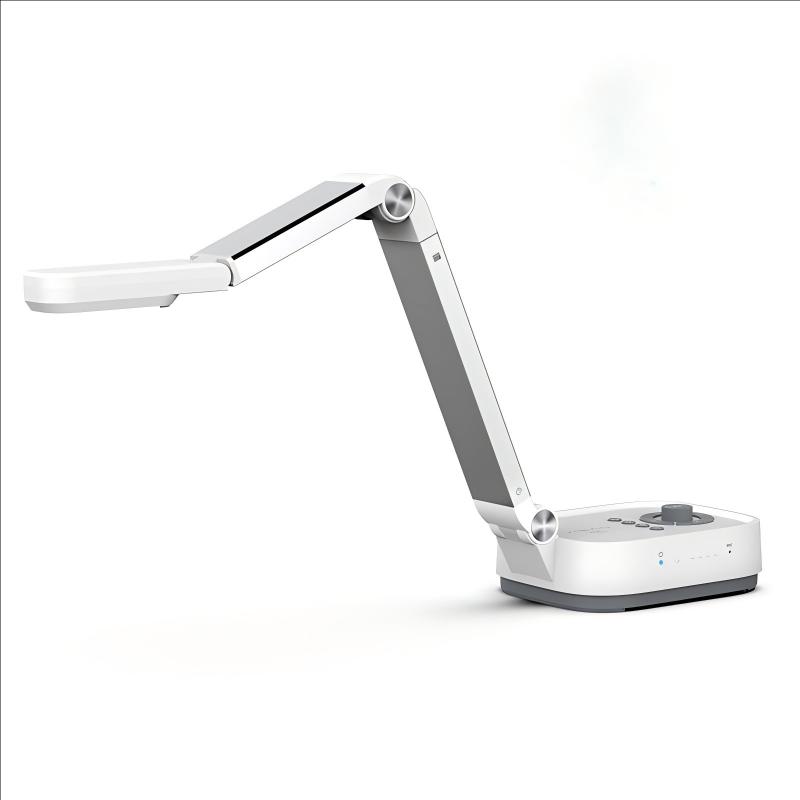
16MP 3D Desktop Visualizer Document Camera with Microphone, 120X Zoom, VGA, A3 Scan Size, LED Light & Foldable
- Foldable LED-light visualizer for classrooms, meetings and live document review.
- Microphone and A3 capture area support hybrid teaching and product demonstrations.
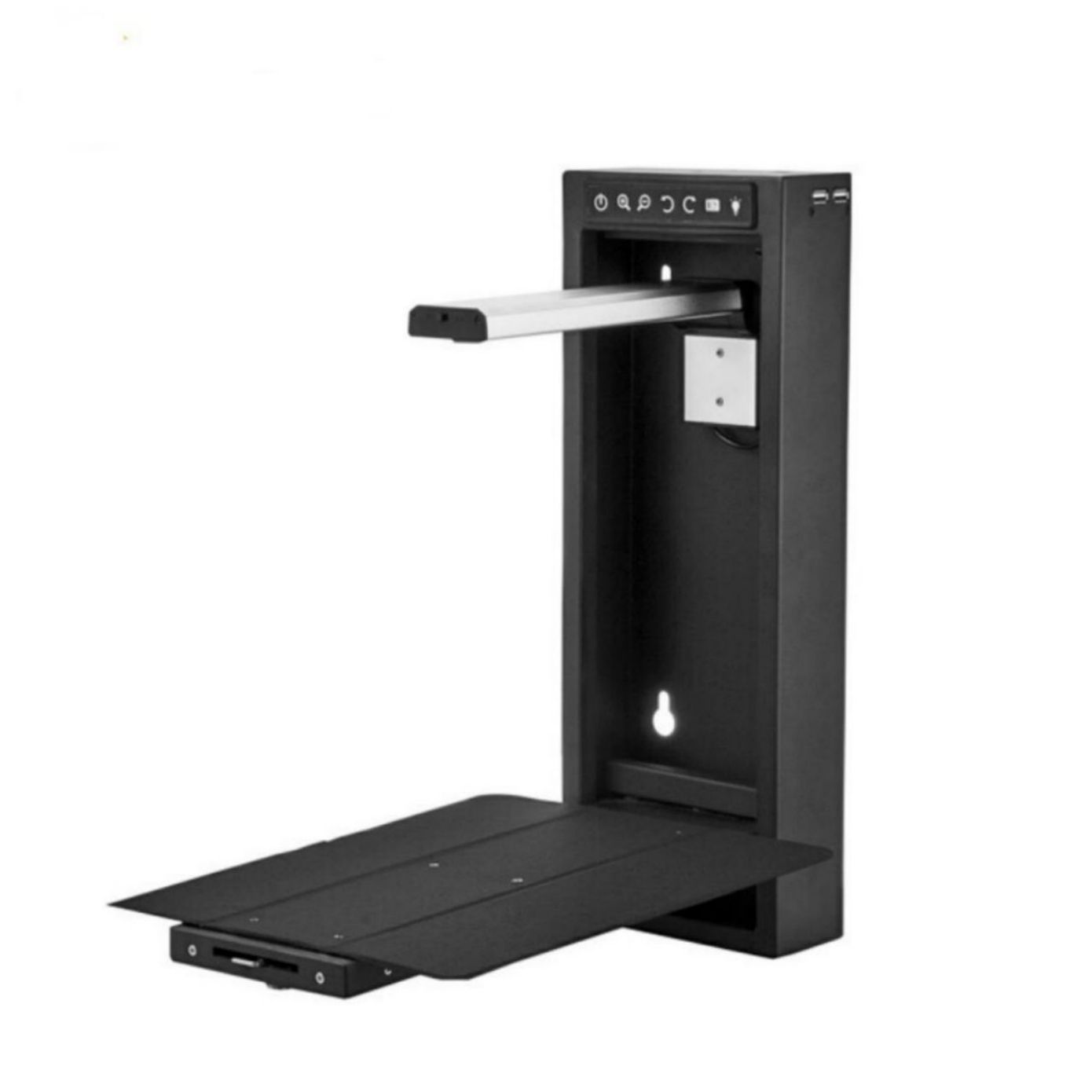
10MP USB CMOS Document Camera Wall Mount Scanner with 1-Second Scan Speed, 1-Year Warranty, A4, SDK
- Fast 1-second capture for counter service, classroom demonstration and hybrid work.
- Wall-mounted A4 format supports SDK integration and space-saving installation.
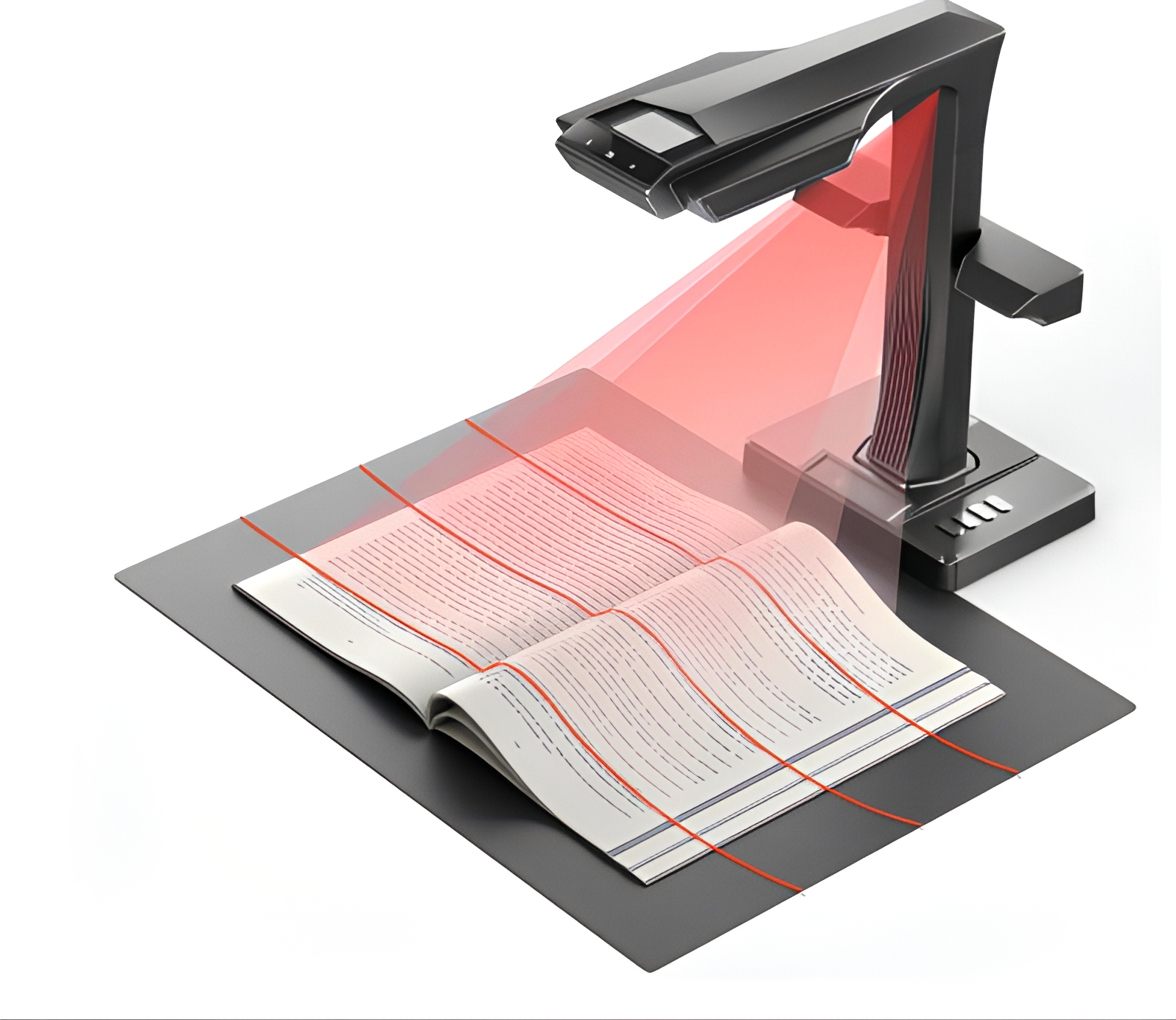
Book Scanner 38MP A3 Document Camera with Auto Curve Flattening, High-Speed Overhead Scanning
- 38MP overhead capture for bound books, periodicals, fragile paper and office records.
- Auto curve flattening helps reduce spine distortion while protecting the binding.
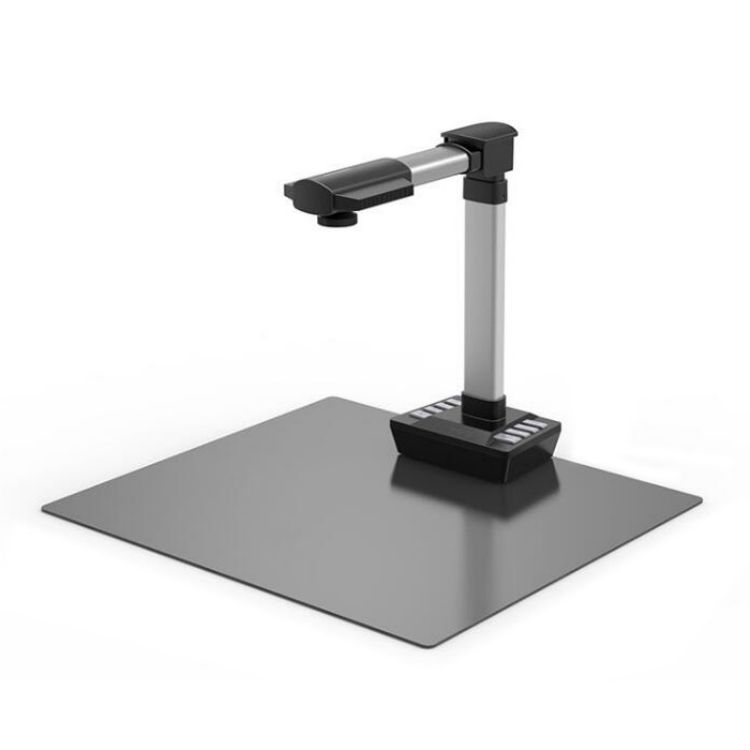
High Resolution Portable A3 Library Book Scanner with Foot Controller, USB Interface
- Hands-free foot control is useful for repetitive library, archive and registry capture.
- Portable A3 design supports mobile digitization projects and limited desk space.
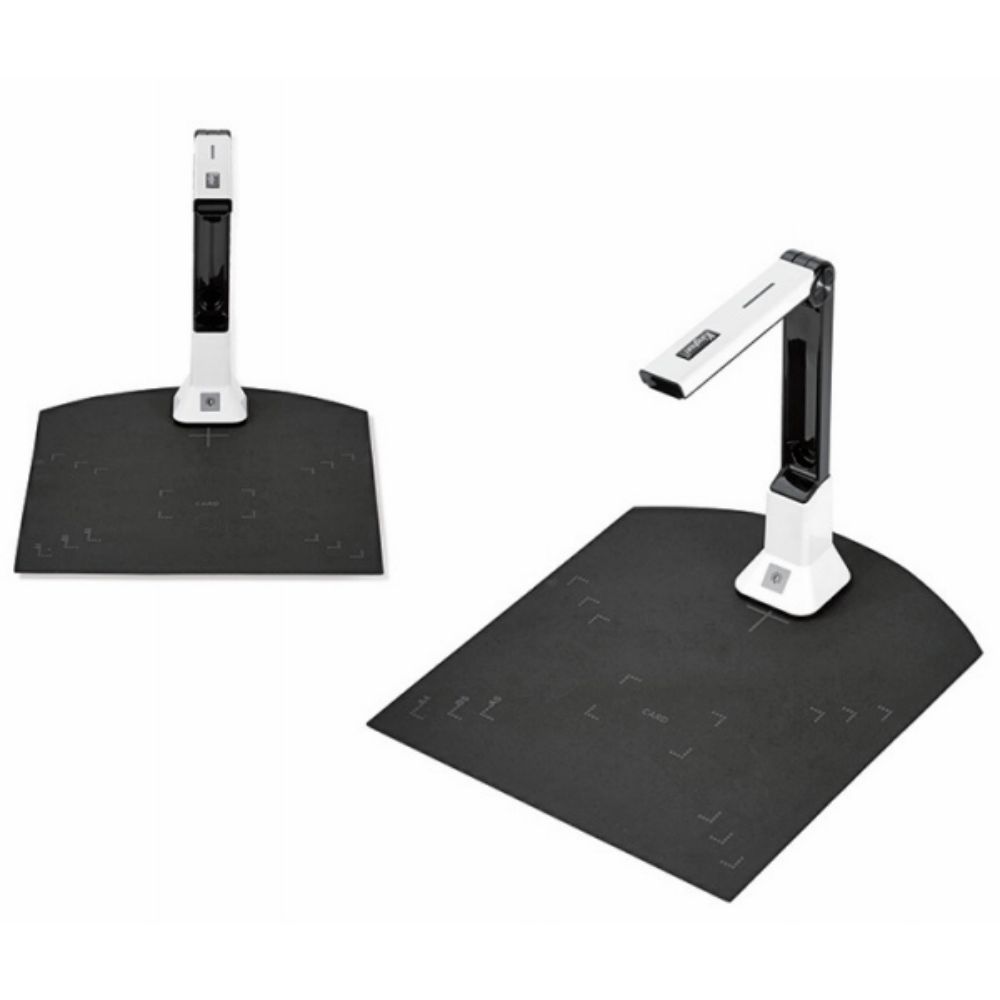
Wholesale 5MP USB Light CMOS A4 Portable Handheld Document Scanner, 1-Second Scan, CE Certified
- Compact A4 handheld/USB scanner for field teams, service desks and quick intake.
- CE certification and 1-second scan speed suit pilot projects and volume rollouts.
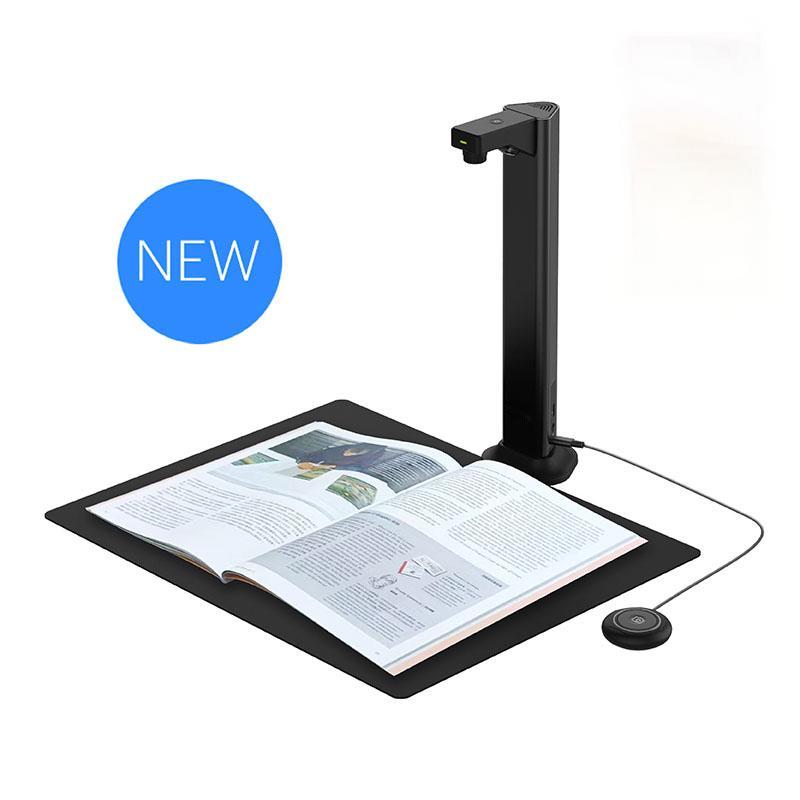
A3 18MP USB Aluminum Document Scanner with UVC Camera, 1s Scan Speed, OCR & Text to Speech
- Aluminum body and UVC camera support stable office, archive and counter installations.
- OCR and text-to-speech features support accessibility and searchable document workflows.
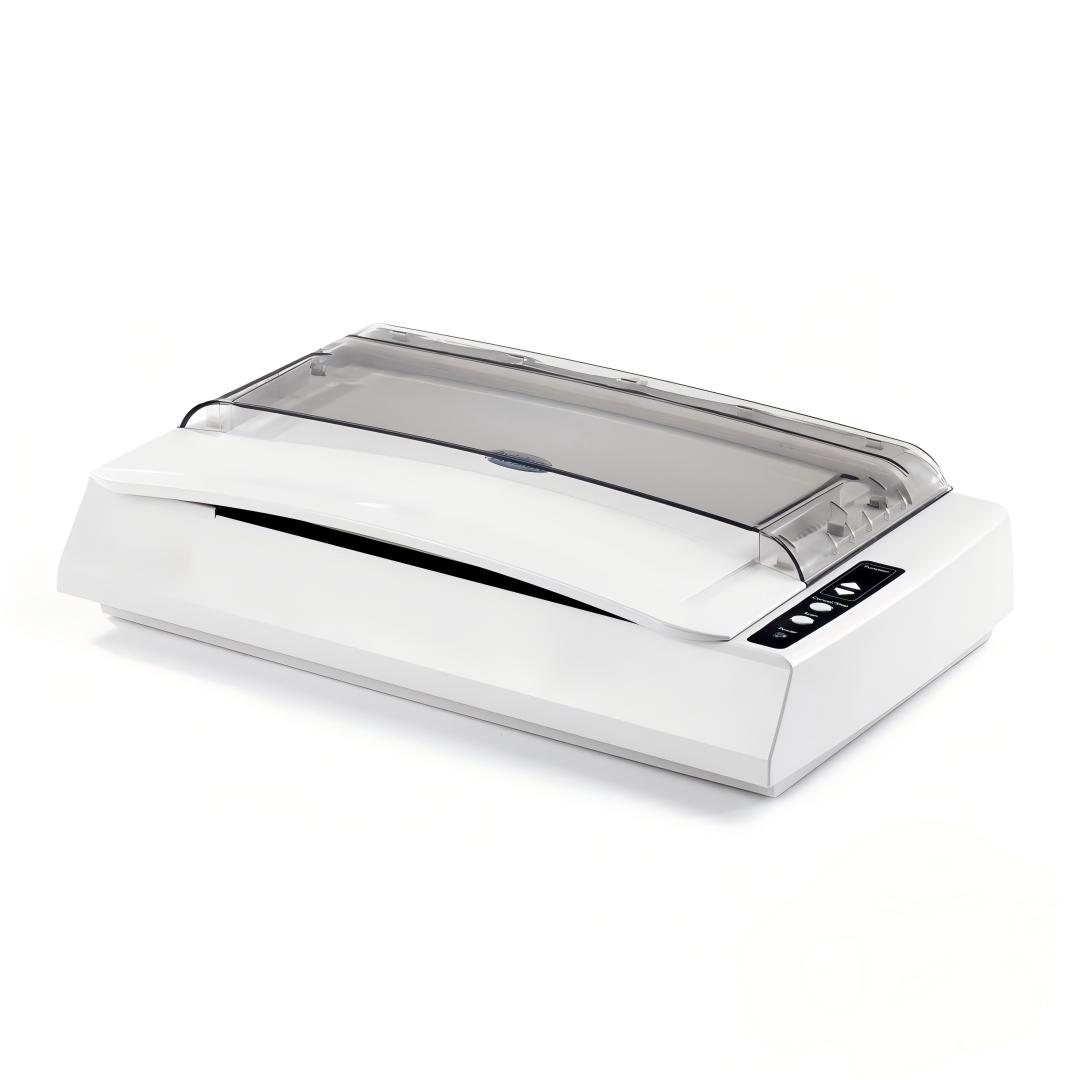
CCD Zero Margin Bookedge Flatbed Scanner A4 600dpi for Bound Book and Archive Digitization
- Zero-margin bookedge design helps scan bound volumes without pressing the spine flat.
- CCD imaging and 600dpi output support library, archive and special-collection digitization.
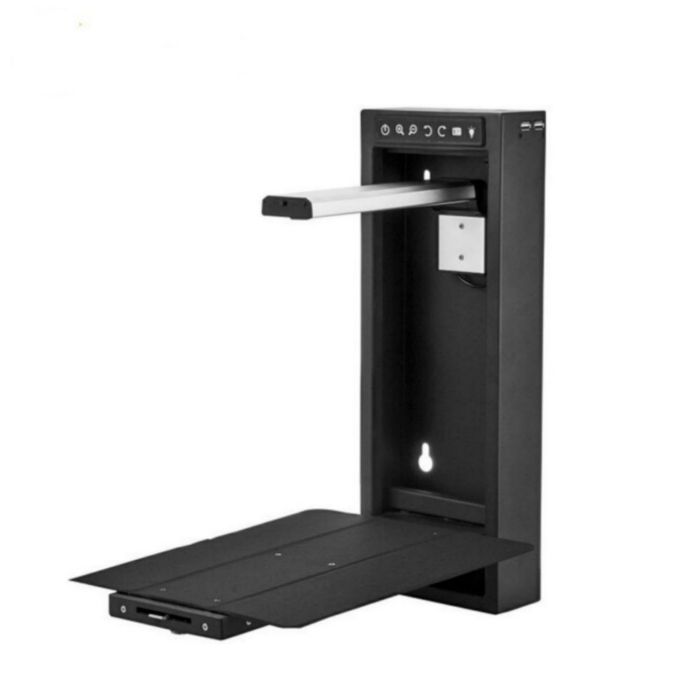
A4 Black USB 5V High-Speed 10MP High-Resolution Document Scanner, Wall-Mountable OEM, 24 Bit, SDK
- 10MP A4 capture for ID cards, forms, invoices and service-counter digitization.
- Wall-mountable OEM design, 24-bit output, SDK and 1-year warranty support integration.
Why Frankfurt Buyers Specify a High-Speed Scanner Supplier Before a PO
Frankfurt am Main sits at the centre of the Rhine-Main region, where banks, insurers, universities, museums, municipal registries, publishers and logistics teams all manage high volumes of paper, hybrid records and time-sensitive service counters.
In this market, a high-speed scanner is rarely a standalone peripheral. It is a workflow gate. A 10MP A4 wall-mounted document camera can capture an identity document or application form at a service counter in about one second. An A3 overhead book scanner with curve flattening can protect a fragile bound volume while producing OCR-ready files for a digital archive. A high-resolution A2-capable system can capture full newspaper spreads, maps and engineering drawings without stitching.
Frankfurt procurement teams usually compare total cost of ownership, not only the unit price. They ask about CE marking, RoHS documentation, EU power adapters, German and English OCR, Windows and macOS compatibility, SDK access, invoice and customs data, spare-part planning and remote support across time zones. That is a healthy evaluation process, and it is why product claims should be specific, verifiable and tied to a real document workflow.
Quibow is a Guangzhou-based imaging equipment supplier and OEM/ODM partner, not a local Frankfurt factory. Our company profile lists the business type as a trading company with onsite verification, and we coordinate production, export sales and after-sales support across CIS, CMOS and CCD imaging platforms. This distinction matters for E-E-A-T: buyers should know who is accountable, where support originates and which records can be checked independently.
Where High-Speed Scanners and Document Cameras Fit in Frankfurt Workflows
Frankfurt buyers often need one device category to solve several departmental problems. These are the most common application scenarios raised by libraries, educational institutions, financial teams, public offices and integrators.
Libraries, archives & museums
Non-contact overhead and bookedge scanners reduce stress on bindings while supporting OCR, searchable PDF and long-term preservation files. Frankfurt’s library and archive ecosystem benefits from controlled lighting and repeatable capture.
Banks, insurance & finance
Counter teams can capture ID cards, signed forms and correspondence with A4 wall-mounted cameras or A3 overhead scanners. Local IT teams should confirm data storage, encryption and retention rules before deployment.
Universities & training rooms
Visual presenters and document cameras with optical zoom make textbooks, experiments, 3D objects and handwritten notes visible on projectors, interactive displays and video-conference platforms.
Public administration & registries
Municipal offices and registry teams often need A3/A2 capture, clear audit trails and consistent file naming. Overhead scanners help process bound records, maps and plans without damaging originals.
Media, publishers & logistics
Newspapers, printed archives, route plans, shipping documents and quality records can be digitized quickly. A2-capable models are recommended when broadsheets or large drawings must stay intact in one shot.
System integrators & distributors
OEM/ODM branding, UVC camera access and SDK support allow Frankfurt-area resellers to embed scanners into kiosks, document-management platforms and custom capture applications.
Localized Development Trends Shaping Scanner Demand in Frankfurt
The purchasing conversation in Frankfurt is moving away from “how many megapixels?” toward “which document workflow can this device make auditable, searchable and secure?”
Hybrid paper-to-digital work
Banks, insurers, law firms and shared-service centres still receive signed paper and mixed-format records. They need fast capture at the counter and batch-ready searchable PDFs for downstream teams.
Audit-ready invoices and records
Germany’s B2B e-invoicing timetable and disciplined record-keeping expectations are pushing buyers to review scanning quality, OCR accuracy, naming rules and export formats. Legal obligations should always be confirmed with a qualified adviser.
Data-control questions
Frankfurt IT teams ask whether capture software writes files locally, whether cloud access is optional and how retention rules are enforced. Quibow can discuss local storage and export options; GDPR compliance remains the buyer’s responsibility.
SDK and OEM integration
Rhine-Main integrators want devices they can brand, embed and support. SDK documentation, UVC compatibility, logo/packaging options and remote engineering communication are becoming selection criteria alongside hardware specs.
How to Calculate the Real Resolution You Need for A4, A3 and A2 Scanning
The most common specification error in scanner tenders is mixing page format with sensor resolution. Megapixels only matter in relation to the physical document size and the required output resolution.
Use a simple formula: pixels = document width in mm ÷ 25.4 × dpi, and repeat for the height. A 300 dpi A4 page needs about 2480 × 3508 pixels, or roughly 8.7MP. A 300 dpi A3 page needs about 3508 × 4961 pixels, or roughly 17.4MP. A 300 dpi A2 page needs about 4961 × 7016 pixels, or roughly 34.8MP. If the sensor must cover the entire page with a margin, specify higher resolution or accept a lower effective dpi.
For OCR and on-screen access, 200–250 dpi may be sufficient. For preservation masters, public tenders and high-quality print reproduction, 300 dpi or higher is commonly requested. A 21MP camera covering a full A2 sheet delivers roughly 225–235 dpi; a 48MP A2 system is the safer choice when 300 dpi is mandatory.
Frankfurt buyers should also test curve flattening, finger removal, page-edge detection, OCR language packs, footprint, power requirements and software compatibility. A calibrated sample scan is worth more than a headline megapixel number.
| Document size | Pixels at 300 dpi | Recommended sensor | Practical note |
|---|---|---|---|
| A4 210 × 297 mm | 2480 × 3508 ≈ 8.7MP | 10MP or higher | Good for ID cards, forms, invoices and counter service. |
| A3 297 × 420 mm | 3508 × 4961 ≈ 17.4MP | 18–24MP | Choose 24MP when margins or double-page spreads must be retained. |
| A2 420 × 594 mm | 4961 × 7016 ≈ 34.8MP | 48MP for ≈300–350 dpi | Recommended for newspapers, maps, posters and archive masters. |
| Photos & art | 600–2400 dpi optical | Flatbed with 48-bit color | Use a flatbed when surface texture, color fidelity and controlled lighting matter. |
CIS, CMOS or CCD: Which Imaging Platform Fits the Frankfurt Project?
Quibow works across CIS, CMOS and CCD imaging platforms. Each platform has a clear strength; choosing correctly avoids budget waste, integration rework and user frustration.
CIS contact image sensor
A slim linear sensor that reads the page at close range. It is compact, low-power and efficient on sheet-fed scan paths.
- Best for
- High-volume office batches, invoices, contracts and ADF workflows.
- Example use
- Document-heavy finance and administrative teams that need fast duplex capture.
CMOS area sensor
Captures the whole page from above in one shot, so books, maps and files do not need to be pressed flat against glass. Software can flatten curves and clean backgrounds.
- Best for
- Bound books, newspapers, live teaching, counter services and visualizers.
- Example range
- 10MP–48MP document cameras, A3 overhead book scanners and 4K visual presenters.
CCD linear sensor
A moving optical carriage with greater depth of field and stable color, tolerant of slightly raised originals such as book gutters and artwork surfaces.
- Best for
- Photos, art, bookedge scanning and archive work where spine shadow must be avoided.
- Example use
- Zero-margin bookedge flatbed scanners for bound-volume digitization.
What Frankfurt Procurement Teams Should Verify Before Ordering
Use this checklist to compare any overseas supplier, including Quibow, on the same evidence base. It reduces ambiguity and makes internal approval easier.
Commercial & compliance documents
Request CE and RoHS information, model-level test reports, EU plug options, packaging data, HS code guidance, EORI details for the importer and clear warranty terms. WEEE/EAR and packaging obligations depend on the importer role, so confirm the responsible party before shipment.
Power, network & software
Confirm voltage, USB or HDMI requirements, Windows and macOS compatibility, driver installation, OCR languages, SDK availability and whether capture software can write files locally. For finance and public-sector users, add IT security review and retention rules.
Pilot test & acceptance criteria
Send representative documents: a thick bound book, a creased map, a glossy photo, a handwritten form and the largest required page. Agree acceptance metrics for capture speed, effective dpi, OCR accuracy, edge detection and repeatability.




Guangzhou Quibow Electronic Co., Ltd.
Quibow is a technology-driven supplier focused on image data acquisition and conversion. The team develops and supplies photoelectric information equipment, including high-speed document cameras, book scanners, A3/A2 overhead scanners, flatbed scanners, visual presenters and ID-card recognition cameras. We work across CIS, CMOS and CCD platforms and support projects from product selection and production coordination to export sales and after-sales communication.
For Frankfurt buyers, the practical advantages are clear: fast response, model-level specification support, OEM/ODM flexibility, SDK discussion, stock availability and a 1-year warranty on listed models. The supplier profile also records onsite verification, a 100% message response rate, a ≤1h average response time and a 27% buyer reorder rate. These are platform records, not marketing slogans, and they should be checked directly before a purchase decision.
We are transparent about the operating model: Quibow is a Guangzhou-based supplier and production-coordination partner, not a local Frankfurt manufacturer. Buyers who need a factory-direct program can discuss OEM branding, packaging, software identity, SDK integration and inspection checkpoints with our team, then verify platform records and sample scans before committing to volume.
From Frankfurt Requirement to Delivery in Five Practical Steps
A transparent workflow helps procurement, IT and operations teams understand what happens after the first inquiry.
Requirement review
Document size, daily volume, operating system, OCR language, output format and data-storage rules are confirmed.
Model matching
We recommend sensor platform, resolution and mounting style, with sample scans or video tests where needed.
Customization
Logo, packaging, housing color, software branding, OCR languages and SDK integration are scoped per project.
Quality inspection
Focus, lighting uniformity, driver installation, capture speed and accessories are checked before packing.
Shipping & support
Export packing, documentation and remote setup support are coordinated, with a 1-year warranty on listed models.
Payment methods
T/T, L/C, PayPal and Western Union.
Payment currency
USD, EUR, HKD and CNY.
Delivery terms
FOB, EXW and DDU. Confirm DDP availability for Frankfurt delivery before PO.
Independent Records Frankfurt Buyers Can Check
Trust should be verifiable. These platform records help buyers check supplier identity, trading activity and feedback before requesting a quotation.
Supplier Assessment
Onsite check confirming business premises and legal status.
View report →Credit Overview
Platform credit profile and trading reliability indicators.
View credit →Ratings & Reviews
Feedback left by verified buyers after completed orders.
Read reviews →Trade Capacity
Export markets, trade terms and logistics capability.
View capacity →Questions Frankfurt Buyers Ask Most
These answers reflect common purchasing, compliance and support questions. Final specifications, pricing, lead time and compliance documents are confirmed in the quotation.
Do you ship high-speed scanners to Frankfurt am Main and across Germany?
Yes. Quibow exports imaging equipment from Guangzhou to buyers in Germany and other EU markets. We can quote under EXW, FOB or DDU terms, and DDP or courier options can be discussed for Frankfurt delivery. Share the delivery postcode, document sizes and expected volume so the quotation includes the correct shipping assumptions, packaging requirements and electrical accessories.
Which scanner is best for Frankfurt libraries, universities, public offices and financial teams?
The decision should follow the document format. For bound books and fragile records, choose a CMOS overhead book scanner or a CCD zero-margin bookedge flatbed. For A4 ID cards, forms and counter capture, use a 10MP wall-mounted document camera. For classrooms and visual presentations, choose a 16MP visualizer or 4K document camera. For A2 newspapers, maps and wide drawings, specify a 48MP A2-class model and confirm effective dpi with a sample scan.
Can you support German and English OCR, local data storage and Windows or macOS environments?
Many models support Windows and macOS, and selected products offer OCR output, UVC camera access or SDK integration. OCR language packs, exact software versions and local-storage behaviour must be confirmed per model before order. For Frankfurt financial, legal or public-sector users, involve IT early and specify whether files must remain on an internal network, whether cloud access is prohibited and which retention rules apply.
What compliance and electrical requirements should we include in a Frankfurt purchase?
Ask for model-level CE and RoHS information, applicable test reports, EU plug options and product documentation. Confirm who acts as the importer of record for EORI, VAT, WEEE/EAR and packaging compliance, because these responsibilities depend on the commercial structure and importer role. Quibow can provide product data to support your registration and customs process, but legal and tax obligations should be confirmed with your qualified advisers.
What are the minimum order quantity, payment terms and delivery terms?
Most stock book scanners, A3/A2 overhead scanners and flatbed scanners start from 1 piece or 1 set. Several document camera models start from 2 pieces. OEM/ODM quantities are confirmed per project. We accept T/T, L/C, PayPal and Western Union in USD, EUR, HKD or CNY, with FOB, EXW and DDU delivery terms. Confirm current stock, production lead time and shipping method before issuing a purchase order.
What warranty and after-sales support are provided?
Listed models such as the A3 flatbed scanners, A2 overhead scanners, CCD bookedge scanner and selected document cameras come with a 1-year warranty, backed by remote technical support. For Frankfurt buyers, we recommend agreeing on a pilot acceptance checklist, a spare-unit strategy for critical deployments and an escalation contact before rollout. Consumables, accidental damage and local on-site service should be clarified in the quotation.
Can Quibow support OEM/ODM and SDK integration for Rhine-Main system integrators?
Yes, selected models support OEM/ODM discussions including logo printing, packaging, housing color, software branding and SDK integration. UVC document cameras can be attractive when an integrator wants standard video-class access; SDK-based models may offer deeper capture control. Share your operating system, programming environment, data format and volume forecast so our team can confirm feasibility before quotation.
How can we verify image quality and avoid a failed scanner purchase?
Do not evaluate from catalogue images alone. Send representative samples: a thick bound book, a creased A2 map, a glossy photo, a handwritten form and a dense invoice. Ask for sample scans, a live video demonstration or a pilot unit. Confirm effective dpi, capture time, OCR accuracy, edge detection, lighting uniformity, software compatibility and export format. A structured acceptance test is the fastest way to reduce procurement risk.
Request a High-Speed Scanner Quotation for Frankfurt
Share your document sizes, daily capture volume, required resolution, OCR languages, software environment and delivery postcode. Our team will recommend the right scanner or document camera, confirm available compliance documents and prepare a quotation with delivery terms suitable for your Frankfurt purchase.