A practical OEM USB scanner partner for Sapporo’s paper-to-digital workflows
Sapporo organizations rarely buy a scanner as an isolated gadget. A ward office or citizen-service counter needs a fast A4/A3 capture station for forms, identification documents and supporting paperwork without slowing the queue. A university or training centre needs a visualizer that can show a textbook page, a small prototype or a lab sample to a hybrid class. A library or local archive needs non-contact scanning for bound books and fragile records. A Japanese reseller needs a USB-first product that is easy to demonstrate, integrate, package and support.
Guangzhou Quibow Electronic Co., Ltd. is a technology-driven supplier focused on image data acquisition and conversion. The company develops and supplies photoelectric information equipment, including high-speed document cameras, book scanners, flatbed scanners and ID card recognition high-speed cameras. Its work spans CIS, CMOS and CCD imaging platforms, which matters because sensor architecture determines whether a device is best for batch-fed office paper, bound books, classroom demonstration or high-resolution artwork. Quibow handles the full cycle from product design and development to production coordination, export sales and after-sales support, and welcomes OEM/ODM projects.
Quibow was established in 2020 and operates from Guangzhou, Guangdong, China. It is an onsite-checked supplier on Alibaba.com, with platform records showing an average response time of ≤1 hour, a 100% message response rate and a 27% buyer reorder rate. Its stated main markets are Eastern Europe, North America and South America. Sapporo buyers can be supported through export coordination, sample documentation and remote technical communication. We do not claim a Sapporo warehouse or a local repair centre; instead, we focus on what B2B buyers can verify before the order: model selection, OEM scope, compatibility, packing, warranty terms and responsive export communication.
Custom OEM USB scanner projects usually start with four questions: what document size must be captured, how many pages per day, which operating system and OCR language are required, and whether the device will sit on a counter, wall, library cart or classroom desk. Quibow’s product family answers those questions with stock models and customization options, including logo printing, packaging, housing colour, capture-software branding and SDK integration on selected models. For Sapporo resellers, that means a path from one evaluation unit to a repeatable private-label product line.




Company workspace and imaging equipment display from Quibow’s original website. Images are shown in their natural proportions.
8 USB scanner and visualizer models recommended for Sapporo buyers
The eight products below retain their original product URLs. They cover A3/A4 document scanning, dual-camera counters, portable training, wall-mount education, 22× optical zoom visualizers and foldable classroom cameras. Buyers should confirm the final configuration—OCR language, cable set, software and packaging—before a purchase order, because a model that is ideal for a Sapporo university may be over-specified for a small office.
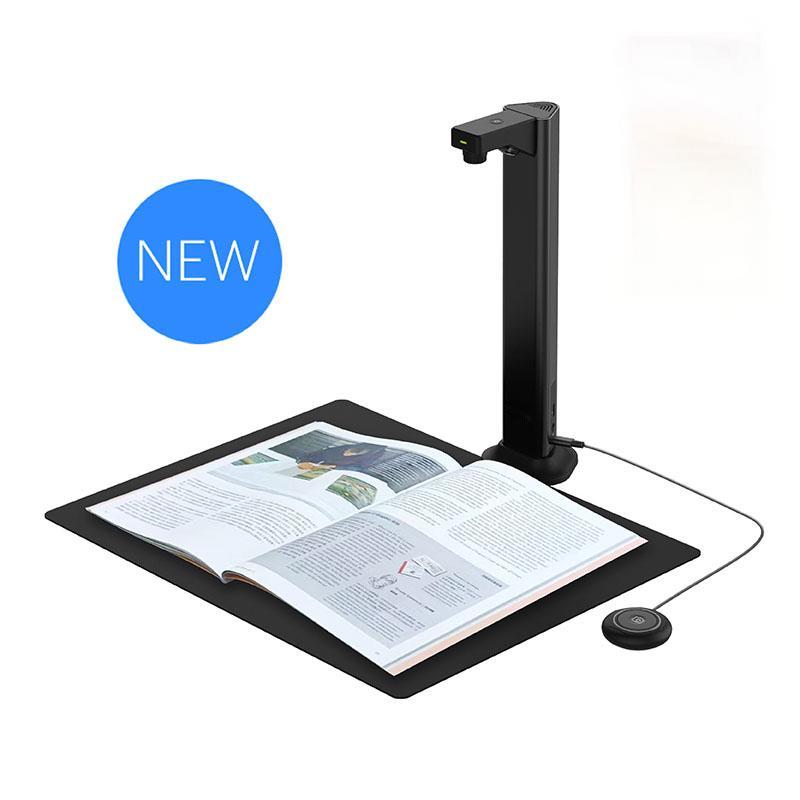
A3 18MP USB Aluminum Document Scanner with UVC Camera 1s Scan Speed OCR & Text to Speech Features-in Stock
Sapporo fit: library reading rooms, municipal counters and archive intake desks that need non-contact A3 capture with OCR and text-to-speech support.
- UVC camera and aluminum housing
- 1-second scan-speed class
- OCR and text-to-speech features
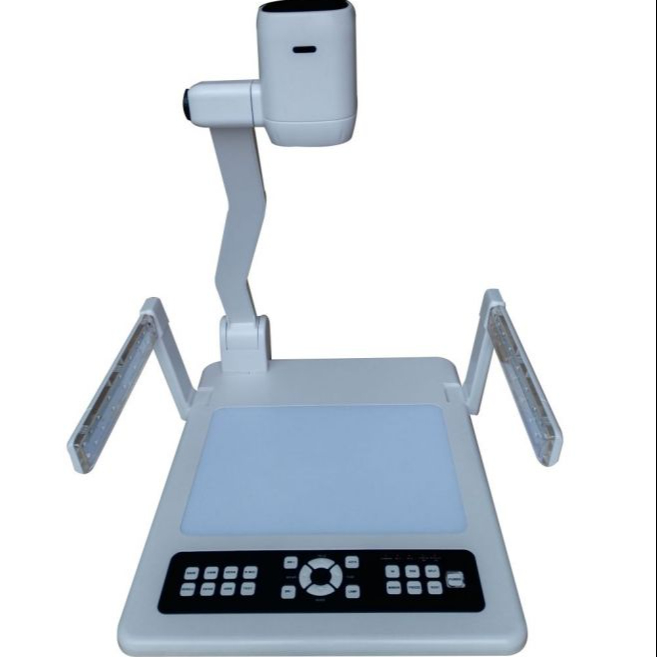
Factory Desktop Document Camera Visualizer 22X Optical Zoom with Interface HD MI RS232 Audio Mic Video
Sapporo fit: lecture theatres, training rooms and meeting spaces where a presenter must show printed pages, objects or device details on a large display.
- 22× optical zoom
- HDMI and RS232 control
- Audio, mic and video interfaces
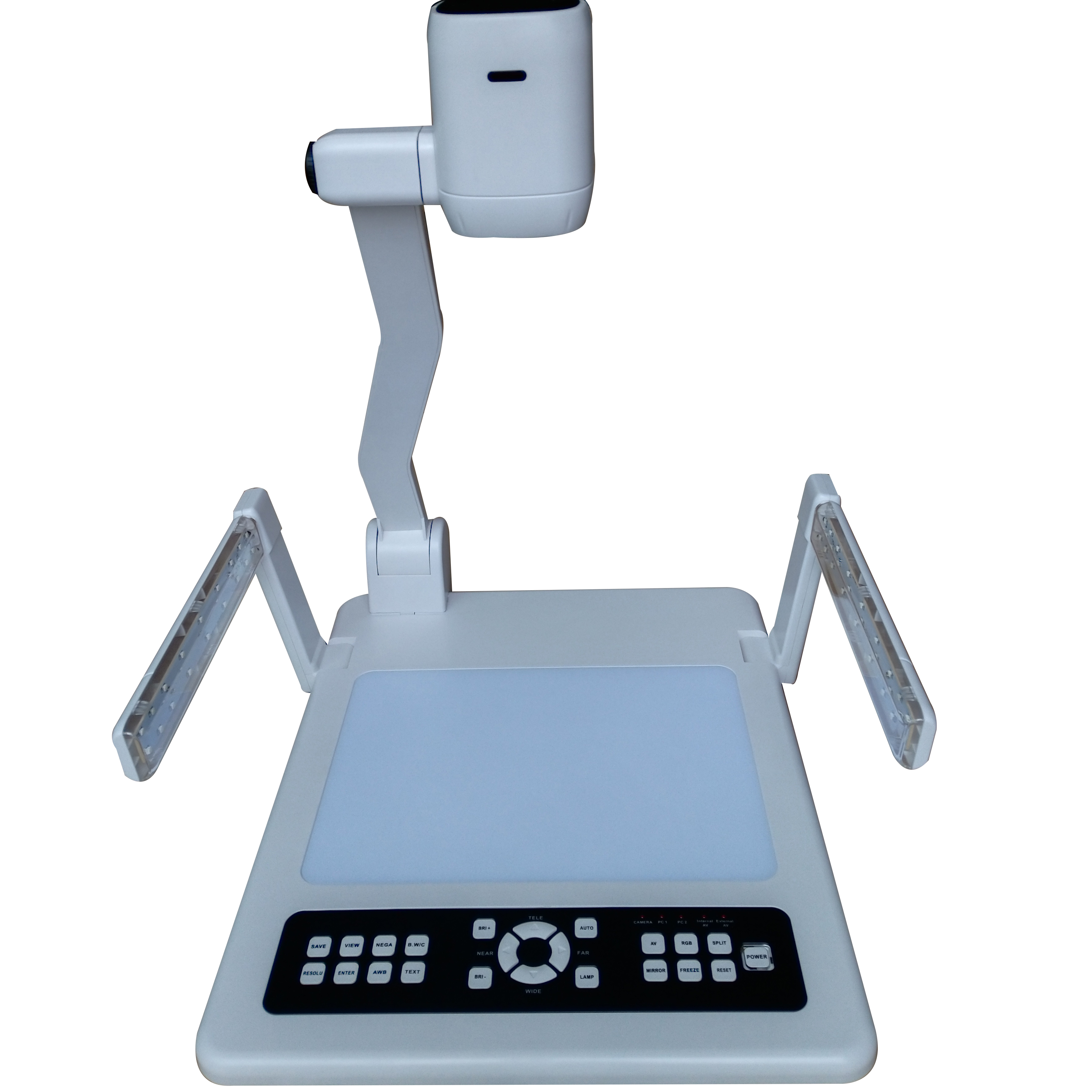
Modern Foldable Flexible Ultra HD Desktop Document Camera for School Video Output HD MI VGA Visualizer
Sapporo fit: schools and temporary training desks with limited storage; the arm folds down after use and outputs to HDMI or VGA.
- Foldable, flexible body
- Ultra HD capture for classroom display
- HDMI and VGA video output
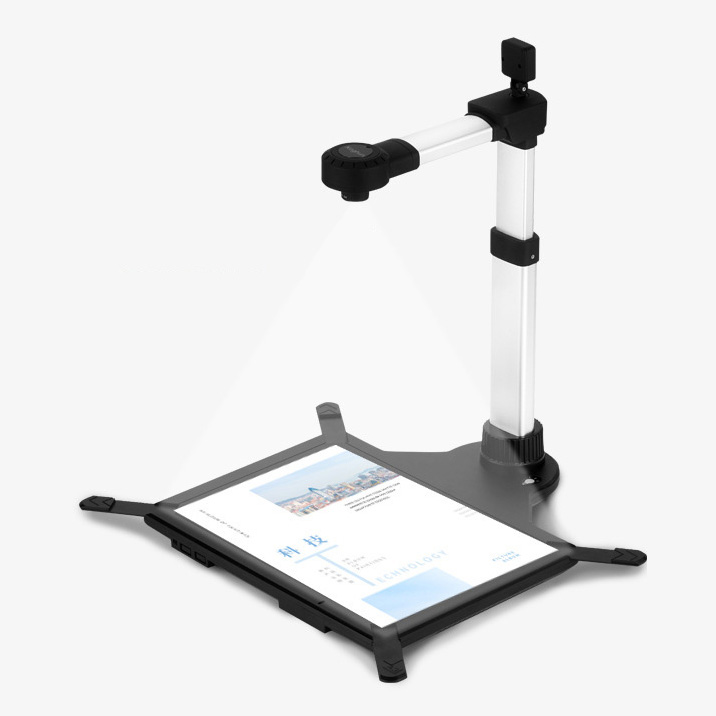
HD Dual Camera 16MP + 2MP Pixels Multifunction Stretchable Smart USB 60 Pages/Min A3/A4 Document Scanner 360 Rotation 180
Sapporo fit: service counters and document-heavy offices where the dual camera can handle A3/A4 documents plus ID or portrait capture tasks.
- 16MP + 2MP dual-camera design
- 60 pages/min capture class
- Stretchable with 360 rotation and 180 adjustment
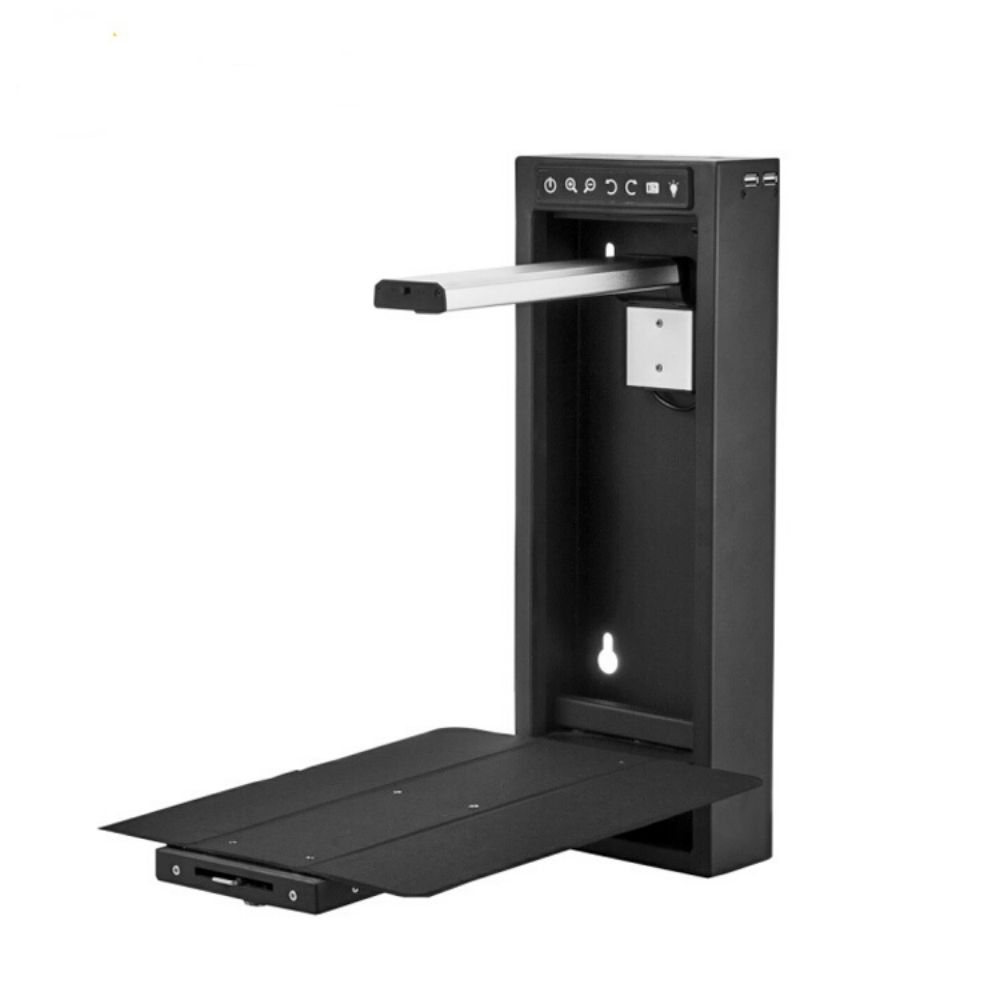
Online Training Portable 10MP A4 Document Scanner USB Interface Visualizer-in-Stock for Wall Version Black+Silver 1-Year
Sapporo fit: remote training, travelling staff and small offices that need a compact A4 USB visualizer or wall version without a large hardware footprint.
- 10MP A4 document capture
- USB interface
- Wall version, black + silver, 1-year warranty
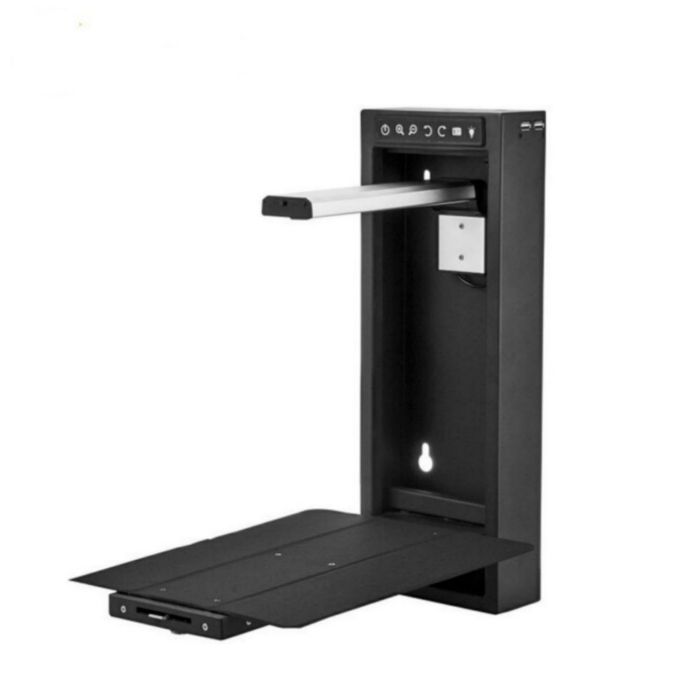
A4 Black USB 5V High-Speed 10MP High-Resolution Document Scanner Wall-Mountable OEM 24 Bit SDK 1-Year Warranty Education Stock
Sapporo fit: school corridors, clinic intake windows and compact offices where wall-mounting saves desk space and USB simplifies installation.
- 10MP high-resolution A4 capture
- USB 5V, 24-bit output
- Wall-mountable OEM model with SDK and 1-year warranty
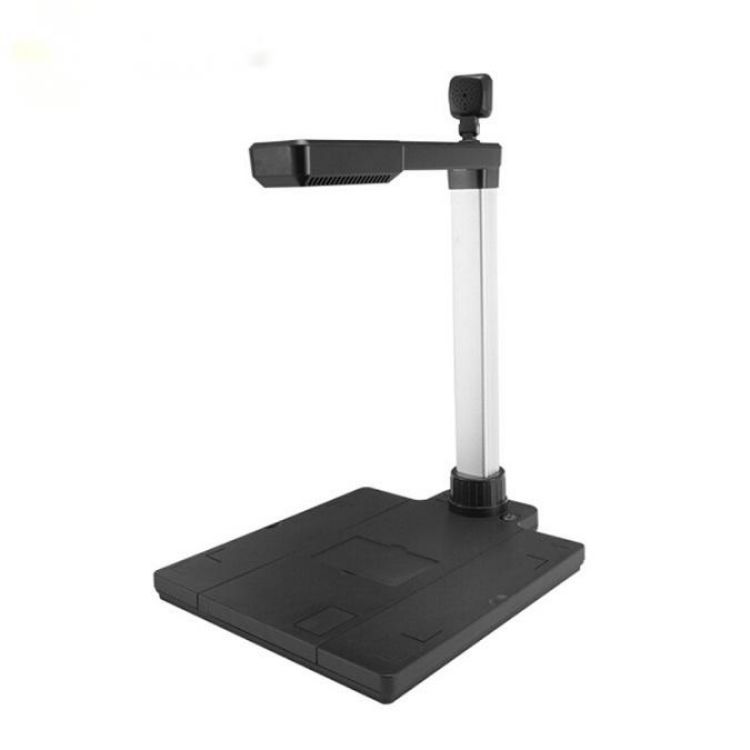
10MP Education Visualizer Scanner Document Management Book Camera USB in Stock
Sapporo fit: classrooms, tutoring centres and small libraries that need a USB book camera for document management, live display and simple digitization.
- 10MP education visualizer
- USB connection
- Book camera for document management
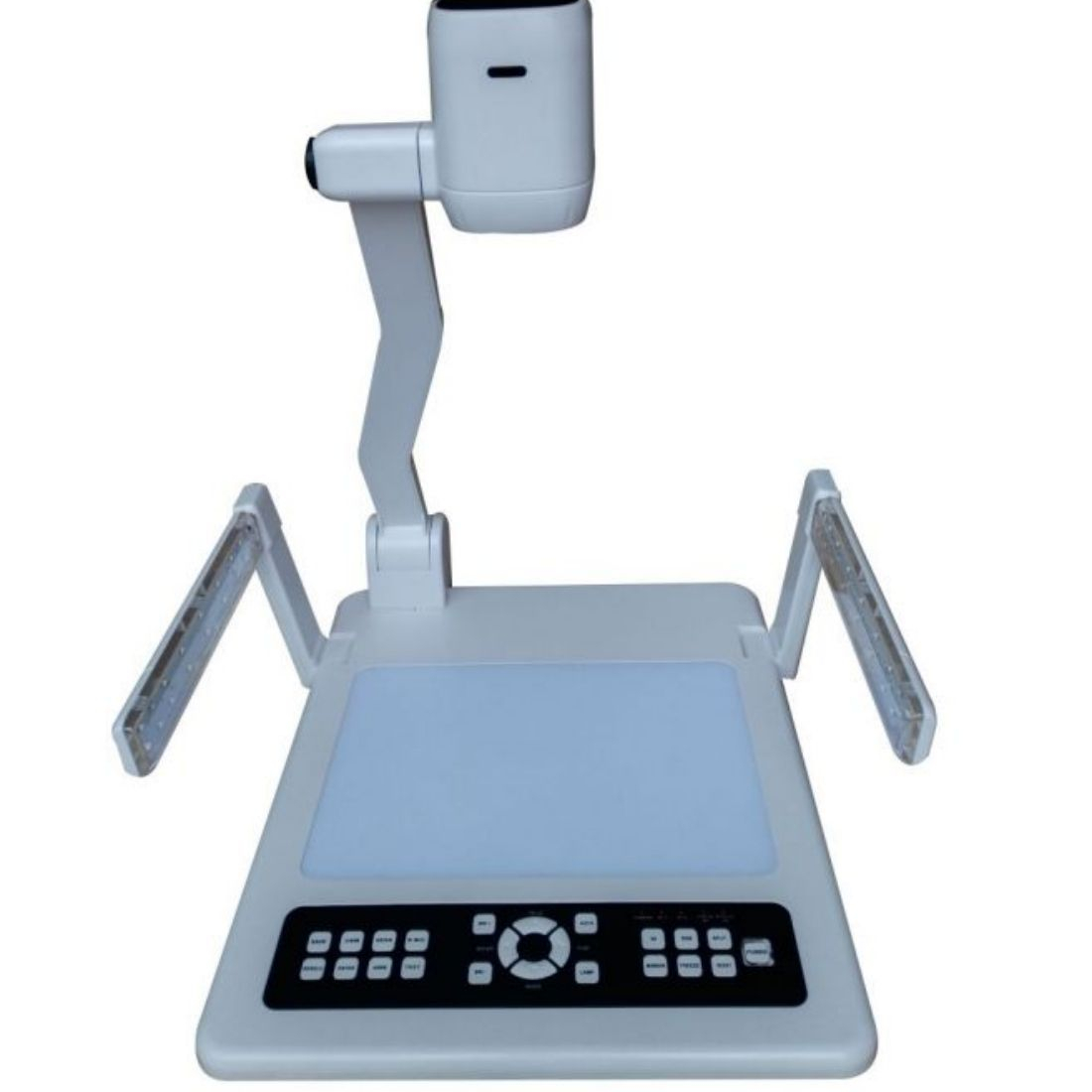
Factory 22X Optical Zoom Desktop VGA HD MI Audio Interface High Resolution Document Camera Visualizer
Sapporo fit: meeting rooms and hybrid training where optical zoom, VGA/HDMI output and an audio interface support clear, practical live presentation.
- 22× optical zoom
- VGA and HDMI output
- Audio interface for presentations
Localized applications: where USB capture earns its place in Sapporo
Sapporo’s economy is not a copy of Tokyo’s. Public administration, universities, healthcare, tourism, retail, logistics, food and advanced manufacturing coexist in a compact northern city where indoor space matters, and winter operations put a premium on reliable, easy-to-service equipment. These use cases are practical starting points for a local pilot.
Ward offices and citizen-service counters
Capture application forms, proof documents and ID pages with USB-connected A4/A3 scanners and dual-camera models. Local capture keeps sensitive files on the operator’s workstation and supports queue-friendly workflows.
Universities, schools and training centres
Use 22× optical-zoom and foldable Ultra HD visualizers to show textbooks, experiments, prototypes and printed handouts in lecture theatres, seminar rooms and hybrid classes.
Libraries, museums and local archives
Non-contact book cameras and A3 overhead scanners help preserve bound books, newspapers, maps and local-history materials. OCR to searchable PDF makes collections easier to search and share internally.
Hospitals, clinics and pharmacies
Document management for intake forms, referrals and administrative paperwork benefits from compact wall-mount and A4 USB scanners that do not require a dedicated imaging room.
Tourism, hospitality and retail
Guest registration paperwork, tour information, multilingual brochures and supplier documents can be digitized with portable A4 and visualizer models, reducing paper storage in limited back-office space.
Manufacturing, logistics and cold-weather operations
Quality records, shipping documents, inspection sheets and supplier certificates can be captured at workstations. USB-first deployment reduces network complexity in temporary or space-constrained facilities.
Sapporo-specific trends shaping USB scanner demand in 2025
Procurement in Sapporo is shifting from one-off device purchases to repeatable digitization programs. The most important changes are not only about camera resolution; they are about workflow fit, language support, privacy, space and long-term reseller support.
Municipal and university DX
Public-sector and education teams are moving from paper archives to indexed PDFs, but they often need local capture without sending sensitive files to unknown cloud services.
Japanese OCR and multilingual output
OCR is now judged by Japanese character accuracy, layout retention, searchable PDF and text-to-speech. For tourism and international offices, English, Chinese or Korean output may also matter.
Compact, wall-mount and foldable hardware
Sapporo offices, clinics and classrooms often prioritize desk space. Foldable visualizers and wall-mount A4 scanners reduce footprint while keeping capture available where work happens.
Hybrid classrooms and remote training
Visualizers are no longer only for classrooms. Companies use them for remote onboarding, product demonstration, inspection training and quality briefings with distributed teams.
USB-first integration for security and simplicity
USB avoids complex network configuration and keeps capture on the operator’s PC. SDK-supported models let local integrators build custom intake, archive and verification workflows.
OEM/private-label demand from Japanese channel partners
Resellers and system integrators want their own brand, packaging and software identity while keeping proven hardware, small stock MOQs and a 1-year warranty on listed models.
Resolution, sensor and OCR: a practical buying standard for Sapporo projects
Megapixels are only meaningful in relation to the physical page. To calculate dpi, divide the horizontal and vertical pixel count by the document dimensions in inches. For archival master files, many programs specify 300 ppi or higher; for OCR and on-screen reading, 200–250 dpi is often enough. Always confirm the tender, retention policy or internal standard before choosing a model.
How many pixels do Sapporo buyers really need?
An A4 page at 300 dpi requires about 2480 × 3508 pixels, or roughly 8.7 MP, so a 10MP model is suitable. An A3 page at 300 dpi requires about 3508 × 4961 pixels, or about 17.4 MP, which is why an 18MP or 24MP scanner makes sense for A3 archive work. An A2 sheet at 300 dpi needs about 4961 × 7016 pixels, or roughly 34.8 MP; a 48MP A2 scanner gives useful reserve for archival masters.
A 21MP camera covering a full A2 sheet typically delivers roughly 225–240 dpi. If a Sapporo tender explicitly requires 300 dpi at A2, specify a 48MP A2 model instead of a 21MP model. This is exactly the kind of specification that should be settled before a purchase order rather than after delivery.
| Document size | Pixels at 300 dpi | Recommended sensor | Quibow range match |
|---|---|---|---|
| A4 210 × 297 mm | 2480 × 3508 ≈8.7 MP | 10 MP or higher | 10MP portable, wall-mount and education visualizers; 16MP + 2MP dual camera |
| A3 297 × 420 mm | 3508 × 4961 ≈17.4 MP | 18–24 MP | A3 18MP USB aluminum scanner; 24MP auto-flatten series for extra reserve |
| A2 420 × 594 mm | 4961 × 7016 ≈34.8 MP | 48 MP for ≈340 dpi | Dual 48MP overhead book scanner; 48MP A2 newspaper and archive scanner |
| Photos and artwork | 600–2400 dpi optical | Flatbed, 48-bit color | 1200 / 2400 DPI A3 flatbed scanners; CCD bookedge flatbed |
CIS contact image sensor
A slim linear sensor that reads the page at close range. Compact, low power and fast on sheet-fed paths.
- Best for
- High-volume office batches, invoices, contracts
- Typical model
- S2060W ADF scanner, 60 ppm duplex
CMOS area sensor
Captures the whole page from above, so books never need to be pressed flat. Software can flatten curves and remove fingers.
- Best for
- Bound books, newspapers, live teaching, counters
- Typical models
- 18–48MP book scanners, 4K visualizers
CCD linear sensor
A moving optical carriage with greater depth of field and stable color, tolerant of slightly raised originals such as book gutters.
- Best for
- Photos, artwork, bookedge scanning without spine shadow
- Typical model
- Zero-margin bookedge flatbed, 600 dpi
From requirement to Sapporo delivery in five practical steps
A transparent workflow helps procurement teams know exactly what happens after the first message. It also keeps sample units, software validation and packaging approval from becoming disconnected tasks.
Requirement review
Document size, daily volume, operating system, OCR language and output formats are confirmed.
Model matching
We recommend the sensor platform and resolution, with sample scans available on request.
Customization
Logo, packaging, housing colour, software branding, OCR language options and SDK integration.
Quality inspection
Each unit is checked for focus, lighting uniformity, driver installation and capture speed.
Shipping and support
Export packing and remote setup support, with a 1-year warranty on listed models.
Payment methods
T/T, L/C, PayPal, Western Union
Currencies
USD, EUR, HKD, CNY
Delivery terms
FOB, EXW, DDU
MOQ
Stock scanners from 1 pc/set; several document cameras from 2 pcs; OEM per project
Company advantages and verifiable records for Sapporo procurement teams
A Sapporo procurement team should not rely on a brochure alone. Check business identity, platform records, warranty terms, payment conditions, MOQ and the post-sales process. Quibow’s advantages are practical rather than abstract: a focused product range, direct technical discussion, OEM/ODM flexibility and published trading records.
Quibow is a Guangzhou-based trading company with onsite-checked status, established in 2020, with annual revenue in the US$1M–US$2.5M range and a team of 5–10 specialists. That size is relevant: buyers can usually reach a person who understands document capture, rather than a large anonymous queue. At the same time, very large multi-month OEM programs should be planned early. We state that openly because reliable supplier selection depends on matching project scale to supplier capacity.
For Sapporo resellers and integrators, the strongest fit is a two-stage approach: first validate one or two models with real Japanese documents, target PC and intended workflow; then scale to OEM branding, packaging and software customization. This reduces risk for both the buyer and the channel partner, and it keeps the final product tied to a tested use case rather than a specification sheet alone.
Supplier Assessment
Onsite check confirming business premises and legal status.
View report →Credit Overview
Platform credit profile and trading reliability indicators.
View credit →Ratings & Reviews
Feedback left by verified buyers after completed orders.
Read reviews →Trade Capacity
Export markets, trade terms and logistics capability.
View capacity →Third-party records are maintained by Alibaba.com, not by Quibow. Buyers should combine platform checks with their own due diligence, sample testing and import-requirements review for Japan.
Common local procurement questions about OEM USB scanners
These answers are written for Sapporo distributors, university procurement teams, municipal offices, clinics and resellers that need a reliable starting point before requesting samples or a formal quotation.
Can Quibow ship OEM USB scanners to Sapporo and Hokkaido?
Yes. Quibow handles export sales and can quote FOB, EXW or DDU terms. Sapporo buyers commonly discuss shipment via New Chitose Airport or Tomakomai Port with their freight forwarder. We do not claim a local warehouse in Sapporo. The buyer normally confirms the importer of record, customs broker, import duties and consumption tax. We provide product and packing information so the local import process can be planned before shipment.
What is the minimum order quantity for a Sapporo pilot?
Most stock book scanners, A2 large-format scanners and flatbed scanners start from 1 piece or 1 set. Several document camera models start from 2 pieces. OEM/ODM quantities are confirmed per project. For a local pilot, a mixed sample order is often more useful than a large first shipment because it lets the buyer compare A3 versus A4 capture, visualizer versus scanner, and USB versus network deployment.
Do the scanners work with Japan’s 100V power environment?
Many models are USB-powered or use an external adapter, so the exact power accessory matters. The USB interface itself is standard, but the adapter, plug type and certification markings must match the Japanese installation. Before ordering, confirm whether the device will be powered from a PC USB port, a locally supplied adapter or a fixed installation. Do not substitute an unverified power supply for a device used in a public counter or classroom.
Is Japanese OCR supported for Sapporo documents?
OCR and text-to-speech features are model- and software-dependent. The A3 18MP USB aluminum scanner is listed with OCR and text-to-speech features, but Japanese language accuracy and layout retention should always be validated with real documents. Before an order, send three to five representative samples—forms, tables, vertical text or mixed layouts—and confirm whether you need searchable PDF, editable text, or SDK integration.
Can a Japanese reseller customize logo, packaging, housing colour and software?
Yes. Quibow supports OEM/ODM projects including logo printing, packaging, housing colour, capture-software branding and SDK integration on selected models. The practical scope depends on the model, order quantity and software requirements. For a Sapporo private-label program, provide the target product name, packaging language, manual requirements, software identity and any SDK or driver constraints before the quotation stage.
Are Windows and macOS supported?
Many models, including A2 large-format scanners and the 1200 DPI A3 flatbed scanner, support Windows and macOS, and some are verified on Apple M1 Macs. Compatibility must be confirmed for each model before shipment, especially if the Sapporo customer uses a specific Japanese Windows edition, macOS version, security policy or locked-down PC image.
What warranty and after-sales support are provided?
Listed models such as A3 flatbed scanners, A2 overhead scanners and the S2060W ADF scanner come with a 1-year warranty, backed by remote technical support. We do not claim a local repair centre in Sapporo. The RMA route, spare-part expectations and remote troubleshooting process should be agreed before the purchase order, especially for public-sector or classroom deployments.
How should we plan a Sapporo pilot and avoid winter condensation issues?
Start with one or two sample units, test the exact Japanese documents and target PC, and approve scan quality, OCR output, packaging and cable set. After a winter delivery, keep the sealed carton in a dry room for 12–24 hours before power-on to reduce condensation risk. Keep the original packaging for any potential RMA. For multi-site rollouts, standardize the model, software version and operator training before scaling.
What payment and delivery terms are available?
Quibow accepts T/T, L/C, PayPal and Western Union in USD, EUR, HKD or CNY, with FOB, EXW and DDU delivery terms. For Sapporo procurement, confirm the desired Incoterm, consignee details, documentation language and inspection requirements before the proforma invoice is issued.
Request a Sapporo-specific OEM USB scanner recommendation
Send us the document size, daily volume, OCR language, operating system, available desk or wall space, branding requirements and target delivery terms. We will suggest a model, sensor platform, resolution, sample plan and OEM scope. For the fastest comparison, include three to five sample scans or photos of the documents you need to capture.
Published average response time: ≤1 hour. Published platform message response rate: 100%. Third-party platform records should be read alongside your own technical validation and import review for Japan.