Eight Book Scanners, Document Cameras & A3/A2 Scanners for Houston Buyers
These models come from Quibow’s current catalogue and can be quoted as stock units or custom OEM projects. For Houston bound-book workflows, start with the 20MP A3 portable book scanner with foot pedal. For oversized archival masters, compare the A2 dual 48MP model against your 300 dpi requirement.
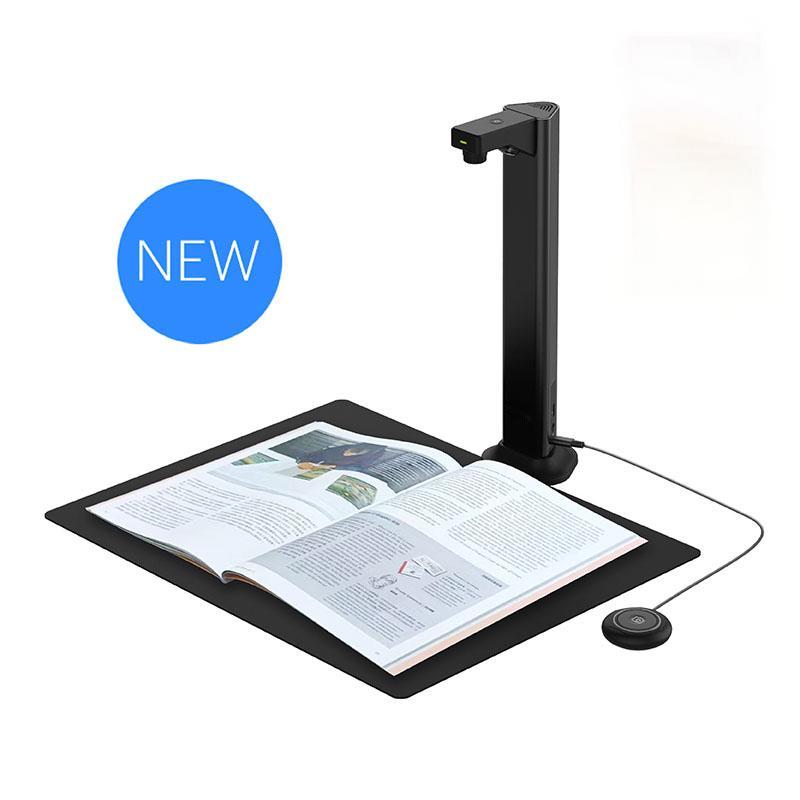
A3 18MP USB Aluminum Document Scanner with UVC Camera, 1s Scan, OCR & Text-to-Speech
- 18MP A3 capture with UVC camera
- OCR and text-to-speech support
- Fast 1-second scan workflow
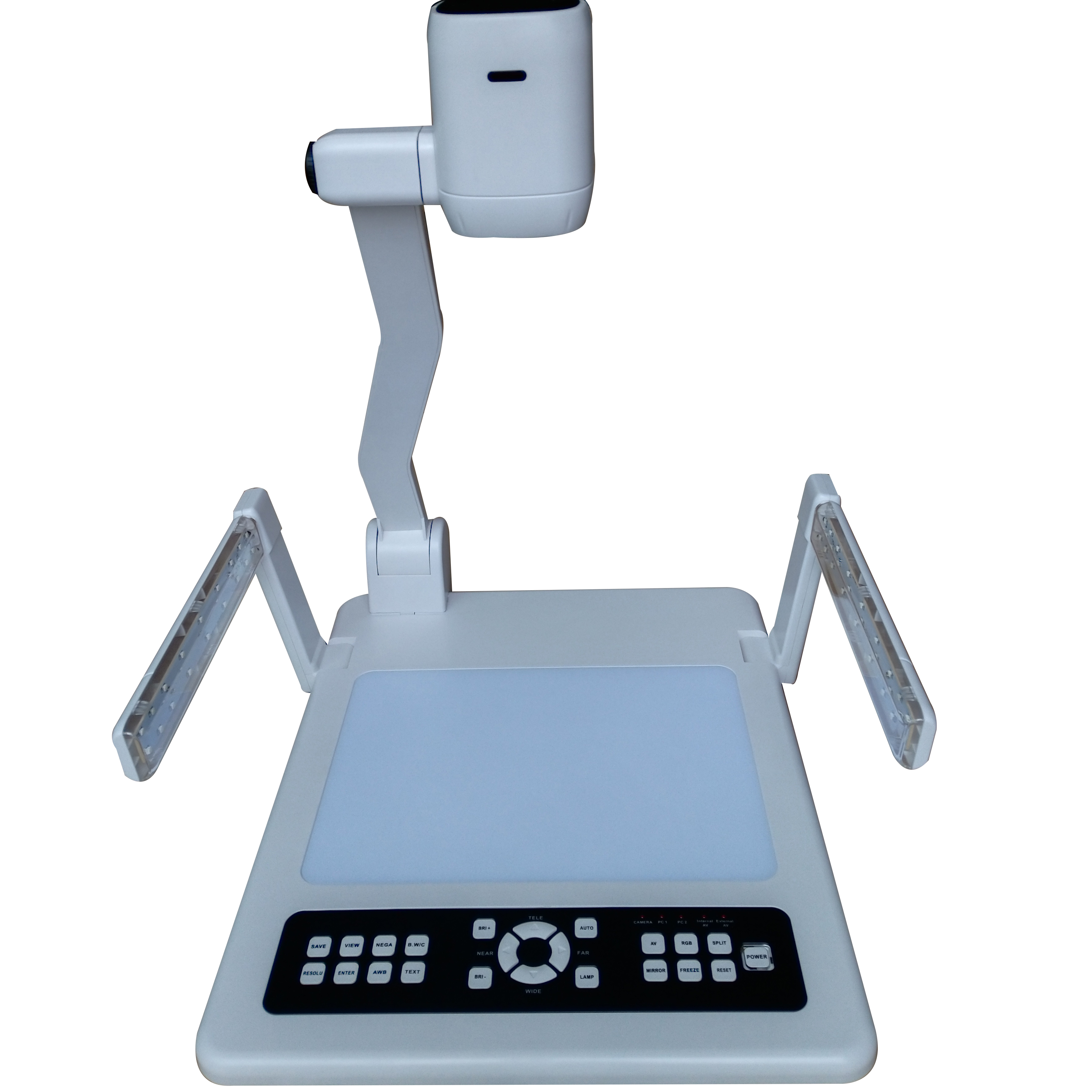
Modern Foldable Flexible Ultra HD Desktop Document Camera for School Video Output HDMI VGA Visualizer
- Foldable desktop visualizer
- HDMI / VGA classroom output
- Live demonstration and capture
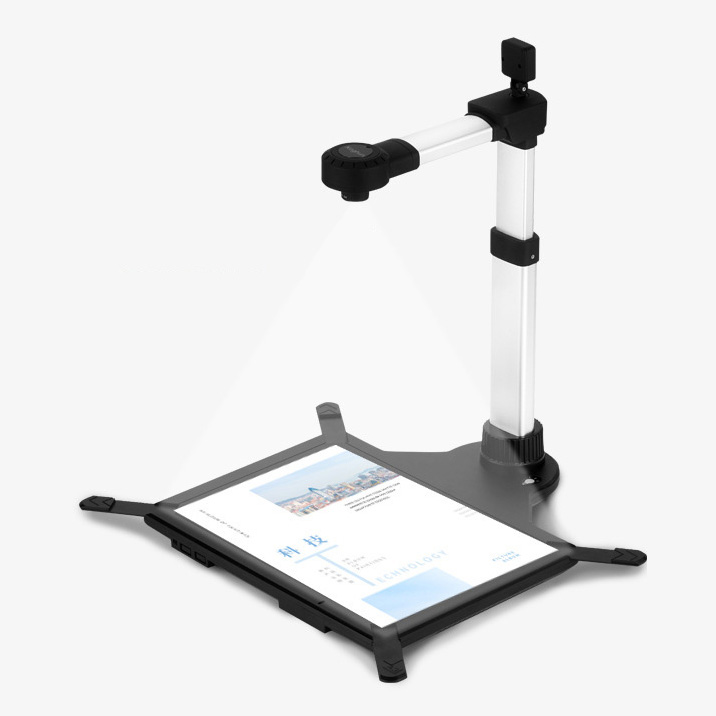
HD Dual Camera 16MP + 2MP Multifunction Stretchable Smart USB 60 Pages/Min A3/A4 Scanner, 360 Rotation 180
- 16MP + 2MP dual-camera design
- 60 pages/min A3/A4 scanning
- 360° rotation, flexible positioning
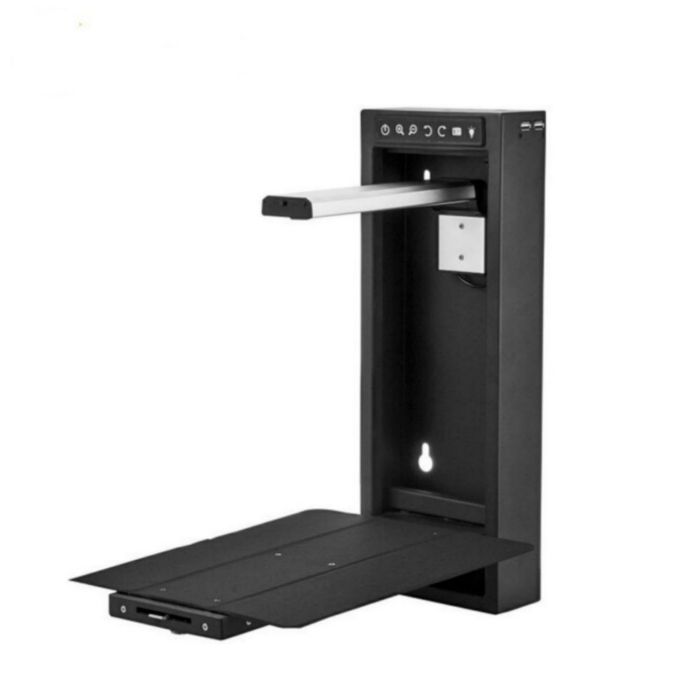
A4 Black USB 5V High-Speed 10MP High-Resolution Document Scanner, Wall-Mountable OEM, 24 Bit SDK
- 10MP A4 high-resolution capture
- Wall-mountable, USB 5V
- 24-bit color and SDK support
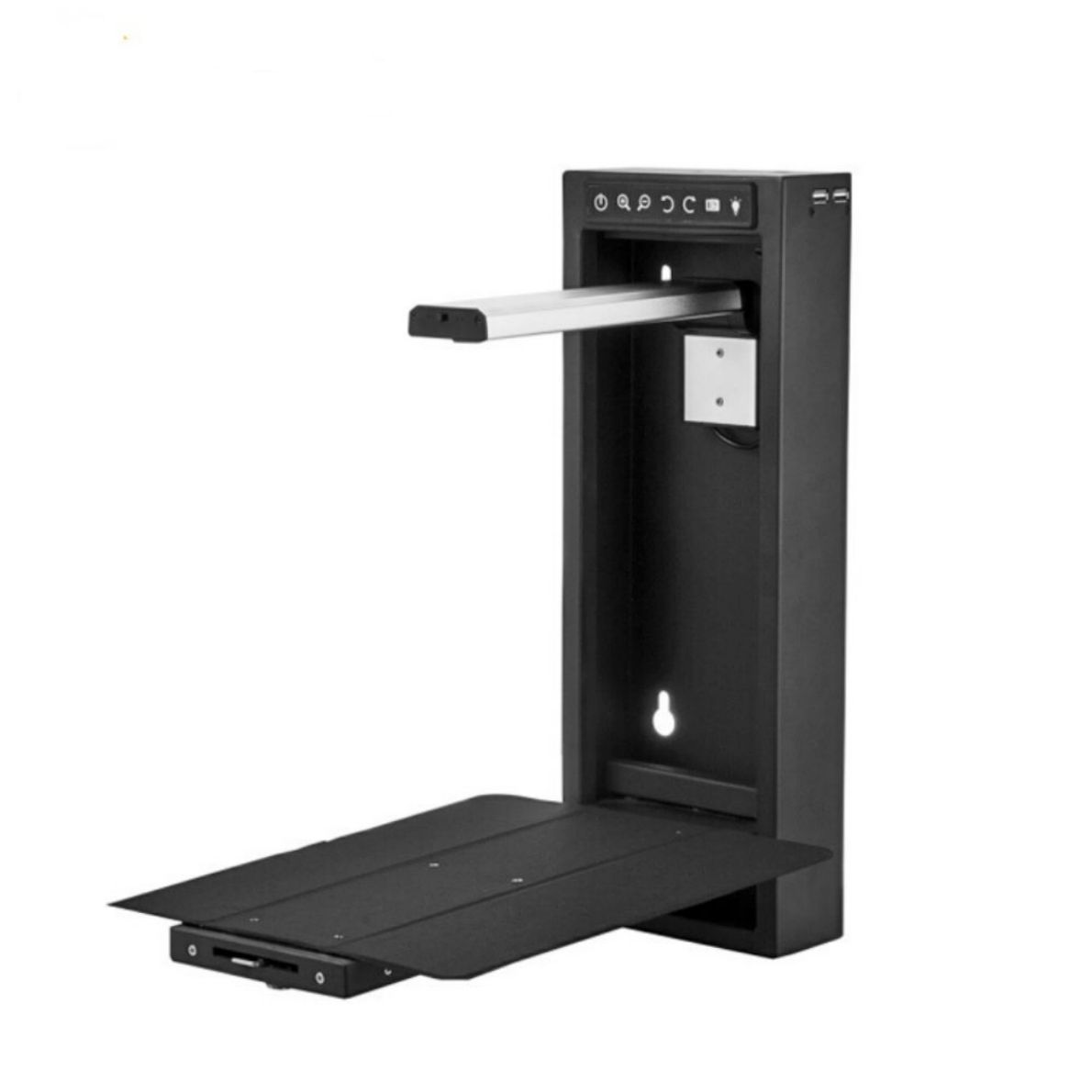
Factory New High Definition Wall Mount Document Scanner USB Interface Visualizer, CE Certified, 1-Year Warranty, A4 SDK
- HD wall-mount visualizer
- USB interface, A4 capture
- CE certification, 1-year warranty
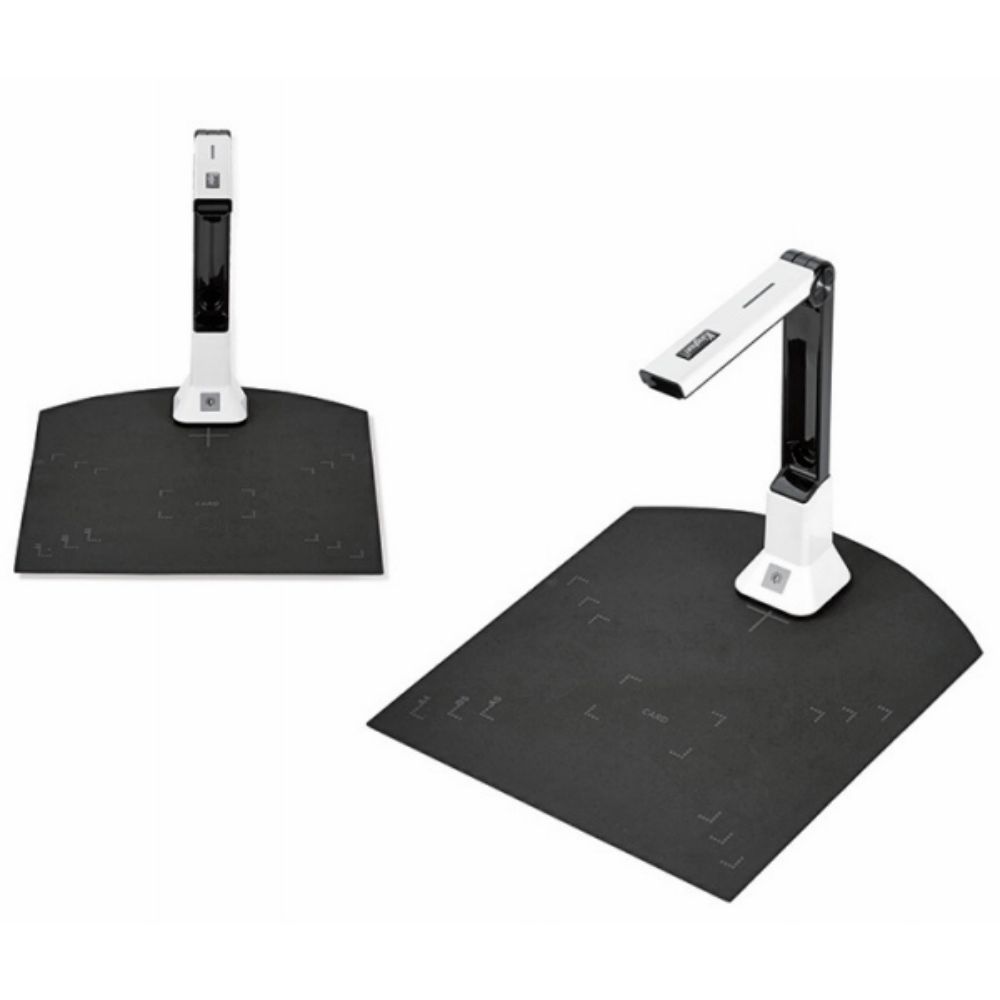
Wholesale 5MP USB Light CMOS A4 Document Scanner, Portable Smart Handheld, High Resolution, 1-Second Scan, CE Certified
- 5MP CMOS A4 portable scanner
- 1-second scan, USB powered
- CE certified, stock black
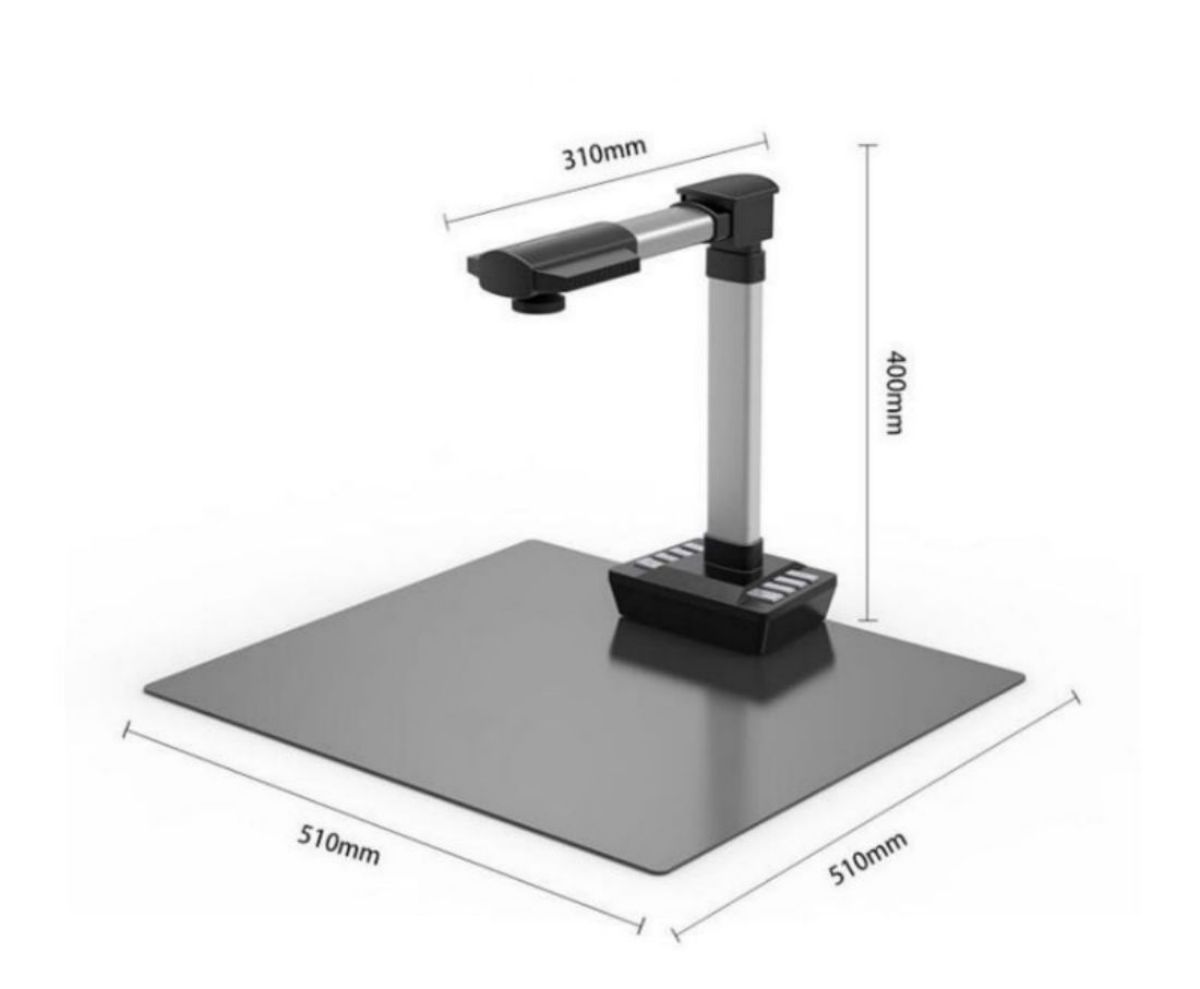
Portable 20MP High-Speed Wireless A3 Document Scanner, Professional Book Scanner with Foot Pedal, USB Interface, 24-Bit Color
- 20MP A3 overhead book capture
- Foot pedal for hands-free page cycles
- Wireless / USB interface, 24-bit color
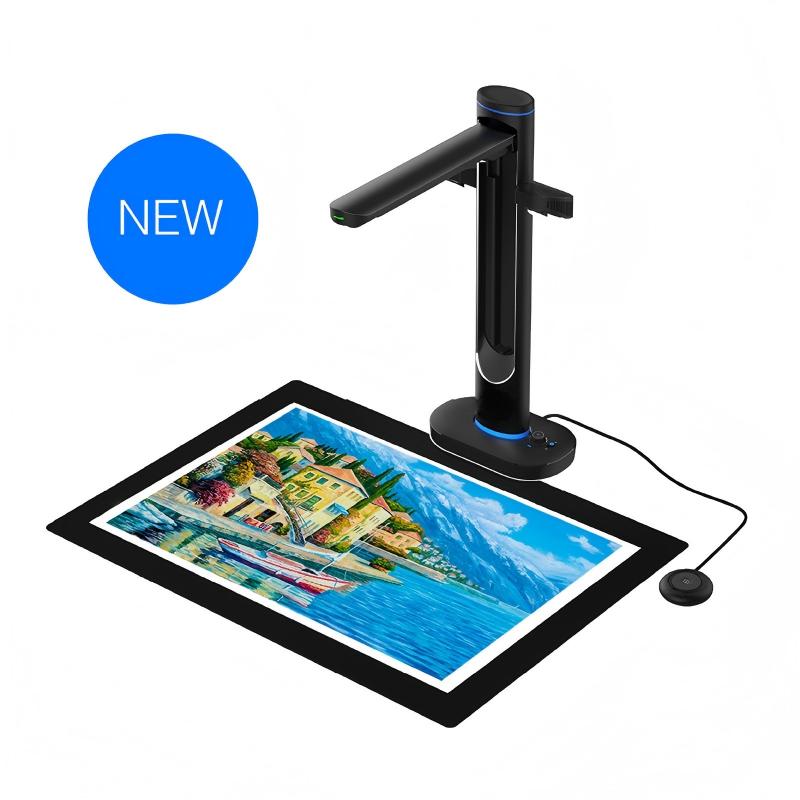
A2 Large Format Book Scanner, Dual 48MP CMOS Sensors, High-Speed Desktop Overhead Scanner for Windows & macOS
- Dual 48MP CMOS sensors
- A2 large-format archive capture
- Windows and macOS workflow
Minimum order quantities: most stock book scanners and A3/A2 scanners start from 1 piece or 1 set; several document camera models start from 2 pieces. OEM/ODM quantities are confirmed per project, packaging plan and branding requirement.
Why Houston Buyers Search for a Portable USB Book Scanner with Foot Pedal
Houston’s document mix is unusually broad: bound books in university and law libraries, patient intake forms near the Texas Medical Center, engineering manuals in the Energy Corridor, shipping paperwork around the Port of Houston, and public records across Harris, Fort Bend and Montgomery counties.
Buyers searching for a custom OEM portable USB book scanner with foot pedal usually have three intents. The first is replacement: a flatbed scanner is too slow for bound books, a phone camera cannot produce consistent OCR, and a sheet-fed ADF cannot safely handle spines. The second is procurement: the buyer needs a factory-direct supplier with clear MOQ, warranty, packaging and SDK terms. The third is integration: a Houston reseller, systems integrator or department wants logo printing, housing color, software branding or OCR output customized for its own workflow.
Houston-specific demand is also shaped by physical space and labor. Scanners are moved between intake rooms, records rooms and training spaces. A USB-powered unit with a foot pedal reduces repetitive hand movement and lets one operator maintain page rhythm while watching the screen. For multi-site teams, OEM documentation and consistent firmware behavior often matter more than a single headline specification.
Match the Scanner to the Houston Workflow, Not Just the Spec Sheet
The most expensive specification is the one your team never uses. Use this recommendation matrix to narrow the shortlist before requesting sample scans, SDK details and OEM pricing.
| Houston workflow | Recommended starting model | Why it fits | Procurement check |
|---|---|---|---|
| Bound books, court records, deposition binders | Portable 20MP A3 wireless/USB book scanner with foot pedal | Hands-free page capture, A3 coverage, 24-bit color and portable placement for records rooms. | Test foot-pedal mapping, OCR language packs and page-curvature handling on a real bound book. |
| Newspapers, maps, large engineering drawings | A2 dual 48MP CMOS overhead book scanner | A2 coverage with dual 48MP sensing supports archival master files and large-format capture. | Confirm 300 dpi at A2 and compare compressed file size with your repository limits. |
| Clinic intake, ID cards, insurance forms | HD dual camera 16MP + 2MP stretchable A3/A4 scanner | Dual-camera design, 60 pages/min, flexible rotation and high-throughput counter capture. | Review privacy workflow, driver installation and SDK hooks before pilot deployment. |
| Wall-mounted office scanning | 10MP A4 wall-mountable USB scanner or HD wall-mount visualizer | Saves desk space and creates a fixed capture point for forms, invoices and ID documents. | Check mounting height, lighting, USB cable length and software auto-crop performance. |
| Classroom, training and live demonstration | Foldable Ultra HD desktop document camera visualizer | HDMI/VGA output supports projection, recording and live display of books, objects and documents. | Confirm projector resolution, remote control needs and freeze-frame functions. |
| Entry-level portable A4 capture | 5MP USB CMOS A4 portable document scanner | Low-cost, 1-second scan and USB power for mobile intake, field teams and small offices. | Validate OCR quality at your required dpi and consider 10MP or A3 when text detail is critical. |
Where Portable USB Book Scanners and Document Cameras Fit in Houston
These scenarios reflect the Houston region’s institutional, healthcare, legal, education, energy and logistics ecosystem. They are workflow examples, not claims of specific client relationships.
Law libraries & eDiscovery
Convert deposition binders, case files and bound references into searchable PDFs while preserving the spine and page order.
Medical & dental front desks
Capture ID cards, insurance forms and consent documents at intake. Pair USB scanning with a documented privacy workflow.
Universities & public libraries
Digitize special collections, reserve materials and local history archives without forcing fragile books flat against glass.
Energy & engineering documentation
Capture well logs, technical manuals, permits and large drawings with an A2 overhead scanner for digital archives.
Port, logistics & customs records
Scan bills of lading, packing lists, inspection reports and driver documents at fixed USB stations or mobile desks.
K-12 & corporate training
Use visualizers for live demonstrations, textbook sharing, object display and hybrid training sessions with HDMI/VGA output.
Houston Digitization Trends Shaping 2025–2026 Procurement
Four practical trends are changing how Houston buyers compare portable USB book scanners, overhead cameras and OEM document-camera programs.
OCR is becoming baseline
Searchable PDFs, eDiscovery review and public-record requests make OCR quality a procurement criterion, not an optional feature. Test OCR on real Houston forms, not only clean test pages.
Space-efficient capture
Hybrid offices and compact records rooms favor wall-mounted scanners, foldable visualizers and portable USB book scanners that can be moved without a dedicated scanning lab.
OEM branding for integrators
Local resellers want logo printing, packaging, housing color and software branding so scanners fit their own service offering and documentation set.
Accessibility & text-to-speech
Text-to-speech and searchable text support accessibility, training and multilingual workflows in a diverse metro area such as Houston.
Foot Pedal Ergonomics, Resolution Math and USB Throughput
Use these calculations to separate meaningful scanner capabilities from marketing claims. They are especially useful when preparing a Houston tender, pilot or multi-site rollout.
What the foot pedal really changes
For repetitive bound-book capture, the pedal is an ergonomic control, not a gimmick. If an operator scans 500 pages and saves three seconds per page by using a foot pedal instead of reaching for a mouse or keyboard, the workflow saves about 25 minutes per project. Across daily scanning shifts, that difference affects fatigue, consistency and page-order errors.
Confirm that the pedal is stable on carpet and hard floors, that the software supports key mapping, and that accidental double-triggers are controlled. For OEM projects, ask whether the pedal can be private-labeled and whether the driver exposes an SDK event for third-party capture applications.
Resolution math: A3 at 300 dpi needs about 3508 × 4961 pixels, or roughly 17.4MP. A2 at 300 dpi needs about 4961 × 7016 pixels, or roughly 34.8MP. A4 at 300 dpi needs about 8.7MP. A 21MP camera covering a full A2 sheet is closer to 225–240 dpi, while a 48MP A2 scanner can reach roughly 340 dpi for archival masters.
File size and USB reality check
An uncompressed 24-bit A3 scan at 300 dpi contains roughly 52MB of raw color data; grayscale is about 17MB. An A2 300 dpi color master can exceed 100MB before compression. This is why “1-second scan” claims should be tested together with OCR, PDF compression and repository upload rules.
USB 3.0 or a stable USB 2.0 workflow can be sufficient for many capture stations, but the software pipeline matters. Test auto-crop, deskew, curve flattening, blank-page removal, OCR language packs and PDF/A export on a live Houston sample set.
| Document size | Pixels at 300 dpi | Sensor guidance | Quibow catalogue match |
|---|---|---|---|
| A4 210 × 297 mm |
2480 × 3508 ≈8.7MP |
10MP or higher for comfortable cropping | 10MP wall-mount A4 scanner; 5MP portable A4 for entry-level use |
| A3 297 × 420 mm |
3508 × 4961 ≈17.4MP |
18–24MP for 300 dpi workflows | 18MP A3 USB scanner; 20MP A3 portable book scanner with foot pedal |
| A2 420 × 594 mm |
4961 × 7016 ≈34.8MP |
48MP recommended for archival masters | Dual 48MP CMOS A2 large-format book scanner |
| ID cards & forms | Application-specific | Dual camera or fixed-focus desk scanner | 16MP + 2MP dual-camera A3/A4 scanner |
Customization Path for Houston Dealers, Integrators and Institutional Buyers
A transparent factory-direct workflow helps procurement teams understand what happens after the first inquiry and where customization decisions are confirmed.
Requirement review
Document size, daily volume, operating system, OCR languages and output formats are confirmed.
Model matching
We recommend CIS, CMOS or CCD imaging based on page type, speed, depth of field and budget.
Customization
Logo printing, packaging, housing color, software branding, OCR options and SDK integration are scoped.
Quality inspection
Focus, lighting uniformity, driver installation, capture speed and accessory checks are completed before packing.
Shipping & support
Export packing, documentation and remote technical support are coordinated with the agreed Incoterm.
Payment methods
T/T, L/C, PayPal and Western Union
Payment currency
USD, EUR, HKD and CNY
Delivery terms
FOB, EXW and DDU
Brand-ready hardware
Logo printing, packaging design, housing color and selected software branding for reseller and integrator programs.
SDK & OCR integration
Selected models support SDK access and OCR workflow planning so your team can connect capture to existing systems.
Flexible starting quantities
Most stock scanners start from 1 piece; several document cameras start from 2 pieces. Custom quantities are confirmed by project.
Guangzhou Quibow Electronic Co., Ltd. — Factory-Direct Coordination with Verifiable Records
Quibow develops and supplies image acquisition and conversion equipment, including overhead book scanners, A3/A2 document scanners, flatbed scanners, document cameras and visualizers.

Our work covers CIS, CMOS and CCD imaging platforms and the full cycle from product design and development to production coordination, export sales and after-sales support. For Houston buyers, this means model selection can be tied to real document size, OCR output, software compatibility and OEM branding requirements rather than a generic catalogue page.
Transparency note: manufacturing is coordinated from our Guangzhou operation. Houston-market support covers model selection, OEM documentation, sample approvals and export logistics. This distinction matters for procurement teams that need a clear supplier profile and verifiable business records.
Verifiable supplier signals include ≤1-hour average response time, a 100% message response rate, a 27% buyer reorder rate and onsite-checked supplier records. These are useful complements to product specifications, but they do not replace your own sample testing, compliance review and commercial due diligence.
OEM / ODM SDK support CIS · CMOS · CCD Windows / macOS Remote technical supportCommon Questions from Houston OEM, Institutional and Integrator Buyers
These answers focus on the practical details buyers ask before requesting a sample, placing a stock order or starting an OEM project.
Do you have a portable USB book scanner with foot pedal for bound Houston court records?
Yes. The 20MP A3 portable book scanner listed above is the closest starting point for hands-free bound-book capture. It supports A3 overhead scanning, a foot pedal and USB operation. Before purchasing, test the pedal mapping, OCR quality and page-curvature handling with a representative court binder or book from your collection.
Can the same supplier handle A3 and A2 document sizes?
Yes. The catalogue includes A3 18MP and 20MP overhead book scanners plus an A2 large-format model with dual 48MP CMOS sensors. A3 at 300 dpi needs about 17.4MP; A2 at 300 dpi needs about 34.8MP. Use the A2 dual 48MP model when archival masters must meet or exceed 300 dpi at full A2 size.
What is the minimum order for OEM branding in Houston?
Most stock book scanners, A2 scanners and flatbed scanners start from 1 piece or 1 set. Several document camera models start from 2 pieces. OEM/ODM quantities depend on logo method, packaging, housing color, software branding and SDK scope, so the final MOQ is confirmed per project.
Can you customize logo, packaging, housing color and software?
Yes. OEM/ODM support can include logo printing, packaging, housing color, capture-software branding and SDK integration on selected models. Provide your brand assets, target software environment and compliance expectations early so the sample and quotation can reflect the actual customization.
Are the scanners compatible with Windows, macOS and Apple M1 Macs?
Many models support Windows and macOS, and some are verified on Apple M1 Macs. Compatibility differs by model and software version, so confirm the exact scanner, driver and capture application before shipment or pilot deployment.
How do we evaluate OCR, PDF/A and searchable PDF output?
Send a sample set that reflects your real documents: a bound page with gutter shadow, a form with small text, a Spanish-language document if relevant, and one oversized page. Request output as searchable PDF plus the OCR text layer. Review character accuracy, layout retention, compression size and compatibility with your document-management system.
What are the payment, warranty and delivery terms?
Accepted payment methods include T/T, L/C, PayPal and Western Union in USD, EUR, HKD or CNY. Delivery terms include FOB, EXW and DDU. Listed models such as A3 flatbed scanners, A2 overhead scanners and the S2060W ADF scanner carry a 1-year warranty with remote technical support.
How should a Houston buyer confirm lead time and shipping?
Separate ready-stock items from OEM production items. Confirm the Incoterm, export packing, accessory list, sample-approval step and any DDU delivery assumption. Because freight, customs clearance and final delivery depend on the shipment plan, request a current lead-time and quotation rather than relying on a generic web statement.
Request a Houston-Specific OEM Scanner Recommendation
Share your document sizes, daily page volume, OCR languages, operating system, foot-pedal requirement and branding scope. The team can then recommend a stock or OEM configuration, provide sample-scan guidance and quote the relevant model.