USB Document Scanners and Visualizers Selected for Real Procurement Briefs
These eight models cover the most common buying intents behind the keyword “USB document scanner”: office document capture, library book digitization, A2 archive scanning, classroom presentation, portable field enrollment and OEM-branded visualizer projects. Each recommendation keeps the original product URL and highlights the specification detail that matters most during evaluation.
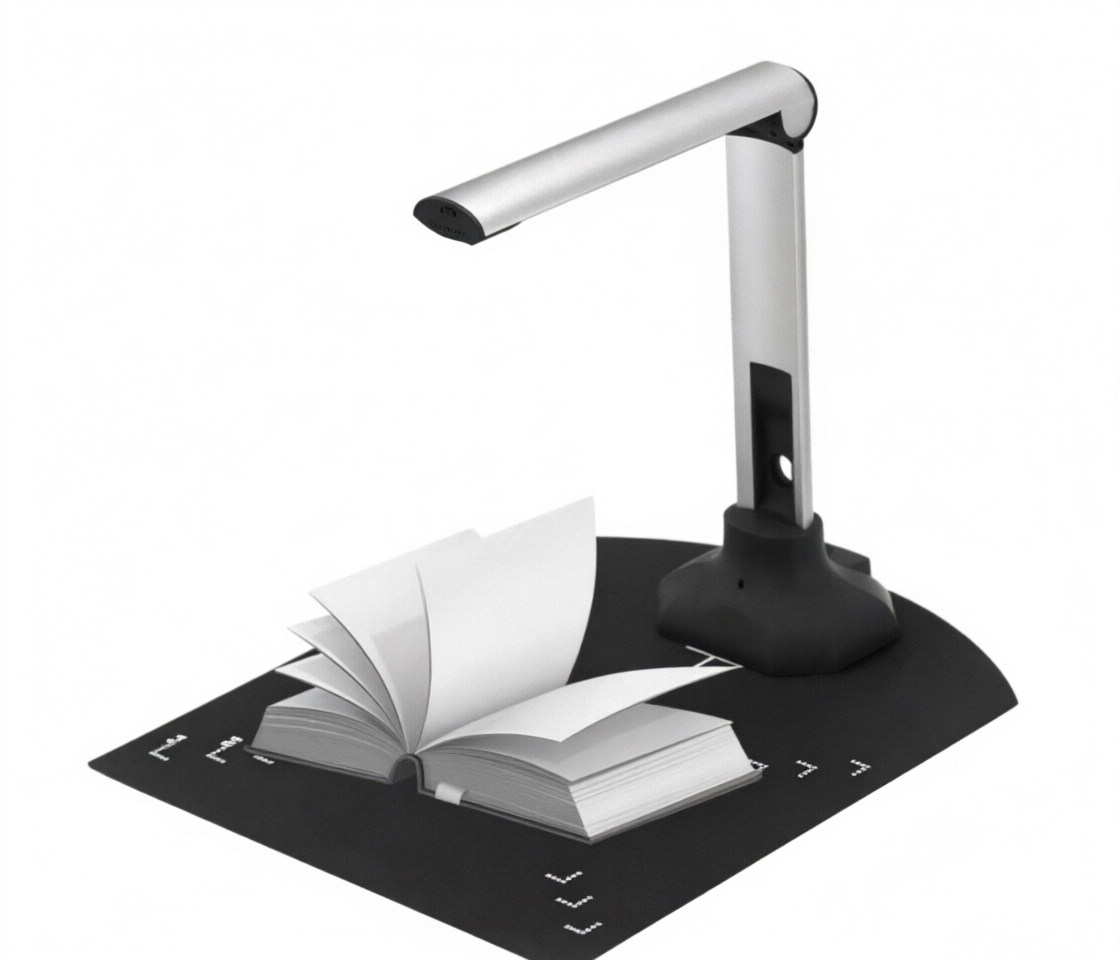
USB Document Camera Scanner 10MP CMOS Visualizer A4 Scanner for Office Education
A practical entry point for hybrid classrooms, help desks and product demonstrations. The 10MP CMOS sensor captures A4 pages and objects in a single frame, while USB connectivity keeps deployment straightforward for buyers standardizing on PC-based capture stations.
- 10MP CMOS imaging for A4 documents
- Suited to office, teaching and visualizer use
- Stock and accessory details confirmed on inquiry
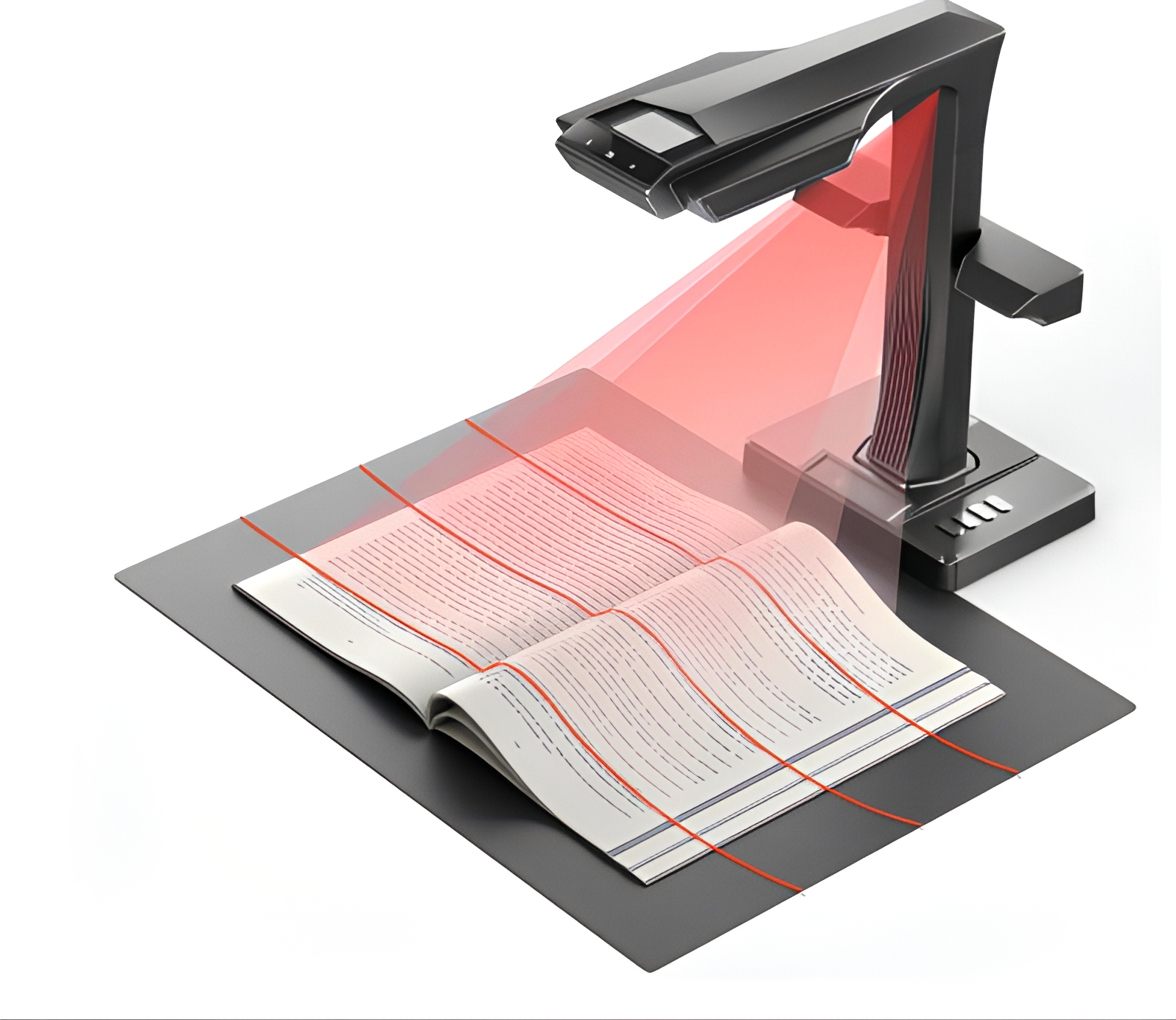
Book Scanner 38MP A3 Document Camera Auto Curve Flattening High Speed Overhead Scanner for Library Office
Built around non-contact overhead capture, this 38MP A3 book scanner is relevant when bindings, fragile paper or curved pages make a flatbed workflow slow or risky. Automatic curve flattening helps produce more readable OCR output and cleaner archive masters for libraries and administrative offices.
- 38MP sensor for A3 book and document capture
- Auto curve flattening for bound originals
- High-speed overhead workflow for library/office use
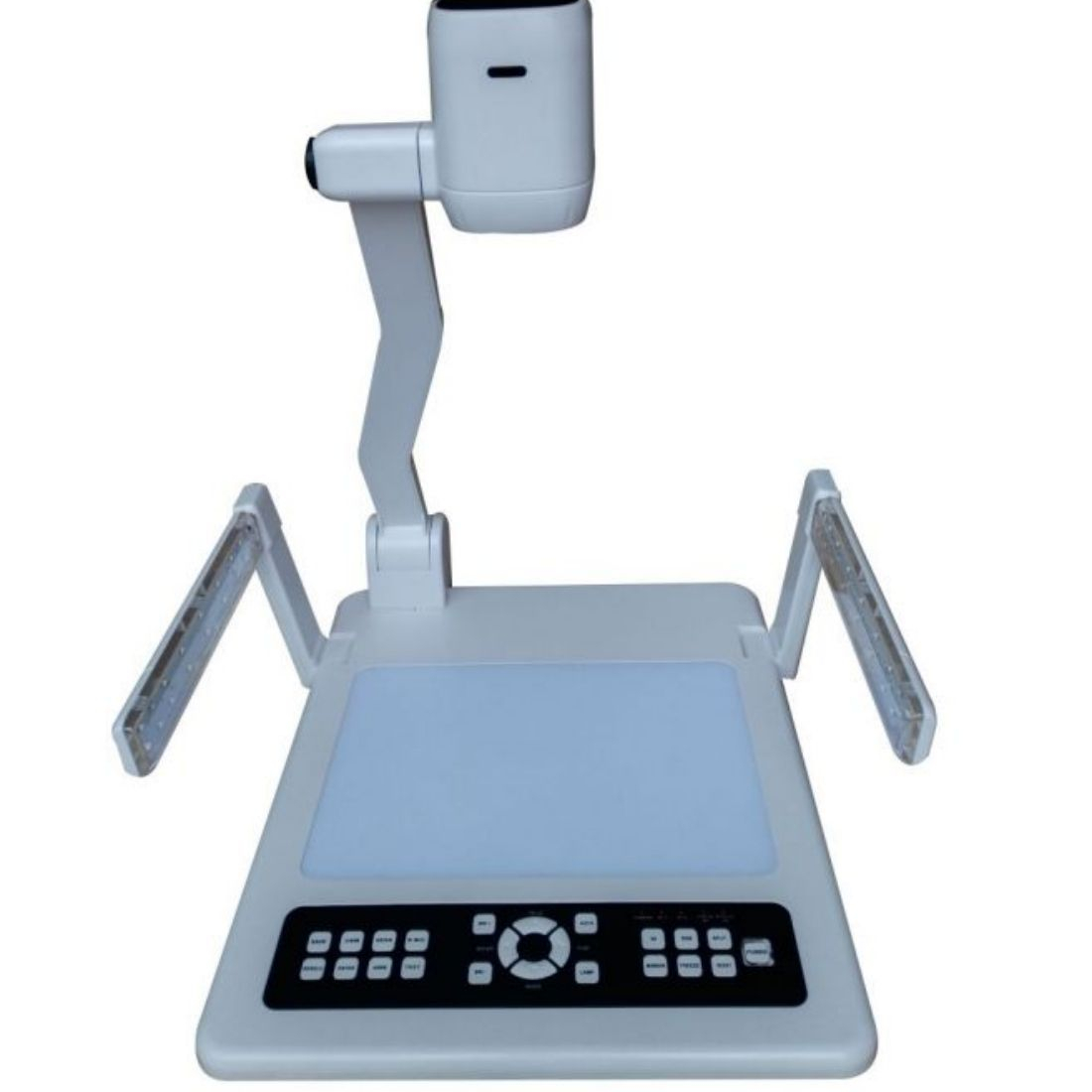
Factory 22X Optical Zoom Desktop VGA HD MI Audio Interface High Resolution Document Camera Visualizer
For training rooms and classroom demonstrations, optical zoom is more useful than digital zoom because it preserves detail as the presenter moves from a full page to a small object. This desktop visualizer combines 22X optical zoom with VGA/HDMI and audio interface options for AV integration.
- 22X optical zoom for close-up live teaching
- VGA/HDMI and audio interface integration
- Factory supply suited to distributors and tenders
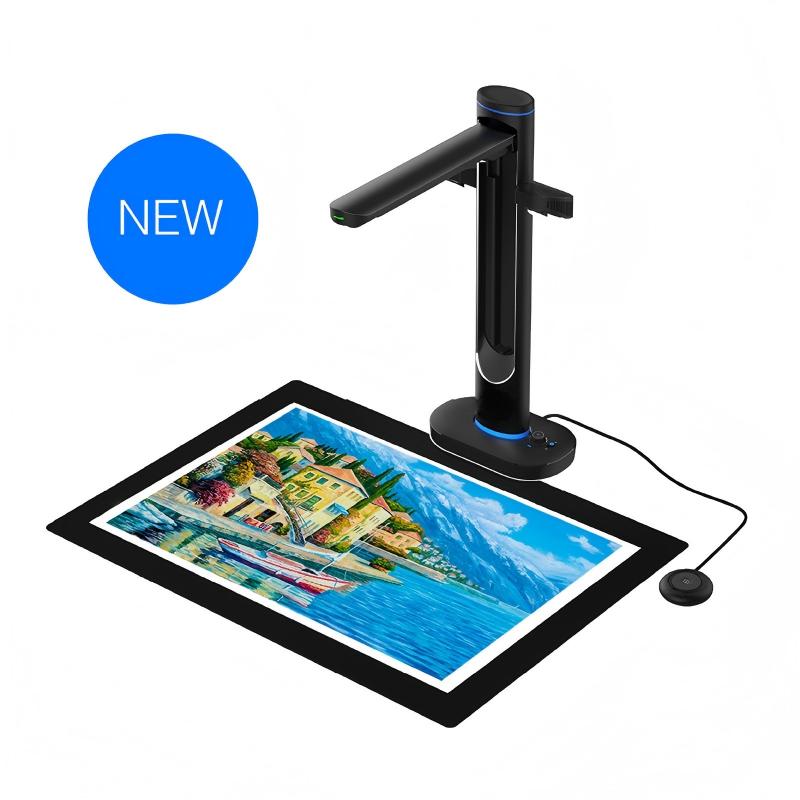
A2 Large Format Book Scanner Dual 48MP CMOS Sensors High-Speed Desktop Overhead Scanner for Windows & MacOS
When a tender requires 300 dpi at A2, generic megapixel claims are not enough. Dual 48MP CMOS sensors provide the pixel budget needed for newspapers, maps, large drawings and archive masters, while Windows and macOS support broadens deployment beyond a single IT environment.
- Dual 48MP CMOS sensors for A2 large-format work
- High-speed overhead scanning for archive projects
- Windows and macOS compatibility for mixed IT estates
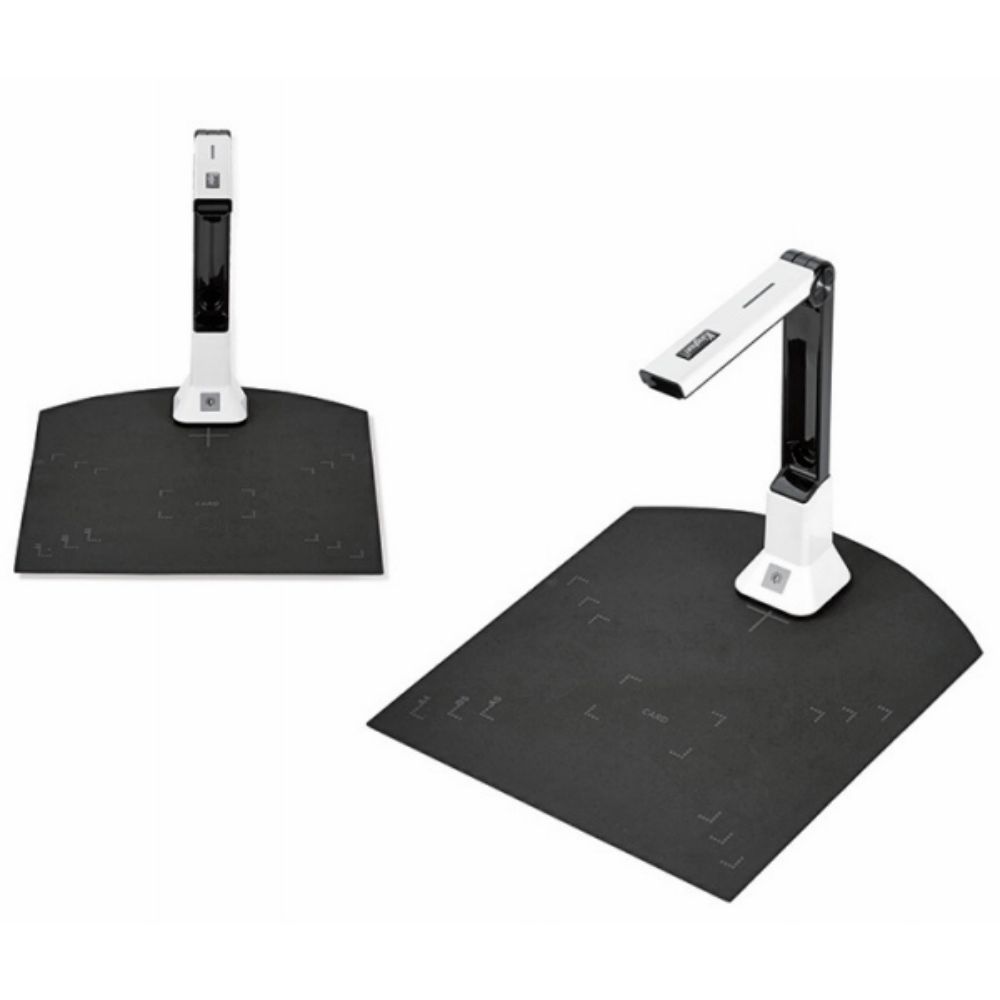
Wholesale 5MP USB Light CMOS A4 Document Scanner Portable Smart Handheld High Resolution 1-Second Scan CE Certified Stock Black
This compact 5MP model targets counters, field enrollment, mobile service desks and reseller programs that need fast A4 capture without a fixed overhead rig. The listed 1-second scan and CE certification make it a relevant candidate for high-throughput front-office deployments where compact hardware and stock availability matter.
- 5MP USB A4 portable document capture
- Listed 1-second scan workflow
- CE-certified stock model in black
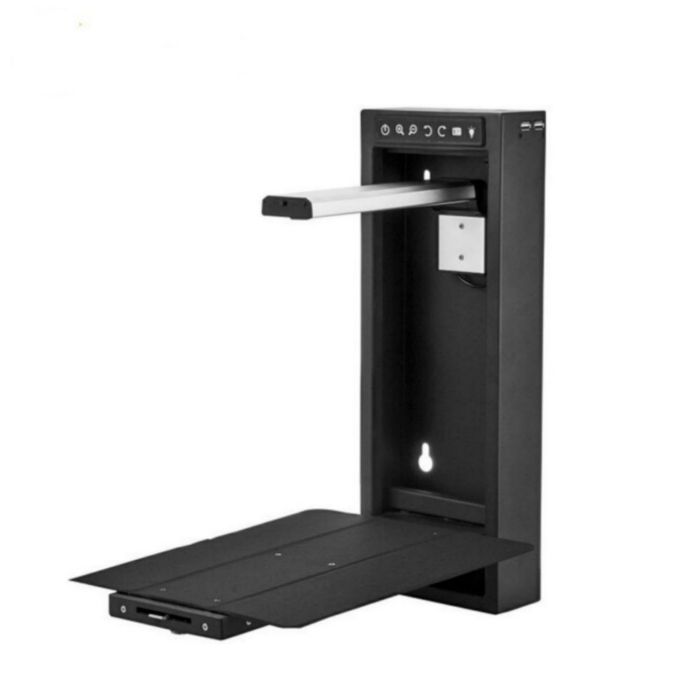
A4 Black USB 5V High-Speed 10MP High-Resolution Document Scanner Wall-Mountable OEM 24 Bit SDK 1-Year Warranty Education Stock
For kiosks, self-service counters and fixed-position document capture, wall-mount flexibility is a real procurement advantage. This A4 model combines a 10MP sensor, USB 5V power, 24-bit color, OEM support, SDK access and a listed 1-year warranty—making it suitable for education stock programs and software-integrated capture points.
- 10MP A4 capture with USB 5V power
- Wall-mountable, OEM-ready and SDK supported
- 24-bit color and listed 1-year warranty
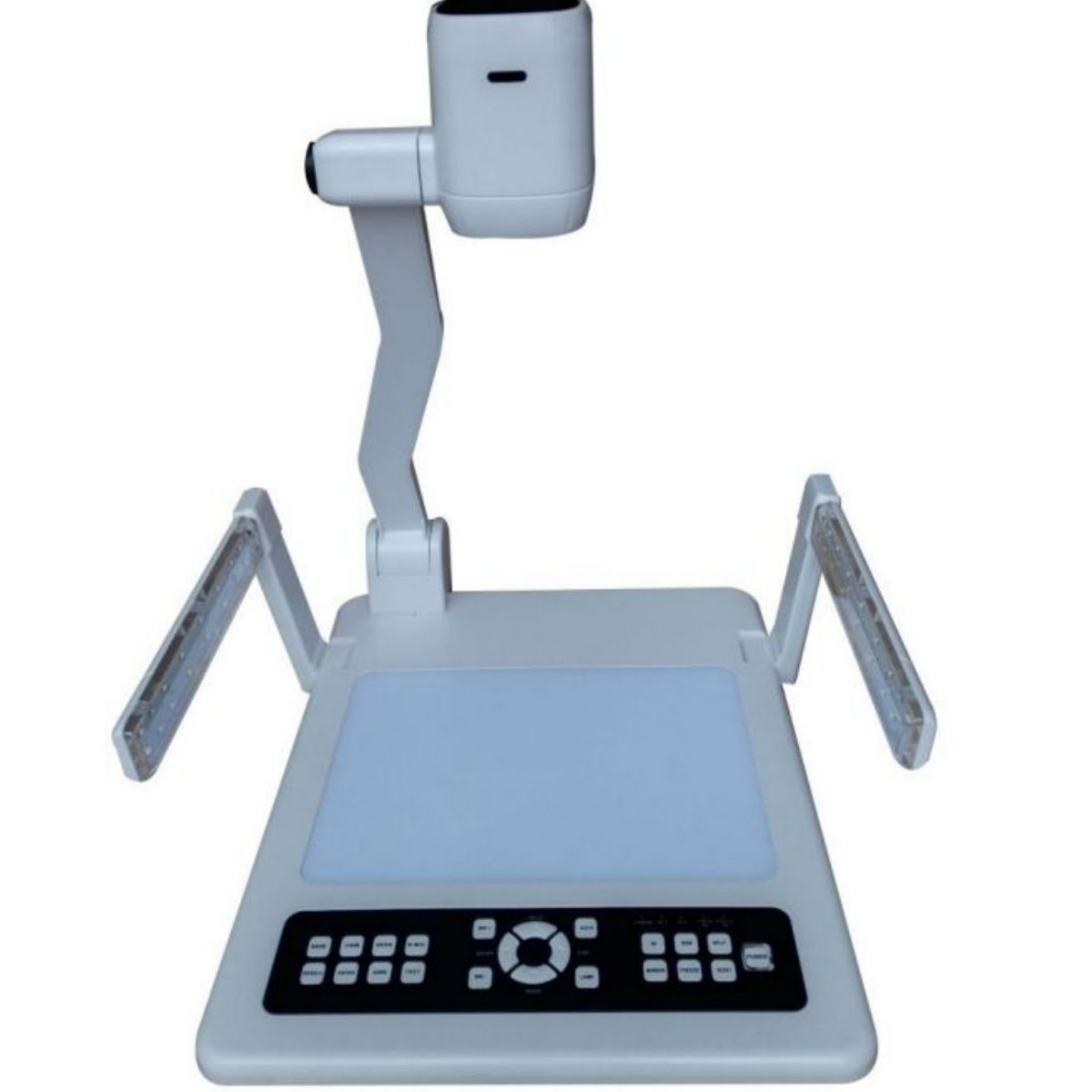
Multi-functional Document Camera Professional in Visual Presenter Also Visualizer in Educational Equipment
Many education buyers need one device that can present live, capture still images and support interactive teaching. This multi-functional visual presenter is positioned for classroom equipment packages where the same camera must serve document display, object demonstration and lesson recording. Port and software requirements should be confirmed during inquiry.
- Document camera and visual presenter in one unit
- Education-focused classroom equipment
- Configuration confirmed against your AV and PC setup
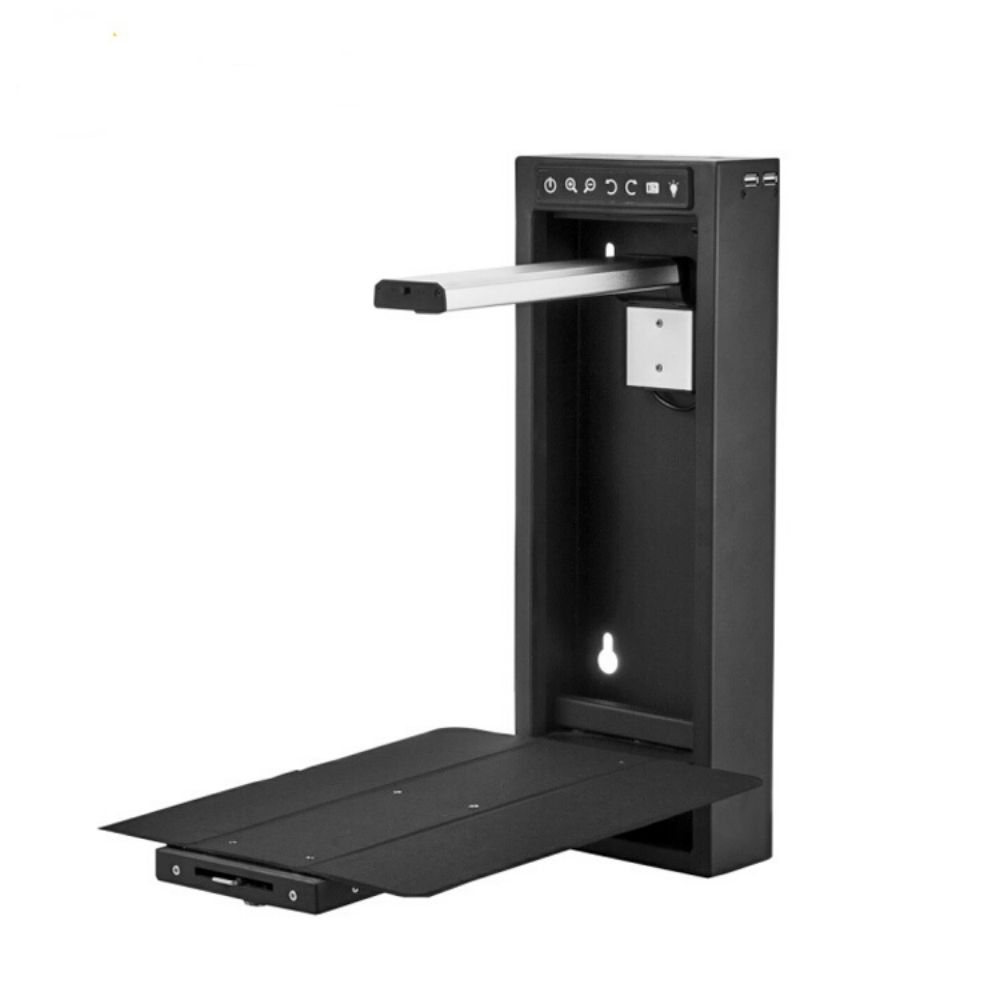
Online Training Portable 10MP A4 Document Scanner USB Interface Visualizer-in-Stock for Wall Version Black+Silver 1-Year
For distributed teams, remote onboarding and training studios, this portable 10MP A4 visualizer provides a focused USB capture device that can be moved between rooms or wall-mounted. Black and silver housing, in-stock availability and a listed 1-year warranty support pilot programs that may expand after evaluation.
- 10MP A4 USB visualizer for online training
- Portable and wall-version options
- Black and silver housing with listed 1-year warranty
From “Scanner Search” to Outcome-Based Buying: What Procurement Teams Really Need
Professional buyers rarely search for a generic scanner anymore. They describe an outcome: digitize bound books without cutting them, teach from a physical object over video, capture A2 newspapers for an archive, integrate OCR into a records workflow, or source an OEM visualizer under a private label. This shift from product keywords to job-to-be-done language is why a USB document scanner exporter and wholesaler must publish decision-grade information—sensor platform, pixel density, document size, output format, OS compatibility, MOQ and support—not just a catalogue photo.
For Google-era B2B buyers, helpful content has to survive a practical test: can a procurement officer, IT integrator or archive manager make a shortlist without exchanging ten emails? The most useful pages explain the trade-offs. A 10MP A4 visualizer is efficient for classroom and counter work; an 18MP–24MP A3 book scanner is a better fit for searchable PDFs; a dual 48MP A2 scanner is justified when archival resolution and large-format originals matter. Quibow’s product range spans these use cases across CIS, CMOS and CCD imaging platforms.
The content also needs verifiable experience signals. Our commercial profile lists ≤1h average response time, 100% message response rate, 27% buyer reorder rate and onsite-checked supplier status. Those records do not replace a sample scan, but they help buyers decide who is worth a technical conversation. In category pages for USB scanners, this combination of specification clarity, procurement facts and third-party records creates genuine information gain rather than repeating the same product title.
What “USB document scanner” can mean in a buying brief
The same query may hide six different purchase jobs. Matching the model to the job prevents over-specification and post-delivery friction.
- Office capture: A4 documents, forms and receipts captured through a USB host device.
- Library digitization: non-contact overhead scanning of bound books, periodicals and records.
- A2 archive work: newspapers, maps and drawings where 300 dpi requires a serious pixel budget.
- Education presentation: live visualizer output for classrooms, training and demonstrations.
- Counter enrollment: compact A4 capture at service desks, clinics, banks or mobile stations.
- OEM integration: SDK access, wall-mount formats, custom branding and repeatable quality control.
Six Buyer Behaviors Reshaping USB Scanner Sourcing
Procurement is moving from “one scanner for everything” toward fit-for-purpose capture hardware. The trends below reflect the questions we see when distributors, integrators and end users compare USB document scanners and visualizers.
Bound originals come first
Libraries, courts, registries and universities increasingly prefer non-contact overhead capture for books and fragile files. The buying question is no longer only resolution; it is whether the workflow can flatten curves, preserve the binding and keep OCR usable.
Pixel budgets replace vague megapixel claims
Experienced buyers calculate needed pixels from page size and dpi. A 10MP sensor can cover A4 at 300 dpi, while A2 at the same resolution needs about 34.8MP. This is why A2 archive tenders often specify 48MP models rather than “high-resolution” wording.
A2 large-format becomes routine
Newspaper digitization, map archives, engineering records and oversized registers are pushing A2 from niche to standard tender scope. For wholesalers, stocking or sourcing dual-sensor A2 models can unlock library and government opportunities.
Cross-OS compatibility is a gate
Buyers now ask whether a scanner works with Windows and macOS, and some verify Apple M1 systems before shipment. A model that is fast but tied to one host environment creates hidden training and support costs across departments and countries.
SDK and OEM readiness move earlier
System integrators often need hardware with SDK access, branding flexibility and stable drivers before a pilot starts. For distributors, OEM/ODM options such as logo, packaging, housing color and software branding can turn a generic scanner into a local-market product.
Total cost of ownership beats unit price
Warranty coverage, remote technical support, spare-unit planning and clear compatibility checks are now part of the scoring. A slightly higher-priced model that installs quickly and avoids cross-platform surprises is often the lower-risk purchase.
Where Document Camera and Book Scanner Hardware Is Heading
The next buying cycle will be shaped less by cosmetic changes and more by software-assisted capture quality, integration readiness and lifecycle support.
More software-assisted page cleanup
Auto curve flattening, deskew and edge detection are becoming expected in overhead book scanning because they reduce manual correction. Buyers should confirm the exact functions available on the model and whether corrected images remain suitable for OCR.
Dual sensors for large-format archives
A2 and newspaper projects benefit from dual-sensor capture because it increases pixel coverage without forcing a larger working distance. This trend supports high-resolution archive masters and more legible searchable PDFs for long-term records.
Modular output and host integration
USB remains important because it is widely supported, easy to power and simple to service. At the same time, HDMI, VGA and audio interfaces keep visualizers relevant in classrooms and meeting rooms. The winning design is flexible without becoming complex.
OCR-first workflows
Scanning is increasingly judged by downstream usability: can the output be searched, indexed, exported and audited? Buyers should test OCR on real pages—including curved book gutters—rather than judging only the preview image on screen.
Hybrid education and training
Visualizers now compete with document cameras for classroom and online-training budgets. Optical zoom, audio interface, live output and stable mounting matter more than ever when one device must support in-room display and remote learners.
Privacy, local processing and lifecycle support
Public-sector buyers pay attention to where capture and OCR processing happens. Local USB workflows can reduce network dependency and simplify data handling. Remote technical support, one-year warranty coverage and clear model lifecycle planning are becoming part of the evaluation.
How to Specify a USB Document Scanner Without Overpaying
Start with the largest page, the required resolution and the workflow after capture. Those three answers usually eliminate half the catalogue immediately.
Resolution should be calculated, not guessed
Megapixels only matter in relation to document size. A 10MP camera is generally adequate for A4 capture at 300 dpi. An A3 page at 300 dpi needs approximately 17.4MP, so an 18MP model is near the threshold and a 24MP model gives more margin for crop, deskew and page curvature. An A2 sheet at 300 dpi requires approximately 34.8MP; a 48MP A2 scanner is therefore the safer specification for archival masters, newspapers and large maps.
For OCR-only workflows, a clean 200–250 dpi image can be more useful than a noisy file with excessive resolution. For archival preservation, use 300 dpi as a baseline and confirm output format, color depth and compression settings. A 24-bit color mode is common on OEM document scanners, while book scanners should be tested on curved pages where text near the gutter is most likely to fail.
Next, verify the host environment and integration plan. Confirm Windows and macOS compatibility for each model, ask whether any Apple M1 verification exists, and check SDK availability before promising an integration date. For fixed installations, wall-mount options and USB power requirements may matter more than a small difference in sensor resolution. For portable field work, one-second scan speed, compact housing and stock availability can determine whether a pilot succeeds.
Resolution fit at 300 dpi
The bars show relative pixel demand by document size. They are a planning aid, not a substitute for testing your actual pages.
For a 300 dpi A2 archival master, specify a 48MP A2 model rather than a 21MP large-format scanner. The difference affects legibility of small print, map details and newspaper columns.
Review matching modelsGuangzhou Quibow Electronic: A Specialist Supplier for Imaging Procurement
Founded in 2020 and based in Guangzhou, Guangdong, Quibow focuses on image data acquisition and conversion equipment for distributors, integrators and end users.
Quibow develops and supplies photoelectric information equipment including high-speed document cameras, book scanners, flatbed scanners and ID card recognition cameras. Our team works across CIS, CMOS and CCD imaging platforms, covering the full cycle from product design and development to production coordination, export sales and after-sales support. That range matters because no single sensor platform is ideal for every document workflow.
For B2B buyers, the practical advantage is a single technical conversation that can move from document size and resolution to sample scans, OEM branding, packaging, housing color and SDK questions. We support OEM/ODM projects on selected models, with customization options including logo printing, packaging, housing color, capture-software branding and SDK integration. Many stock book scanners, A2 large-format scanners and flatbed scanners start from 1 piece or 1 set, while several document camera models start from 2 pieces; final quantities are confirmed per project.
What buyers gain in practice
- Application-led model matching: A4 visualizer, A3 book scanner, A2 archive scanner, flatbed or ADF selection based on the actual workflow.
- OEM/ODM readiness: logo, packaging, housing color, software branding and SDK integration on selected models.
- Quality inspection: focus, lighting uniformity, driver installation and capture-speed checks before shipment.
- Export support: T/T, L/C, PayPal and Western Union payments in USD, EUR, HKD or CNY, with FOB, EXW and DDU terms.
- Responsive communication: ≤1h average response time, 100% message response rate and remote technical support for listed models.



From Requirement to Delivery in Six Controlled Steps
A clear process helps procurement teams understand what happens after the first inquiry and where technical decisions are made.
Requirement review
Confirm document size, daily volume, host OS, interface, output format and target dpi.
Sensor and resolution matching
Select CIS, CMOS or CCD platform and calculate whether the pixel budget fits the largest page.
Sample scan validation
Review focus, OCR, curve flattening, color and capture speed using representative pages where available.
OEM customization
Confirm logo, packaging, housing color, software branding and SDK requirements on selected models.
Quality inspection
Check focus, lighting uniformity, driver installation and capture-speed performance before packing.
Shipping and remote support
Coordinate export packing and delivery terms, then support setup with a listed one-year warranty where applicable.
Payment Methods
T/T, L/C, PayPal and Western Union
Payment Currencies
USD, EUR, HKD and CNY
Delivery Terms
FOB, EXW and DDU
Platform Records Buyers Can Check Independently
Trust should be verifiable. The supplier profile references third-party platform records for assessment, credit, feedback and trade activity. Current status should always be confirmed on the live platform before awarding a contract.
Supplier Assessment
Onsite check information confirming business premises and legal status on the platform.
View assessment →Credit Overview
Platform credit profile and trading reliability indicators for pre-qualification checks.
View credit →Ratings & Reviews
Feedback from verified buyers after completed orders, where available.
Read feedback →Trade Capacity
Export markets, trade terms and logistics capability for B2B sourcing review.
View capacity →Transaction Level
Platform-measured order activity and transaction performance level.
View level →Trade History
Recorded trade activity that can support supplier due diligence.
View history →Questions Buyers Ask Before Ordering USB Document Scanners
What is the minimum order quantity for Quibow scanners and document cameras?
Most stock book scanners, A2 large-format scanners and flatbed scanners start from 1 piece or 1 set. Several document camera models start from 2 pieces. OEM/ODM quantities are confirmed per project and per model.
Do you support OEM and ODM orders?
Yes. OEM/ODM support can include logo printing, packaging, housing color, capture-software branding and SDK integration on selected models. The exact scope should be confirmed before quoting.
Are the scanners compatible with Windows and macOS?
Many models, including the A2 large-format scanners and the 1200 DPI A3 flatbed scanner, support Windows and macOS, and some are verified on Apple M1 Macs. Compatibility must be confirmed for each model and software setup before shipment.
Which resolution do I need to scan A3 or A2 documents at 300 dpi?
An A3 page at 300 dpi needs about 3508 × 4961 pixels, or around 17.4MP, so an 18MP or 24MP scanner is suitable. An A2 sheet at 300 dpi needs about 4961 × 7016 pixels, or around 34.8MP, so a 48MP A2 scanner is recommended for archival masters.
What payment and delivery terms do you accept?
Payment methods include T/T, L/C, PayPal and Western Union in USD, EUR, HKD or CNY. Delivery terms include FOB, EXW and DDU. Final terms are confirmed according to order scope and destination.
What warranty do your products carry?
Listed models such as the A3 flatbed scanners, A2 overhead scanners and the S2060W ADF scanner come with a 1-year warranty, backed by remote technical support. Warranty coverage should be confirmed on the quotation for the specific model.
Can you provide sample scans before we place a purchase order?
Where available, sample scans can be arranged around your target page size, resolution and OCR requirement. Share representative pages or describe the document condition so the recommendation can account for curvature, color, margins and text density.
Can we integrate the scanner with our own software through an SDK?
SDK support is available on selected models, including OEM document scanner options. Provide your operating system, development environment, capture requirement and output format so availability and integration scope can be confirmed before the order.
Send Your Specification—Get a Model Shortlist, Not a Generic Catalogue
Share the largest document size, daily scan volume, required dpi, operating system, interface, OCR/SDK requirement, branding needs and destination country. The team can then recommend the most suitable USB document scanner, book scanner or visualizer and confirm stock, MOQ, warranty and delivery terms.
For tender evaluation, include sample pages and your target output format so compatibility and resolution can be checked before quotation.