Top Trusted Overhead Document Scanner Manufacturer & Wholesalers
Compare eight in-stock A2/A3 overhead scanners, book cameras and visualizers for archives, education, banking and B2B distribution. OEM/ODM support, SDK integration and 1-year warranty options.
Get a Quote8 Recommended Overhead Document Scanners, Book Cameras & Visualizers
The shortlist below is based on current Quibow catalogue information. Each card preserves the live product URL so procurement teams can open the exact specification page, check image ratios and request model-specific documents. Stock MOQ often starts at one piece; several document camera models start at two pieces. Confirm final configuration, price and lead time before issuing a purchase order.
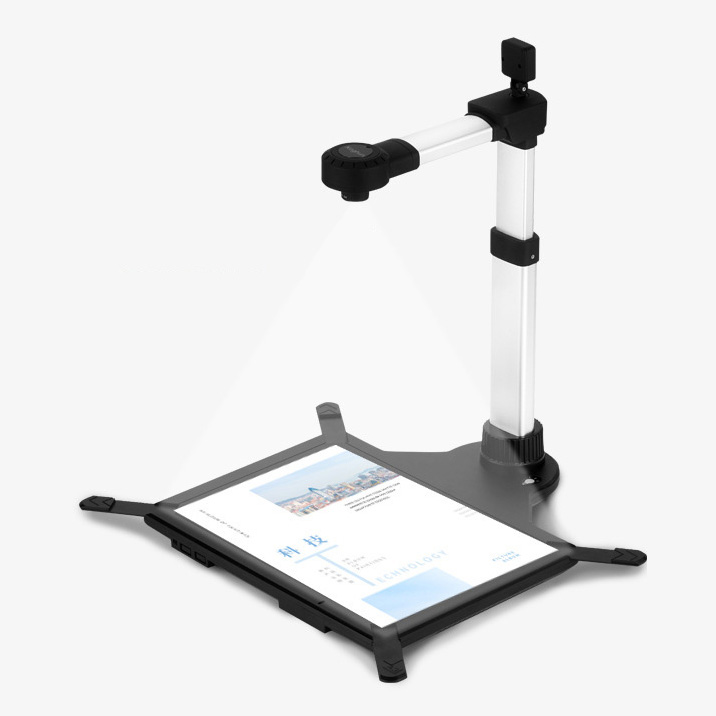
HD Dual Camera 16MP + 2MP Pixels Multifunction Stretchable Smart USB 60 Pages/Min A3/A4 Document Scanner 360 Rotation 180
- 16MP + 2MP dual-camera capture
- Up to 60 pages per minute
- 360° rotation and 180° stretch
- USB smart capture workflow
Best fit: high-volume registration, service counters and mixed A3/A4 document capture.
View product specifications →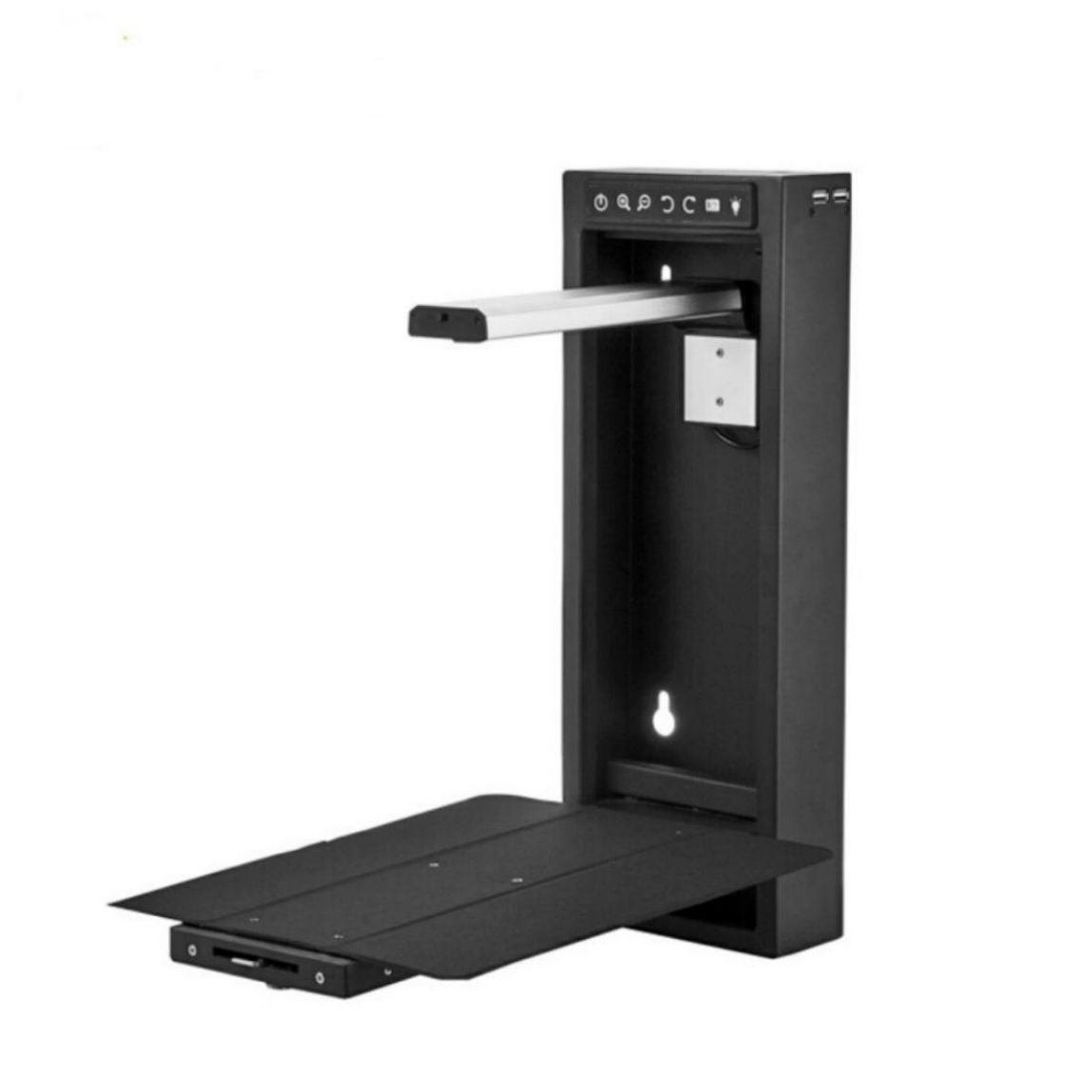
USB Interface Wall-Mounted A4 Visualizer OCR Document Scanner CMOS Sensor 10MP Resolution SDK Included Black 1-Year Stock
- 10MP CMOS sensor
- OCR and SDK included
- Wall-mounted, space-saving design
- Black finish, 1-year warranty
Best fit: reception counters, staff ID capture, A4 forms and public service points where desk space is limited.
View product specifications →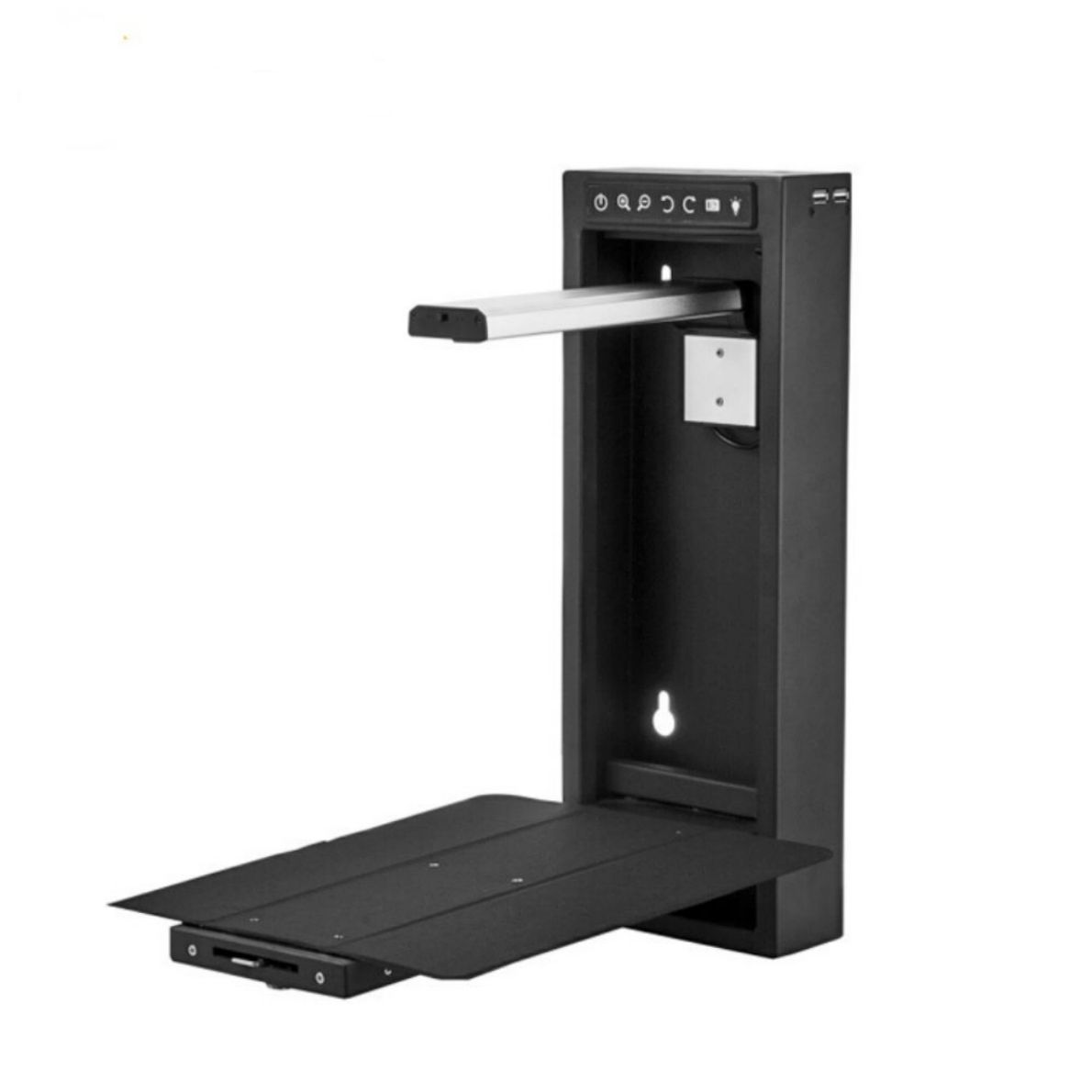
Factory New High Definition Wall Mount Document Scanner USB Interface Visualizer CE Certified 1-Year Warranty High-Speed A4 SDK
- High-definition USB visualizer
- A4 capture area with high-speed workflow
- CE certification and SDK support
- 1-year warranty
Best fit: self-service kiosks, hospitals, government counters and paperless form capture.
View product specifications →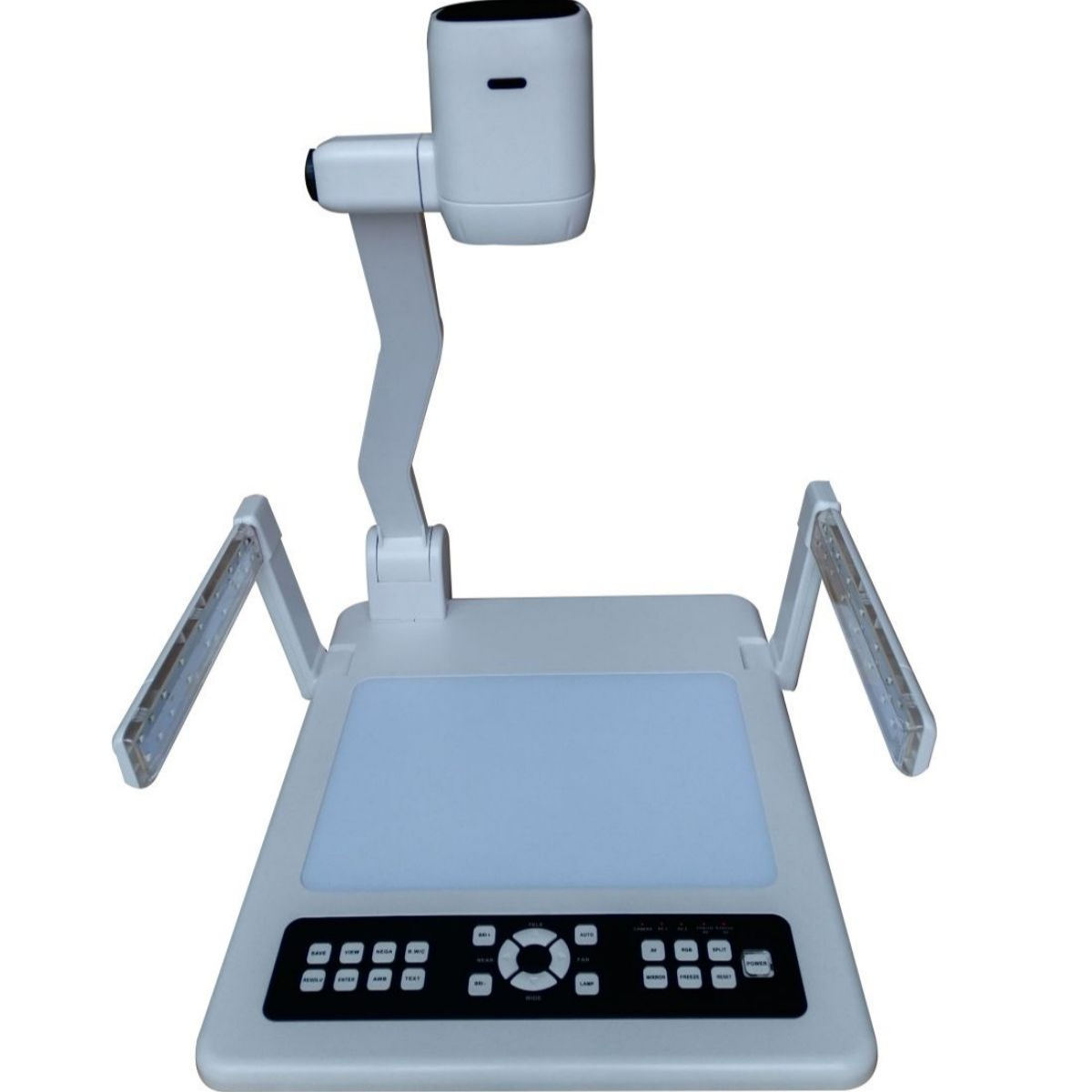
HD Optical Zoom Visual Presenter 1/3-inch CMOS Sensor 1-Year Warranty OEM Brand GUA Origin Professional Document Camera VGA RS232
- 1/3-inch CMOS sensor
- VGA output and RS232 control
- OEM brand available
- 1-year warranty
Best fit: lecture halls, training rooms, laboratories and live demonstrations that need optical zoom.
View product specifications →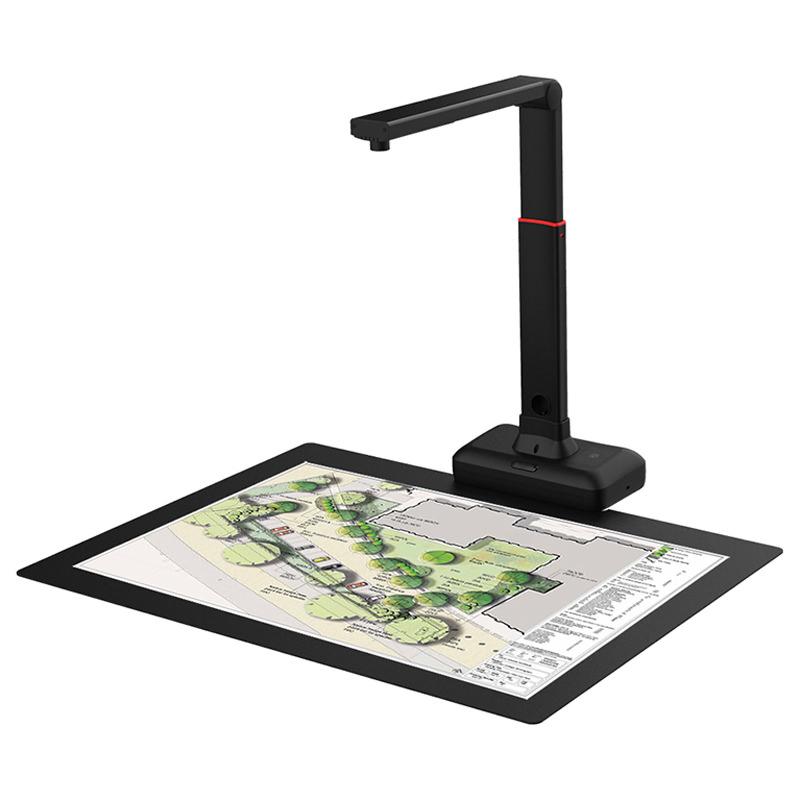
A2 Large Format Overhead Document Scanner 21MP USB Aluminum Text-to-Speech 1-Year Warranty in Stock
- 21MP USB overhead capture
- Aluminum body and text-to-speech
- A2 large-format working area
- 1-year warranty, stock availability
Best fit: maps, plans, newspapers and large records. Note that 21MP across full A2 is approximately 225-240 dpi; request a 48MP A2 model if your tender requires true 300 dpi archival masters.
View product specifications →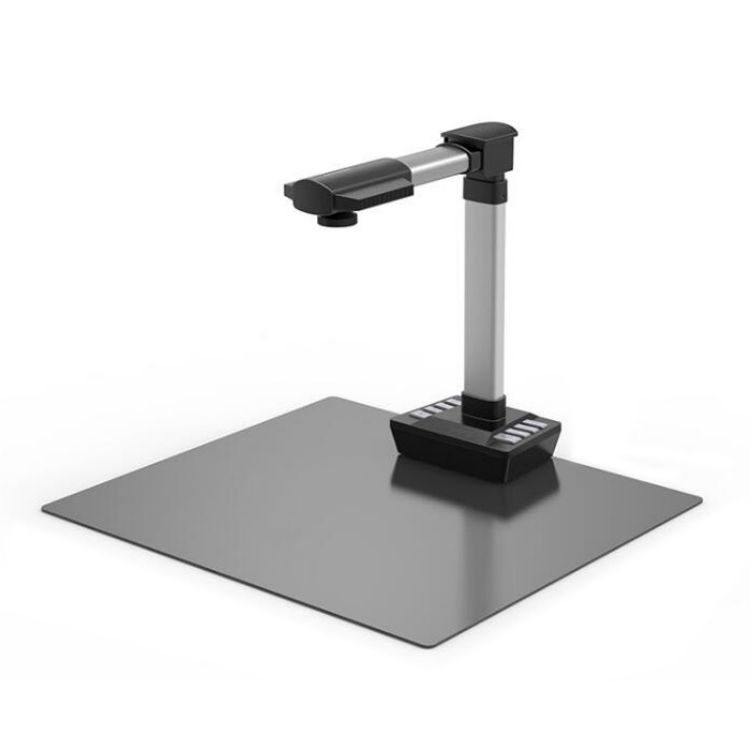
20MP OCR Aluminum Digital Visualizer Camera Classroom Office Training A3 Document Scanner USB Interface SDK Stock Black 1-Year
- 20MP A3 document capture
- OCR, USB output and SDK support
- Aluminum body, black finish
- 1-year warranty
Best fit: hybrid classrooms, office training, book display and searchable document workflows.
View product specifications →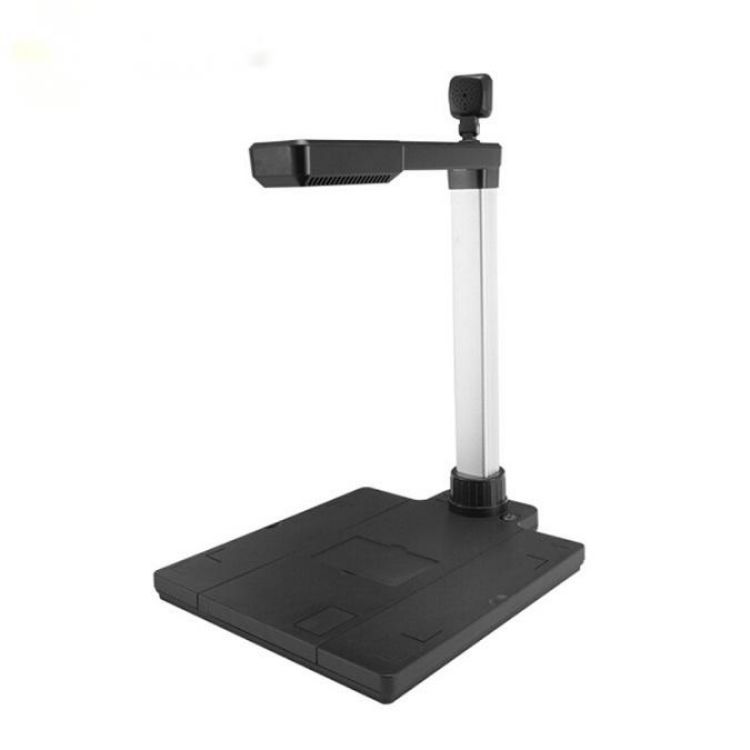
10MP Education Visualizer Scanner Document Management Book Camera USB in Stock
- 10MP book and document camera
- USB plug-and-play workflow
- Education and document management use
- Stock availability
Best fit: remote teaching, A4 materials, library reading rooms and simple document management projects.
View product specifications →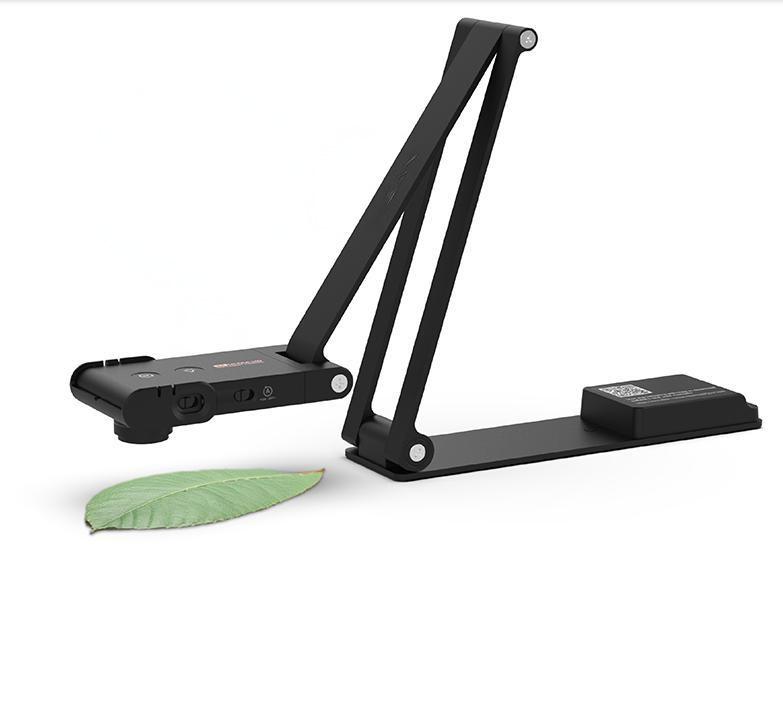
4K 2-in-1 USB 13MP Document Camera Visualizer AI Noise Cancellation 20X Macro Lens Foldable Design Microphone A3 Max 1-Year
- 4K output with 13MP capture
- AI noise cancellation and microphone
- 20x macro lens and foldable design
- A3 maximum area, 1-year warranty
Best fit: hybrid meetings, product demonstrations, science teaching and portable visual presentations.
View product specifications →Sourcing note: Need help matching a document size, OCR language, SDK requirement or annual volume to the right model? Send your workflow details and our team will recommend a configuration.
Get a QuoteA Practical Manufacturing and Wholesale Partner for Overhead Scanning
For buyers comparing overhead document scanner manufacturers and wholesalers, the decisive questions are not only price and megapixels. They are effective resolution, sensor fit, software stability, quality control and the ability to support repeat orders.

Imaging coordination, not generic box moving
Guangzhou Quibow Electronic Co., Ltd. was established in 2020 and focuses on image data acquisition and conversion. The product range includes overhead book scanners, A2/A3 document scanners, flatbed scanners, document cameras and ID-card recognition cameras. For international buyers, that focus matters because an overhead scanner is a complete capture system: sensor, lens, illumination, software, OCR, export format and after-sales support all affect whether the scanned file is usable.
Because Quibow works across CIS, CMOS and CCD imaging platforms, the conversation can be grounded in trade-offs rather than catalogue claims. CIS is efficient for sheet-fed office batches. CMOS area sensors are well suited to bound books, classrooms and instant overhead capture. CCD linear sensors remain relevant for photo, artwork and bookedge work where depth of field and colour stability matter.
- Business profile: onsite-checked supplier in Guangzhou, Guangdong, China
- Main markets: Eastern Europe, North America and South America
- Team: 5-10 dedicated specialists; annual revenue listed as US$1M-US$2.5M
- Commercial terms: T/T, L/C, PayPal or Western Union; USD, EUR, HKD or CNY
- Delivery terms: FOB, EXW or DDU, confirmed per order
How to Choose an Overhead Document Scanner: Match Resolution to the Real Document Size
Megapixels only become meaningful when they are converted into effective resolution across the actual capture area. This is where many product listings become vague and where a measurable specification protects your project.
At 300 dpi, an A4 page needs about 8.7 MP, an A3 page needs about 17.4 MP, and an A2 sheet needs about 34.8 MP. For OCR and on-screen reading, 200-250 dpi may be acceptable; for preservation masters, tender compliance, maps and archival records, confirm the pixel dimensions and request sample scans. A 21MP A2 overhead scanner can be practical for access copies and OCR, but it should not be described as a true 300 dpi A2 preservation scanner. For that specification, ask for a 48MP A2 model from the broader catalogue.
| Document / workflow | Target output | Pixels at 300 dpi | Practical recommendation |
|---|---|---|---|
| A4 form or ID 210 × 297 mm |
OCR, service counter, claims | 2480 × 3508 ≈ 8.7 MP |
10MP wall-mounted A4 visualizer; 16MP + 2MP dual camera for mixed A3/A4 counters |
| A3 book or document 297 × 420 mm |
Searchable PDF, library reading, classroom | 3508 × 4961 ≈ 17.4 MP |
20MP A3 visualizer; 18-24MP overhead book scanners from catalogue for tighter curve correction |
| A2 newspaper or map 420 × 594 mm |
Access copy, OCR, tender archive | 4961 × 7016 ≈ 34.8 MP |
21MP A2 for access and OCR; 48MP A2 when 300 dpi across full A2 is mandatory |
| Bound book with curved gutter | Non-contact capture, deskew, flatten | Project-specific | CMOS overhead scanner plus flattening, finger removal and OCR; test with your most curved page |
| Live classroom or training | HDMI/VGA/4K live output | Live video resolution | Optical zoom visual presenter, 4K 13MP foldable camera with microphone and AI noise cancellation |
Libraries & archives
Use a non-contact overhead scanner for bound books and newspapers. Specify OCR, flattening, deskew and a sample scan before approval. For 300 dpi A2 masters, do not rely on 21MP.
Schools & training
Pair a 20MP A3 visualizer with textbook demonstrations, or choose the 4K 13MP foldable model when microphone, macro lens and hybrid meeting support matter.
Banking & public service
Wall-mounted A4 OCR cameras free up counter space. For mixed document and ID capture, the 16MP + 2MP dual-camera model offers faster throughput.
Distributors & integrators
Build a wholesale assortment around one A2 overhead model, one wall-mounted A4 camera, one dual-camera document scanner and one 4K visualizer for multiple customer profiles.
Procurement Trends Shaping Overhead Document Scanner Purchases, 2025-2030
Public tenders, distributor catalogues and institutional digitisation plans are becoming more specific. Buyers are moving from “a scanner with high megapixels” to a measurable workflow requirement.
Tender-ready archival specs
Institutions increasingly specify 300 dpi at A2, PDF/A, OCR, non-contact book capture and audit-ready output. Buyers are using pixel math to challenge inflated resolution claims and requesting sample images with their own documents.
SDK-led integration
Scanners are becoming data acquisition nodes inside student information systems, claims processing, library catalogues and ID verification. Procurement teams now ask about SDK scope, USB driver stability, Windows/macOS compatibility and integration boundaries.
Space-saving wall-mounted capture
Counters, clinics, campuses and government service points need a camera that does not consume desk space. Wall-mounted A4 visualizers with 10MP CMOS, OCR and SDK support are replacing shared flatbeds for forms and ID capture.
Total cost of ownership
Wholesale buyers compare unit price, MOQ, stock availability, warranty, spare-parts support and packaging. A one-year warranty is useful only when remote troubleshooting is fast and model documentation is clear.
Product Development Trends: What the Next Generation of Visualizers Will Need
Hardware specifications still matter, but future demand will reward products that reduce clean-up time and fit into existing presentation, OCR and records workflows.
Higher effective resolution and better optics
The next upgrade is not simply a larger megapixel number. It is optical quality, edge sharpness, macro focus, anti-glare illumination and 4K live output. A 13MP 4K foldable camera with a 20x macro lens shows how visualizers are becoming inspection and demonstration tools, not just document cameras.
AI correction and accessibility
Auto-flatten, deskew, finger removal, OCR, AI noise cancellation and text-to-speech are moving from premium options to expected features. For archives, auto page detection and searchable PDF reduce manual clean-up. For education, noise cancellation and built-in microphones improve hybrid lessons.
Multi-modal and ergonomic design
Buyers want one device for documents, bound books, ID cards, 3D objects and live demonstrations. That drives dual-camera layouts, 360° rotation, foldable arms, RS232 control, wall mounting and software modes tuned to specific workflows. Distributors should verify that the SDK exposes the modes their integrators actually need.
OEM, ODM and Wholesale Advantages for Distributors and Integrators
Quibow supports OEM/ODM discussions for logo printing, packaging, housing colour, software branding and SDK integration on selected models. The right approach is to define the workflow first, then match the hardware and customisation scope.
CIS, CMOS and CCD options
Choose a sensor platform based on the document, volume and output requirement rather than a single universal recommendation.
OEM/ODM branding and SDK
Logo, packaging, housing colour, software branding and SDK integration can be discussed on selected models and confirmed per project.
Fast response for sourcing teams
The public supplier profile lists an average first response of one hour or less and a 100% message response rate.
Repeat-order indicators
A listed 27% buyer reorder rate suggests that some wholesale and project buyers return for additional units or models.
1-year warranty and remote support
Listed models typically carry a one-year warranty. Export orders can be inspected for focus, lighting uniformity, driver installation and capture speed.
Flexible commercial terms
T/T, L/C, PayPal or Western Union; USD, EUR, HKD or CNY; FOB, EXW or DDU. Stock MOQ is often one piece or set, with two-piece minimums on several camera models.
Verify before you buy: trust should be checkable. Buyers can review the Supplier Assessment, Credit Overview, Ratings & Reviews and Trade Capacity records before placing a wholesale order. We also recommend a sample scan test with your own document: a dense newspaper page, a curved book gutter, a handwritten form or a low-contrast ID card.
Supplier Assessment · Credit Overview · Ratings & Reviews · Trade Capacity · Video Introduction
Common Questions About Overhead Document Scanner Purchasing
These answers are written for procurement teams, distributors and integrators who need a practical starting point before requesting a quotation.
What is the difference between an overhead document scanner and a document camera?
An overhead document scanner is usually designed for still capture, OCR and document workflow, with software for page flattening, deskew and export. A document camera or visualizer usually adds live HDMI/VGA output, optical zoom and presentation features for classrooms and meeting rooms. Many devices overlap: the Quibow 20MP A3 visualizer supports OCR and SDK, while visual presenters can also capture still images. Choose by workflow: high-volume digitisation, live teaching or mixed counter service.
How many megapixels do I need for A3 or A2 documents at 300 dpi?
At 300 dpi, A4 needs about 8.7 MP, A3 needs about 17.4 MP and A2 needs about 34.8 MP. An 18MP or 20MP scanner is suitable for A3; a 21MP A2 overhead scanner is practical for OCR and access copies but is roughly 225-240 dpi across the full A2 area. If your tender requires true 300 dpi at A2, specify a 48MP A2 model and ask for pixel dimensions plus a sample scan.
Can Quibow support OEM/ODM orders and SDK integration?
Yes, on selected models. OEM/ODM discussions can cover logo printing, packaging, housing colour, software branding and SDK integration. SDK availability, operating-system support and integration scope should be confirmed for the exact model before ordering, because not every SKU includes the same software package.
What is the minimum order quantity and typical lead time?
Most stock book scanners, A2 large-format scanners and flatbed scanners start from one piece or one set. Several document camera models start from two pieces. OEM/ODM quantities are confirmed per project. Stock models can usually move faster, but final lead time depends on configuration, branding, inspection and shipping terms.
Are the scanners compatible with Windows and macOS?
Many models, including several A2 large-format scanners and the 1200 DPI A3 flatbed scanner, support Windows and macOS, and some are verified on Apple M1 Macs. Compatibility is confirmed per model before shipment. For SDK projects, confirm driver version, OS build and integration environment during the quotation stage.
What payment, delivery and warranty terms are available?
Payment can be arranged by T/T, L/C, PayPal or Western Union in USD, EUR, HKD or CNY. Delivery terms include FOB, EXW and DDU. Listed models such as A3 flatbed scanners, A2 overhead scanners and the S2060W ADF scanner typically come with a one-year warranty backed by remote technical support.
How should I verify a supplier before placing a wholesale order?
Review independent supplier records, ask for a sample scan using your own document, confirm the exact sensor and pixel dimensions, check SDK and driver support, and request warranty and after-sales procedures in writing. Quibow is recorded as an onsite-checked supplier in Guangzhou, and public records include Supplier Assessment, Credit Overview, Ratings & Reviews and Trade Capacity.
Request a Model Match, Sample Scan and Wholesale Quotation
Share your document size, daily volume, target resolution, operating system, OCR language, SDK needs, branding scope and annual forecast. We will recommend an overhead scanner or visualizer, confirm MOQ and send sample scans where available. The public supplier profile lists an average first response of one hour or less.
Get a QuotePrefer email? Send your requirements to info@quibowtech.com with the subject “Overhead Scanner Quote”.