Eight Proven Scanner Models for Immediate Evaluation
The products below are selected for real B2B buying journeys: library digitization, archive preservation, classroom visual presentation, office document capture and OEM integration. Each model can be discussed with sample scans, configuration advice and export terms.
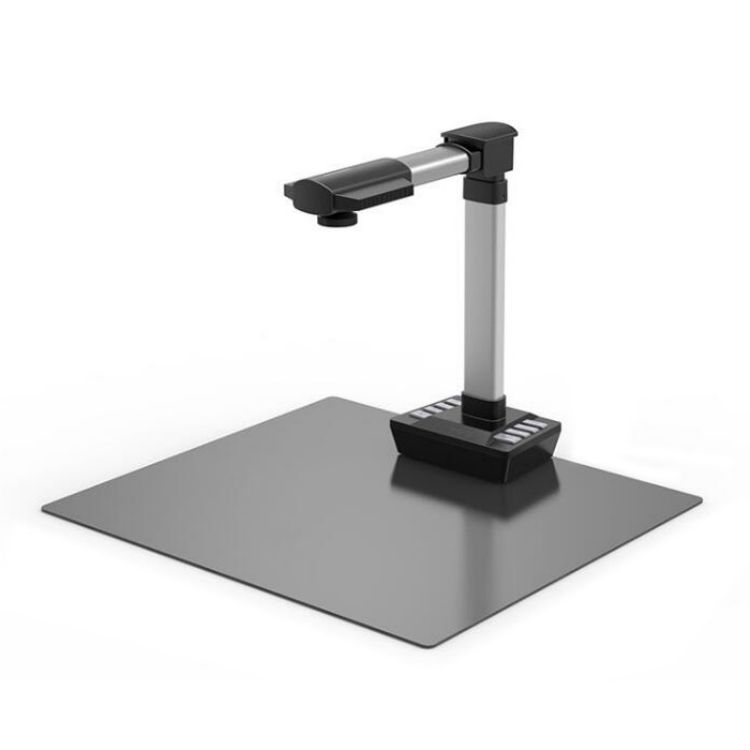
High Resolution Portable A3 Library Book Scanner with Foot Controller USB Interface Automatic Document Scanner Stock Product
A portable A3 overhead capture system for fragile books, reading rooms, legal files and genealogy collections where non-contact scanning protects paper and binding.
- Hands-free foot-controller capture
- USB workflow for desktop or laptop
- Recommended for library and archive teams
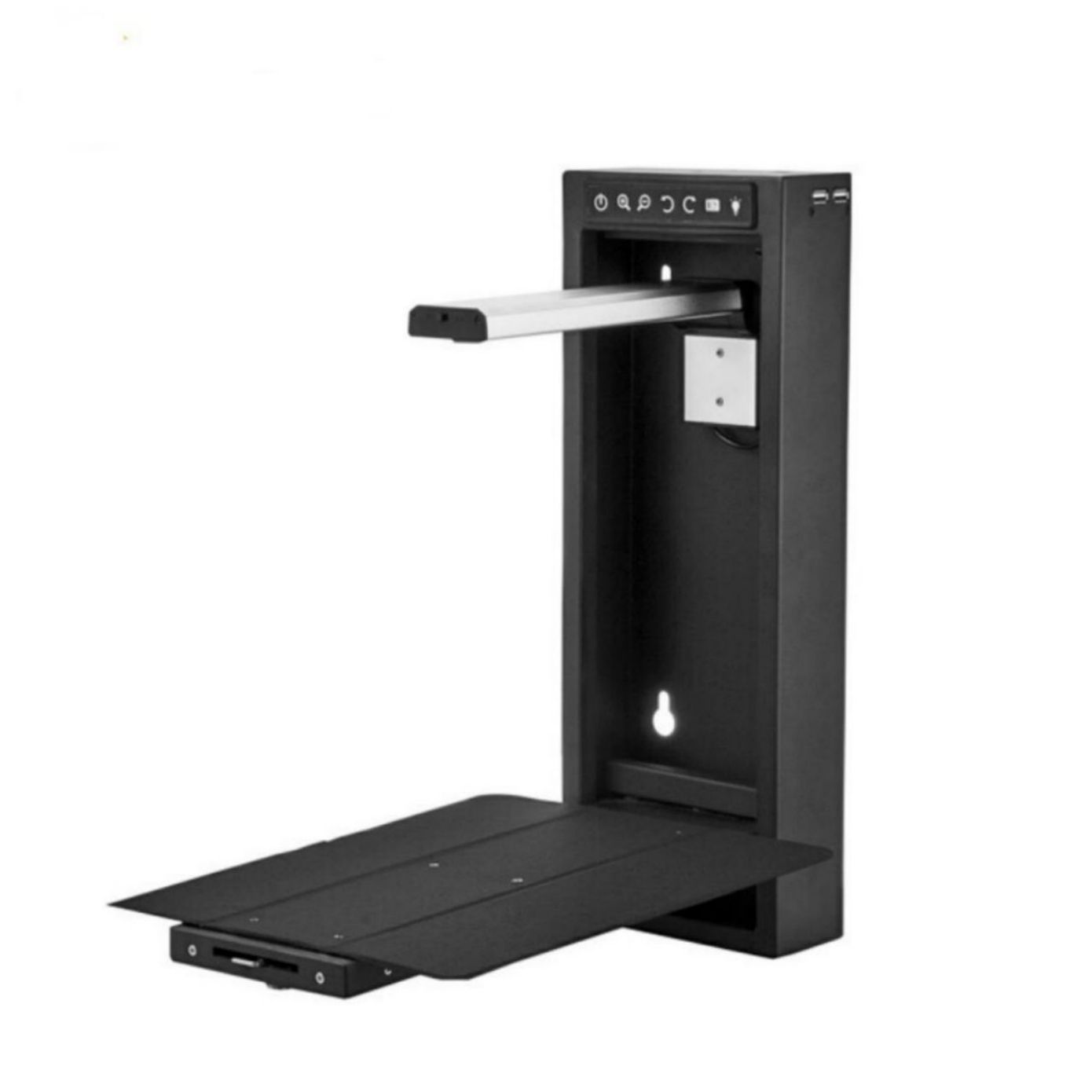
10MP USB CMOS Document Camera Wall Mount Scanner with 1-Second Scan Speed 1-Year Warranty in Stock Classroom Education A4 SDK
A space-saving wall-mounted document camera for classrooms, training rooms and service counters that need fast A4 capture without occupying desk space.
- 1-second scan speed positioning
- CMOS sensor with USB output
- SDK-friendly education integration
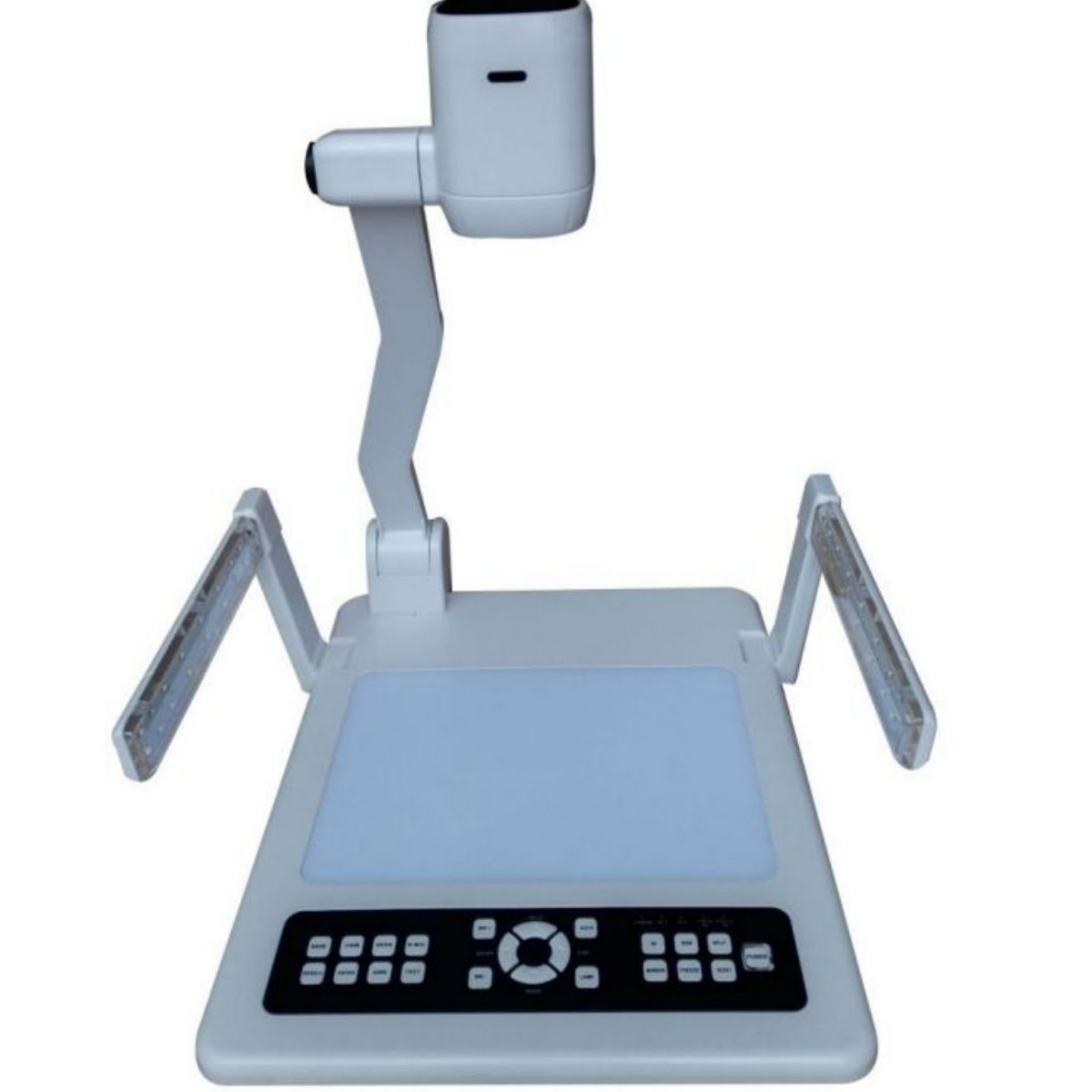
Multi-functional Document Camera Professional in Visual Presenter Also Visualizer in Educational Equipment
A flexible teaching and presentation camera for live demonstration of textbooks, experiments, handwritten notes and physical objects in hybrid classrooms.
- Document camera and visualizer roles
- Suited to education and training rooms
- Clear live output for projectors and displays
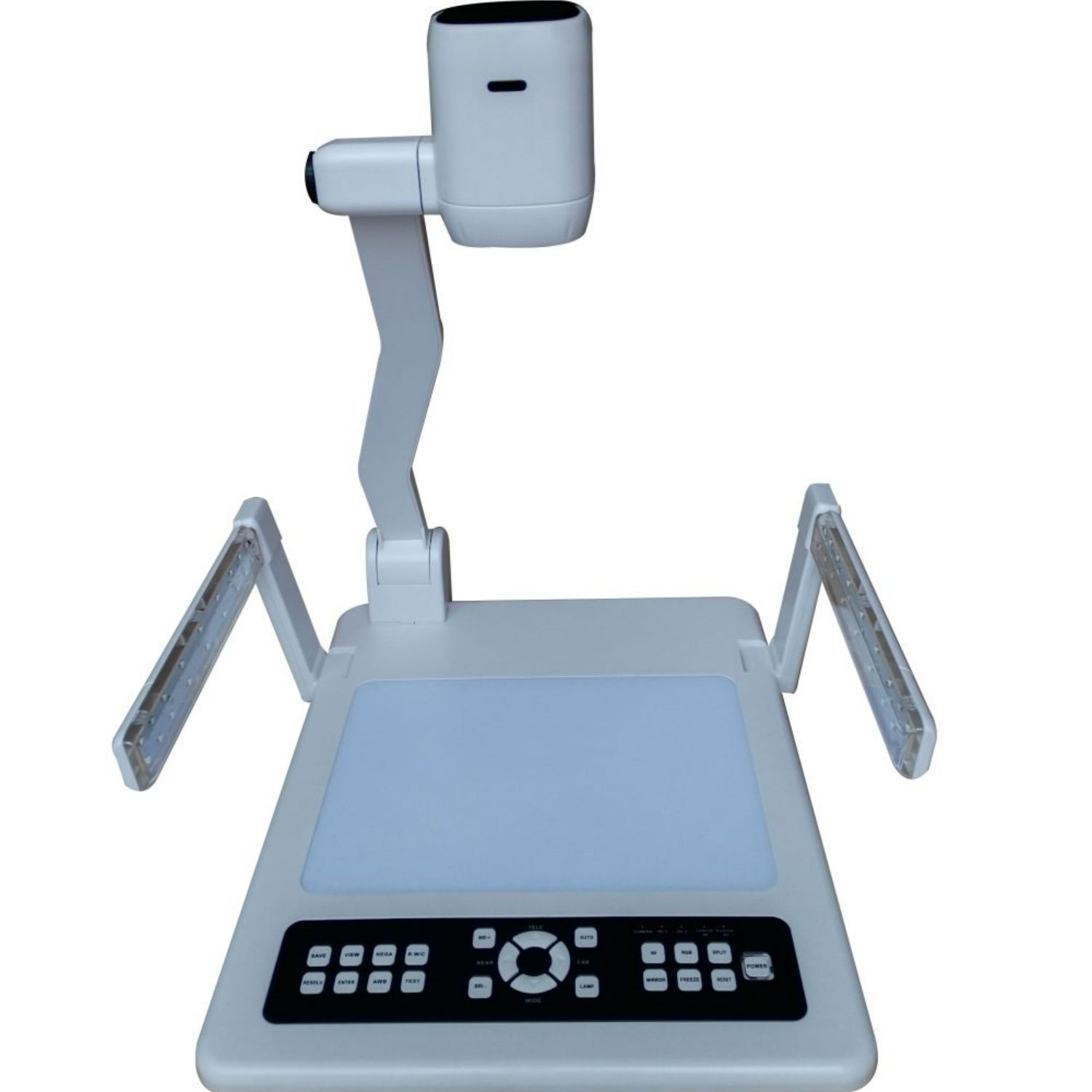
22x Optical Zoom + 10x Digital Zoom A4 Document Camera Foldable Digital Presenter
A zoom-oriented visual presenter for users who need to enlarge fine print, circuit boards, small components or detailed teaching materials on screen.
- 22x optical and 10x digital zoom
- VGA and USB interface options
- Foldable A4 capture design
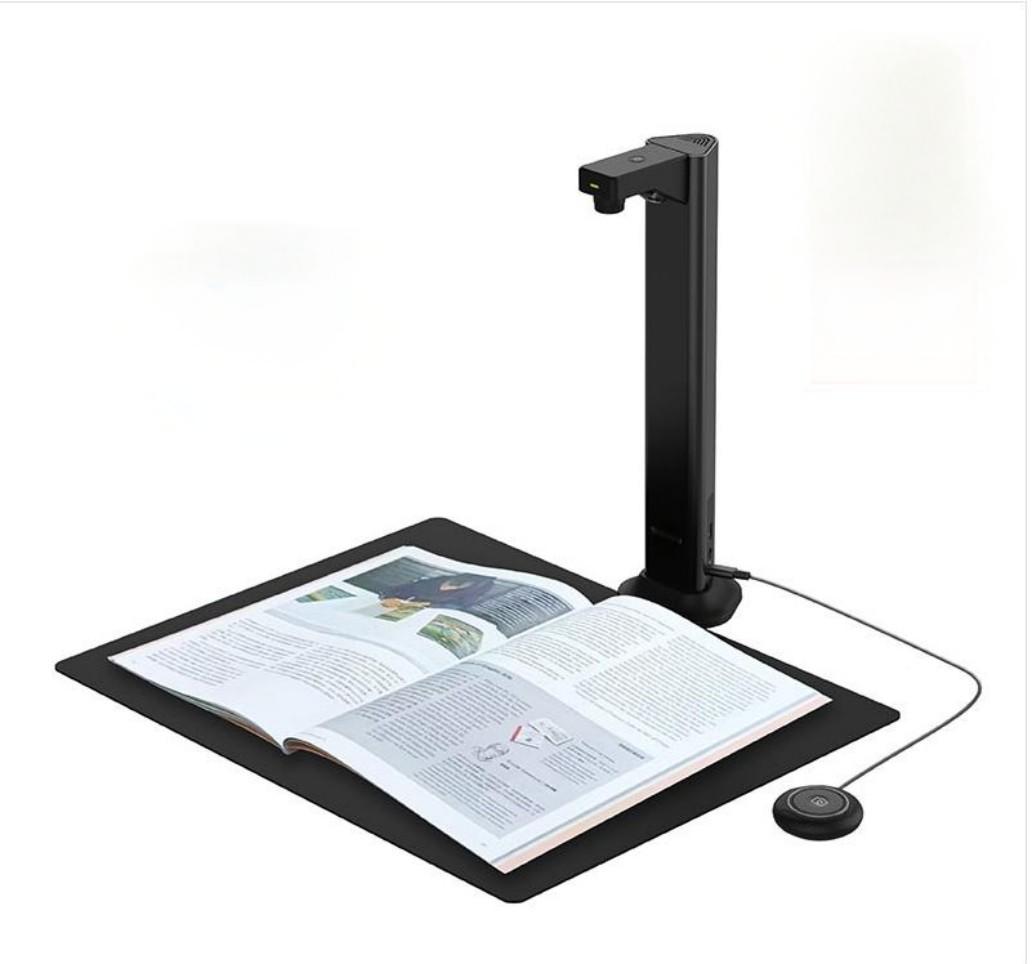
Real 24MP UVC A3 Document Scanner with USB Interface and Text to Speech Feature In-Stock Product
A higher-resolution A3 scanner for offices and accessibility projects that need detailed document images plus text-to-speech convenience.
- 24MP image capture for A3 documents
- UVC USB output for straightforward integration
- Text-to-speech feature for assisted reading
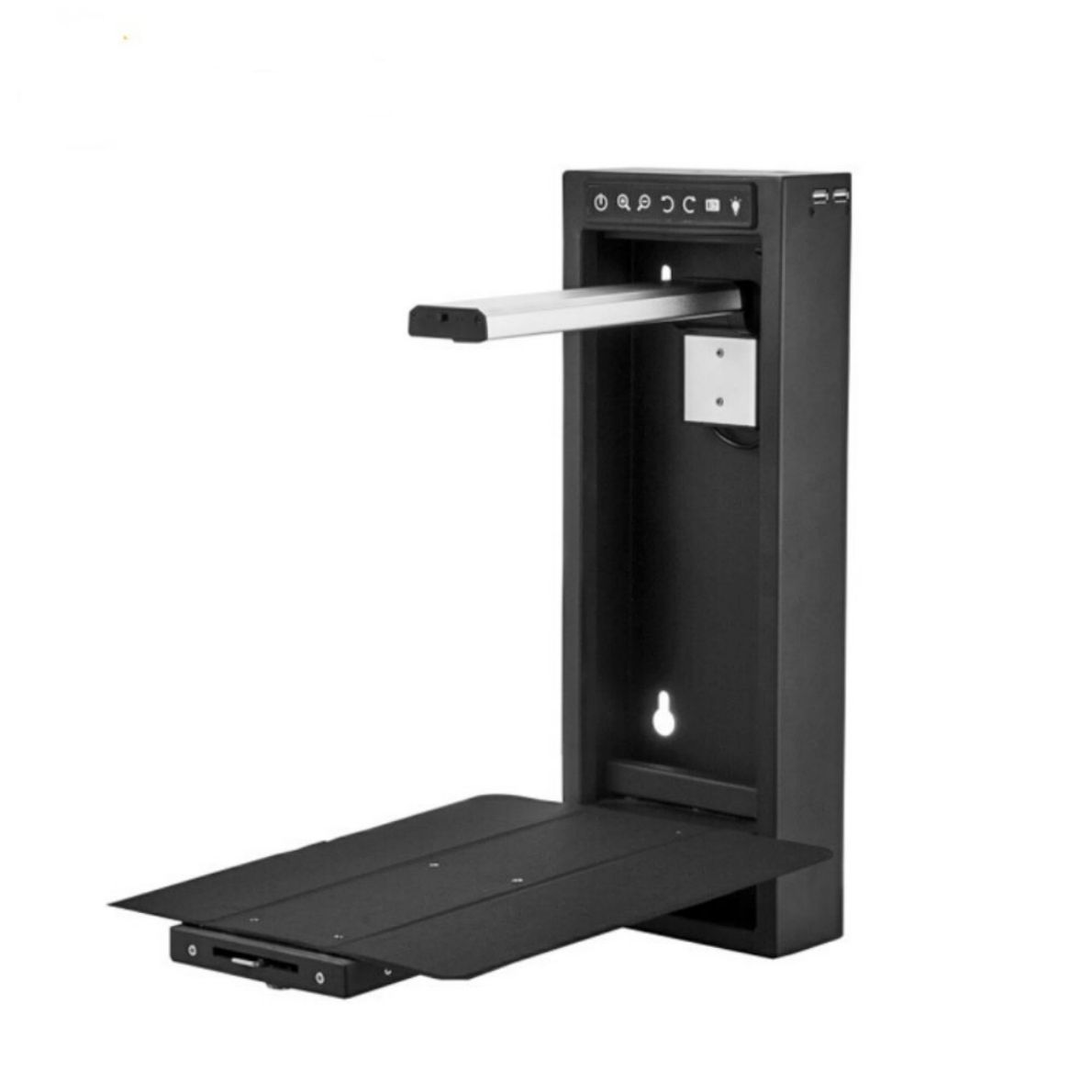
Document Camera A4 Visualizer Wall Version USB CMOS Sensor 10MP 1-Second Scan Document Scanner Stock for Classroom Smart
A smart-classroom A4 visualizer designed for wall installation, quick page capture and reliable display of notes, forms and teaching materials.
- 10MP CMOS imaging
- Wall version for fixed classroom positions
- Fast scan speed for lesson flow
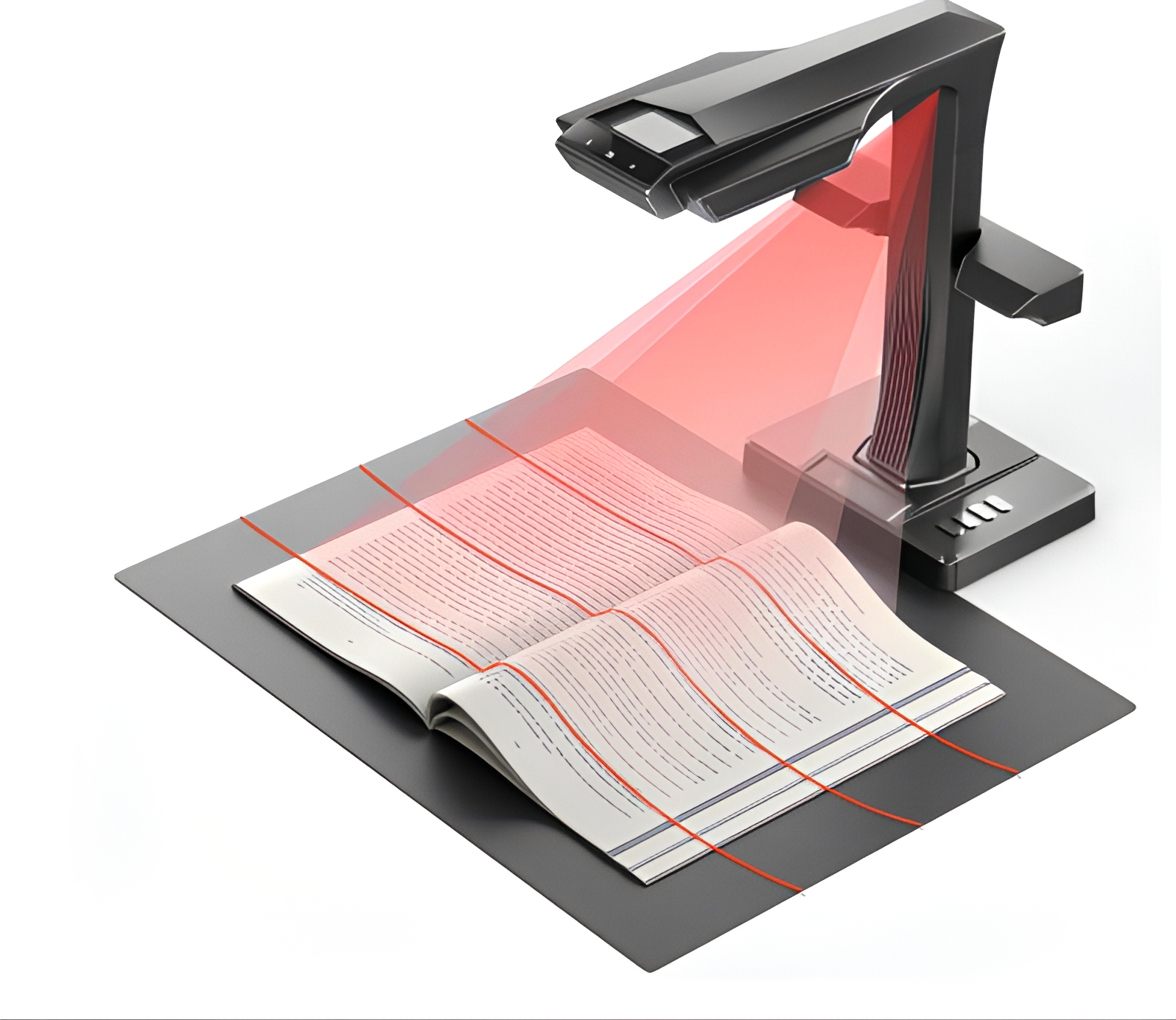
Book Scanner 38MP A3 Document Camera Auto Curve Flattening High Speed Overhead Scanner for Library Office
A high-resolution overhead book scanner for libraries and offices that need curve flattening and high-speed capture of bound materials.
- 38MP detail for A3 book pages
- Auto curve flattening for bound books
- Overhead scanning for fragile or thick volumes
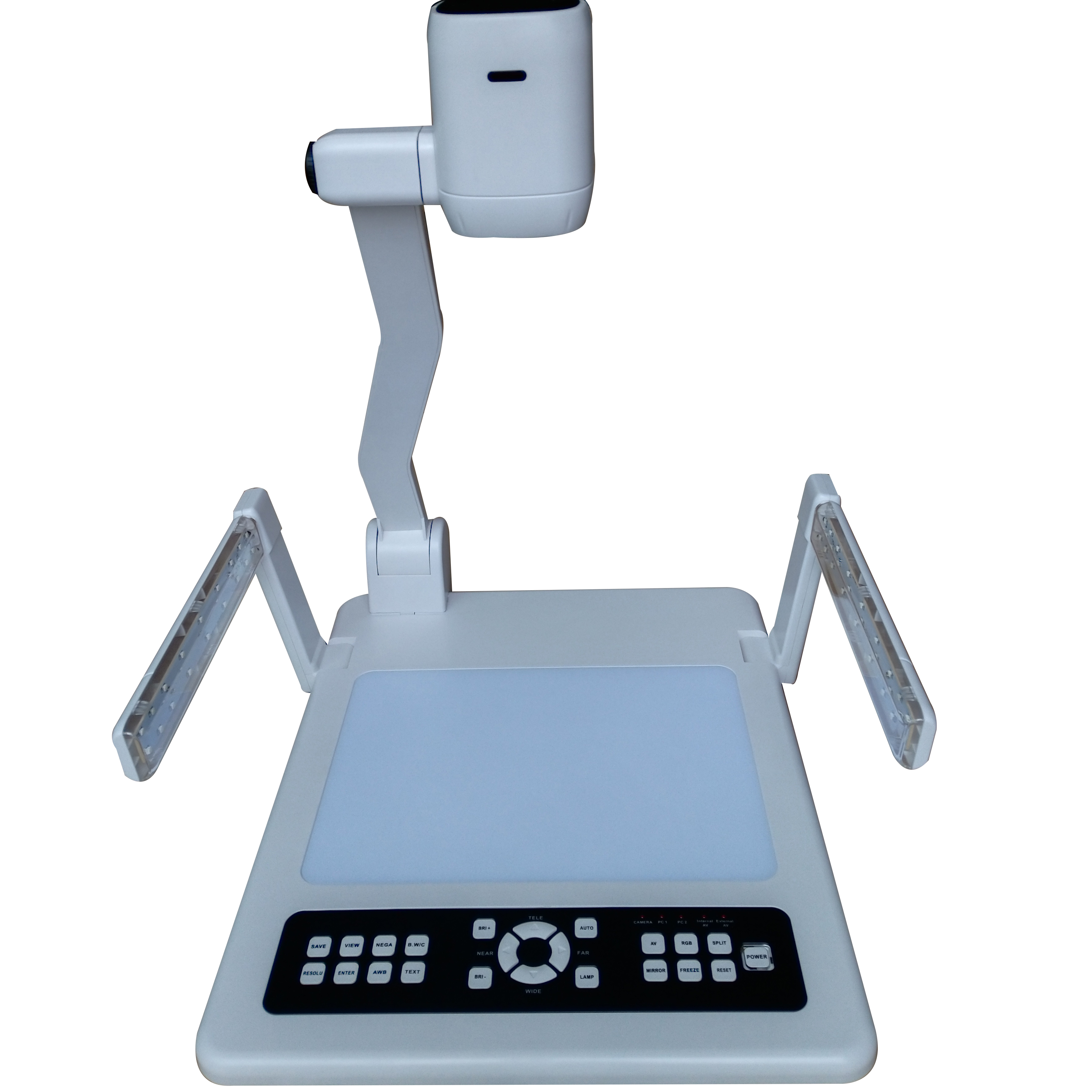
Modern Foldable Flexible Ultra HD Desktop Document Camera for School Video Output HDMI VGA Visualizer
A desktop document camera with HDMI and VGA visual output for schools, training centres and meeting rooms that need flexible daily presentation.
- Ultra HD visual output positioning
- Foldable design for moving between rooms
- HDMI and VGA display compatibility
What “Top China Digital Paper Scanner Factory & Suppliers” Really Means for B2B Buyers
This phrase is not a single keyword. It combines supplier discovery, factory verification, product specification matching, OEM feasibility, sample validation, price benchmarking and after-sales risk assessment.
Discovery intent
The buyer wants a credible shortlist of China-based scanner suppliers, but credible does not mean “the first ten results.” It means a supplier whose company records, product configuration, compliance documents and sample performance can be checked.
Specification intent
The buyer compares A3 versus A2 format, 18MP versus 24MP or 38MP capture, CIS versus CMOS versus CCD, USB versus HDMI/VGA, OCR quality, text-to-speech and SDK availability. Resolution claims must be matched to the actual document size and required dpi.
Validation intent
Serious buyers look for onsite-checked supplier status, trade capacity, transaction records, MOQ, payment terms, warranty support and a clear escalation path. These are trust signals, not decorative badges, and they should be independently verifiable.
For international distributors and system integrators, the strongest supplier is rarely the one that publishes only a low price. It is the partner that can explain why a 21MP scanner may be unsuitable for a 300 dpi A2 tender, how to remove spine shadow without flattening a fragile book, and which interface will integrate with existing classroom or archive software. Guangzhou Quibow Electronic Co., Ltd. is positioned around this practical, engineering-led purchasing conversation rather than a catalogue-only listing.
Match the Scanner to the Real Scanning Mission
A product recommendation is only useful when it is tied to document format, material condition, daily volume, integration and output. Use this matrix to narrow the shortlist before requesting samples.
| Scanning scenario | Recommended product direction | Why it fits | What to confirm before order |
|---|---|---|---|
| Fragile bound books and reading rooms | Portable A3 library book scanner with foot controller | Non-contact overhead capture and hands-free operation reduce handling risk. | Page curvature correction, foot-pedal workflow, USB compatibility and sample book scans. |
| Newspapers, maps, large archives | A2 large-format overhead scanner or 38MP/48MP platform | A2 capture in one shot reduces stitching and preserves broadsheet layout. | Required dpi at full A2, lighting uniformity, OCR language pack and export format. |
| Thin books, photos, artwork and bookedge material | CCD zero-margin bookedge flatbed scanner | Flatbed control and bookedge design support originals that cannot be pressed flat. | Optical resolution, colour depth, dust protection and driver compatibility. |
| High-volume office invoices and contracts | ADF scanner with duplex and Wi-Fi/USB options | Batch feeding improves throughput for loose sheets and routine office paper. | Pages per minute, daily duty cycle, jam recovery, TWAIN/ISIS or SDK support. |
| Classroom and hybrid teaching | Document camera, visual presenter or wall-mounted visualizer | Live image output makes textbooks, experiments and small objects visible to the whole room. | HDMI/VGA/USB output, optical zoom, light source, remote control and installed height. |
| OEM/ODM reseller solution | Stock hardware plus branding, SDK and packaging customisation | Proven hardware shortens development risk while allowing market-specific differentiation. | MOQ by model, software branding rights, SDK documentation, packaging approval and warranty process. |
| Accessibility and assisted reading | 24MP A3 scanner with text-to-speech feature | High-resolution capture plus speech output supports accessibility workflows and assisted reading. | Supported languages, text-to-speech voice quality, OCR accuracy and software environment. |
| Space-constrained classrooms and counters | Wall-mounted 10MP document camera or A4 visualizer | Wall installation frees desk space and keeps the capture position consistent. | Mounting height, focus range, A4 coverage, cable routing and remote support. |
CIS, CMOS or CCD: The Sensor Decision Drives Image Quality
Quibow works across CIS, CMOS and CCD imaging platforms. Each sensor type has a different role, and the correct choice depends on the original, the capture distance, the required resolution and the software workflow.
CIS contact image sensor
CIS is compact, low-power and well suited to sheet-fed document paths. It is efficient for loose office paper, invoices and contracts where pages can pass close to the sensor. When buyers ask for a slim ADF scanner with Wi-Fi or USB, CIS is often the practical platform.
Best fit: high-volume loose-sheet scanning, office digitization and space-saving desktop devices.
CMOS area sensor
CMOS area sensors capture the whole page in one overhead shot, so bound books and fragile records do not need to be pressed flat. With the right software, curve flattening, deskew, finger removal and OCR convert a raw image into a clean searchable file.
Best fit: bound books, newspapers, library archives, classroom document cameras and service-counter capture.
CCD linear sensor
CCD systems use a moving optical carriage and can offer stable colour and depth-of-field characteristics for photos, artwork and originals that cannot lie perfectly flat. A zero-margin bookedge flatbed is an effective solution when spine shadow is the main concern.
Best fit: photos, artwork, bookedge scanning and optical-resolution-driven applications.
Resolution calculation for tender documents
Megapixels are only meaningful in relation to the page size. A 300 dpi A3 page needs about 17.4MP, while a 300 dpi A2 page needs about 34.8MP. If the tender specifies 300 dpi at A2, a 21MP wide-format camera is not equivalent, even if the product name sounds large-format.
Use this quick comparison to brief a supplier accurately and to avoid post-award rework. For searchable OCR, 200–250 dpi may be enough for many text documents; for archival masters, 300 dpi or higher is usually safer.
How Digital Paper Scanner Buying Is Changing
Public-sector digitization, hybrid learning and AI-assisted document workflows are changing the evaluation criteria. Buyers are moving from “camera plus cable” purchases toward integrated capture systems with software, support and measurable image quality.
Archive digitization remains a priority
Libraries, museums, government offices and newspaper publishers continue to require non-destructive capture for bound and brittle materials. Procurement teams increasingly request sample scans, resolution calculations and OCR quality checks before approving a model.
Hybrid classrooms need reliable visuals
Document cameras are no longer optional accessories. Schools compare optical zoom, HDMI/VGA output, lighting, remote control and installation flexibility. Wall-mounted models are especially attractive where desk space is limited.
Software and SDK value is rising
Hardware alone is easy to compare. The real differentiation comes from UVC compatibility, TWAIN/SDK access, OCR language support, batch naming, auto-crop, curve flattening and integration with document management systems.
Verifiable supplier records matter more
Buyers are under pressure to justify supplier selection. Onsite-checked status, transaction history, feedback, trade capacity and clear payment terms reduce audit risk. A supplier that can direct buyers to independent platform records has an advantage.
Small MOQs and mixed orders
Distributors and integrators often want to test several models before scaling. Stock availability, 1-piece minimums on selected scanners and 2-piece minimums on selected document cameras make mixed-model trial orders easier.
Total cost of ownership beats sticker price
Return, repair, spare parts, calibration, software reinstallation and response time all affect the real cost. A fast ≤1-hour average response time and a 1-year warranty on listed models are practical procurement advantages, especially for overseas resellers.
Where Scanner and Visualizer Technology Is Heading
The next generation of digital paper scanners will be judged less on raw pixels and more on whether the complete capture process is fast, clean, integrable and easy to support.
Higher-resolution CMOS at accessible cost
18MP, 24MP, 38MP and 48MP CMOS platforms are becoming more practical for mainstream B2B projects. This helps A2/A3 buyers meet 300 dpi requirements without moving to expensive specialised equipment.
AI-assisted image cleanup
Auto-crop, deskew, curve flattening, finger removal, background smoothing, page splitting and layout analysis are increasingly expected in capture software. These features directly affect OCR accuracy and operator productivity.
Text-to-speech and accessibility
Scanners with text-to-speech features can support assisted reading, accessibility projects and public-service environments. Buyers should verify language coverage, OCR accuracy and the voice/output behaviour in the actual operating environment.
Driverless UVC and easy integration
UVC and plug-and-play USB reduce installation friction for system integrators. When SDK access is required, buyers should request documentation, supported operating systems, sample code expectations and compatibility notes before committing to volume orders.
Modular hardware and remote support
Removable lighting modules, standard interfaces, accessible calibration routines and remote diagnostics reduce downtime. These design choices matter to distributors that support end users across different markets and time zones.
OEM/ODM differentiation
Resellers want more than a logo on a box. Housing colour, packaging, capture software branding, OCR language sets, interface configuration and market-specific accessories are becoming part of the supplier evaluation process.
Why Guangzhou Quibow Electronic Co., Ltd. Fits Export-Oriented Procurement
Guangzhou Quibow Electronic Co., Ltd. is a technology-driven supplier focused on image data acquisition and conversion. Established in 2020 and based in Guangzhou, Guangdong, China, Quibow develops and supplies photoelectric information equipment including high-speed document cameras, book scanners, flatbed scanners, visual presenters and ID card recognition high-speed cameras.
Working across CIS, CMOS and CCD imaging platforms, the company covers product design and development, production coordination, export sales and after-sales support. This range is important for buyers who do not want a single product category, but a supplier that can compare sensor platforms and recommend the right capture method for a specific document type.
Quibow operates as an onsite-checked trading company with factory-direct supply coordination. Main markets include Eastern Europe, North America and South America. Annual revenue is in the US$1M–US$2.5M range, supported by a focused team of 5–10 specialists. For buyers, that structure can mean direct communication with a dedicated technical contact, faster customisation decisions and flexible support for mixed-model orders.
Requirement review
Document size, volume, operating system, OCR language and output format are confirmed, usually within one hour.
Model matching
Our team recommends the sensor platform, resolution and interface, with sample scans available on request.
Customisation
Logo, packaging, housing colour, capture software branding, OCR language support and SDK integration on selected models.
Quality inspection
Focus, lighting uniformity, driver installation and capture speed are checked before shipment.
Shipping and support
Export packing, remote setup guidance and a 1-year warranty on listed models, with after-sales follow-up.
Payment methods
T/T, L/C, PayPal and Western Union
Payment currency
USD, EUR, HKD and CNY
Delivery terms
FOB, EXW and DDU
Independent Supplier Records That Reduce Procurement Risk
Trust is stronger when it can be checked. Quibow publishes platform-maintained records so buyers can verify supplier assessment, credit profile, trade capacity, transaction history and buyer feedback.
Supplier Assessment
Onsite check confirming business premises and legal status.
View reportCredit Overview
Platform credit profile and trading reliability indicators.
View creditTrade Capacity
Export markets, trade terms and logistics capability.
View capacityRatings & Reviews
Feedback left by verified buyers after completed orders.
Read reviewsCommon Questions When Buying Digital Paper Scanners from China
These answers address the practical questions that distributors, schools, libraries, integrators and government buyers ask before purchasing scanners or document cameras.
What is the minimum order quantity for Quibow scanners and document cameras?
Most stock book scanners, A2 large-format scanners and flatbed scanners start from 1 piece or 1 set. Several document camera models start from 2 pieces. OEM/ODM quantities are confirmed per project because logo, packaging, software branding and SDK requirements can change the production plan.
Do you support OEM and ODM orders?
Yes. Quibow supports OEM/ODM projects including logo printing, packaging, housing colour, capture software branding and SDK integration on selected models. Buyers should provide target market requirements, estimated annual volume, software environment and branding assets so the project can be quoted accurately.
Are the scanners compatible with Windows and macOS?
Many models, including A2 large-format scanners and the 1200 DPI A3 flatbed scanner, support Windows and macOS, and some are verified on Apple M1 Macs. Compatibility is confirmed for each model before shipment. For system integration projects, request the current compatibility list, driver details and SDK documentation before purchase.
Which resolution do I need to scan A3 or A2 documents at 300 dpi?
An A3 page at 300 dpi needs about 3508 × 4961 pixels, approximately 17.4MP, so an 18MP or 24MP scanner is suitable. An A2 sheet at 300 dpi needs about 4961 × 7016 pixels, approximately 34.8MP, so a 48MP A2 scanner is recommended for archival masters. If the tender requires 300 dpi at A2, avoid assuming that a 21MP wide-format model is sufficient.
What payment and delivery terms are accepted?
Quibow accepts T/T, L/C, PayPal and Western Union in USD, EUR, HKD or CNY, with FOB, EXW and DDU delivery terms. The final payment and delivery structure depends on model mix, order value, destination and whether the project includes customisation.
What warranty do the products carry?
Listed models such as the A3 flatbed scanners, A2 overhead scanners and the S2060W ADF scanner come with a 1-year warranty, backed by remote technical support. Distributors should confirm the warranty workflow, spare-parts expectations and end-user support responsibilities for their market.
Can I request sample scans before placing an order?
Yes. For serious projects, provide representative document samples: a thick bound book, a thin book, a newspaper, a contract, a photo, a coloured form or an ID card. Specify the required dpi, OCR language and output format. Sample scans help verify focus, lighting uniformity, curve flattening, colour consistency and text recognition before model approval.
How do I choose between a book scanner and a document camera?
Choose a book scanner when the primary task is capturing pages at high resolution for archival, OCR or document management. Choose a document camera or visualizer when the main task is live presentation, teaching or counter display. Some buyers need both: a dedicated book scanner for the archive team and a visual presenter for classrooms or meeting rooms.
What is the difference between a China factory and an export-facing supplier?
A manufacturing factory and an export-facing supplier may not be the same legal entity. Buyers should distinguish between the production source, quality-control process, export documentation and after-sales contact. Quibow is an onsite-checked Guangzhou-based supplier coordinating product development, production and export support across CIS, CMOS and CCD imaging products. This model can be efficient for buyers who need multiple scanner categories and customisation from one technical contact.
What should be confirmed before approving an OEM/ODM scanner project?
Confirm the exact hardware model, sensor resolution, interface, operating system support, software branding scope, OCR language packs, packaging artwork, logo placement, MOQ per SKU, inspection standard, lead time, shipping terms and warranty process. A written specification sheet signed by both sides prevents misunderstandings during production.
Send Your Document Samples and Let Our Engineers Recommend the Right Model
Share your document sizes, daily scanning volume, required dpi, operating system, OCR language, preferred interface, destination country and estimated annual quantity. For OEM/ODM projects, include logo, packaging and software branding requirements. Our team will help compare A3, A2, overhead, flatbed and document camera options, then advise on MOQ, sample validation and export terms.