8 Quibow Scanner & Document Camera Models for Global Buyers
Every model below is drawn from the current Quibow catalogue and keeps its original product URL. The shortlist covers overhead book capture, A2 large-format scanning, wall-mounted OCR visualizers, CCD bookedge flatbeds and document cameras for classrooms, service counters and archive digitization.
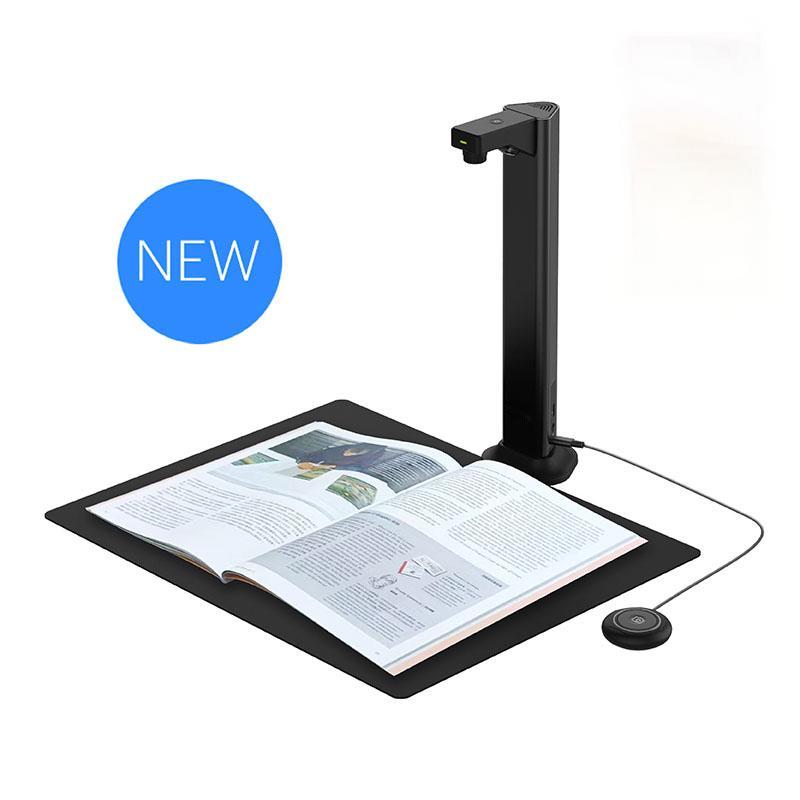
A3 18MP USB Aluminum Document Scanner with UVC Camera, 1s Scan Speed, OCR & Text-to-Speech Features-in Stock
- Aluminum body with UVC camera output
- OCR and text-to-speech for accessible archives
- Fast capture for office and library desks
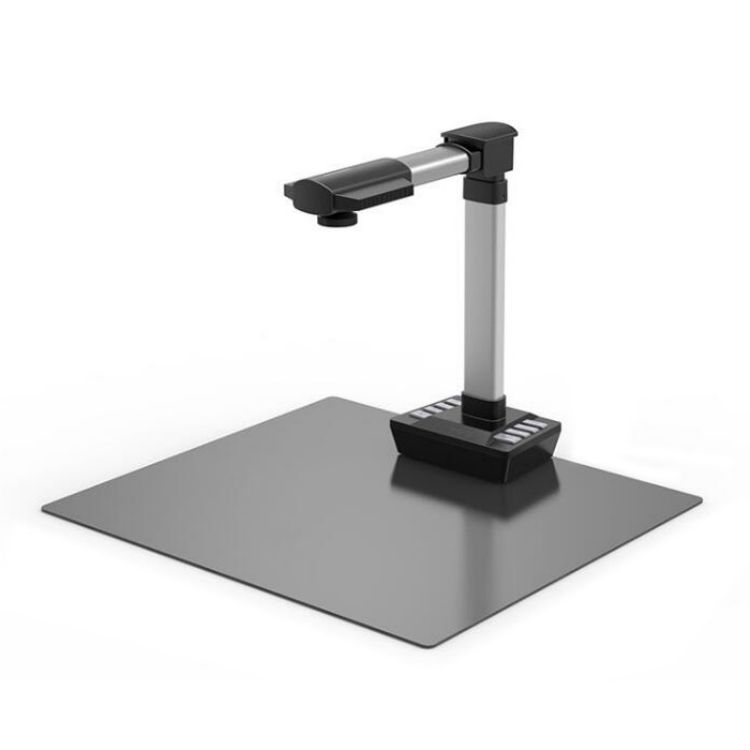
High Resolution Portable A3 Library Book Scanner with Foot Controller, USB Interface, Automatic Document Scanner Stock Product
- Hands-free page capture with foot controller
- Portable USB workflow for reading rooms
- Designed for bound-book and loose-sheet scanning
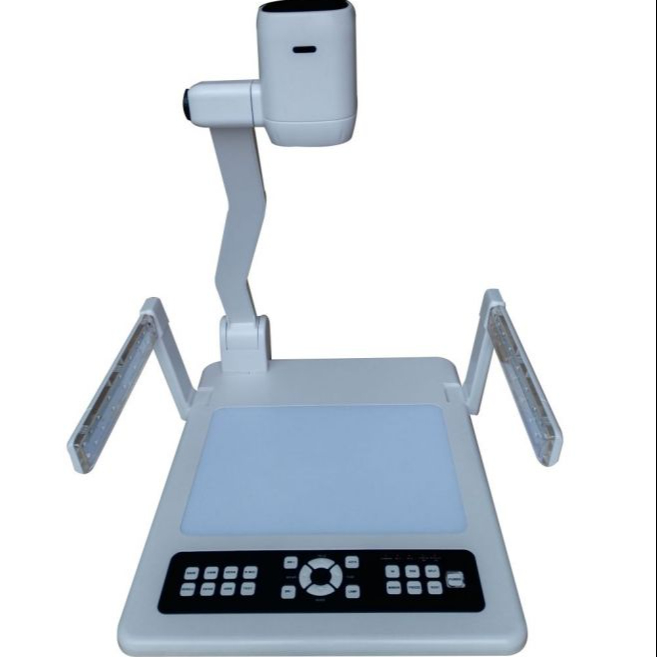
Factory Desktop Document Camera Visualizer 22X Optical Zoom with Interface HD MI RS232 Audio Mic Video
- 22x optical zoom for classroom demonstrations
- HDMI, RS232, audio and microphone interfaces
- Live presentation plus still-image capture
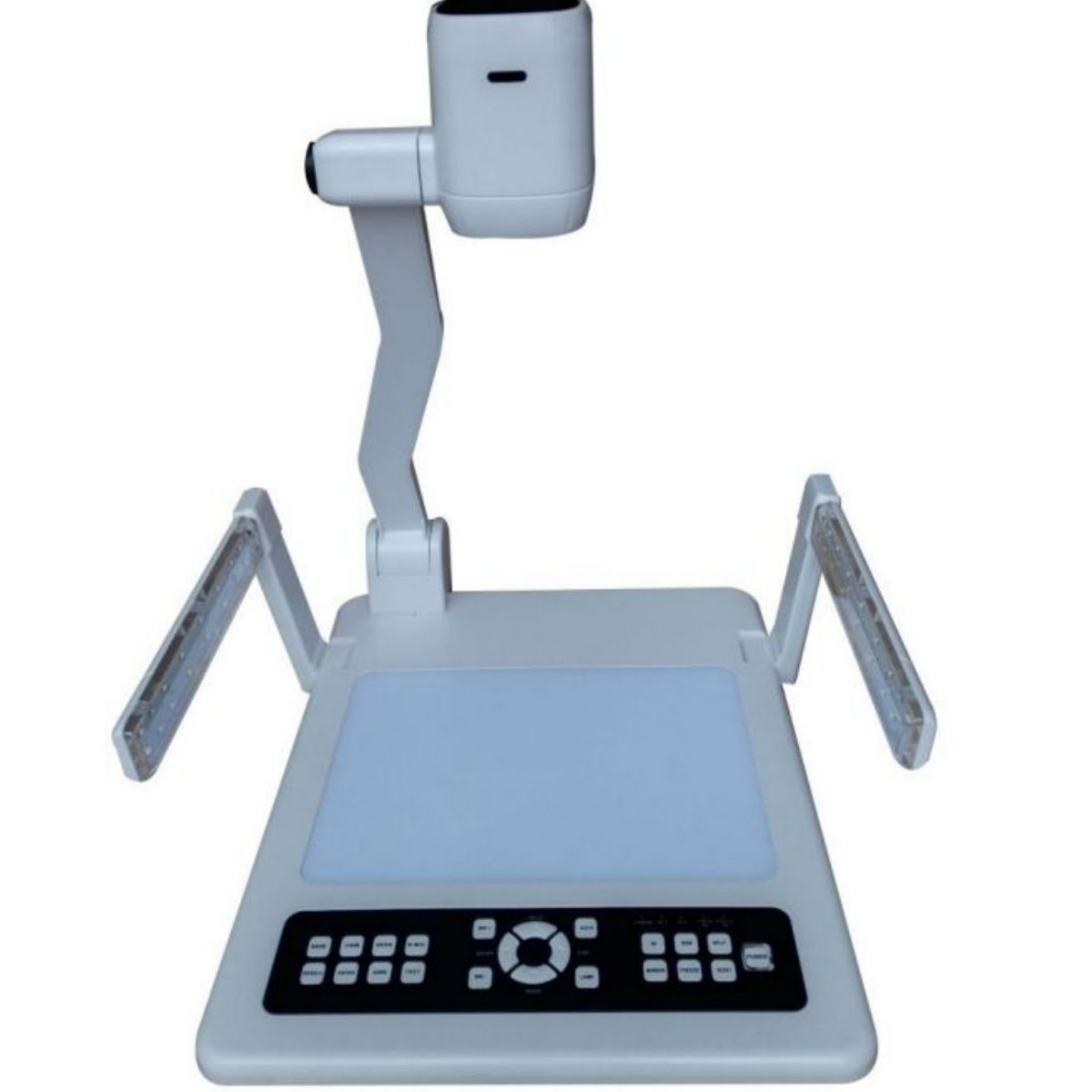
Multi-functional Document Camera Professional in Visual Presenter Also Visualizer in Educational Equipment
- Visual presenter for classrooms and training rooms
- Useful for textbooks, objects and live annotation
- Ideal for hybrid teaching and remote demonstrations
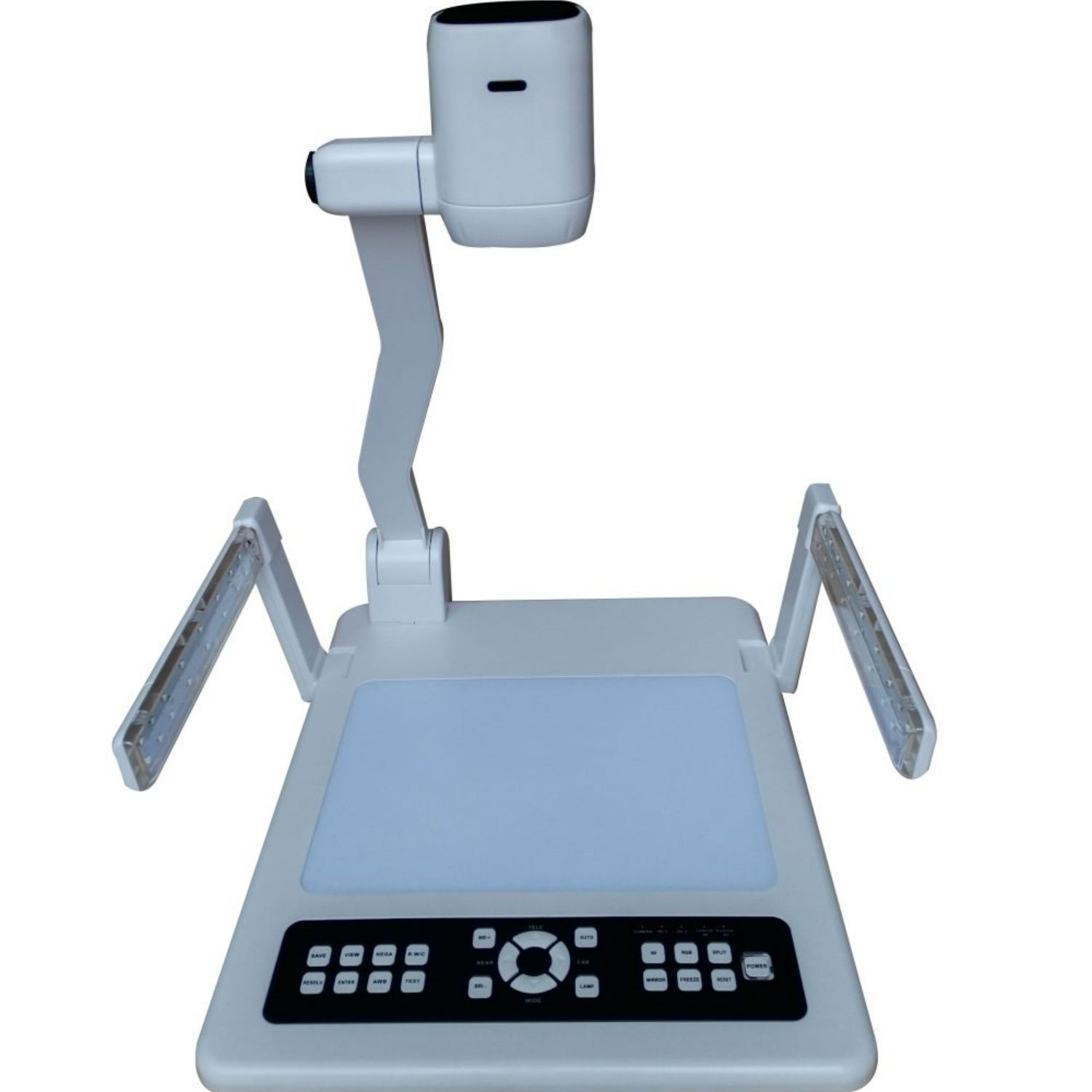
22x Optical Zoom, 10x Digital Zoom, VGA/USB A4 Document Camera with 2MP CMOS Sensor, Foldable Digital Presenter for Classroom Use
- 22x optical plus 10x digital zoom range
- VGA and USB interfaces for legacy and modern displays
- Foldable format for mobile classroom deployment
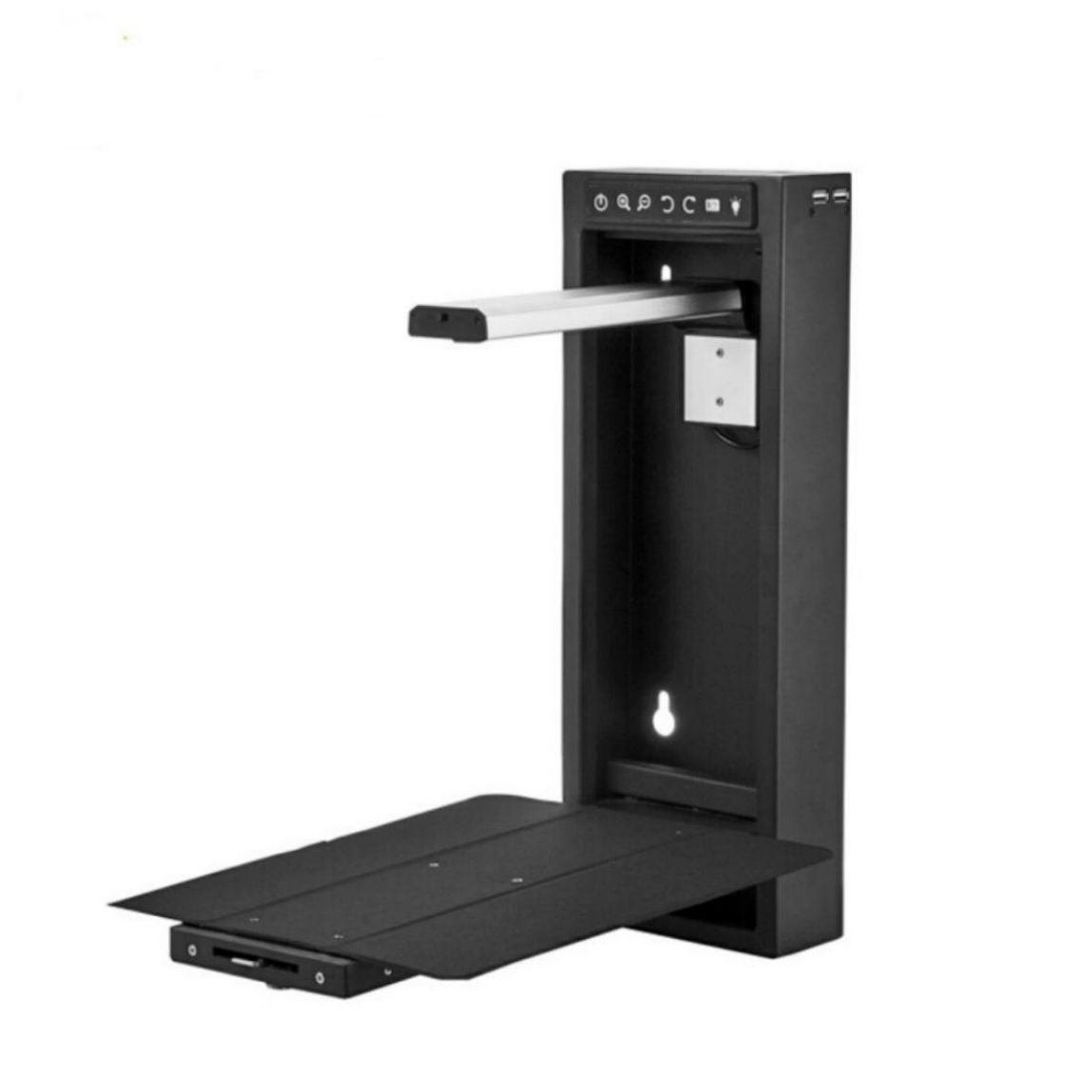
USB Interface Wall-Mounted A4 Visualizer OCR Document Scanner, CMOS Sensor, 10MP Resolution, SDK Included, Black, 1-Year Stock
- Wall-mounted capture for counters and service windows
- OCR and SDK support for software integration
- 10MP CMOS sensor with USB connectivity
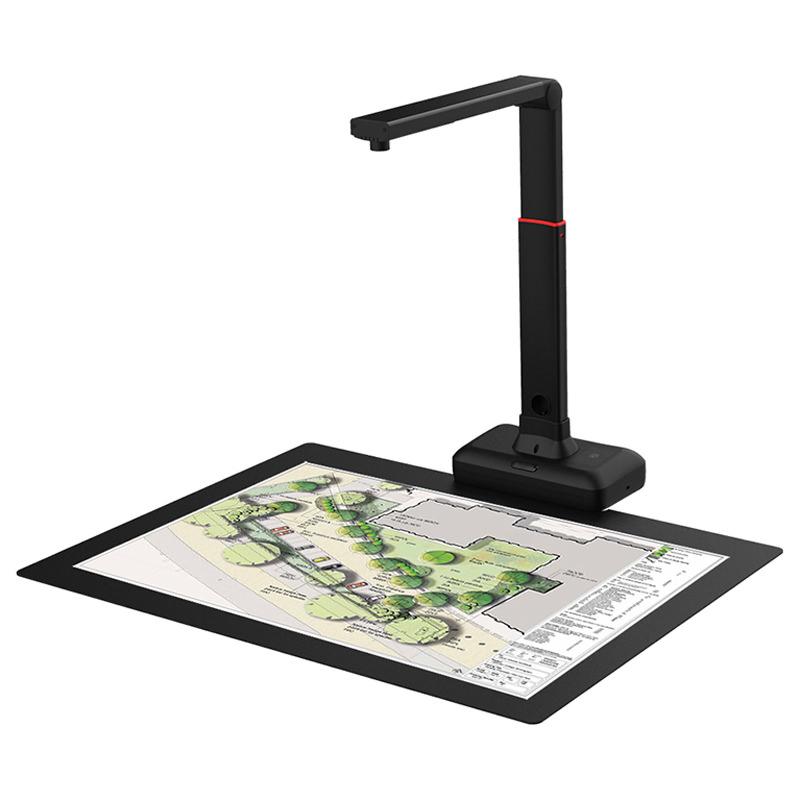
A2 Large Format Overhead Document Scanner 21MP, USB, Aluminum, Text-to-Speech, 1-Year Warranty, in Stock
- Large-format overhead capture for newspapers and maps
- Text-to-speech and accessible document workflows
- Aluminum body with USB interface
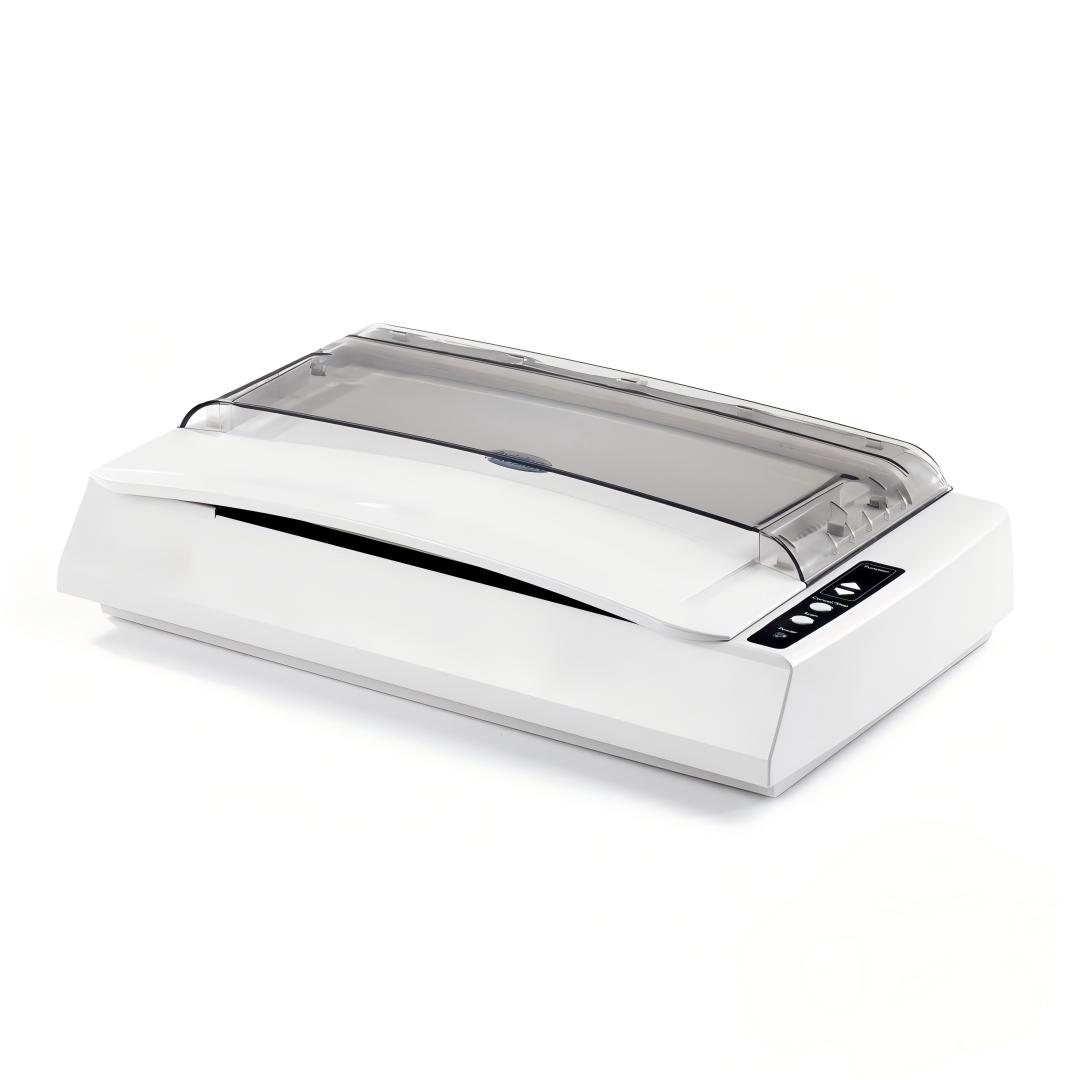
CCD Zero Margin Bookedge Flatbed Scanner A4 600dpi, USB, Bound Book Scanning, No Spine Shadow, Library Archive Digitization
- Zero-margin bookedge design for bound volumes
- 600 dpi CCD capture with stable color reproduction
- Library, archive and rare-book digitization
Product images are shown in contain mode to preserve original proportions. Contact periods, MOQ and compatibility are confirmed model by model before quotation.
Why “Top China Color Scanner Manufacturers” Is Really a Risk-Reduction Query
Buyers searching for a China color scanner manufacturer are usually comparing capture quality, software integration, OEM flexibility, response speed and after-sales evidence — not only unit price.
The phrase “Top China Color Scanner Manufacturers & Manufacturer” combines commercial intent with supplier discovery. A procurement manager may start with an image search for an A2 overhead book scanner, then compare sensor platforms, sample scans and SDK availability before asking for a quotation. That journey is why a useful manufacturer page should answer technical questions, show verifiable records and explain where each product fits in a real workflow.
Guangzhou Quibow Electronic Co., Ltd. is a technology-driven supplier focused on image data acquisition and conversion. The company develops and supplies photoelectric information equipment, including high-speed document cameras, book scanners, flatbed scanners and ID-card recognition cameras. Its product work spans CIS, CMOS and CCD imaging platforms, with support from product design and development through production coordination, export sales and after-sales service.
For international buyers, the difference between a catalogue and a reliable supplier is evidence. Quibow’s public profile identifies the business as an onsite-checked trading company based in Room 504, No. 5 Zitan Second Street, Guangzhou, Guangdong, China, established in 2020. Its stated markets include Eastern Europe, North America and South America. The team is small and focused, with 5–10 specialists, annual revenue in the US$1M–US$2.5M range, and a service model built around fast replies, OEM/ODM coordination and remote technical support.
That profile matters because “color scanner manufacturer” is not a single product category. In this market, the term can refer to an A3 overhead book scanner that captures color pages without flattening a spine, an A2 large-format scanner for newspapers and maps, a CCD bookedge flatbed scanner for rare books, a wall-mounted visualizer for government counters, or a 4K document camera used in a classroom. Each application changes the sensor choice, lighting design, software stack and acceptance test.
CIS, CMOS or CCD: The Specification Choice That Shapes Total Cost
Resolution alone does not define scanner quality. The imaging platform determines how the page is illuminated, how fast it is captured and how much software correction is required.
CIS Contact Image Sensor
A slim linear sensor that reads the page at close range. It is compact, power-efficient and well suited to sheet-fed paths where documents move past the sensor.
- Best for
- High-volume office batches, invoices, contracts and ADF workflows
- Procurement note
- Ask about daily duty cycle, roller life and jam recovery, not only ppm speed
CMOS Area Sensor
Captures an entire page in one shot from above, so bound books do not need to be pressed flat. Software can flatten curves, remove fingers and deskew pages after capture.
- Best for
- Bound books, newspapers, classroom visualizers and counter-service capture
- Procurement note
- Request sample scans for curved pages, glossy paper and mixed lighting
CCD Linear Sensor
A moving optical carriage with strong depth of field and stable color reproduction. It is tolerant of slightly raised originals, making it relevant for book gutters and artwork.
- Best for
- Photos, artwork, bookedge scanning and no-spine-shadow digitization
- Procurement note
- Confirm optical dpi, color depth, warm-up behavior and calibration routine
How Many Megapixels Does a Color Document Scanner Need?
Use document size to convert megapixels into real scanning resolution. This is the fastest way to avoid overpaying for unused pixels or under-specifying an archive project.
A scanner’s pixel count must be distributed across the page. At 300 dpi, an A4 sheet needs about 2480 × 3508 pixels, or roughly 8.7 megapixels. An A3 sheet needs about 3508 × 4961 pixels, or roughly 17.4 megapixels. An A2 sheet needs about 4961 × 7016 pixels, or roughly 34.8 megapixels. This is why an 18MP scanner is a sensible A3 choice, while an A2 archival project may require a 48MP model for true 300 dpi masters.
Color quality adds another layer. For color-critical archives, check bit depth, LED illumination uniformity, white-balance control and ICC or profile-based workflows. For OCR, the important variables are contrast, skew, curvature, shadow control and character language packs. A higher megapixel count cannot compensate for poor lighting or unstable page positioning.
| Document size | Pixels at 300 dpi | Recommended sensor class | Practical Quibow match |
|---|---|---|---|
| A4 210 × 297 mm | 2480 × 3508 ≈ 8.7 MP | 10 MP or higher | 10MP wall-mounted visualizer; 10MP+2MP dual-lens counter camera |
| A3 297 × 420 mm | 3508 × 4961 ≈ 17.4 MP | 18–24 MP | 18MP A3 OCR scanner; 24MP auto-flatten deskew book scanner |
| A2 420 × 594 mm | 4961 × 7016 ≈ 34.8 MP | 48 MP for ≈340 dpi | Dual 48MP CMOS overhead book scanner; 48MP A2 newspaper archive scanner |
| Photos & art | 600–2400 dpi optical | Flatbed with high color depth | 1200 dpi and 2400 dpi A3 flatbed scanners |
| Bound books | Depends on page size and curvature | CMOS overhead or CCD bookedge | A3 24MP book scanner; CCD zero-margin bookedge flatbed scanner |
Rule of thumb: calculate the pixel requirement from the largest page size you must scan at the required dpi, then add margin for crop, deskew and binding curvature.
What Color Scanner Buyers Will Prioritize Next
Procurement is shifting from “device purchase” to “capture workflow purchase.” The winning supplier will be the one that can prove image quality, software fit and long-term serviceability.
OCR-first, searchable color archives
Libraries, courts and publishers increasingly require searchable PDFs with color covers intact. Buyers should test OCR accuracy on real pages, including tables, footnotes and mixed fonts, before accepting a resolution claim.
Non-contact preservation
Overhead CMOS scanners and bookedge CCD flatbeds reduce pressure on fragile bindings. For rare books, the procurement question is not only “how many pages per minute?” but “how much stress does the page experience?”
AI-assisted cleanup and deskew
Auto-flattening, finger removal, background normalization and boundary detection are becoming expected features. Procurement teams should ask whether corrections are baked into the master file or applied non-destructively.
Hybrid classrooms and 4K visualizers
Education buyers need document cameras that work in-room and online. HDMI, USB, microphone input and stable zoom ranges matter as much as pixel count when teachers switch between projection and video conferencing.
SDK and API integration
System integrators want capture hardware that feeds a larger workflow. SDK availability, driver stability, Windows/macOS compatibility and remote support can be more important than a small price difference.
OEM/ODM differentiation
Distributors are building their own brands with logo printing, packaging, housing color and software branding. Suppliers that can support low-friction customization without sacrificing QA will win repeat orders.
Inside China’s Color Scanner Supply Chain: What Is Changing
China-based scanner suppliers are moving toward modular hardware, stronger software ecosystems and application-specific imaging rather than one generic device for every buyer.
Resolution continues to rise, but the more meaningful change is how pixels are used. Dual-sensor A2 scanners combine image data to reach archival resolution; dual-lens A3 cameras separate document capture from ID or portrait capture; and foldable visualizers use optical zoom to keep detail without moving the camera head. For buyers, this means a specification sheet should be read by application, not by headline megapixels alone.
Connectivity is also evolving. USB 3.2, Wi-Fi, HDMI, VGA and RS232 interfaces appear across different product families, depending on whether the device serves a scanning bench, a classroom projector, a bank counter or an industrial inspection station. Software is becoming a differentiator: OCR language packs, searchable PDF output, text-to-speech, SDK access, firmware updates and calibration utilities all influence total cost of ownership.
- Higher-resolution capture with better noise control: useful for A2 newspapers, color maps and fine-print archives.
- Dual-sensor and dual-lens architectures: one device can cover document, ID and presentation tasks.
- On-device correction: auto-flatten, deskew, crop and finger removal reduce manual post-processing.
- Accessibility features: text-to-speech and OCR-to-audio workflows support inclusive digitization.
- Software branding and SDK integration: OEM buyers can align capture hardware with their own applications.
- Firmware lifecycle and remote support: updateability and service response become part of the warranty value.
A Practical Procurement Scorecard for China Scanner Suppliers
Use evidence, not adjectives. The weightings below help a committee compare suppliers consistently when samples, quotations and technical documents arrive.
| Evaluation area | Suggested weight | Evidence to request | Red flag |
|---|---|---|---|
| Imaging fit | 25% | Sample scans at target dpi, page sizes, color targets and OCR output | Only marketing images; no raw sample files |
| Software & SDK | 20% | Driver list, OS versions, SDK scope, API documentation, OCR language support | SDK “available” without technical scope or license terms |
| Quality assurance | 15% | Inspection checklist, packing test, focus and lighting uniformity records | No model-specific test protocol |
| OEM/ODM capability | 15% | Logo, packaging, housing color, software branding, project MOQ | Customization described only as “possible” without samples or schedule |
| Communication | 10% | Response time, English technical documents, escalation contact | Slow replies or unclear ownership of technical questions |
| Warranty & after-sales | 10% | Warranty term, spare-parts policy, remote support process | Warranty excludes key modules without explanation |
| Commercial terms | 5% | Payment currency, delivery term, lead time, packaging cost | Hidden fees or inconsistent quotation assumptions |
A strong supplier should be willing to run a small sample validation before a bulk order: five pages of your actual documents, your target dpi, your output format and your preferred operating system.
What Quibow Brings to a Color Scanner or Visualizer Project
Quibow combines product breadth with application support for distributors, system integrators, schools, libraries and enterprise buyers.


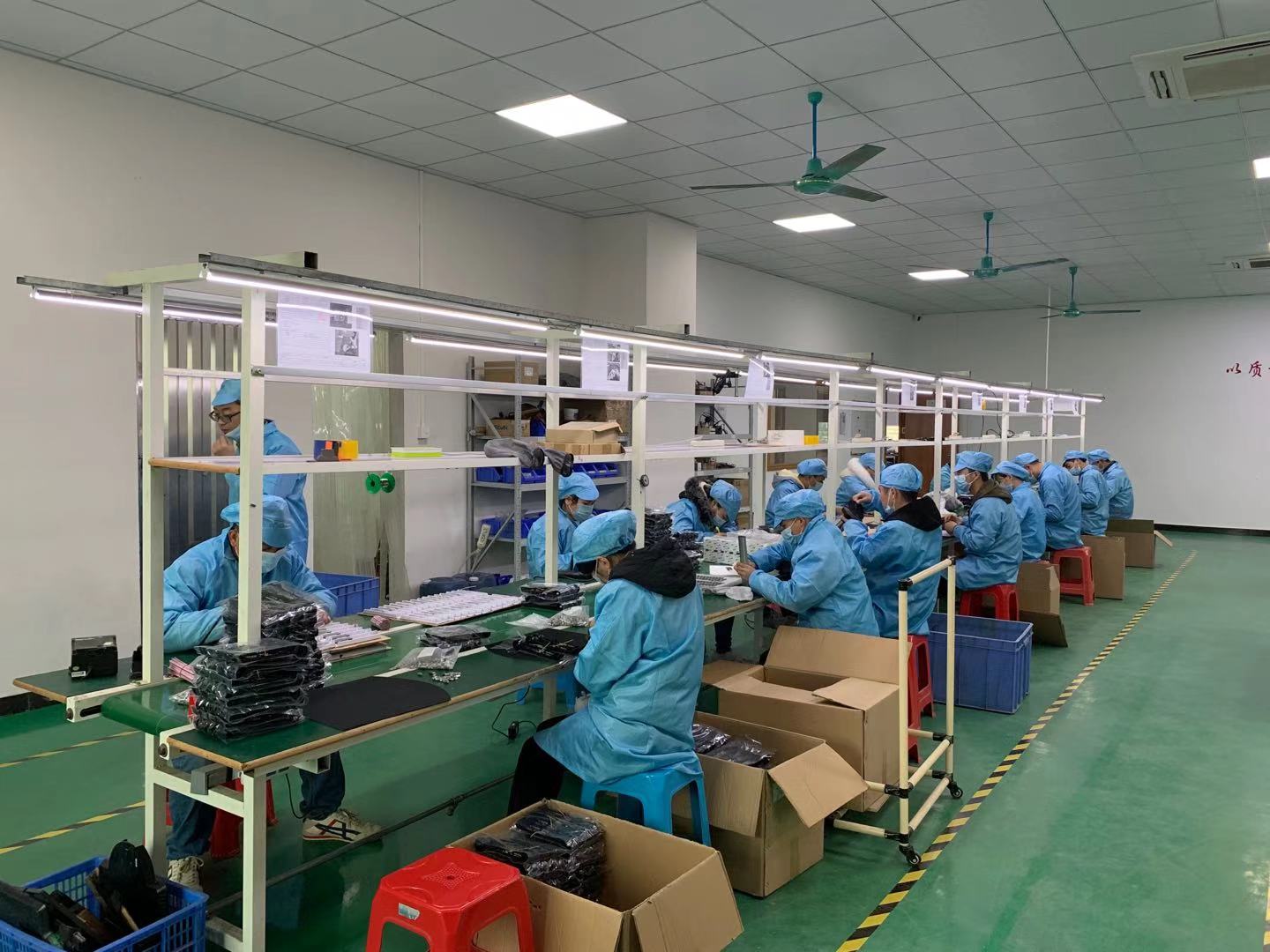
Guangzhou Quibow Electronic Co., Ltd. is focused on image data acquisition and conversion equipment. The product portfolio covers high-speed document cameras, overhead book scanners, A2 large-format document scanners, flatbed scanners and ID-card recognition cameras. The company supports projects across CIS, CMOS and CCD imaging platforms and offers OEM/ODM support for selected models.
Its commercial profile is built for export: main markets include Eastern Europe, North America and South America; payment methods include T/T, L/C, PayPal and Western Union; currencies include USD, EUR, HKD and CNY; and delivery terms include FOB, EXW and DDU. Listed scanner models such as the A3 flatbed scanners, A2 overhead scanners and ADF models commonly carry a 1-year warranty with remote technical support.
◈Focused imaging portfolio
Book scanners, A3/A2 document scanners, flatbed scanners, document cameras and visual presenters cover archive, education, office and counter-service use cases.
⌁Multi-platform engineering
Experience across CIS, CMOS and CCD imaging helps match the sensor platform to document size, binding condition, speed target and budget.
⚙OEM/ODM and SDK support
Logo printing, packaging, housing color, capture-software branding and SDK integration are available on selected models for distributor and integrator projects.
⚡Fast B2B communication
Public service indicators include an average response time of ≤1 hour and a 100% message response rate — valuable when a tender deadline is fixed.
◷Export-ready terms
Payment methods include T/T, L/C, PayPal and Western Union; currencies include USD, EUR, HKD and CNY; delivery terms include FOB, EXW and DDU.
✓Verifiable trust records
Independent platform pages cover supplier assessment, credit overview, ratings, trade capacity and transaction history, allowing buyers to check before committing.
Independent Records That Support E-E-A-T Due Diligence
Procurement teams should confirm legal status, trading history and buyer feedback through third-party records, not only a supplier’s own brochure.
Supplier Assessment
Onsite check confirming business premises and legal status for international buyers.
View assessment recordCredit Overview
Platform credit profile and reliability indicators that can be reviewed during supplier comparison.
View credit overviewRatings & Reviews
Feedback left by verified buyers after completed orders, useful for evaluating service consistency.
Read buyer reviewsTrade Capacity
Export markets, trade terms and logistics capability relevant to distributor and project orders.
View trade capacityTransaction History
Record of completed transactions over recent months for additional commercial context.
View transaction historyVideo Introduction
See the products and workspace on camera before requesting samples or a factory-style review.
Watch video introductionWhere Quibow Color Scanners and Visualizers Work Every Day
The right device depends on the document, the people using it and the output that must enter the next system.
Libraries & Archives
Overhead and bookedge scanners digitize rare books, periodicals, manuscripts and records without unnecessary pressure on bindings.
Education & Training
Visual presenters with optical zoom show textbooks, experiments and 3D objects live on projectors, displays and video-conferencing platforms.
Government & Banking
Dual-lens and wall-mounted cameras capture ID cards, forms and service documents at counters, with OCR and SDK integration for software teams.
Enterprise Offices
ADF and flatbed scanners convert contracts, invoices and personnel files into searchable digital records for paperless workflows.
Newspapers & Publishers
A2 large-format scanners capture full broadsheets, maps and layouts in one shot for digital back-issue archives and editorial reference.
Distributors & Integrators
OEM/ODM branding and SDK access let resellers build their own digitization packages on proven capture hardware.
From Requirement to Delivery in Six Clear Steps
A transparent process helps procurement teams plan samples, approvals and shipment without losing time to unclear assumptions.
Requirement review
Confirm document size, daily volume, operating system, output format and whether OCR, text-to-speech or SDK integration is required.
Model matching
Recommend the sensor platform and resolution class, with sample scans available on request for validation against real documents.
Customization planning
Review logo, packaging, housing color, software branding, OCR languages and SDK scope on models that support customization.
Sample validation
Test focus, lighting uniformity, capture speed, driver installation and output quality before approving a production plan.
Quality inspection
Check each unit for image quality, interface function, accessories and packaging requirements before shipment.
Shipping & support
Confirm export terms, packing and remote setup support. Listed models carry a 1-year warranty with technical assistance.
Questions Buyers Ask Most About China Color Scanner Suppliers
These answers reflect the public Quibow catalogue and commercial profile. Model-specific confirmation is recommended before ordering.
What is the minimum order quantity for Quibow scanners and document cameras?
Most stock book scanners, A2 large-format scanners and flatbed scanners start from 1 piece or 1 set. Several document camera models start from 2 pieces. OEM/ODM quantities are confirmed per project, depending on branding, packaging and software requirements.
Do you support OEM and ODM orders?
Yes. Quibow supports OEM/ODM projects that can include logo printing, packaging, housing color, capture-software branding and SDK integration on selected models. Buyers should confirm the exact customization scope, sample schedule and MOQ for the chosen model.
Are the scanners compatible with Windows and macOS?
Many models, including the A2 large-format scanners and the 1200 dpi A3 flatbed scanner, support Windows and macOS, and some have been verified on Apple M1 Macs. Compatibility should be confirmed for each model and software version before shipment.
Which resolution do I need to scan A3 or A2 documents at 300 dpi?
An A3 page at 300 dpi needs about 3508 × 4961 pixels, or around 17.4 megapixels, so an 18MP or 24MP scanner is suitable. An A2 sheet at 300 dpi needs about 4961 × 7016 pixels, or around 34.8 megapixels, so a 48MP A2 scanner is recommended for archival masters.
What payment and delivery terms do you accept?
Quibow accepts T/T, L/C, PayPal and Western Union in USD, EUR, HKD or CNY. Delivery terms include FOB, EXW and DDU. Final terms depend on destination, order volume and shipping method.
What warranty do your products carry?
Listed models such as the A3 flatbed scanners, A2 overhead scanners and the S2060W ADF scanner commonly come with a 1-year warranty, backed by remote technical support. Confirm the exact warranty statement in the quotation for your model.
How can I evaluate color accuracy before ordering?
Request sample scans of your own color documents at the target dpi. Review white balance, highlight detail, shadow detail, noise, LED illumination uniformity and output file format. For artwork, ask whether ICC profiles or calibration routines are available.
Can you provide sample scans or SDK information for integration projects?
For a serious project, share document size, sample pages, operating system, output format and integration requirements. Quibow can match the request to the appropriate model and confirm whether sample scans, SDK availability or technical documentation can be provided for evaluation.
How should a distributor choose between an overhead scanner and a flatbed scanner?
Choose an overhead CMOS scanner when the priority is non-contact capture of bound books, newspapers or large-format pages. Choose a bookedge CCD flatbed when optical resolution, controlled lighting and no-spine-shadow scanning are more important. Many distributors carry both categories because they solve different customer problems.
Planning a Color Scanner, Book Scanner or Classroom Visualizer Rollout?
Share your document sizes, daily volume, target dpi, output format, operating system and branding requirements. The Quibow team can recommend a model, confirm MOQ and prepare a quotation for your next digitization or education project.