Eight USB Book Scanners and Document Cameras for Wholesale Programs
The shortlist below covers the core buying briefs we see in USB document capture: live visual presentation, A3 book scanning, A2 overhead capture, high-resolution OCR, dual-camera service counters, flatbed bookedge scanning and affordable education deployments. Every product link below is preserved from the current Quibow catalogue.
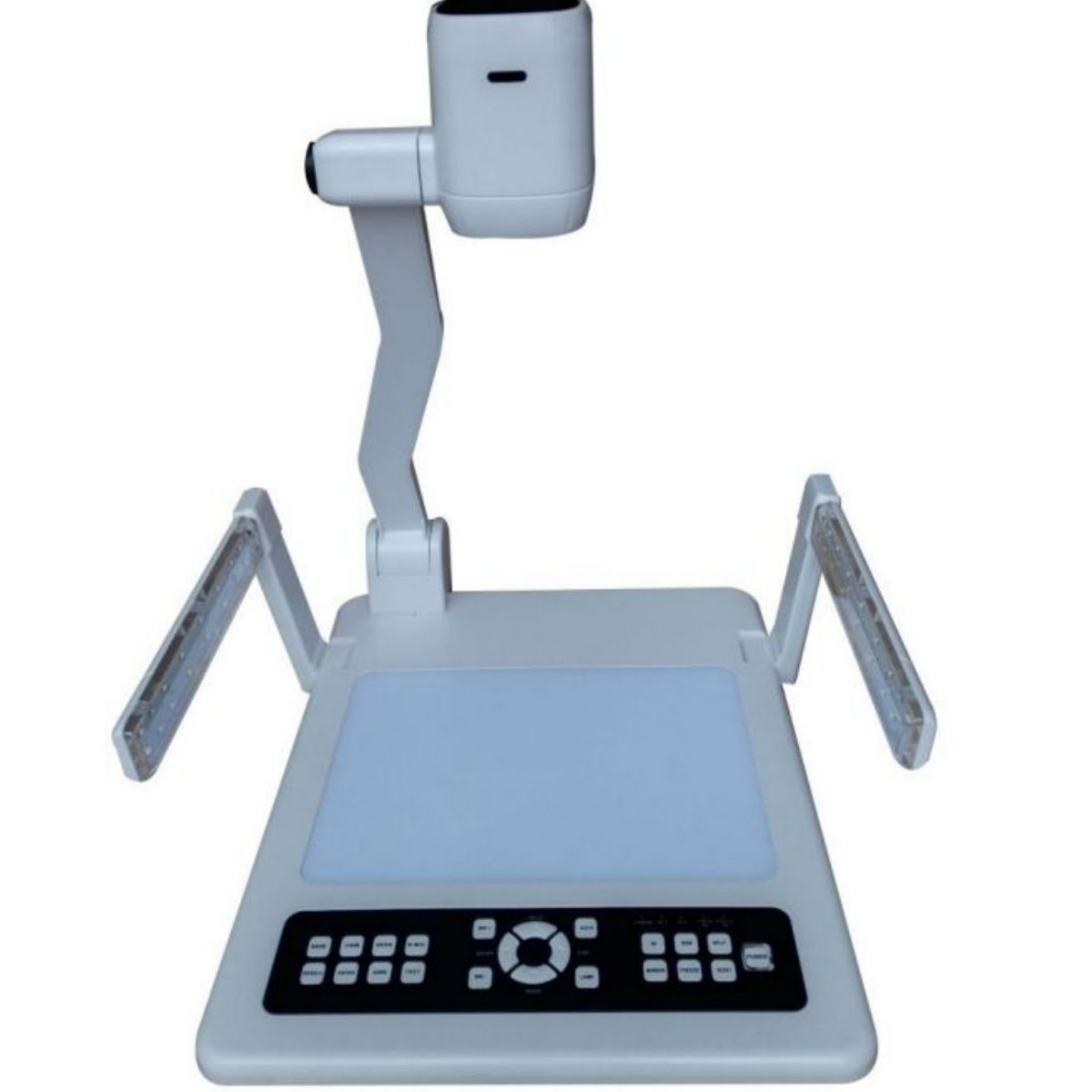
Multi-functional Document Camera Professional in Visual Presenter Also Visualizer in Educational Equipment
Designed for classrooms, training rooms and hybrid lessons, this visualizer combines live object demonstration with document capture for distributors serving education tenders.
View model →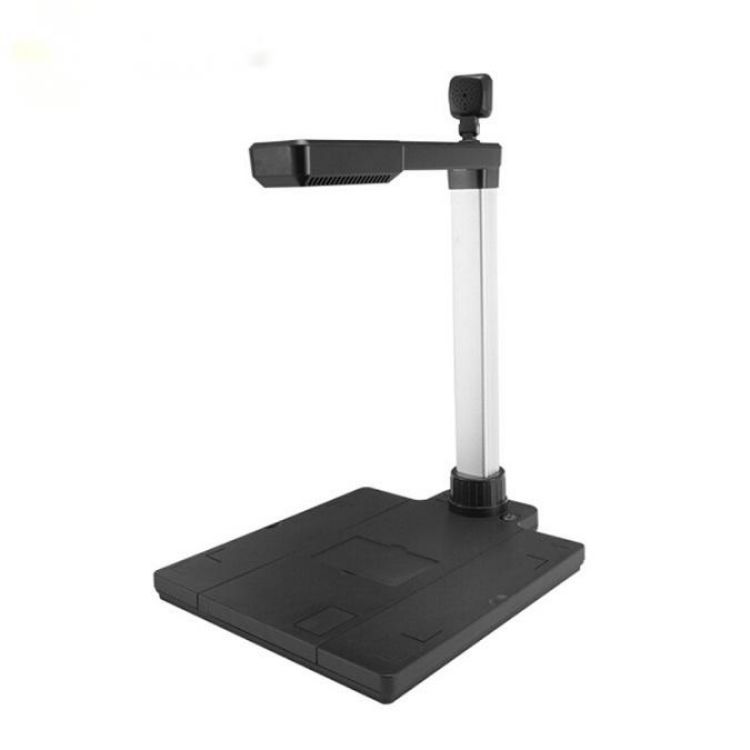
10MP Education Visualizer Scanner Document Management Book Camera USB in Stock
A stock-ready USB document camera for book capture and document management. It gives education and office buyers a straightforward option for readable OCR output and quick deployment.
View model →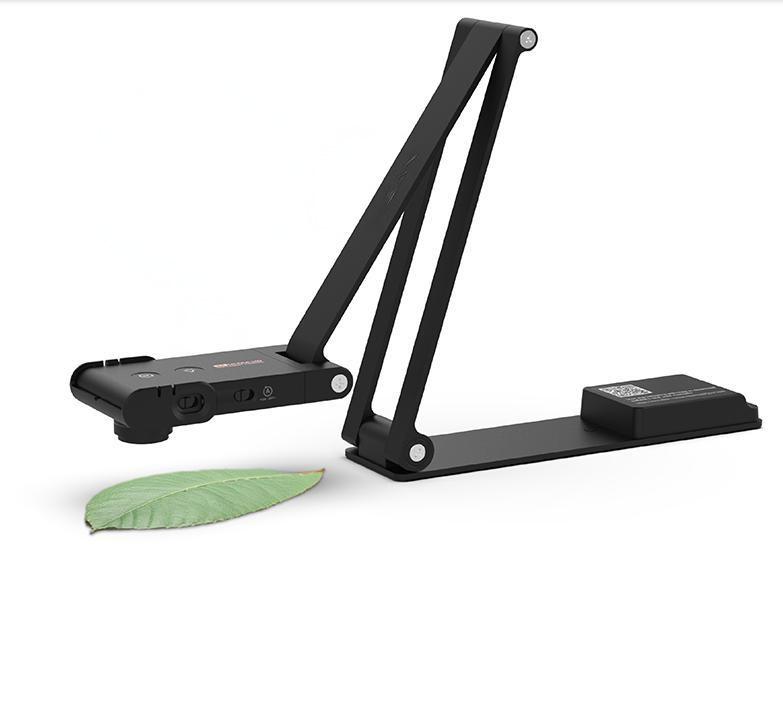
4K 2-in-1 USB 13MP Document Camera Visualizer AI Noise Cancellation 20X Macro Lens Foldable Design Microphone A3 Max 1-Year
A foldable 4K visualizer with 20x macro lens, microphone and AI noise cancellation. It suits buyers who need both document scanning and clear live instruction in one device.
View model →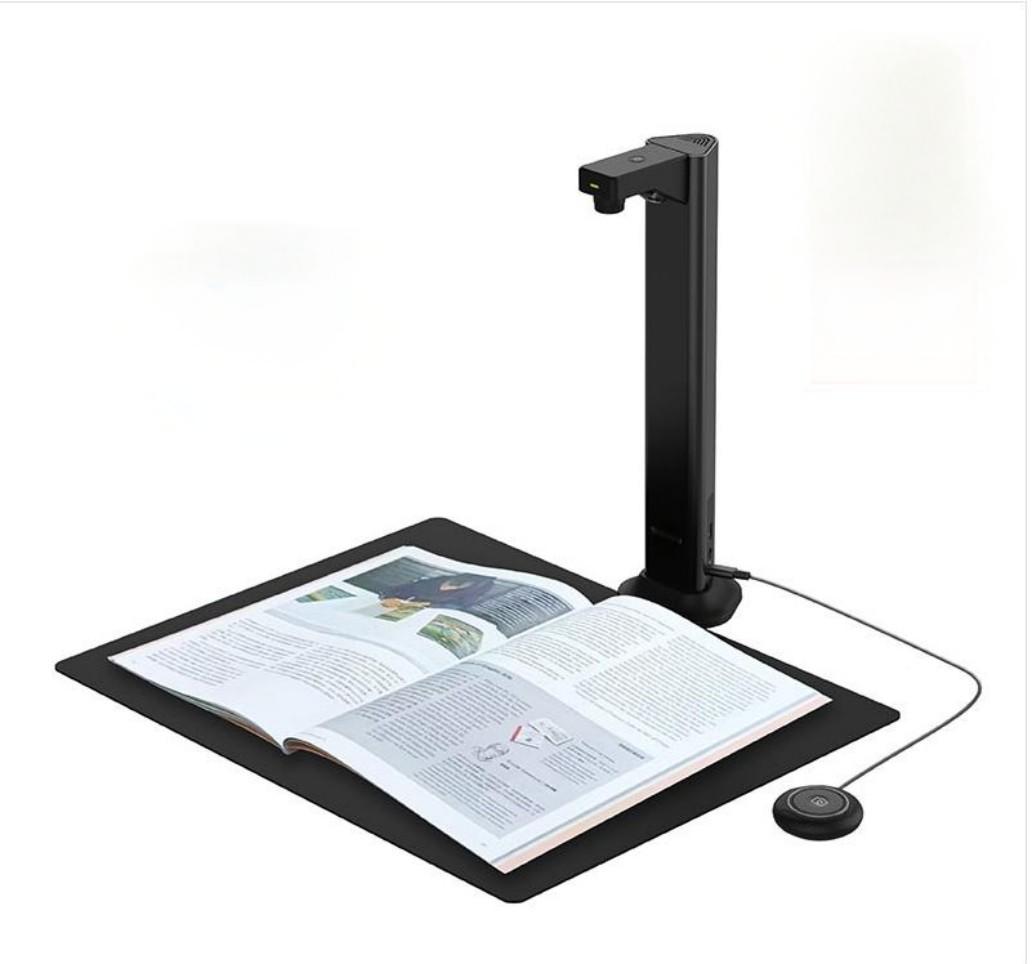
Real 24MP UVC A3 Document Scanner with USB Interface and Text to Speech Feature In-Stock Product
A high-resolution A3 document scanner with UVC USB connectivity and text-to-speech support, suitable for accessibility programs, records teams and OCR-driven document workflows.
View model →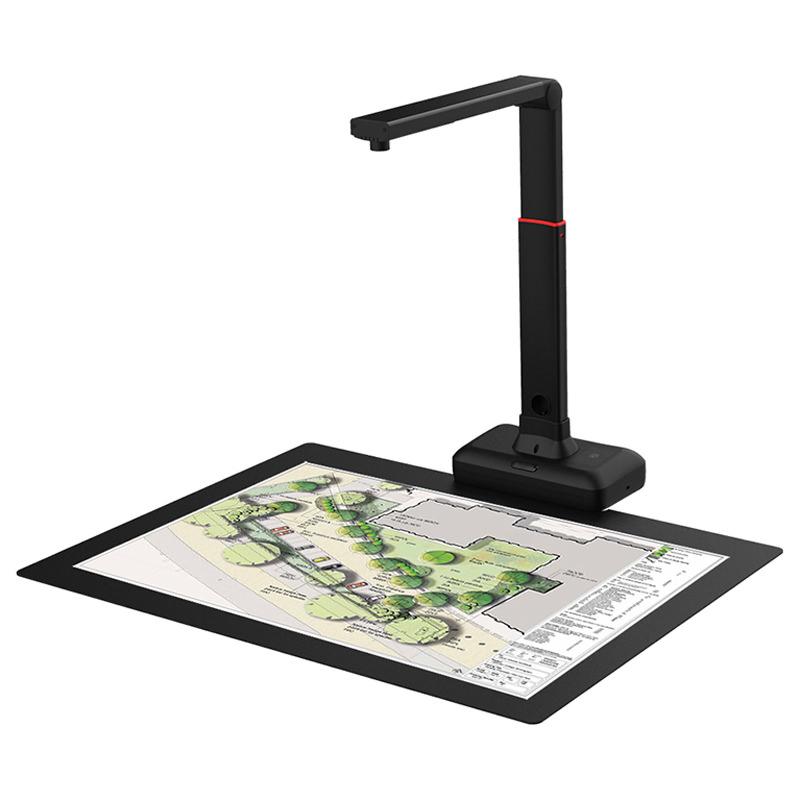
A2 Large Format Overhead Document Scanner 21MP USB Aluminum Text-to-Speech 1-Year Warranty in Stock
An A2 overhead scanner for newspapers, maps, plans and large records. The aluminum body and text-to-speech feature make it relevant for libraries and public-sector tenders.
View model →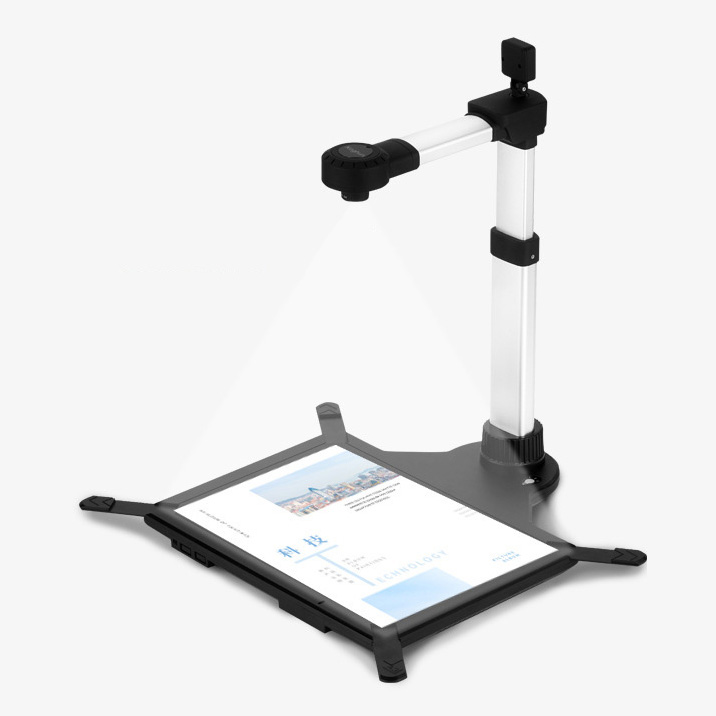
HD Dual Camera 16MP + 2MP Pixels Multifunction Stretchable Smart USB 60 Pages/Min A3/A4 Document Scanner 360 Rotation 180
A dual-camera scanner for high-throughput A3/A4 capture, with a second camera useful for ID cards, portraits and counter-service workflows. Designed for stretchable, flexible positioning.
View model →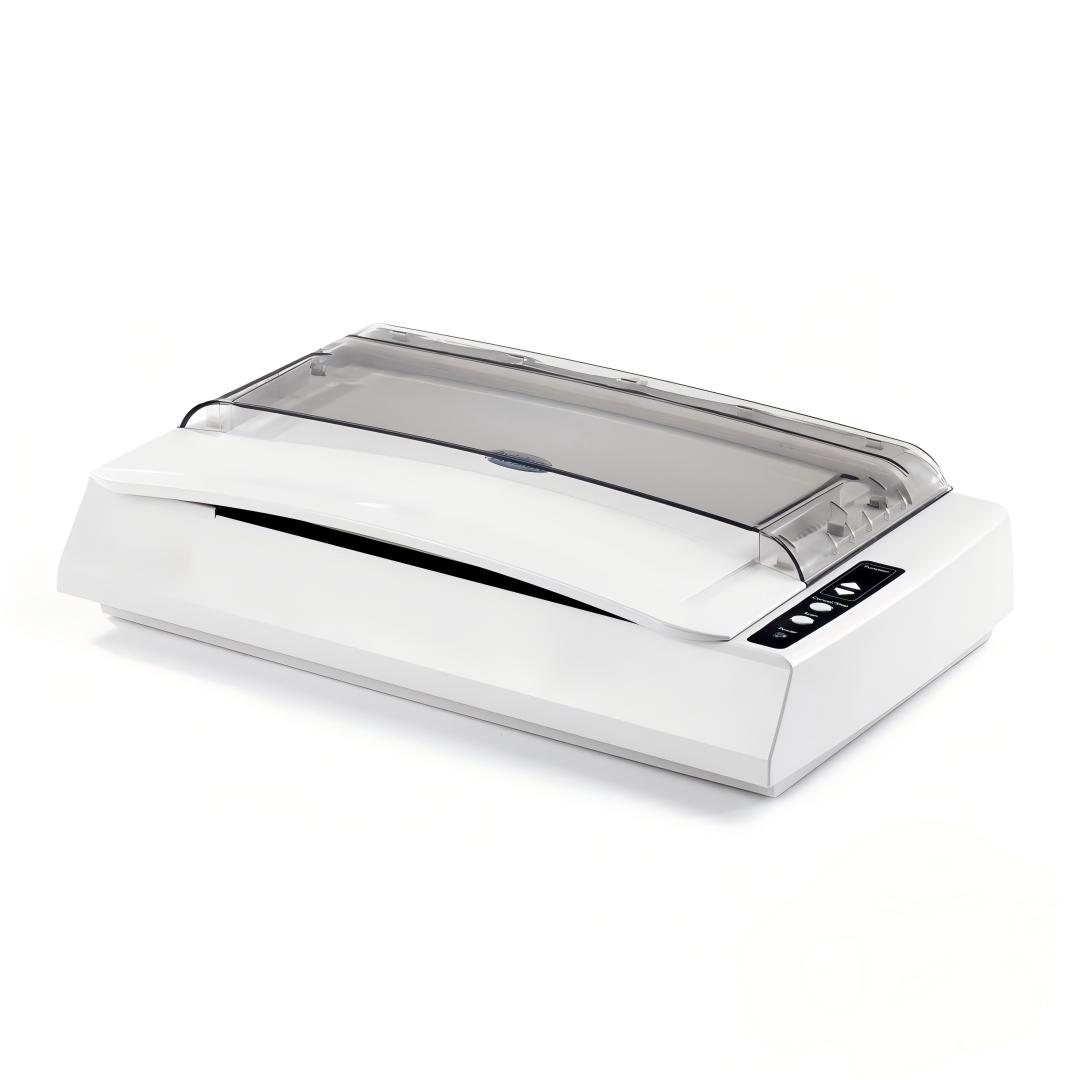
CCD Zero Margin Bookedge Flatbed Scanner A4 600dpi USB Bound Book Scanning No Spine Shadow Library Archive Digitization
A CCD flatbed with a zero-margin bookedge design for fragile bound volumes. It reduces spine shadow and is aimed at library, archive and special-collection digitization.
View model →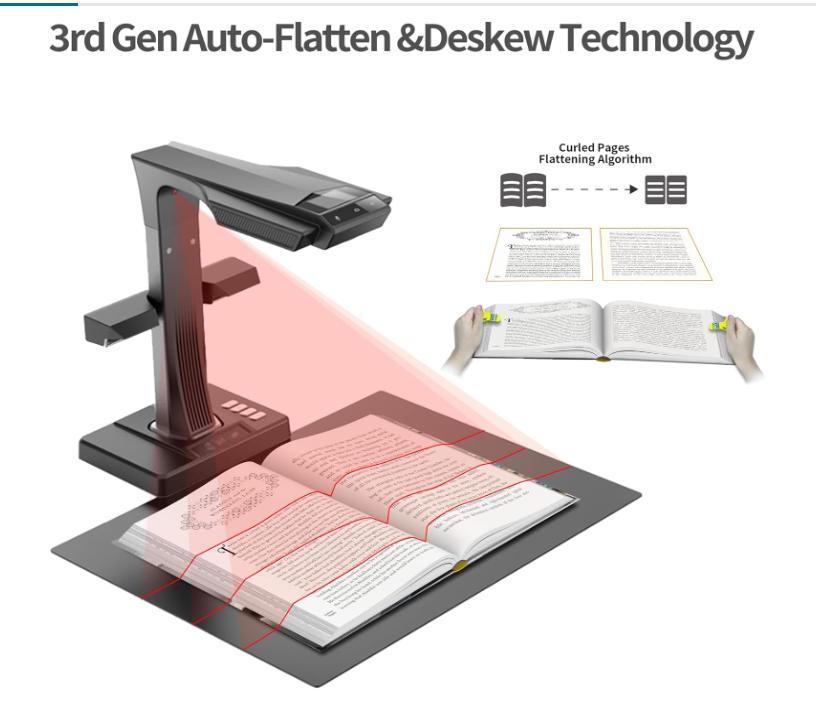
A3 24MP Book Scanner Auto Flatten Deskew CMOS Document Digitizer 4000x6000 USB Visualizer OCR Searchable PDF
A 24MP CMOS book scanner with auto-flatten and deskew for curved pages. It outputs to OCR and searchable PDF, making it a strong fit for book digitization and records modernization.
View model →Supplier Signals B2B Buyers Can Actually Compare
Price alone does not identify a reliable USB book scanner factory or wholesaler. Response speed, repeat orders, verification and after-sales capability matter because they affect installation, tender compliance and total cost of ownership.
What “Top 10” Should Mean in USB Book Scanner Sourcing
Queries such as top 10 USB book scanner factory, USB book scanner wholesaler, A3 book scanner supplier China and A2 overhead document scanner manufacturer usually hide three different intentions: finding ready stock, finding OEM/ODM production flexibility, and validating whether a model can meet a specific digitization specification.
A useful top-10 shortlist is not a paid directory. It is an evidence-based filter that helps a procurement team remove suppliers who cannot support the document size, OCR output, software environment, warranty terms or wholesale model they need.
For semantic search and real purchasing decisions, the word “top” should be attached to measurable criteria: sensor platform, resolution at the target page size, capture speed, curve correction, USB integration, OCR language support, SDK availability, minimum order quantity, stock policy, third-party verification and after-sales response. When these factors are scored consistently, a buyer can compare a low-cost education visualizer with an archival A2 overhead scanner without mixing up their intended use cases.
This whitepaper therefore treats “Top 10” as a 10-point factory and wholesaler scorecard. It is designed for distributors who need repeatable supply, for archives that cannot risk damaging a binding, for schools rolling out visualizers across classrooms, and for systems integrators who need a USB camera that behaves predictably inside their own software.
Illustrative procurement weighting model
Use this as a starting scorecard, then adjust weights for your tender, archive standard or wholesale business model.
The 10-Point USB Book Scanner Supplier Scorecard
Use these ten checks to screen a factory, trading company or wholesaler before sending a formal RFQ. Each point should be documented, not assumed.
Sensor platform fit
Confirm whether the model uses CIS, CMOS or CCD. The sensor choice affects book safety, depth of field, speed and the type of document the scanner handles best.
Resolution math at A3 and A2
Do not compare megapixels without the page size. A 21MP A2 device and a 24MP A3 device produce very different effective dpi on the same page.
Non-contact handling
For bound books, look for overhead CMOS capture, auto-flatten, deskew and page-boundary detection. These reduce stress on spines and improve OCR quality.
Capture speed and throughput
Ask for pages per minute in the actual workflow, including autofocus, exposure, file writing and OCR. High-volume counters need different priorities from archives.
OCR and searchable PDF
Test OCR language coverage, layout retention, searchable PDF export and accuracy on curved pages, stamps, tables and low-contrast paper.
USB and SDK integration
Check UVC support, driver behaviour, Windows and macOS compatibility, and SDK availability for integrators building document capture into their own systems.
OEM/ODM readiness
Verify logo printing, packaging, housing colour, software branding and documentation support. OEM claims should be matched by a clear approval workflow.
MOQ and stock policy
Ask whether ready stock starts from one piece or one set, which models require two pieces, and how mixed-SKU orders are packed and consolidated.
Verification and warranty
Use third-party supplier assessment, transaction history, buyer reviews and warranty terms as evidence. A one-year warranty needs a documented remote support process behind it.
Export terms and after-sales
Normalize FOB, EXW and DDU offers, confirm currencies and payment methods, and ask who handles installation guidance, spare parts and technical escalation.
How Many Megapixels Do You Really Need for A3 or A2 Scanning?
Megapixels only matter in relation to the document size and the required dpi. The calculation is simple: required pixels = document width in inches × target dpi × document height in inches × target dpi. That is why two scanners with similar megapixel counts can deliver very different archival results.
For OCR and on-screen reading, 200–250 dpi is often enough. For library and archive master files, many programs specify 300 dpi or higher. For photographs, artwork and fine detail, optical flatbed resolution from 600 dpi to 2400 dpi may be more relevant than camera megapixels. For procurement, the safest method is to state the page size and the required output dpi in the RFQ, then ask each supplier to prove the effective resolution with a sample scan.
| Document size | Pixels at 300 dpi | Recommended capture class | Typical buyer fit |
|---|---|---|---|
| A4 210 × 297 mm | 2480 × 3508 ≈ 8.7 MP | 10MP or higher | Education visualizers, office document cameras, service counters |
| A3 297 × 420 mm | 3508 × 4961 ≈ 17.4 MP | 18–24MP | 18MP OCR book scanners, 24MP auto-flatten models for approximately 340 dpi |
| A2 420 × 594 mm | 4961 × 7016 ≈ 34.8 MP | 21MP for preview; 48MP for archival | A2 newspaper, map and plan digitization; dual 48MP for high-resolution masters |
| Bound books and fragile archives | 300 dpi master plus curve correction | CMOS overhead or CCD bookedge | Auto-flatten, deskew, zero-margin flatbed, searchable PDF |
A 21MP overhead scanner covering a full A2 sheet usually lands near 225–240 dpi, while a 48MP A2 system can move toward 300 dpi and above. A 24MP A3 book scanner is typically close to 340 dpi on an A3 page. Buyers who need both A2 format and archival resolution should not assume that “A2 support” automatically means “300 dpi at A2”; they should request an actual test scan with a ruler, a text page and a colour target.
Procurement Trends That Will Shape USB Book Scanner Orders
USB document capture is moving from a specialist device purchase to a repeatable IT and records-management category. The following trends are especially relevant for wholesalers, tender suppliers and systems integrators.
USB-first standardization
Procurement teams prefer USB plug-and-play devices that work without a complex network project. UVC compatibility reduces deployment risk across classrooms, archive reading rooms and service counters.
Low-MOQ mixed purchasing
Distributors increasingly test demand with mixed-SKU orders instead of one large container. Models that start from one piece or one set, with selected document cameras from two pieces, reduce inventory risk.
AI-assisted capture
AI noise cancellation, page-boundary detection, curve correction and deskew are moving from premium models to mainstream expectations. Buyers should test these features on real documents, not only demo cards.
Private, local processing
Libraries, banks and government buyers prefer document processing on local PCs or private networks. Offline OCR and USB-only workflows can be easier to approve than cloud-dependent capture.
Software and SDK value
Hardware is no longer the whole product. OCR languages, searchable PDF export, driver stability, API access and custom branding can decide whether a wholesaler wins a tender or a systems-integration contract.
Verification before discount
Buyers are checking supplier assessment, trade history, transaction records and reviews before negotiating price. Verifiable records reduce the risk of switching to an unknown supplier for a small discount.
Where USB Book Scanner Hardware Is Heading
The next procurement cycle will reward suppliers who can combine higher image quality with simpler software, better accessibility and more flexible document workflows.
Higher-resolution A2 capture
Dual-sensor A2 designs are becoming more practical for newspapers, maps and engineering drawings. Instead of stitching multiple captures, buyers can request one-shot overhead scanning with enough resolution for archival output.
Auto-flatten and deskew as baseline
Curve correction, page-boundary detection and deskew are essential for books. The buyer experience is shifting from “can the device capture an image?” to “can it produce a clean, searchable PDF with minimal manual correction?”
AI noise cancellation and cleaner audio
Visualizers used in classrooms and training rooms increasingly include microphones and AI noise cancellation. This reduces the need for separate audio equipment and improves recorded lessons.
Text-to-speech and accessibility
Text-to-speech support is appearing in A3 and A2 scanning products. For public-sector buyers, accessibility can become a scoring item rather than an optional feature.
Dual-camera multifunction devices
A second camera can capture ID cards, portraits or physical objects while the main camera handles documents. This trend is especially relevant for banking, government counters and service desks.
4K visualizers for hybrid teaching
4K output, macro lenses, foldable arms and HDMI/VGA/USB connectivity are turning document cameras into hybrid classroom presentation tools rather than single-purpose scanners.
Where Each USB Book Scanner and Document Camera Buying Brief Begins
Matching the device to the real workflow prevents over-specification and reduces the risk of a failed pilot. These are the six application profiles most often seen in wholesale and tender purchasing.
Libraries and archives
Prioritize non-contact scanning, auto-flatten, deskew, OCR and searchable PDF. For fragile books, a CCD bookedge flatbed or an overhead CMOS scanner is usually safer than pressing pages onto glass.
Education and training
Visual presenters with optical zoom, HDMI/VGA output and clear live video help teachers show textbooks, experiments and 3D objects. Look for simple controls and stable drivers.
Government and banking counters
Dual-camera models can capture forms and ID cards in one workflow. SDK access, OCR and fast capture matter more than large-format book handling.
Enterprise offices
A3 UVC document scanners and ADF-capable devices support paperless workflows, contract digitization and invoice processing. Confirm the target operating system and OCR languages.
Newspapers and publishers
A2 overhead scanners capture broadsheets and maps in one pass. For archival masters, request a high-resolution sample and verify the effective dpi across the full page.
Distributors and integrators
Look for OEM/ODM support, stable supply, mixed-SKU flexibility, documentation and SDK integration. The supplier’s ability to answer technical questions quickly is part of the product.
Total Cost of Ownership and the RFQ Checklist
A lower unit price can be expensive if it creates driver issues, OCR rework, spare-part delays or a failed tender pilot. Normalize every quotation against the same landed-cost and support assumptions.
Request raw sample scans
Ask for the same text page, colour page and book page at the required resolution. Compare edge sharpness, OCR accuracy and file size.
Confirm OCR languages and output
Check searchable PDF, editable text, page layout retention and support for the languages used in your market.
Test the target operating system
Verify Windows and macOS support, driver installation and UVC behaviour on the computers used by the end customer.
Document warranty and spares
Confirm the one-year warranty terms, remote support process and which spare parts or accessories are available.
Normalize Incoterms and fees
Compare FOB, EXW and DDU quotations with currency conversion, payment fees, insurance and import duties included.
Check MOQ, stock and packaging
Confirm minimum order quantities, mixed-SKU rules, export packaging and whether the model is ready stock or made to order.
The practical formula is: total cost = unit price + freight + duties + payment fees + software/OCR cost + training + expected failure and downtime cost + spare-part logistics. A supplier that responds within one hour, provides clear verification records and supports a one-year warranty can be more economical than a cheaper supplier that leaves the integrator to solve every technical issue alone.
Why Guangzhou Quibow Electronic Belongs on a Serious Shortlist
Guangzhou Quibow Electronic Co., Ltd. develops and supplies image acquisition and conversion equipment, including overhead book scanners, A3/A2 large-format document scanners, flatbed scanners and document cameras built on CIS, CMOS and CCD imaging platforms.




Established in 2020 and based in Guangzhou, Guangdong, China, Quibow operates as a technology-driven supplier with an onsite-checked business profile. The company covers product design and development, production coordination, export sales and after-sales support, and welcomes OEM/ODM projects for distributors and integrators.
Its product range is relevant to buyers who need more than a generic USB camera. The catalogue includes A2 overhead book scanners, A3 auto-flatten OCR scanners, CCD zero-margin bookedge flatbeds, 4K visualizers, dual-camera document scanners and education visualizers. This breadth allows a wholesaler to build a coherent USB capture portfolio for libraries, schools, offices and public-sector counters.
Commercial terms are designed for B2B testing and repeat supply. Many stock book scanners, A2 large-format scanners and flatbed scanners start from one piece or one set; several document camera models start from two pieces. OEM/ODM quantities are confirmed per project. Payment methods include T/T, L/C, PayPal and Western Union in USD, EUR, HKD or CNY, with FOB, EXW and DDU delivery terms.
- Business type
- Trading company, onsite checked
- Location
- Guangzhou, Guangdong, China
- Year established
- 2020
- Main markets
- Eastern Europe, North & South America
- Annual revenue
- US$1M – US$2.5M
- Team
- 5–10 dedicated specialists
- Response record
- ≤1h average, 100% message response
- Reorder signal
- 27% buyer reorder rate
Warranty support is offered on listed models, with remote technical support. Verification records such as supplier assessment, credit overview, ratings, trade capacity and transaction history are maintained by Alibaba.com and can be checked independently before an order is placed.
Get a QuoteOEM/ODM and Wholesale Support: From Brief to Shipment
A clear process helps procurement teams understand what happens after the first inquiry and how customization decisions are approved.
Requirement review
Document size, daily volume, operating system, OCR languages and output formats are confirmed.
Model matching
The right sensor platform and resolution class are recommended, with sample scans available on request.
Customization
Logo, packaging, housing colour, software branding and SDK integration are discussed on selected models.
Quality inspection
Focus, lighting uniformity, driver installation and capture speed are checked before shipment.
Shipping and support
Export packing, remote setup guidance and a one-year warranty on listed models support the rollout.
FAQ for USB Book Scanner Factory and Wholesaler Buyers
These are the questions procurement teams ask most often when comparing USB book scanners, visualizers and overhead document cameras.
What should I compare in a top-10 USB book scanner factory shortlist?
Compare sensor type, effective resolution at your actual page size, book-handling features, OCR quality, USB and SDK integration, OEM/ODM readiness, minimum order quantity, stock policy, warranty, third-party verification and technical response time. A supplier with the best unit price is not necessarily the best factory or wholesaler for a repeatable program.
What is the minimum order quantity for Quibow scanners and document cameras?
Most stock book scanners, A2 large-format scanners and flatbed scanners start from one piece or one set. Several document camera models start from two pieces. OEM/ODM quantities are confirmed per project, so buyers should include target SKUs, packaging requirements and forecast volume in the first inquiry.
Do you support OEM and ODM orders?
Yes. OEM/ODM support can include logo printing, packaging, housing colour, capture software branding and SDK integration on selected models. Approval steps and MOQ depend on the model and the level of customization.
Are the scanners compatible with Windows and macOS?
Many models, including the A2 large-format scanners and the 1200 DPI A3 flatbed scanner, support Windows and macOS, and some are verified on Apple M1 Macs. Compatibility should be confirmed for each model before shipment, especially for UVC, SDK or OCR-dependent deployments.
Which resolution do I need to scan A3 or A2 documents at 300 dpi?
An A3 page at 300 dpi needs about 3508 × 4961 pixels, or roughly 17.4MP, so an 18MP or 24MP scanner is suitable. An A2 sheet at 300 dpi needs about 4961 × 7016 pixels, or roughly 34.8MP, so a 48MP A2 scanner is recommended for archival masters. A 21MP A2 model may be adequate for preview, OCR or lower-resolution workflows but should be tested against the tender specification.
What payment and delivery terms are available?
T/T, L/C, PayPal and Western Union are accepted in USD, EUR, HKD or CNY, with FOB, EXW and DDU delivery terms. Buyers should normalize all quotations to landed cost before comparing suppliers.
What warranty do the products carry?
Listed models such as the A3 flatbed scanners, A2 overhead scanners and the S2060W ADF scanner come with a one-year warranty, backed by remote technical support. Confirm spare-part availability and escalation contacts during the RFQ stage.
What sample scans should I request before placing a wholesale order?
Request a ruled test page, a dense text page, a colour page, a curved book page and, for A2 buyers, a large-format document. Ask for OCR output and searchable PDF, not only a compressed JPG. Check edge sharpness, colour accuracy, page-curve correction, shadow control and the time required to produce a usable file.
Build a USB Book Scanner Shortlist That Survives Technical Review
Share your page sizes, daily volume, target dpi, OCR languages, operating system and expected wholesale quantity. We will help match the right overhead scanner, bookedge flatbed or document camera and provide the technical details needed for a confident purchasing decision.