Eight Large Format Book Scanners & Document Cameras for Buyer Evaluation
Start with real models. These eight catalogue items cover A3 bound-book capture, A2 dual-sensor archival scanning, portable A4 digitization, wall-mounted visualizers and OCR-ready document cameras.
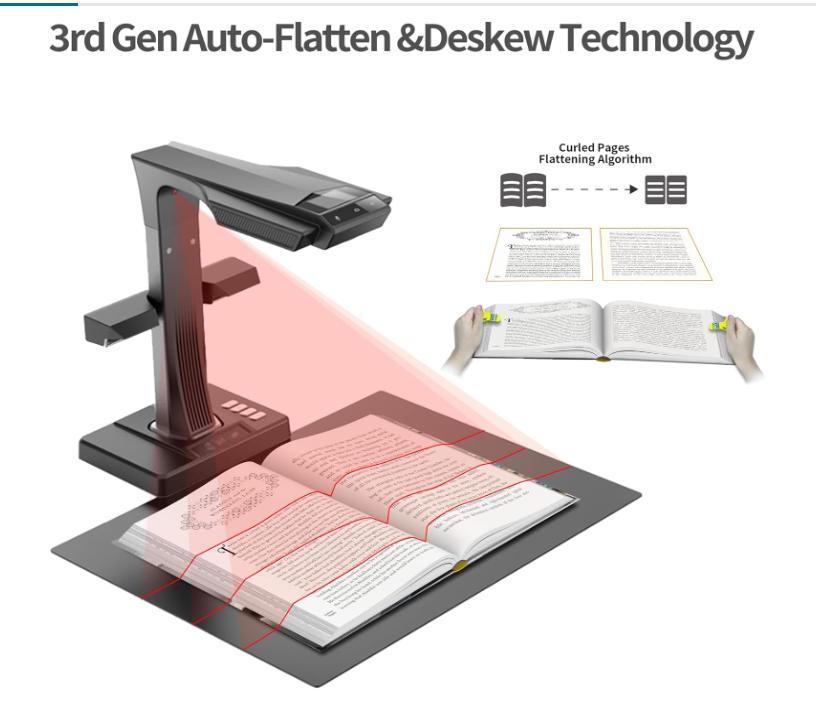
A3 24MP Book Scanner Auto Flatten Deskew CMOS Document Digitizer 4000x6000 USB Visualizer OCR Searchable PDF
Non-contact A3 capture with auto flattening, deskew and OCR searchable PDF workflows for bound books, registers, manuscripts and fragile files.
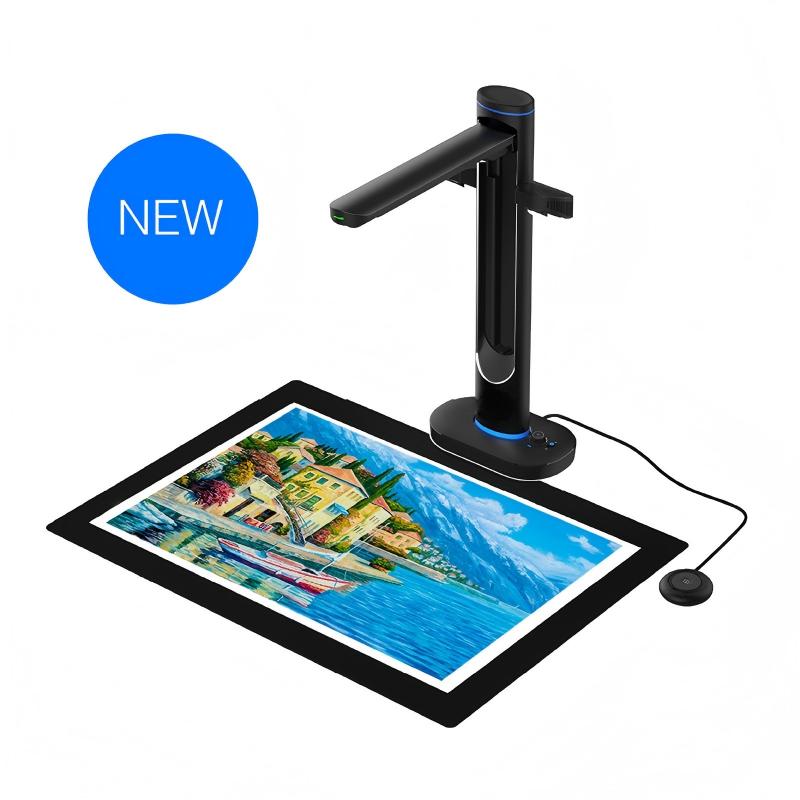
A2 Large Format Book Scanner Dual 48MP CMOS Sensors High-Speed Desktop Overhead Scanner for Windows & MacOS
Dual 48MP CMOS architecture for A2 broadsheets, newspapers, maps and archival masters where 300 dpi headroom matters.
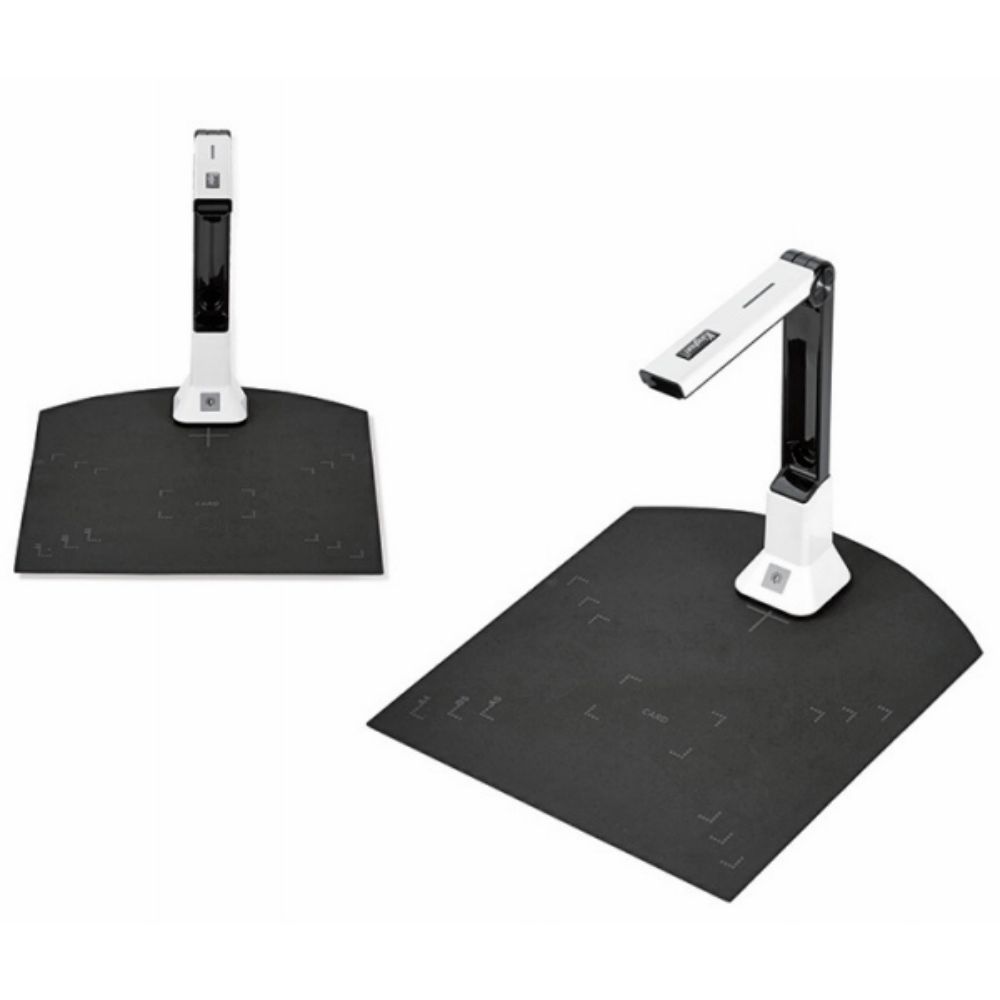
Wholesale 5MP USB Light CMOS A4 Document Scanner Portable Smart Handheld High Resolution 1-Second Scan CE Certified Stock Black
Portable A4 USB scanner for field capture, mobile enrollment, stock availability and fast one-second scan cycles.
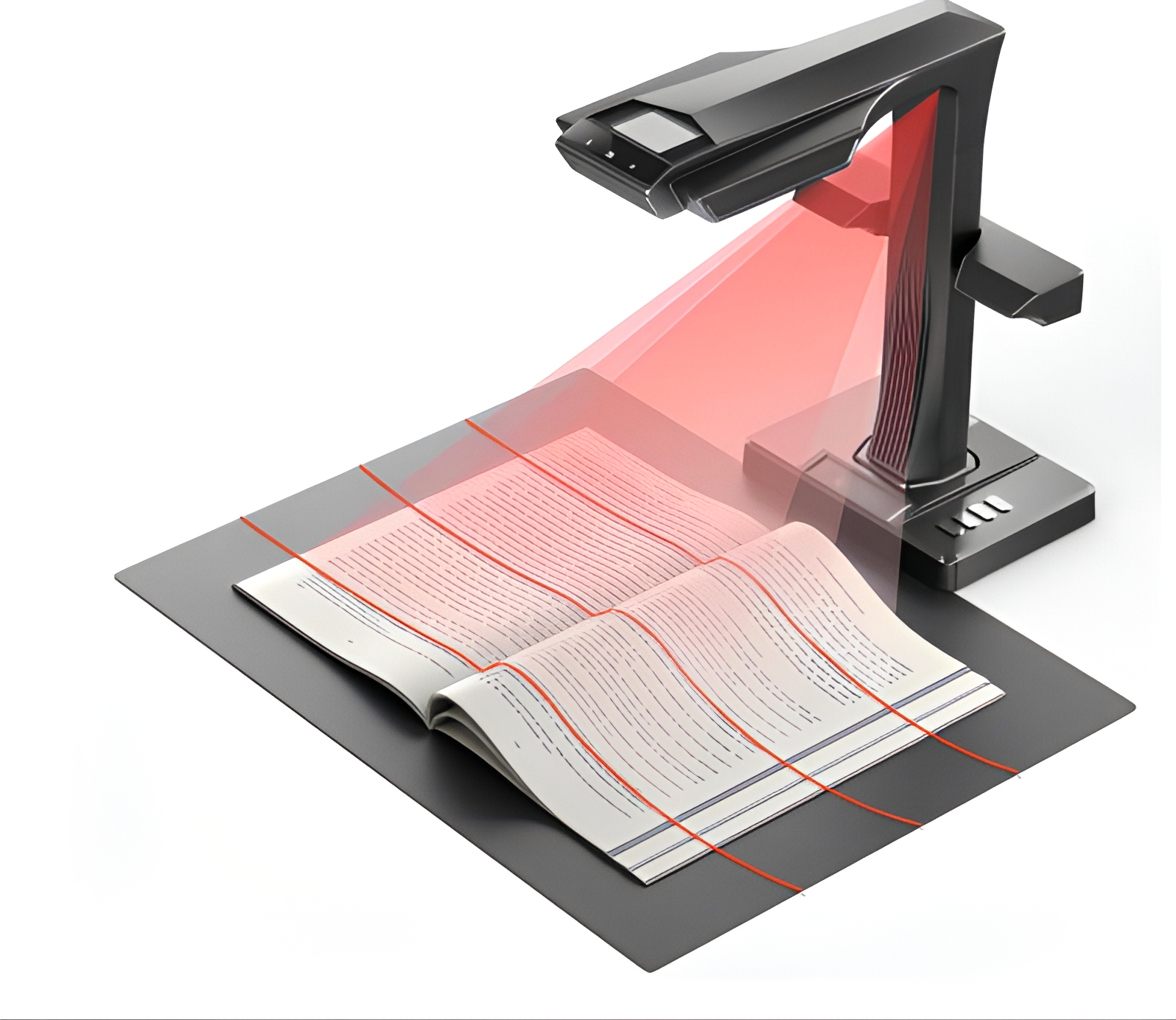
Book Scanner 38MP A3 Document Camera Auto Curve Flattening High Speed Overhead Scanner for Library Office
High-resolution A3 overhead document camera with curve flattening, suited to library digitization and office high-speed capture.

USB Document Camera Scanner 10MP CMOS Visualizer A4 Scanner for Office Education
10MP CMOS visualizer for classroom demonstration, office collaboration and live A4 document capture.
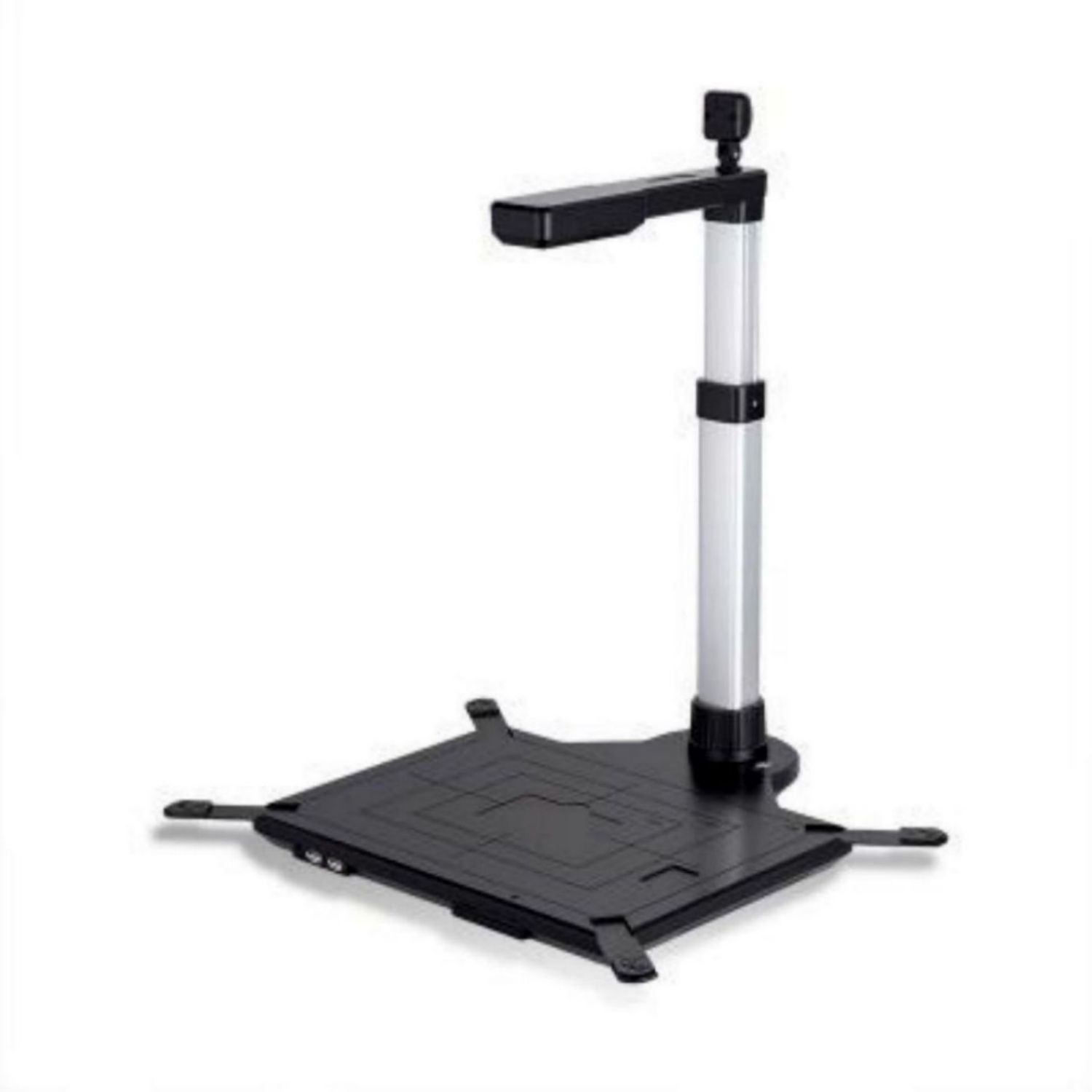
Professional USB Dual Camera Scanner for A3 Documents Supports OCR PDF Multi-Languages High-Speed 1-Second Scan 360-Degree
Dual-camera A3 scanner for high-speed OCR, multi-language PDF output and 360-degree service-counter capture.
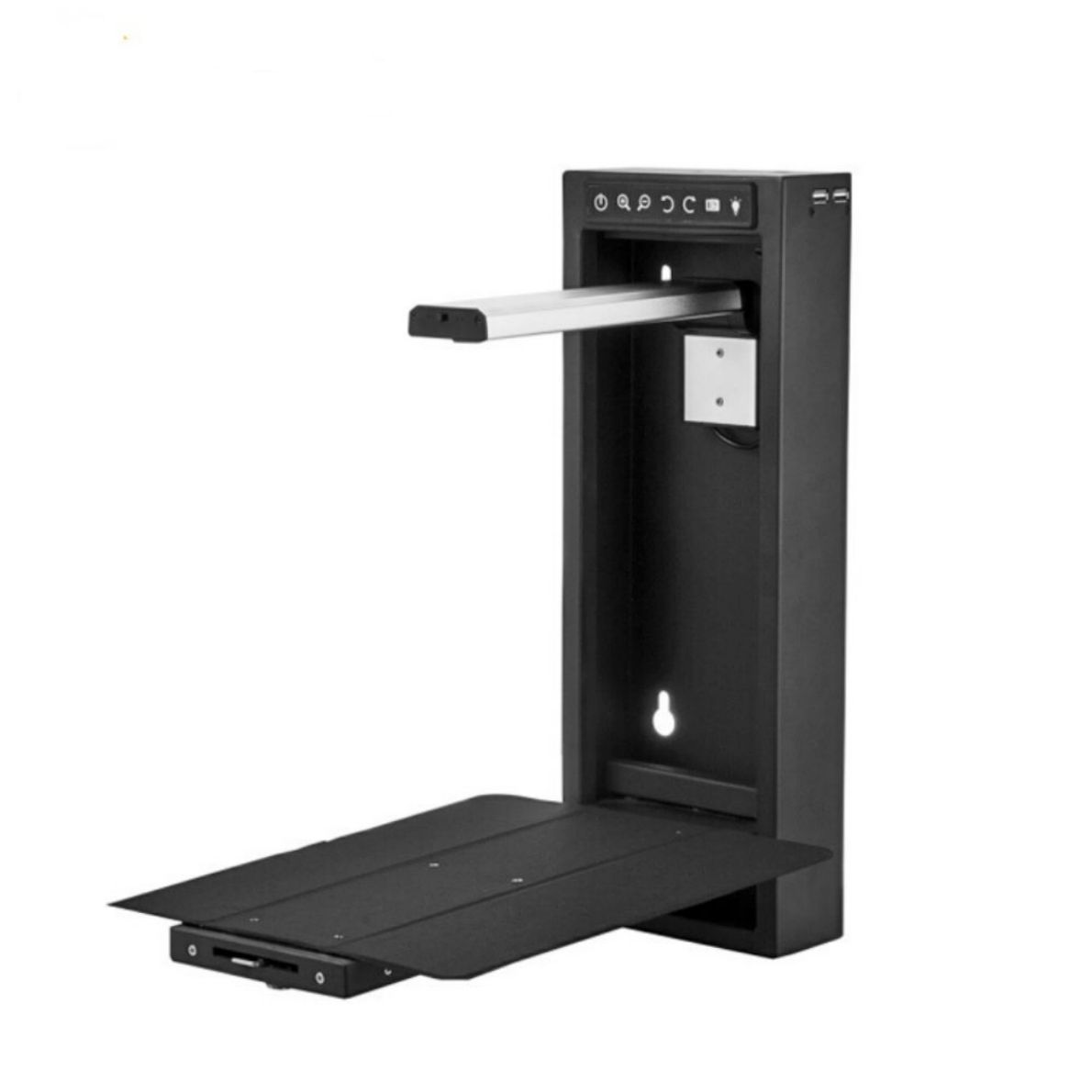
Factory New High Definition Wall Mount Document Scanner USB Interface Visualizer CE Certified 1-Year Warranty High-Speed A4 SDK
Wall-mount visualizer for fixed-position scanning, self-service capture, A4 documents and SDK-based integration.
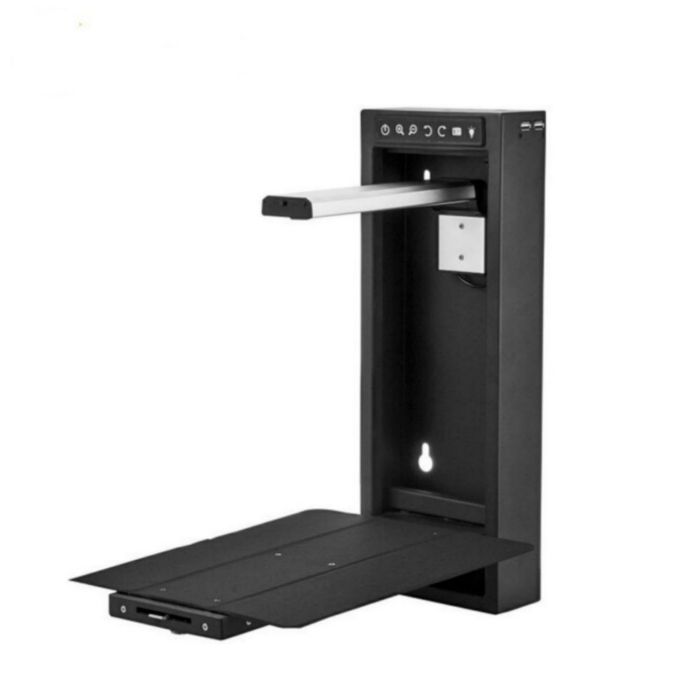
A4 Black USB 5V High-Speed 10MP High-Resolution Document Scanner Wall-Mountable OEM 24 Bit SDK 1-Year Warranty Education Stock
Wall-mountable A4 scanner with 10MP resolution, 24-bit color, SDK access and OEM support for education and office deployments.
Why the Top 10 Large Format Book Scanner Manufacturers & Exporters Shortlist Is Harder Than It Looks
Procurement teams searching for a “top 10” list usually need much more than a brand ranking. They need proof of image quality, book-safe handling, software compatibility, OEM flexibility and exporter reliability.
A large format book scanner is not a commodity peripheral. It sits between fragile physical collections and searchable digital workflows, so the wrong selection creates downstream costs in rescans, OCR correction, operator fatigue and software integration. The strongest supplier shortlist is built from measurable evidence: native sensor resolution, real captured files, curve-flattening performance, output formats, SDK access, warranty terms and verifiable export records.
For A3 books, the critical test is whether the scanner can capture a curved page without pressure and still produce clean, readable text at archival settings. For A2 newspapers, maps and bound broadsheets, the sensor must cover the whole sheet with enough optical headroom for 300 dpi masters. For document cameras and visualizers, the priority shifts to live image clarity, zoom, latency, HDMI/VGA connectivity and classroom or counter usability. A useful “top 10” evaluation therefore blends hardware, software and supplier due diligence rather than treating megapixels as the only metric.
1. Format coverage
Confirm A3, A2, A4 and non-standard sizes. Check whether the unit is overhead, flatbed, bookedge or wall-mounted.
2. Native resolution
Ask for optical resolution across the active document area, not interpolated output. Request original files.
3. Sensor fit
CMOS suits overhead book capture; CIS suits high-volume ADF paths; CCD is valuable for bookedge and photo detail.
4. Book-safe processing
Auto curve flattening, deskew, finger removal, page splitting and background cleanup reduce post-scan labour.
5. OCR & output
Check searchable PDF, editable text, multi-language OCR, batch naming and export to archive or LMS workflows.
6. SDK & integration
For system integrators, SDK access, software branding and API readiness can matter as much as scan speed.
7. Throughput
Measure real cycle time, focus consistency, lighting uniformity and operator comfort across a full workday.
8. Build & QA
Ask how focus, LED uniformity, driver installation and capture speed are checked before export packing.
9. Commercial terms
Compare MOQ, OEM/ODM scope, payment currency, Incoterms, warranty, spare parts and sample policy.
10. Exporter proof
Use onsite checks, trade records, response rates and reorder data to separate active exporters from catalogue resellers.
Resolution Engineering: The Metric That Separates a Demo from a Working Archive
Megapixels are only meaningful when they are mapped to the physical document. The calculation below helps buyers avoid under-specifying a scanner and then paying twice for rescans.
Use this formula before comparing quotations
Required pixels = document width × dpi and document height × dpi. For a 300 dpi A3 master, you need approximately 3508 × 4961 pixels, or about 17.4 MP. A 24MP A3 scanner therefore provides useful headroom for cropping, deskew and OCR. For A2 at 300 dpi, the target is roughly 4961 × 7016 pixels, or about 34.8 MP; a 48MP A2 system is the safer archival choice.
A 21MP A2 scanner can be acceptable for OCR and reading, but it is usually not enough for a 300 dpi A2 preservation master if the specification is enforced literally. This is exactly the kind of detail a top-tier manufacturer or exporter should explain before quoting.
Ask for sample files at the agreed dpi, then inspect text edges, colour fidelity, page curvature and file size. If the sample is a resized JPEG, it does not prove native optical performance.
Quick procurement example
Library tender: A3 bound books, 300 dpi, searchable PDF, Windows and macOS operators. Recommended starting point: 24MP A3 auto-flatten scanner or 38MP A3 overhead scanner, with sample scans at final settings.
Newspaper archive: A2 bound volumes and loose broadsheets, 300 dpi masters. Recommended starting point: dual 48MP A2 overhead scanner, with OCR validation on small text and halftone photographs.
Classroom or service counter: live A4/A3 display, image capture, HDMI/VGA or USB output. Recommended starting point: 10MP visualizer or dual-camera A3 OCR scanner, depending on whether the priority is presentation or transaction capture.
| Document size | Pixels at 300 dpi | Minimum practical sensor | Procurement note |
|---|---|---|---|
| A4 210 × 297 mm | 2480 × 3508 ≈ 8.7 MP | 10MP or higher | Good for visualizers, counter capture and office OCR. |
| A3 297 × 420 mm | 3508 × 4961 ≈ 17.4 MP | 18–24MP | 24MP A3 models add crop and deskew headroom; 38MP supports higher detail. |
| A2 420 × 594 mm | 4961 × 7016 ≈ 34.8 MP | 48MP for archival masters | Dual 48MP A2 is the safer choice for newspapers, maps and preservation files. |
| Bound books | Depends on page size and curvature | Auto-flatten CMOS overhead | Prioritise curve correction, finger removal and non-contact capture. |
| Photos & art | 600–2400 dpi optical flatbed | 48-bit colour flatbed | Use a different device class where surface detail and controlled lighting are critical. |
Which Large Format Book Scanner Fits Your Project?
Match the device to the material, the output standard and the operator environment. The right answer is often a combination of overhead capture for bound media and a visualizer or wall-mount unit for fast counter or classroom work.
Libraries & special collections
Use non-contact A3 overhead capture for bound books and fragile records. The 24MP auto-flatten model is a practical 300 dpi A3 starting point; the 38MP A3 overhead scanner adds extra detail for manuscripts and mixed page sizes.
Newspapers, maps & A2 archives
For broadsheets and large bound volumes, specify dual 48MP A2 capture when 300 dpi masters are required. Confirm OCR output on small classified text and check how the software handles gutter shadow and page curvature.
Front desks, ID & OCR capture
Dual-camera A3 scanners support high-speed document capture and 360-degree service-counter use. Pair with OCR and SDK integration where forms, IDs and multi-language documents must feed a business system.
Education, field capture & wall-mount
Use a portable 5MP USB A4 unit for mobile enrollment, or a wall-mounted HD scanner with SDK for fixed-position self-service capture. Both options are useful where space and operator training are constrained.
What Is Changing in Large Format Book Scanner Purchasing?
Buyers are moving from isolated hardware purchases to workflow-level decisions. The scanner must fit the digitization policy, not just the desk.
Total cost of ownership
Procurement teams are comparing software licences, operator training, OCR correction, warranty and spare-part logistics alongside the unit price.
AI-assisted page cleanup
Auto curve flattening, finger removal, background cleanup and page splitting are becoming expected features rather than premium add-ons.
Hybrid capture fleets
Libraries and enterprises are pairing overhead scanners for bound books with ADF or flatbed units for loose documents and high-volume batches.
Software integration
SDK access, TWAIN-style workflow integration and branded capture software matter to system integrators and archive platform vendors.
Data sovereignty
OCR, storage and cloud processing policies increasingly determine whether a local workstation workflow or a central system is required.
Smaller MOQs, faster pilots
Verified exporters are competing on sample availability, low stock MOQs and OEM flexibility, allowing buyers to test before scaling.
Product Development Trends Buyers Should Specify Now
These developments are shaping the next generation of A3/A2 book scanners, document cameras and export-ready visualizers.
Larger native sensors
Higher-resolution CMOS sensors and better optics are reducing the gap between overhead capture and archival flatbed quality.
On-device processing
Embedded image processing can improve page detection, curve correction and OCR preparation before files reach the operator PC.
Cross-platform software
Windows and macOS support, including Apple M1 verification on selected models, is becoming a practical requirement for mixed IT estates.
Long-life, repairable hardware
Aluminium bodies, stable LED lighting and clear spare-part support reduce downtime for high-use library and archive deployments.

Why Quibow Is a Practical Shortlist Candidate for A3/A2 Book Scanner Export
Guangzhou Quibow Electronic Co., Ltd. is a Guangzhou-based supplier focused on image data acquisition and conversion equipment. Founded in 2020, the company develops and supplies overhead book scanners, A3/A2 large-format scanners, flatbed scanners, document cameras, visual presenters and ID-card recognition high-speed cameras across CIS, CMOS and CCD imaging platforms.
For B2B buyers, the advantage is not only model choice. It is the ability to work from product design and development through production coordination, export sales and after-sales support — including OEM/ODM projects with logo printing, packaging, housing colour, capture software branding and SDK integration on selected models.
- Onsite-checked supplier in Guangzhou, with independent platform records available for review.
- Main markets include Eastern Europe, North America and South America.
- Stock MOQ from 1 piece for most book scanners, A2 large-format scanners and flatbed scanners; several document cameras start from 2 pieces.
- Payment methods: T/T, L/C, PayPal and Western Union; currencies include USD, EUR, HKD and CNY.
- Delivery terms: FOB, EXW and DDU; listed models typically carry a 1-year warranty with remote technical support.
- Response performance shown on the platform includes an average response time of ≤1 hour, 100% message response rate and a 27% buyer reorder rate.
For procurement due diligence, review the Company Profile, Supplier Assessment, Credit Overview, Trade Capacity and Ratings & Reviews before placing a production order.
How to Verify a Large Format Book Scanner Exporter Before You Send a Deposit
Use a repeatable acceptance process. The goal is to compare scanner performance and exporter reliability on the same evidence standard.
Request raw sample scans
Ask for original files captured at the agreed dpi, not resized website images. Inspect text edges, halftones, colour balance and page curvature.
Request samplesConfirm native sensor data
Ask for sensor model, active pixel count, optical resolution and whether the quoted figure is native or interpolated.
Review product listTest the book workflow
Use a representative bound book with tight gutters. Check flattening, finger removal, page splitting and OCR output after processing.
See book scanner resourcesVerify OS compatibility
Many models support Windows and macOS; selected 1200 DPI A3 flatbeds are verified on Apple M1 Macs. Confirm the exact model and driver version.
Check flatbed detailsCheck trade terms
Confirm MOQ, sample charge, packaging, warranty, Incoterms, payment currency and lead time in the proforma invoice.
Trade capacityReview independent records
Check onsite assessment, transaction history, ratings and credit overview. These records help confirm that the exporter is active and verifiable.
Supplier assessmentCompare Beyond the Unit Price
A lower quotation can become the more expensive project once training, rescanning, OCR cleanup and integration are counted. Use this checklist to keep the comparison fair.
| Cost line | What to ask the manufacturer or exporter | Why it matters |
|---|---|---|
| Hardware and optics | Native sensor resolution, lens quality, LED uniformity, focus consistency and expected service life. | Poor optics create soft text that OCR cannot repair reliably. |
| Software and OCR | Searchable PDF output, multi-language OCR, batch processing and licence terms. | Software gaps can force manual work after capture. |
| Integration | SDK availability, operating-system support and sample code for archive or LMS integration. | Integration effort often exceeds the scanner price difference. |
| Training and ergonomics | Operator training, foot-pedal support, monitor workflow and one-second scan cycle. | Ergonomic friction reduces daily throughput and staff adoption. |
| Warranty and spares | 1-year warranty coverage, remote support, spare-part lead time and shipment terms. | Downtime during a digitization grant can delay deliverables. |
| Acceptance testing | Sample scans at final dpi, OCR validation, calibration record and packing standard. | Acceptance tests prevent disputes after the deposit is paid. |
Common Questions About Large Format Book Scanner Manufacturers & Exporters
These are the questions buyers ask most often before requesting samples, OEM terms or a proforma invoice.
What is the minimum order quantity for Quibow scanners and document cameras?
Most stock book scanners, A2 large-format scanners and flatbed scanners start from 1 piece or 1 set. Several document camera models start from 2 pieces. OEM/ODM quantities are confirmed per project.
Do you support OEM and ODM orders?
Yes. Quibow supports OEM/ODM projects including logo printing, packaging, housing colour, capture software branding and SDK integration on selected models.
Are the scanners compatible with Windows and macOS?
Many models, including the A2 large-format scanners and the 1200 DPI A3 flatbed scanner, support Windows and macOS; selected units are verified on Apple M1 Macs. Compatibility should be confirmed for the exact model before shipment.
Which resolution do I need to scan A3 or A2 documents at 300 dpi?
An A3 page at 300 dpi needs about 3508 × 4961 pixels, or around 17.4 MP, so an 18MP or 24MP scanner is suitable. An A2 sheet at 300 dpi needs about 4961 × 7016 pixels, or around 34.8 MP, so a 48MP A2 scanner is recommended for archival masters.
What payment and delivery terms are available?
Payment methods include T/T, L/C, PayPal and Western Union in USD, EUR, HKD or CNY. Delivery terms include FOB, EXW and DDU. Final terms are confirmed on the proforma invoice.
What warranty is offered on the listed models?
Listed models such as the A3 flatbed scanners, A2 overhead scanners and the S2060W ADF scanner come with a 1-year warranty, backed by remote technical support. Confirm warranty coverage and spare-part terms for the exact configuration.
Build Your Large Format Book Scanner Shortlist with Evidence
Share your document sizes, daily volume, target dpi, OCR requirements, operating systems and OEM/ODM needs. The team can recommend an A3 or A2 configuration, provide sample-scan guidance and confirm MOQ, delivery terms and warranty for the exact model.