Top 10 Desktop Document Scanner Factories & Suppliers
A 2025 buyer’s whitepaper for evaluating desktop document scanners, overhead book scanners, visual presenters and A2/A3 capture systems—using resolution math, sensor architecture, workflow fit, OEM/ODM capability and verifiable supplier data.
Desktop Document Scanner Models to Benchmark Before You Shortlist a Factory
The eight models below are specific configurations from Guangzhou Quibow Electronic Co., Ltd., a Guangzhou-based imaging supplier founded in 2020. Use them as specification benchmarks rather than as a blind price comparison: page size, required dpi, book preservation, software support and after-sales capability matter more than a headline megapixel count.
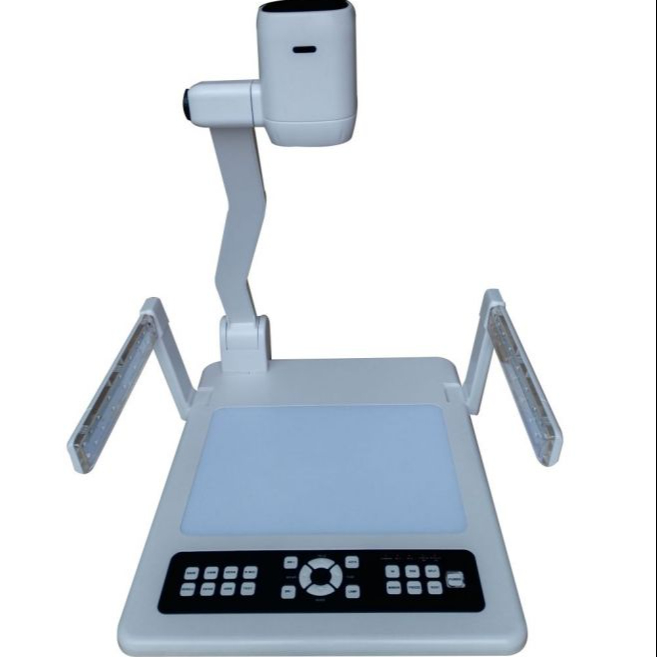
Factory Desktop Document Camera Visualizer 22X Optical Zoom with Interface HD MI RS232 Audio Mic Video
Best fit: classroom demonstration, training rooms, conference presentation and live object display.
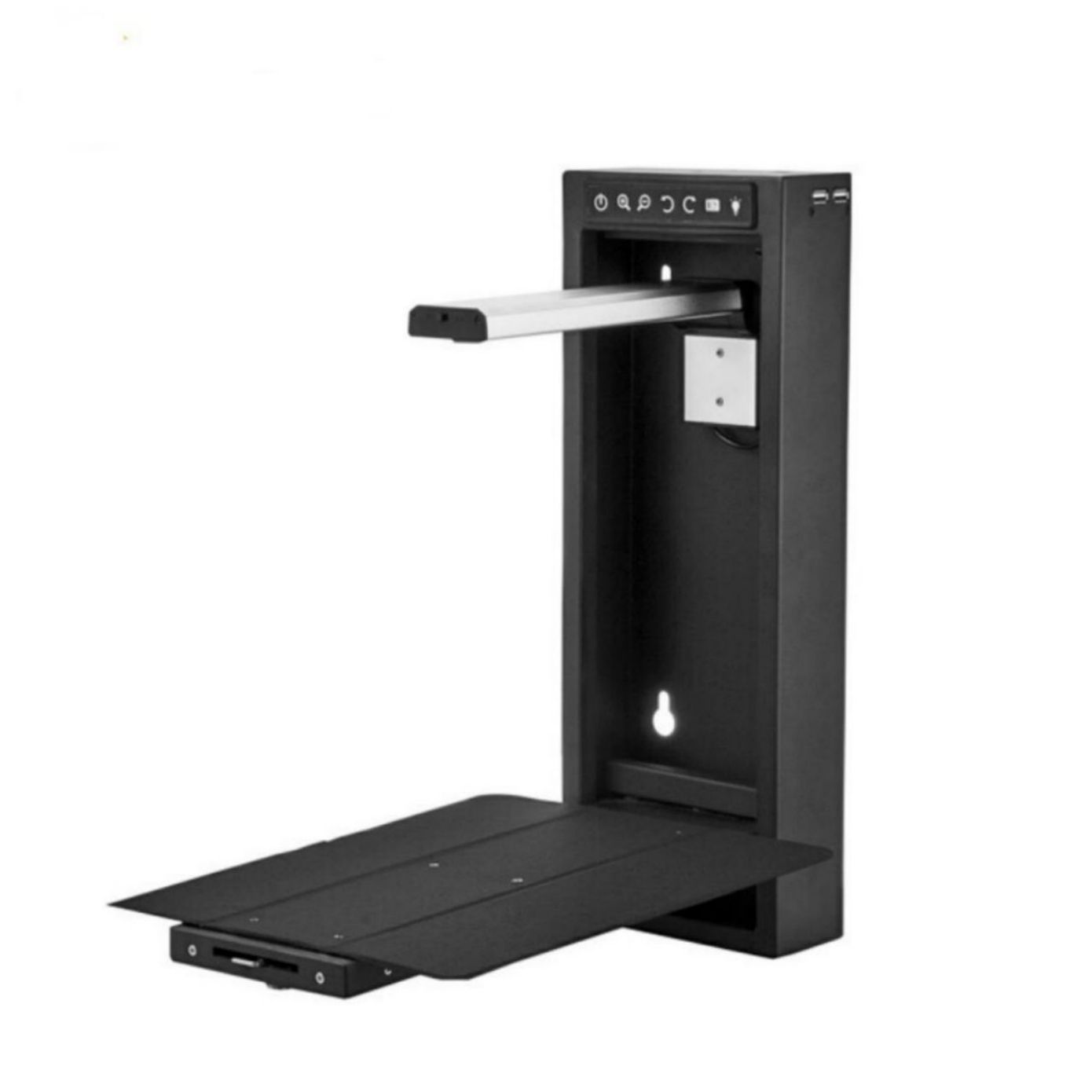
10MP USB CMOS Document Camera Wall Mount Scanner with 1-Second Scan Speed 1-Year Warranty in Stock Classroom Education A4 SDK
Best fit: space-limited classrooms, wall-mounted scanning stations and fast A4 document capture.
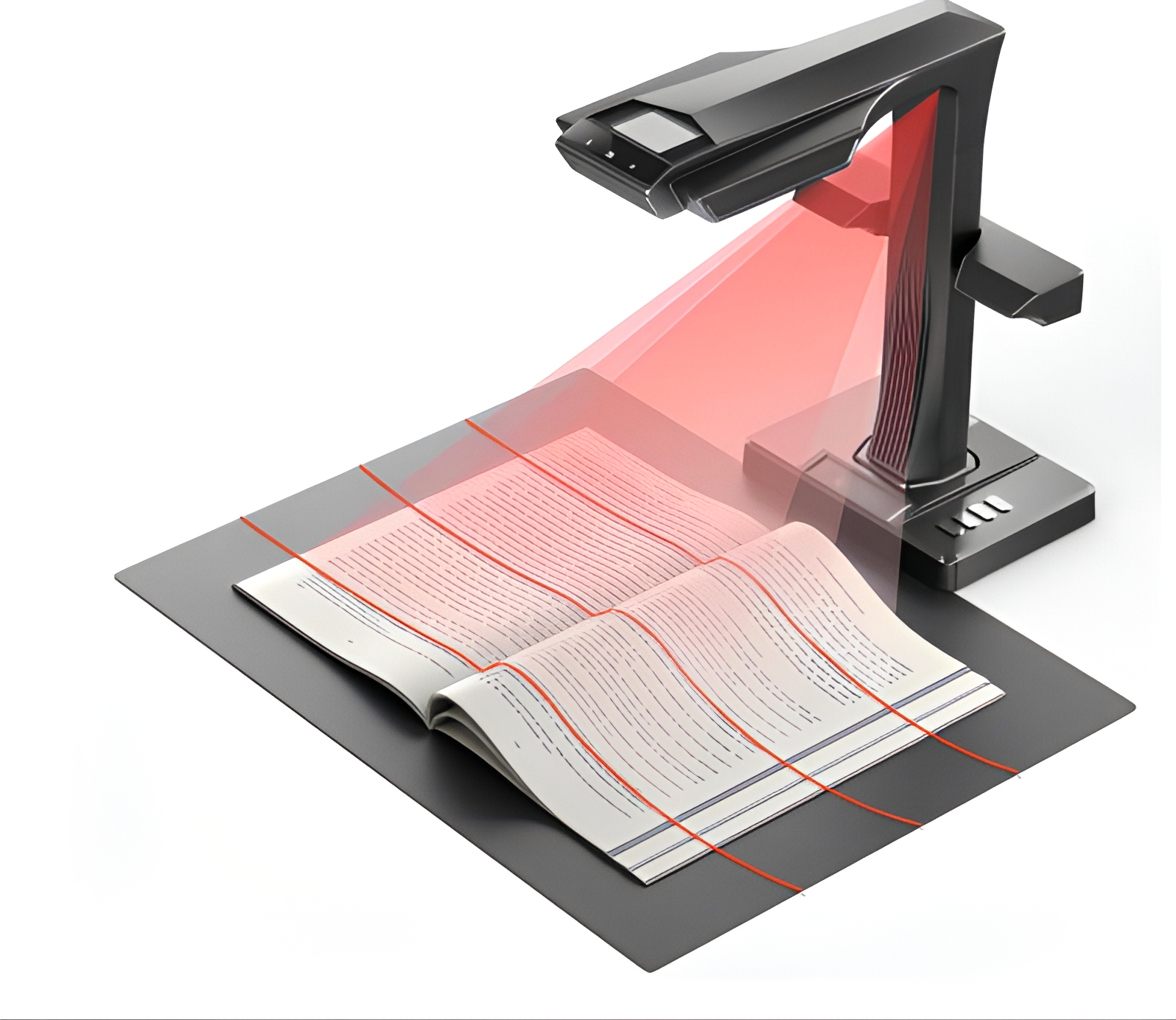
Book Scanner 38MP A3 Document Camera Auto Curve Flattening High Speed Overhead Scanner for Library Office
Best fit: library and archive digitization, bound books, curve correction and office record conversion.
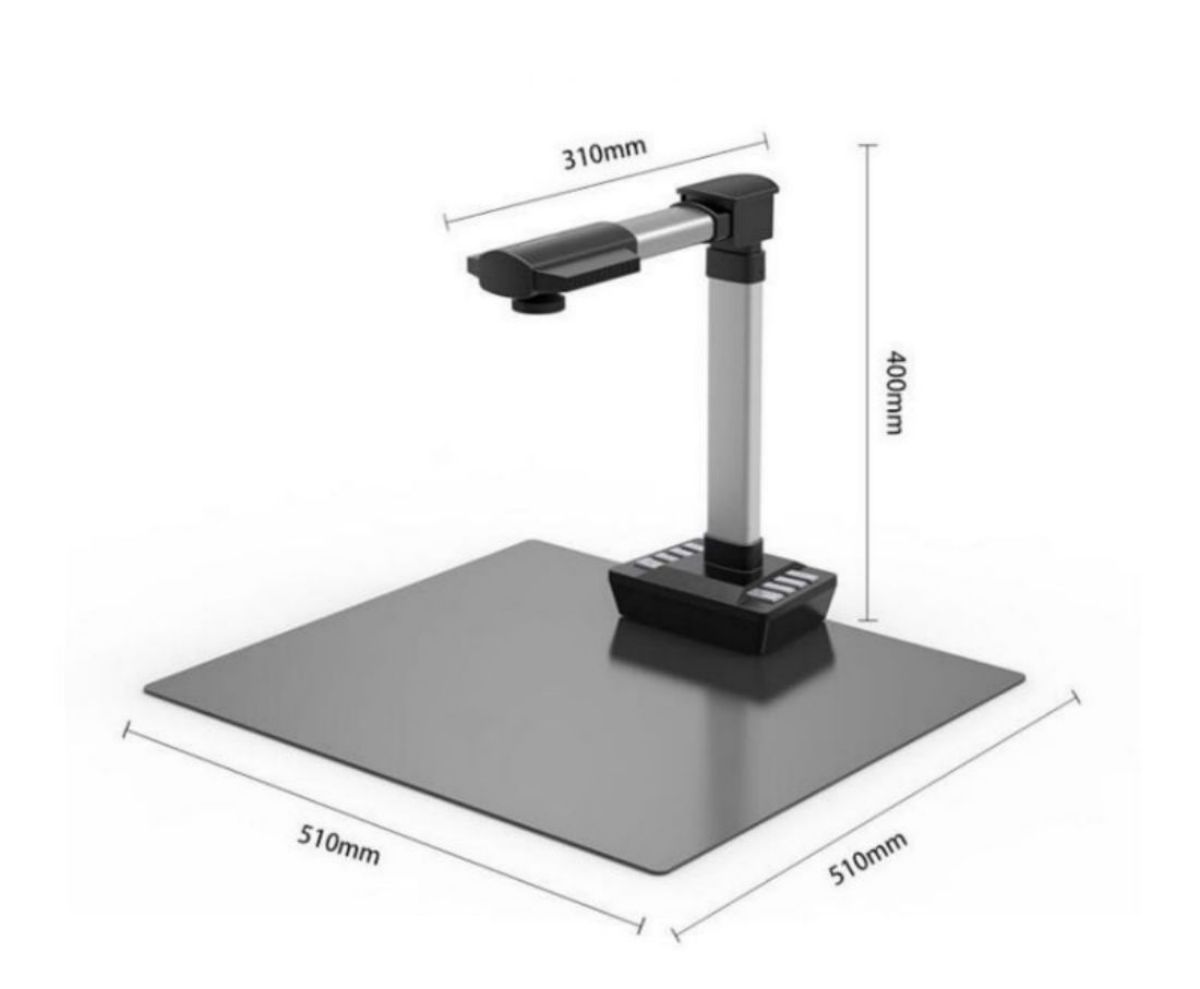
Portable 20MP High-Speed Wireless A3 Document Scanner Professional Book Scanner Foot Pedal USB Interface 24-Bit Color Stock
Best fit: mobile book scanning, field capture, hands-free page turning and flexible project deployment.
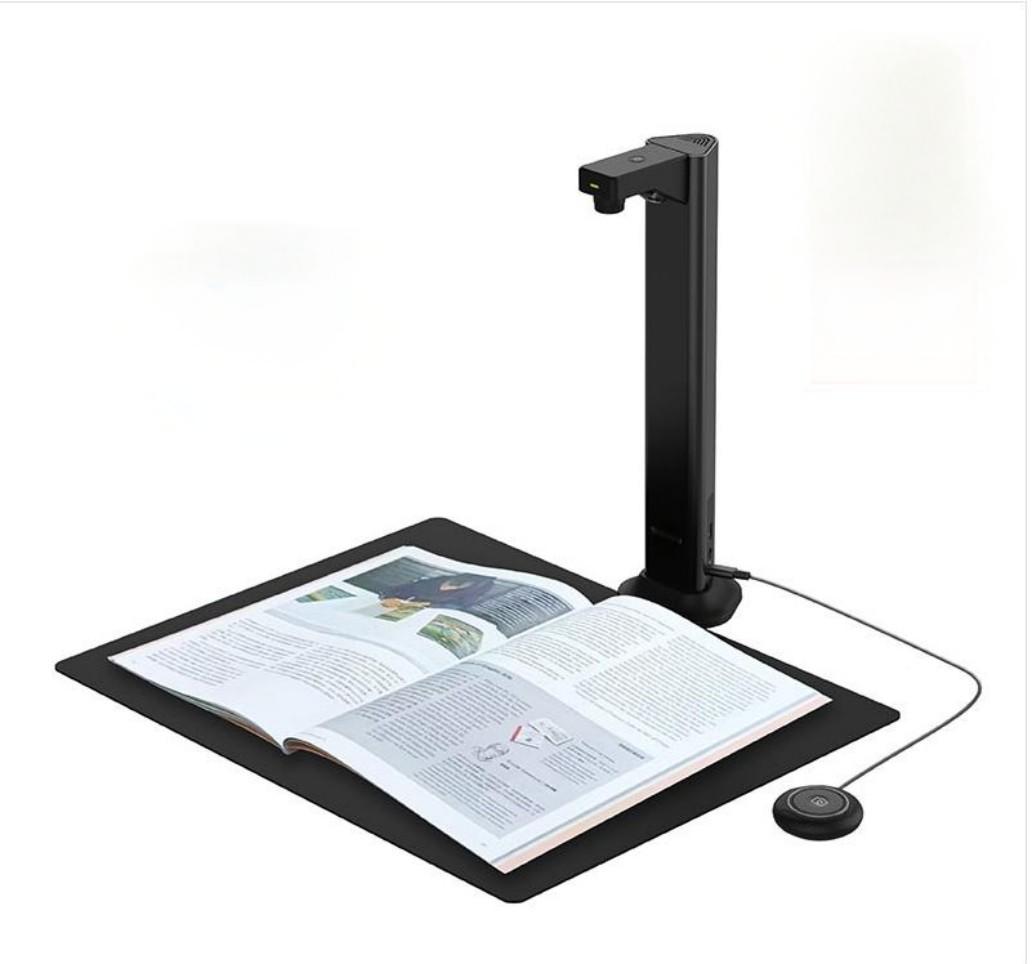
Real 24MP UVC A3 Document Scanner with USB Interface and Text to Speech Feature In-Stock Product
Best fit: OCR workflows, accessible reading support and A3 documents with clear text output.
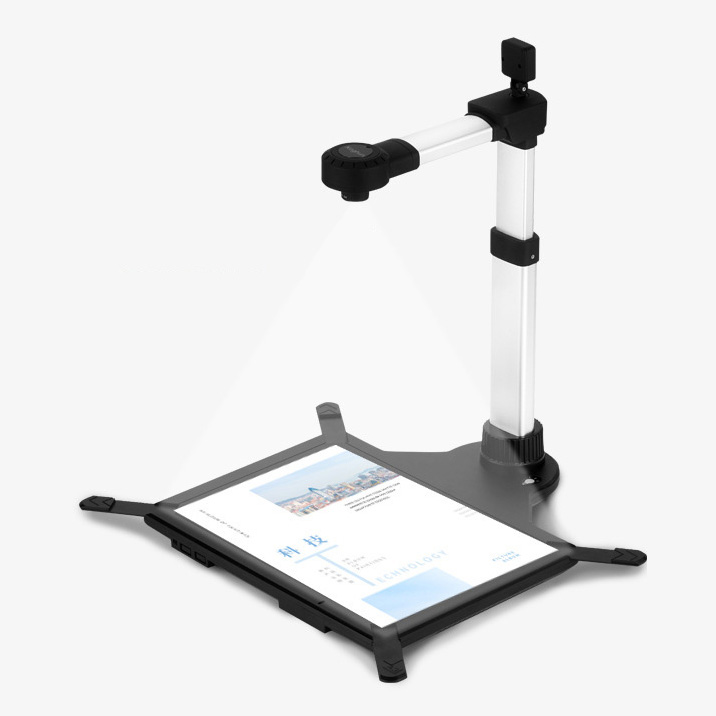
HD Dual Camera 16MP + 2MP Pixels Multifunction Stretchable Smart USB 60 Pages/Min A3/A4 Document Scanner 360 Rotation 180
Best fit: dual-view teaching, document plus object capture, counters and flexible 360-degree presentation.
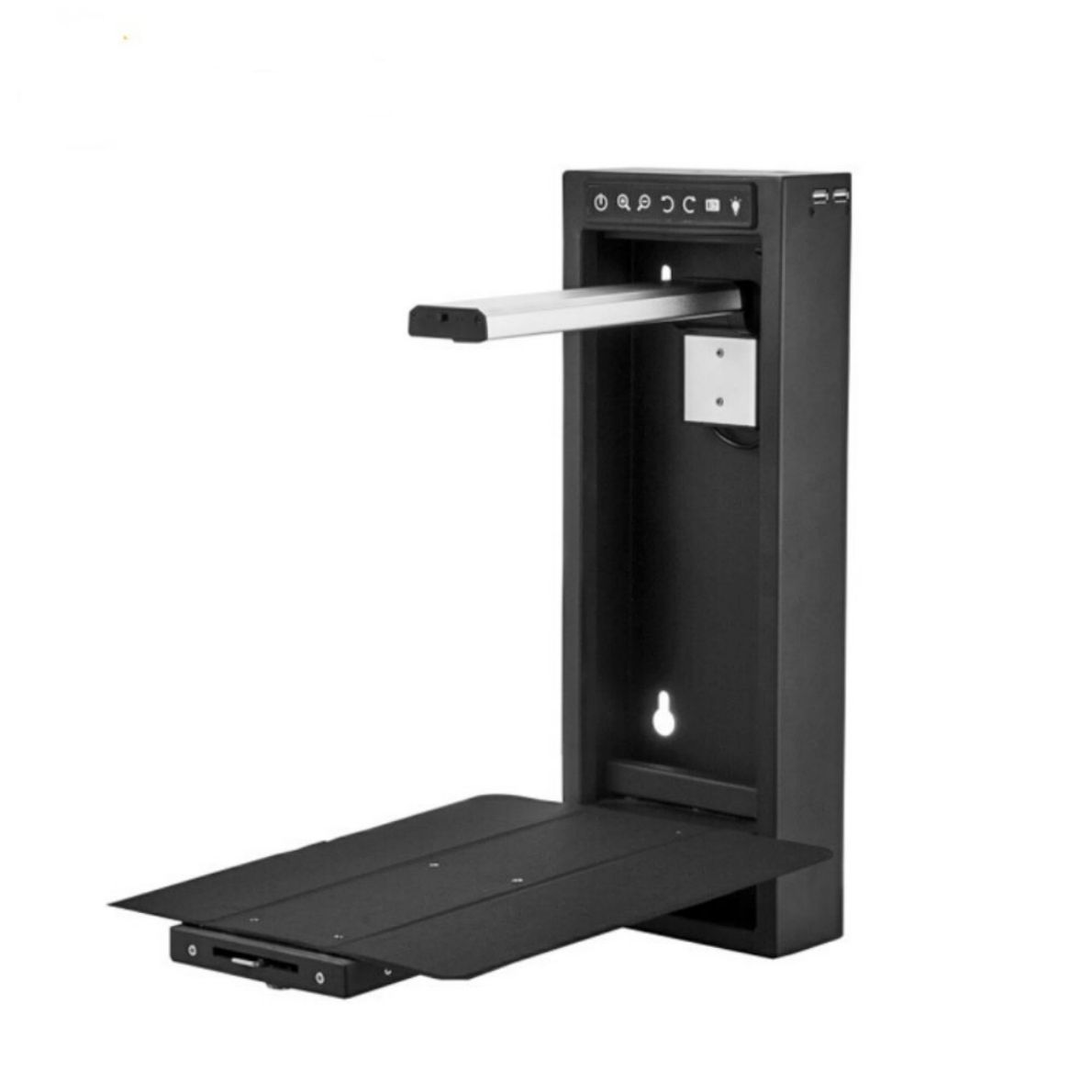
Document Camera A4 Visualizer Wall Version USB CMOS Sensor 10MP 1-Second Scan Document Scanner Stock for Classroom Smart
Best fit: smart classroom capture, wall-mounted A4 presentation and compact USB-connected stations.
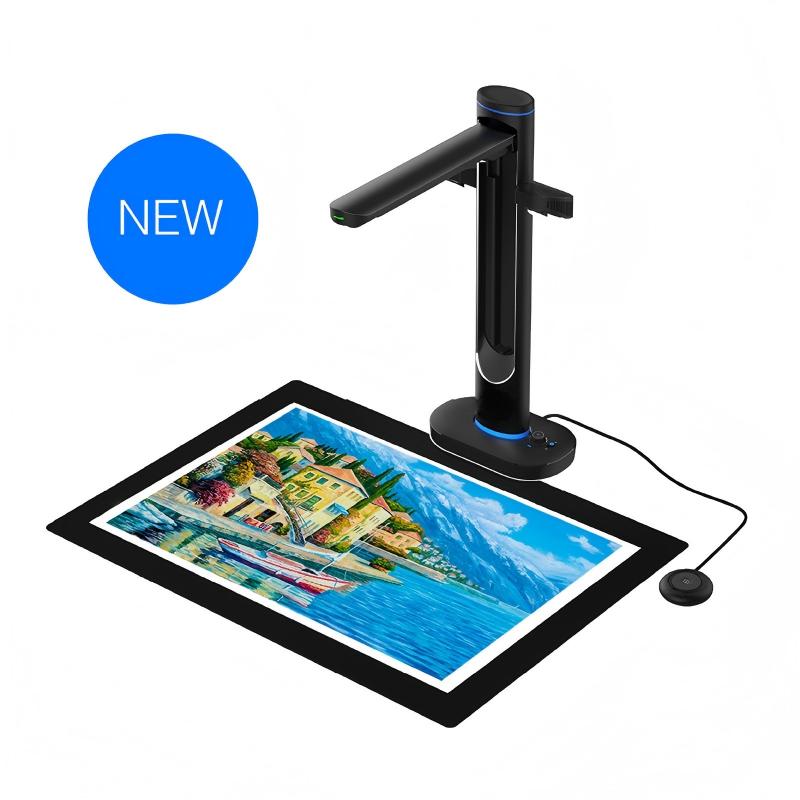
A2 Large Format Book Scanner Dual 48MP CMOS Sensors High-Speed Desktop Overhead Scanner for Windows & MacOS
Best fit: A2 newspapers, maps, large bound volumes and archival masters requiring high pixel density.
What “Top 10” Should Mean in Desktop Scanner Procurement
There is no reliable public ranking that fits every buyer’s page size, budget and software stack. A better approach is a ten-factor scorecard that lets procurement teams compare factories and suppliers on evidence rather than slogans.
The 10-Factor Factory and Supplier Scorecard
Use these ten checks to compare desktop document scanner factories, trading companies and OEM/ODM suppliers before requesting a bulk quotation.
1. Resolution by page size
Start with required dpi at A4, A3 or A2. A4 at 300 dpi needs about 8.7MP; A3 about 17.4MP; A2 about 34.8MP.
2. Sensor architecture
CIS suits compact batch paths; CMOS enables one-shot overhead capture; CCD supports flatbed scanning and book-edge capture.
3. Book preservation
Library buyers should confirm auto curve flattening, deskew and finger removal for bound books and fragile records.
4. OCR and software
Check OCR to searchable PDF, language coverage, auto-cropping, text-to-speech and export options.
5. Connectivity and control
USB is baseline. HDMI, VGA, RS232, Wi-Fi, foot pedals, remote controls and mouse support may decide usability.
6. OS and driver support
Confirm Windows and macOS compatibility, including Apple M1/M2 validation where your deployment requires it.
7. MOQ and customization
Low MOQ reduces trial risk. OEM/ODM should cover logo, packaging, housing color, software branding and SDK integration.
8. Inspection and warranty
Ask how focus, lighting uniformity, driver installation and capture speed are checked before shipment.
9. Commercial terms
Compare payment methods, currencies, delivery terms, lead time and export packing—not only unit price.
10. Verification and response
Use independent supplier records where available, and test communication quality before placing a large order.
Resolution Math: Avoid Buying Too Few Megapixels
One of the most common procurement errors is buying by headline megapixels. Resolution is a function of sensor pixels spread across a page. The calculation is: required pixels = page width in inches × dpi, multiplied by page height in inches × dpi.
A scanner specified as “A2 capable” may capture a full A2 sheet at 200–240 dpi, which can be acceptable for on-screen reading and OCR but may fail a library tender that asks for 300 dpi archival masters. An A3 scanner with 18MP is close to the 300 dpi threshold, while 24MP gives more headroom for cropping and deskewing.
Specify the output you need, then work backward to the sensor. For A2 newspapers, maps or engineering drawings, a dual 48MP A2 system is usually a more defensible archival choice than a 21MP device when 300 dpi is mandatory.
A2/A3 Scanner Recommendations by Workflow
Match the scanner format to the physical document and the people who will use it every day.
| Workflow | Recommended capture format | Representative model from this shortlist |
|---|---|---|
| Rare books and bound archives | Non-contact overhead capture with auto curve flattening and deskewing | 38MP A3 overhead book scanner; A2 dual 48MP scanner for oversized volumes |
| Classroom and training | HDMI/VGA visual presenter or dual-camera system with live zoom | 22X optical zoom visualizer; HD dual-camera 16MP + 2MP system |
| Wall-mounted or space-limited | Fixed wall version with one-second capture and USB output | 10MP USB wall-mount A4 scanner; A4 visualizer wall version |
| Accessible reading and OCR | UVC capture with text-to-speech and clear A3 coverage | Real 24MP UVC A3 document scanner with text-to-speech |
| Field and portable projects | Wireless A3 capture, foot pedal and USB interface | Portable 20MP wireless A3 document scanner |
| Newspapers, maps and large records | A2 overhead scanning with high-resolution archival output | A2 large-format dual 48MP CMOS book scanner |
Future Procurement Trends for Desktop Document Scanners
Buyer expectations are moving from “a camera that captures a page” toward a verifiable productivity system with software, integration and lifecycle support.
Specifications written around dpi
Tenders increasingly define the required dpi at A3 or A2. Suppliers must prove what their sensor delivers at the full page size, not just the native sensor resolution.
Preservation-first mandates
Archives and libraries prefer non-contact overhead capture with curve flattening and finger removal, reducing stress on fragile bindings.
OCR and accessibility
Searchable PDF, text-to-speech and multi-language OCR are becoming evaluation criteria, especially in education, government and accessibility projects.
SDK-ready hardware
System integrators want UVC, USB, SDK and remote-control options so scanners can be embedded into existing document, ID and classroom workflows.
Low-MOQ customization
Distributors increasingly test with one piece or one set before scaling. Logo, packaging, housing color and software branding support can shorten the trial cycle.
Verified supply chains
Procurement teams now review supplier assessment, trade capacity, feedback and warranty support before negotiating price, especially for multi-year rollouts.
Product Development Trends: Where Desktop Scanners Are Heading
The next generation of document cameras and overhead book scanners will be judged as much on software, integration and total cost of ownership as on raw hardware.
Dual-camera architectures
Document plus ID/portrait cameras allow one device to capture different subjects, improving counter service, classroom presentation and multi-view capture.
Higher-resolution A2 capture
Dual 48MP A2 scanners are becoming more practical for newspapers, maps and large records where 300 dpi master files are required.
On-device processing and privacy
Auto-crop, curve correction and OCR are moving closer to the device, which can reduce network dependency and support privacy-sensitive scanning.
Hybrid connectivity
HDMI, VGA, RS232, USB, Wi-Fi and remote controls allow one platform to serve classrooms, service counters, archives and integrator projects.
Compact and wall-mounted formats
Space-saving wall versions, foldable visual presenters and portable A3 scanners are expanding deployment beyond dedicated scanning rooms.
Software-first differentiation
OCR quality, auto-flattening, export workflows, text-to-speech and SDK support increasingly separate a good scanner from a basic camera module.
Why Guangzhou Quibow Electronic Co., Ltd. Is a Practical Benchmark
Guangzhou Quibow Electronic Co., Ltd. is a technology-driven supplier focused on image data acquisition and conversion. Founded in 2020 and based in Guangzhou, Guangdong, China, the company develops and supplies high-speed document cameras, book scanners, flatbed scanners and ID card recognition cameras.
Its work covers CIS, CMOS and CCD imaging platforms, from product design and development to production coordination, export sales and after-sales support. For B2B buyers, that combination matters because a scanner project often requires a hardware specification, an SDK discussion and a commercial trial in the same conversation.
Imaging platform coverage
CIS for compact batch paths, CMOS for one-shot overhead capture and CCD for flatbed and book-edge scanning give buyers a broader technical comparison.
OEM/ODM flexibility
Logo printing, packaging, housing color, capture software branding and SDK integration are available on selected models for distributors and integrators.
Commercial fit for trials
Many stock book scanners, A2 scanners and flatbed scanners start from 1 piece or 1 set; several document cameras start from 2 pieces. Payment terms include T/T, L/C, PayPal and Western Union in USD, EUR, HKD or CNY.
Responsiveness and support
The supplier cites ≤1 hour average response, a 100% message response rate and a 27% buyer reorder rate. Listed models carry a 1-year warranty with remote technical support.
Verified Business Profile
Desktop Document Scanner Procurement FAQ
Answers to the practical questions procurement teams ask before requesting samples, OEM quotes or bulk shipments.
What is the minimum order quantity for Quibow desktop scanners and document cameras?
Most stock book scanners, A2 large-format scanners and flatbed scanners start from 1 piece or 1 set. Several document camera models start from 2 pieces. OEM/ODM quantities are confirmed per project.
Do you support OEM and ODM orders?
Yes. OEM/ODM projects can include logo printing, packaging, housing color, capture software branding and SDK integration on selected models. Buyers should confirm the exact scope, artwork files and approval steps before production.
Are the scanners compatible with Windows and macOS?
Many models, including A2 large-format scanners and the 1200 DPI A3 flatbed scanner, support Windows and macOS, and some are verified on Apple M1 Macs. Compatibility should be confirmed for each model before shipment.
Which resolution do I need to scan A3 or A2 documents at 300 dpi?
An A3 page at 300 dpi needs about 3508 × 4961 pixels, or roughly 17.4MP, so an 18MP or 24MP scanner is suitable. An A2 sheet at 300 dpi needs about 4961 × 7016 pixels, or roughly 34.8MP, so a 48MP A2 scanner is recommended for archival masters.
What payment and delivery terms are available?
Payment methods include T/T, L/C, PayPal and Western Union in USD, EUR, HKD or CNY. Delivery terms include FOB, EXW and DDU. Final terms depend on the order quantity, destination and model mix.
What warranty do the products carry?
Listed models such as A3 flatbed scanners, A2 overhead scanners and the S2060W ADF scanner come with a 1-year warranty, backed by remote technical support.
How should I choose between an overhead book scanner and a flatbed scanner?
Choose an overhead scanner for bound books, newspapers, maps and fragile originals that should not be pressed on glass. Choose a flatbed scanner for photos, artwork and loose originals where controlled lighting and high optical resolution matter. For high-volume loose sheets, an ADF model may be more efficient.
Can buyers request sample scans or SDK information before ordering?
Yes. Share the document size, daily volume, operating system, target dpi, output format and any OCR or SDK requirement. The supplier can then recommend a model, explain the sensor platform and provide sample scan information for evaluation.
Request a Model Match, Sample Scan or OEM/ODM Quote
Send your document size, daily volume, required resolution, operating system and output format. The engineering team can compare overhead, flatbed and document camera options, confirm OEM/ODM scope and recommend a configuration before you commit to a bulk order.
Send an InquiryEmail: info@quibowtech.com