Digital Document Scanner Products for Immediate Sampling and Volume Programs
These eight product families cover A2 archive capture, A3 visualizers, A4 wall-mounted scanners and portable USB document cameras. Each product URL is preserved for direct procurement review.
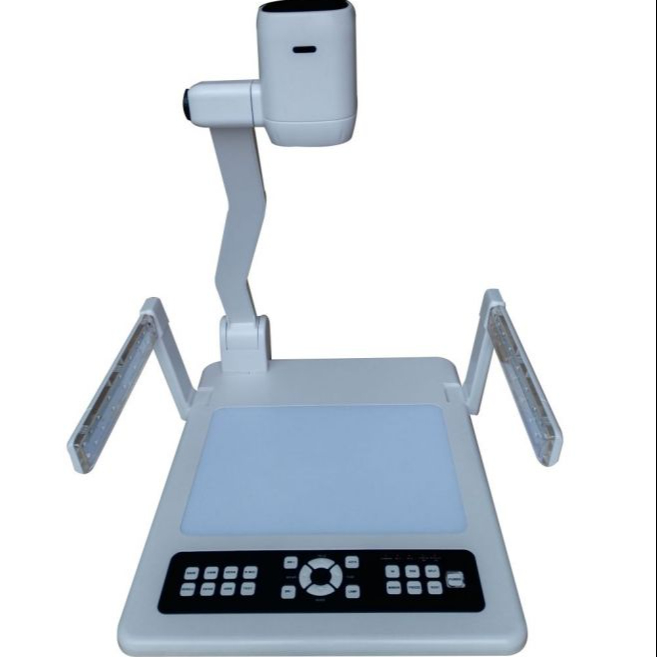
Factory Desktop Document Camera Visualizer 22X Optical Zoom with Interface HD MI RS232 Audio Mic Video
A presentation-ready visualizer with 22X optical zoom, HDMI/RS232 connectivity, integrated audio and microphone. Suited to classrooms, training rooms and OEM projects that require live magnification plus recording-ready capture.
View product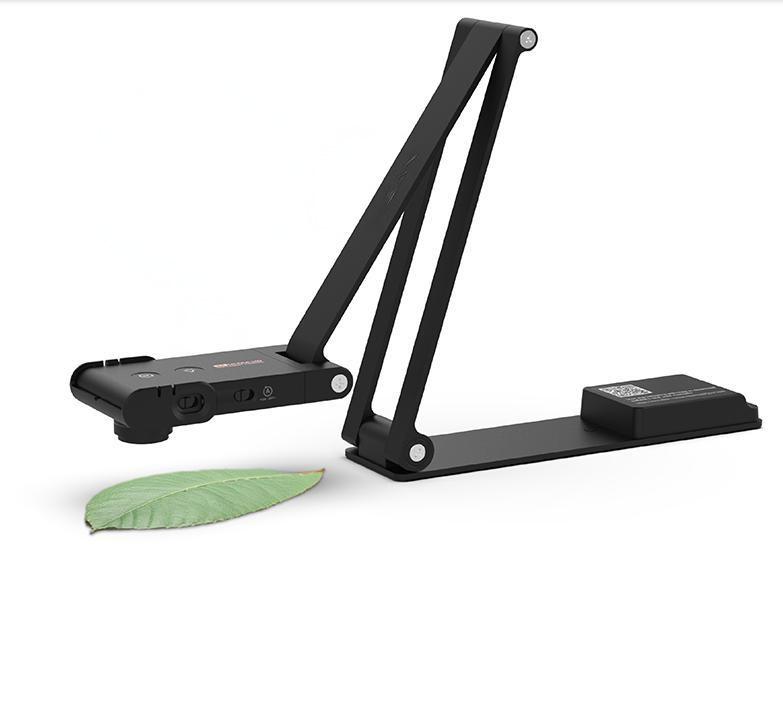
4K 2-in-1 USB 13MP Document Camera Visualizer AI Noise Cancellation 20X Macro Lens Foldable Design Microphone A3 Max 1-Year
A 13MP 4K 2-in-1 visualizer with AI noise cancellation, 20X macro capture, foldable body and built-in microphone. It supports A3 documents, hybrid classrooms, counter capture and desktop documentation workflows.
View product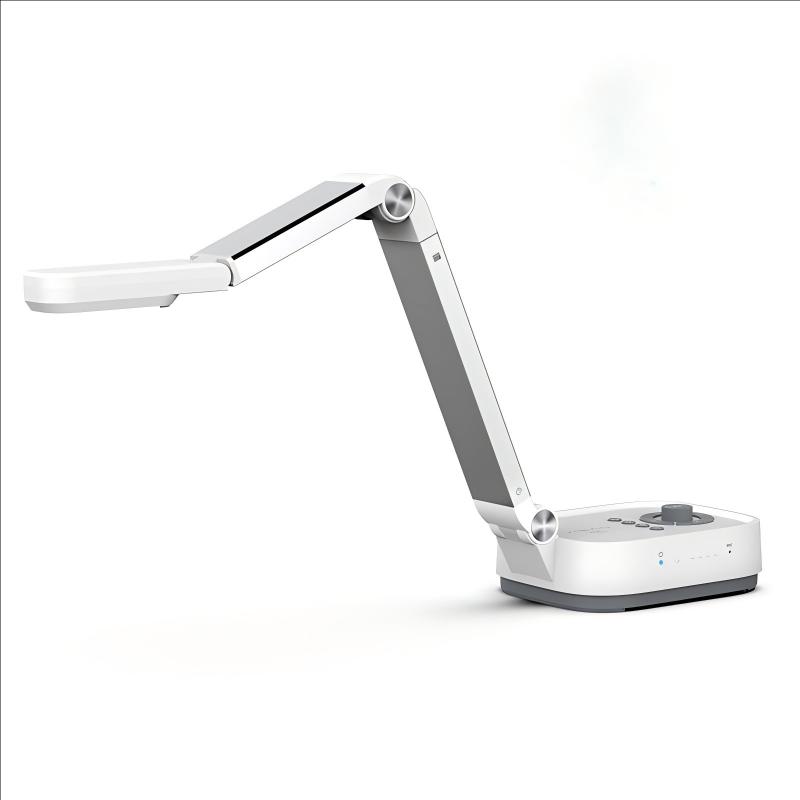
16MP 3D Desktop Visualizer Document Camera with Microphone 120X Zoom /VGA A3 Scan Size LED Light & Foldable for Education
A 16MP 3D visualizer with 120X zoom, VGA output, A3 scan size, LED lighting and microphone. Built for education, lab demonstration and training workflows that need detailed object views and controlled lighting.
View product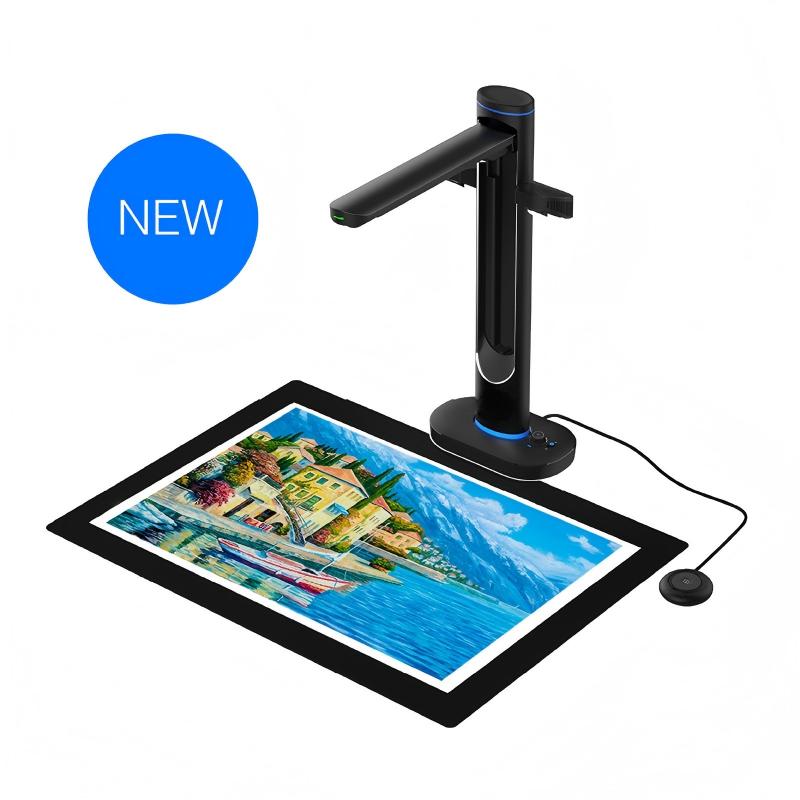
A2 Large Format Book Scanner Dual 48MP CMOS Sensors High-Speed Desktop Overhead Scanner for Windows & MacOS
Dual 48MP CMOS overhead capture for A2 newspapers, maps, bound books and archival masters. Windows/macOS compatibility supports library digitization, tender projects and high-resolution OEM imaging programs.
View product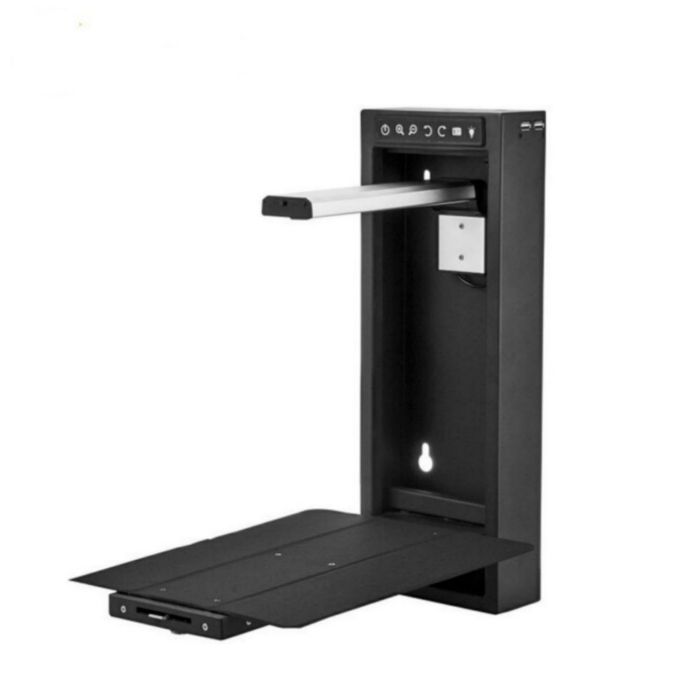
A4 Black USB 5V High-Speed 10MP High-Resolution Document Scanner Wall-Mountable OEM 24 Bit SDK 1-Year Warranty Education Stock
A wall-mountable 10MP A4 scanner with USB 5V power, 24-bit output, SDK access and 1-year warranty. A practical base platform for OEM/ODM education, office and self-service capture projects.
View product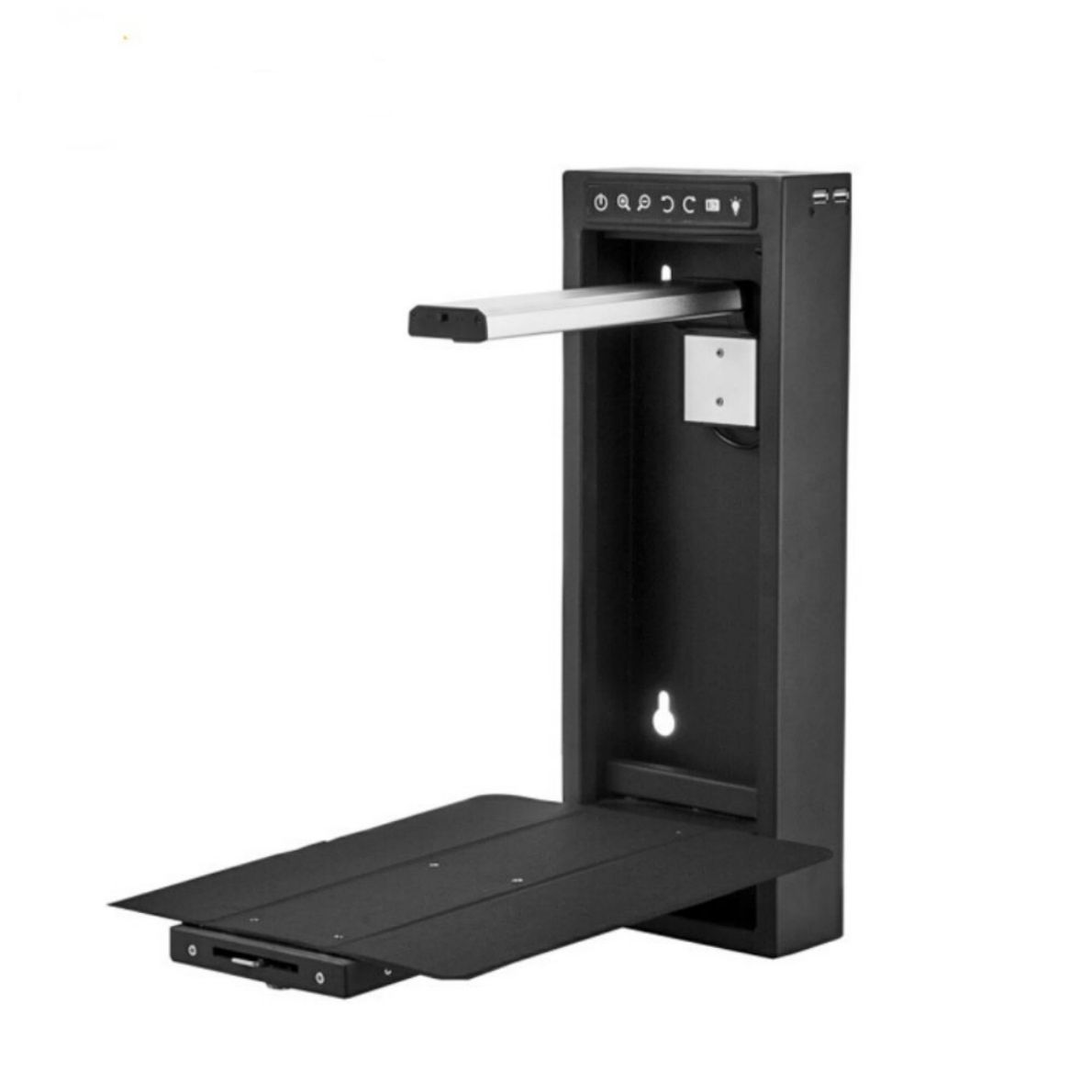
Document Camera A4 Visualizer Wall Version USB CMOS Sensor 10MP 1-Second Scan Document Scanner Stock for Classroom Smart
A wall-version A4 document camera with 10MP CMOS sensor and one-second scan capture. Designed for classrooms, smart podiums and space-limited counters where fixed installation is preferred.
View product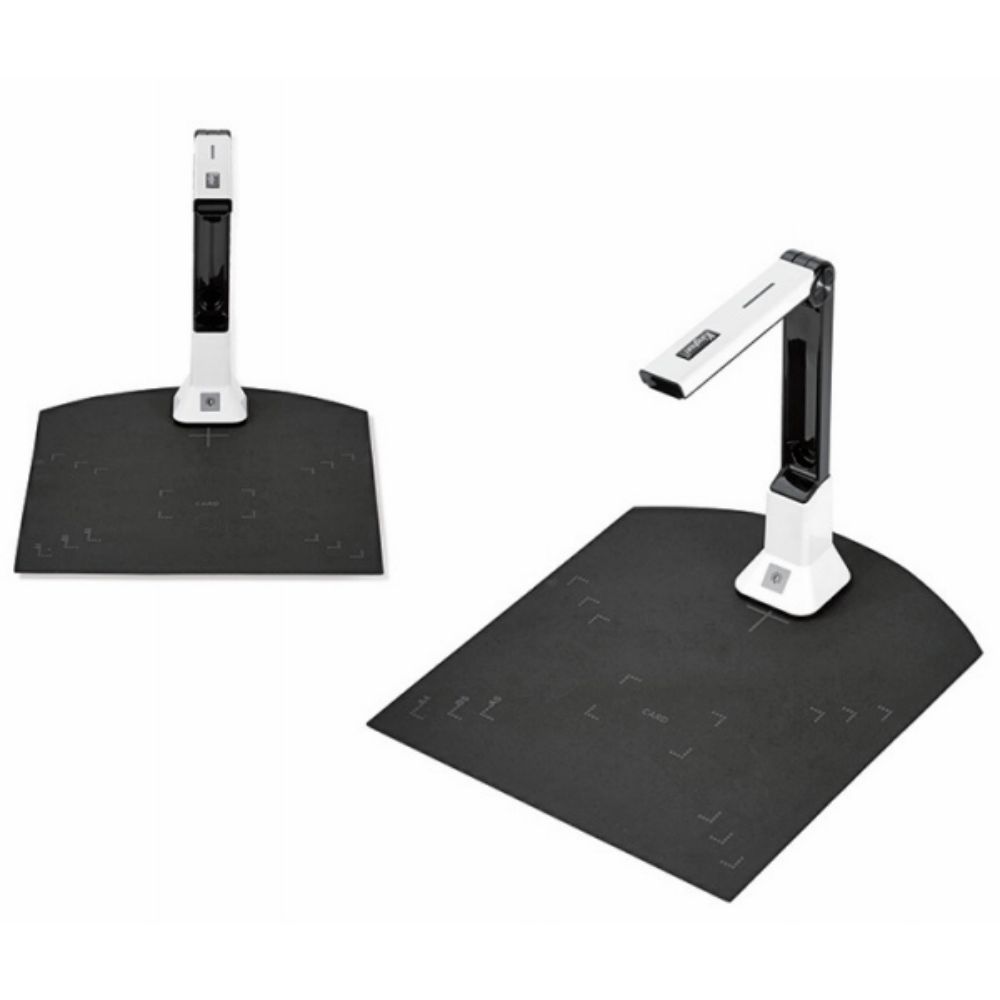
Wholesale 5MP USB Light CMOS A4 Document Scanner Portable Smart Handheld High Resolution 1-Second Scan CE Certified Stock Black
A compact 5MP USB A4 document scanner with light, handheld portability and CE-certified stock. Suitable for entry-level bundles, remote learning kits and distributors that need low-friction deployment.
View product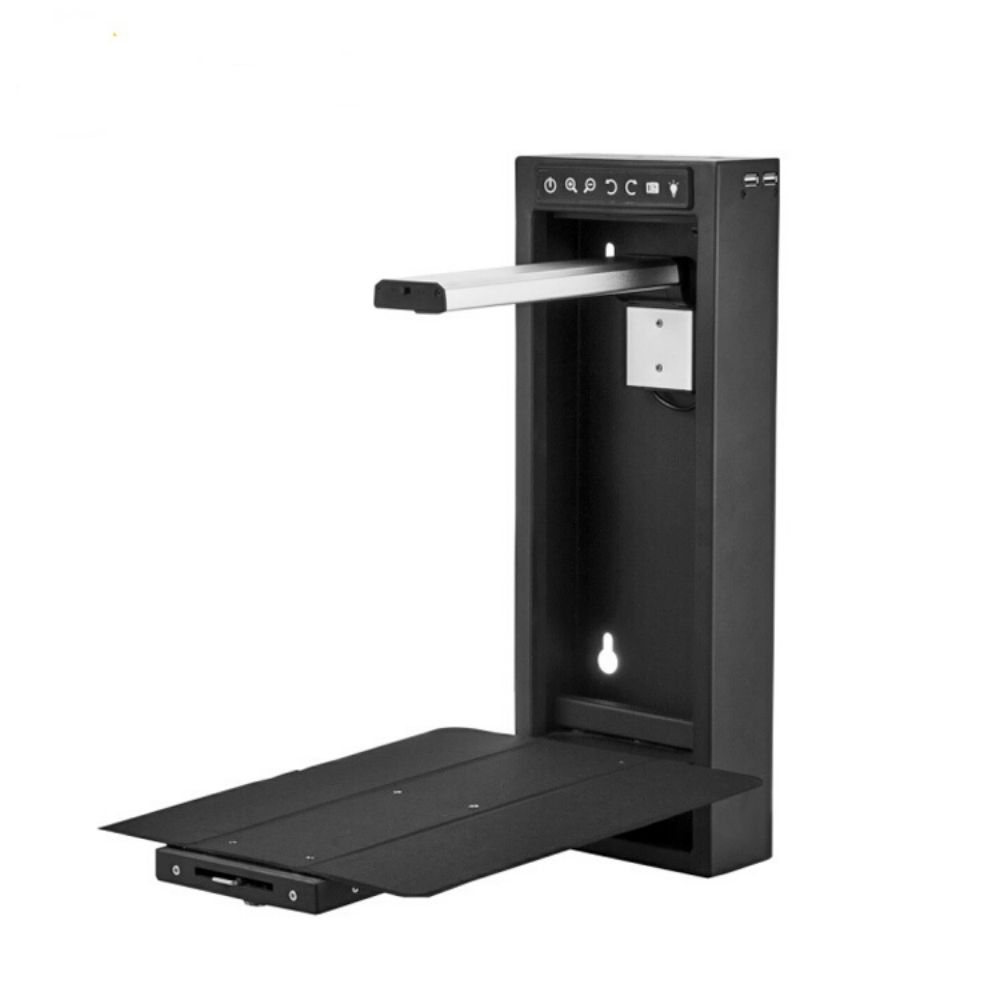
Online Training Portable 10MP A4 Document Scanner USB Interface Visualizer-in-Stock for Wall Version Black+Silver 1-Year
A 10MP A4 portable scanner and visualizer for online training, hybrid meetings and mobile service kits. USB interface, wall-version flexibility and 1-year support suit volume education and corporate rollouts.
View productNeed current specifications, MOQ, sample status and packaging options in one document?
Get CatalogA Supplier Profile Designed for Repeatable Procurement
For distributors and project buyers, response speed and order consistency matter as much as sensor specifications. These public supply indicators reduce evaluation friction before the first sample request.
From Hardware Order to Imaging Workflow: The New OEM/ODM Buying Standard
Digital document scanning has moved from a peripheral purchase to a workflow decision. Distributors and tender teams now compare capture speed, OCR quality, SDK access, driver stability, warranty response time and export documentation in one evaluation. For an OEM/ODM digital document scanner manufacturer and exporter, the winning model is not simply the highest megapixel count; it is the platform that arrives with predictable image quality, documented interfaces and commercial terms that survive repeat orders.
Guangzhou Quibow Electronic Co., Ltd. serves this requirement through a portfolio built on CIS, CMOS and CCD imaging. The range covers A2 overhead book scanners, A3 visualizers, A4 wall-mounted document cameras and portable USB scanners. Buyers can start with stock samples, then move into logo, packaging, software branding and SDK integration when the project volume justifies customization.
Procurement teams should treat a scanner as three products in one: an optical capture engine, a software integration layer and a support commitment. A 48MP A2 scanner can be ideal for archives, but it will fail a classroom deadline if the HDMI output, microphone or remote control are not suitable. A 5MP A4 scanner can be cost-effective for distribution, but not for 300 dpi A2 newspaper masters. Matching the three layers to the actual job prevents both over-specification and hidden rework.
That is why the strongest purchasing briefs specify the document, the output workflow, the operating system, the integration method and the after-sales model before asking for a price. When those five variables are clear, supplier selection becomes faster, sample evaluation becomes measurable and volume pricing becomes comparable.
Megapixels, DPI, Throughput and Sensor Choice in One Decision Model
Resolution is not a marketing number. It is a function of document size, required output quality and the portion of the sensor used during capture.
Calculate the true pixel requirement first
Multiply the document width in inches by the target DPI, then multiply the document height in inches by the same DPI. The result gives the minimum pixel matrix. An A3 page at 300 dpi needs about 3508 × 4961 pixels, or roughly 17.4MP. An A2 sheet at 300 dpi needs about 4961 × 7016 pixels, or roughly 34.8MP. For OCR and screen review, 200–250 dpi is often sufficient; for preservation masters and tender specifications, 300–400 dpi is safer.
Match the sensor to the physical handling method
CIS is compact and efficient for sheet-fed and high-volume office paths. CMOS area sensors capture the whole page from above, which is ideal for bound books and live presentation. CCD platforms offer stable optical performance for flatbed and bookedge work. The sensor should follow the handling method, not the other way around.
| Document size | Pixels at 300 dpi | Recommended platform | Practical product match |
|---|---|---|---|
| A4 210 × 297 mm | 2480 × 3508 ≈ 8.7MP | 10MP CMOS or higher | 10MP A4 wall-mounted scanner; 10MP portable visualizer |
| A3 297 × 420 mm | 3508 × 4961 ≈ 17.4MP | 16MP for near-300 dpi; 24MP class for strict tender compliance | 16MP 3D visualizer with A3 scan size; 13MP 4K A3 visualizer for live capture |
| A2 420 × 594 mm | 4961 × 7016 ≈ 34.8MP | Dual 48MP overhead capture for archival masters | A2 dual 48MP CMOS book scanner |
| Photos and artwork | 600–2400 dpi optical | Flatbed CCD/CIS with 48-bit color | 1200/2400 DPI A3 flatbed models in the broader catalogue |
The Hidden Line Items Behind a Low Unit Price
A scanner quotation that ignores integration, training and failure cost is incomplete. In public tenders and OEM programs, the lowest unit price can become the most expensive decision if the SDK is undocumented, the driver is unstable or the replacement lead time is unclear. A defensible TCO model should include the following cost centres.
- Landed cost: unit price, packaging, freight, duty, local handling and spare-unit allocation.
- Integration cost: SDK access, OCR language support, driver testing, firmware updates and software branding.
- Deployment cost: English manuals, remote setup, classroom training and installation accessories.
- Failure cost: warranty response time, diagnostic support, DOA handling and replacement logistics.
- Compliance cost: destination-market certification, labelling, voltage and interface documentation.
- Reorder cost: MOQ stability, packaging consistency, firmware continuity and spare-part availability.
Use a three-tier evaluation scorecard
Tier one checks product fit: document size, resolution, interface and form factor. Tier two checks commercial fit: MOQ, sample availability, payment terms, packaging and lead time. Tier three checks risk: warranty, remote support, firmware governance, SDK documentation and the supplier’s ability to answer technical questions without delay. A scanner that passes all three tiers is a procurement asset; a scanner that passes only the first is a trial order.
Which Digital Document Scanner Fits Each Procurement Scenario?
Recommendations should follow the job to be done. These four buying scenarios cover the most common OEM/ODM and institutional requests.
Libraries and archives
Prioritize non-contact A2 or A3 overhead capture, dual 48MP resolution for broadsheets and Windows/macOS software compatibility. The A2 Large Format Book Scanner Dual 48MP is the strongest match for master-file creation, while the 16MP 3D visualizer supports smaller reading rooms and object capture.
Education and training
Choose optical zoom, HDMI/VGA output, microphone and A3 or A4 working area. The 22X optical zoom visualizer, 4K 13MP foldable visualizer and 16MP 3D visualizer cover classroom, laboratory and hybrid teaching requirements.
Office and service counters
Favor wall-mount or compact designs with stable USB power and one-second capture. The 10MP A4 wall-mountable scanner, A4 wall-version visualizer and 5MP portable scanner suit banking, government, school and office intake points.
Distributors and integrators
Look for SDK access, OEM branding, stable MOQ and a product mix that covers multiple price bands. The 10MP A4 SDK platform, 4K 13MP visualizer and A2 dual 48MP scanner let partners build education, office and archive bundles from one supplier relationship.
How Digital Document Scanner Buying Will Change Through 2030
Procurement is becoming more outcome-based. Buyers are no longer asking only for a device specification; they are asking how the device will support digitization targets, integration roadmaps and service-level commitments.
Tender language shifts to outcomes
Specifications will increasingly require measurable OCR quality, capture cycle time, image consistency, warranty response and training deliverables. Suppliers that can document these outcomes will win against suppliers that quote only resolution and price.
SDK and software requirements arrive earlier
System integrators now ask about SDKs, drivers, OCR languages and firmware governance before the first price negotiation. A scanner platform without integration documentation creates project risk even when the optical hardware is strong.
Non-contact capture replaces destructive handling
Archives, libraries and publishers are moving toward overhead A2/A3 capture to protect bindings and fragile paper. Dual-sensor and high-resolution CMOS platforms reduce handling while improving master-file quality.
Supply resilience and lower MOQ
Distributors want stock visibility, flexible MOQ and repeatable packaging across orders. The ability to start with one piece or one set, then scale into OEM customization, reduces inventory risk and shortens product launch cycles.
Where Digital Document Scanner Hardware Is Heading
Hardware development is converging around higher resolution, cleaner software-assisted capture and more flexible deployment formats. The practical winner is the platform that reduces setup friction for the end user.
4K and high-resolution sensors move mainstream
13MP 4K visualizers and dual 48MP A2 scanners show how high-resolution capture is moving from specialist projects into commercial catalogues. This raises the baseline for classroom, archive and counter applications.
AI-assisted cleanup becomes expected
AI noise cancellation, auto-flatten, deskew, finger removal and OCR cleanup are becoming part of the value proposition. Buyers should ask whether these functions are built into the supplied software or require third-party tools.
Form factors become more modular
Foldable visualizers, wall-mounted A4 scanners and portable USB models allow the same capture capability to fit classrooms, counters, mobile kits and permanent installations. Modularity improves deployment flexibility for distributors.
Interface convergence continues
USB, HDMI, VGA, RS232, microphone input and remote control are converging in single devices. Windows/macOS support, SDK access and stable driver packaging are becoming as important as the optical specification itself.
Why Buyers Shortlist Quibow as an OEM/ODM Digital Document Scanner Partner
Guangzhou Quibow Electronic Co., Ltd. is an imaging-technology supplier focused on image data acquisition and conversion, with a practical mix of product knowledge, export coordination and customization support.
Established in 2020, Quibow develops and supplies photoelectric information equipment, including high-speed document cameras, book scanners, flatbed scanners and ID card recognition high-speed cameras. The team works across CIS, CMOS and CCD imaging platforms, covering product design, development, production coordination, export sales and after-sales support.
The company is based in Guangzhou, Guangdong, China, and serves buyers in Eastern Europe, North America and South America. Its public trade profile is listed as an onsite-checked supplier, with a main market focus on distributors, system integrators and institutional end users. Annual revenue is reported in the US$1M–US$2.5M range, supported by a specialist team of 5–10 people.
For OEM/ODM buyers, the practical advantage is not a single product but a documented path from sample to customization. Logo printing, packaging, housing color, capture software branding and SDK integration can be discussed on selected models. Listed products commonly carry a 1-year warranty, with remote technical support and transparent commercial terms: T/T, L/C, PayPal and Western Union in USD, EUR, HKD or CNY, with FOB, EXW and DDU delivery options.

Response discipline
A public average response time of ≤1h and a 100% message response rate shorten the evaluation cycle. For tender teams, faster technical clarification can protect bid deadlines and reduce repeated sample rounds.
Triple sensor capability
CIS, CMOS and CCD experience allows the supplier to recommend the right platform instead of forcing one architecture into every project. That matters when the same buyer needs ADF office scanning, overhead book capture and flatbed imaging.
OEM/ODM from logo to SDK
Customization can include logo, packaging, housing color, software branding and SDK integration on selected models. This supports distributors that want private-label product lines without building a complete imaging platform from scratch.
Export-ready commercial terms
Payment support includes T/T, L/C, PayPal and Western Union, with USD, EUR, HKD and CNY currencies. Delivery terms include FOB, EXW and DDU, giving procurement teams room to align logistics with their own forwarder or import process.
Warranty and remote support
Listed models such as A3 flatbed scanners, A2 overhead scanners and the S2060W ADF scanner carry a 1-year warranty, supported by remote technical guidance. Clear warranty terms help institutional buyers plan service budgets.
Verified B2B footprint
Onsite supplier assessment, credit overview, trade capacity, ratings and transaction records are available through the supplier profile. A 27% reorder rate provides an additional signal that repeat buyers are finding usable supply continuity.
Where OEM/ODM Digital Document Scanners Create Measurable Value
The same capture platform can serve very different workflows. The right configuration depends on document size, handling risk, output format and integration requirements.
Libraries and archives
Non-contact overhead scanners digitize rare books, periodicals, maps and newspapers without flattening the binding. High-resolution CMOS capture supports preservation masters and searchable OCR outputs.
Education and training
Visual presenters with optical zoom display textbooks, experiments, 3D objects and handwritten notes live on projectors or displays. Built-in microphones and HDMI/VGA outputs simplify classroom deployment.
Government and banking
A4 wall-mounted scanners and dual-purpose cameras support ID card, form and document capture at service counters. SDK access allows integration with queue systems, verification software and archive platforms.
Enterprise offices
Portable and fixed document cameras convert contracts, invoices and paper records into digital files. Compact USB designs reduce desk footprint while supporting hybrid teams and shared service counters.
Newspapers and publishers
A2 large-format capture handles broadsheets and full-page layouts in one shot. This reduces stitching risk and improves back-issue digitization for publishers, media archives and historical societies.
Distributors and integrators
Private-label branding, SDK access and a multi-category product mix let resellers build education, office and archive bundles. Flexible MOQ supports market testing before larger volume commitments.
A Transparent Path from Requirement Review to Export Delivery
Procurement teams need to know what happens after the first enquiry. The process below keeps technical, commercial and logistics decisions visible.
1. Requirement review
Confirm document size, daily volume, operating system, output format, interface, destination market and branding needs. Most first responses are provided within one hour.
2. Model matching and samples
Match the sensor platform, resolution and form factor to the job. Stock samples, sample scans and specification clarification help the buyer verify image quality before volume planning.
3. Customization and integration
Review logo, packaging, housing color, capture software branding, OCR languages and SDK integration on selected models. Changes are quoted against confirmed volume and technical scope.
4. Inspection and shipment
Check focus, lighting uniformity, driver installation, capture speed and packaging. Export orders can be arranged under FOB, EXW or DDU terms, with 1-year warranty support on listed models.
Payment Methods
T/T, L/C, PayPal, Western Union
Payment Currency
USD, EUR, HKD, CNY
Delivery Terms
FOB, EXW, DDU
Digital Document Scanner OEM/ODM Questions Buyers Ask Most
What does OEM/ODM mean for digital document scanners?
OEM usually means the buyer supplies brand direction, packaging or software requirements while the product platform remains close to a proven model. ODM goes further: the supplier helps configure product appearance, packaging, software branding, documentation or integration points around a baseline design. For scanners, the most important ODM questions are sensor choice, resolution, driver ownership, SDK access and firmware maintenance across repeat orders.
How do I choose between A4, A3 and A2 scanners?
Choose by the largest document the workflow must capture without stitching. A4 suits office records, forms, ID cards and counter capture. A3 fits textbooks, two-page spreads, large forms and classroom presentation. A2 is for newspapers, maps, large drawings, broadsheets and archival masters. If 300 dpi A2 capture is mandatory, specify a 48MP A2 platform rather than a lower-resolution A2 model.
How many megapixels are required for 300 dpi scanning?
An A4 page at 300 dpi requires about 8.7MP, so a 10MP scanner is appropriate. A3 at 300 dpi requires about 17.4MP, so a 24MP class model is safer for strict tender compliance. A2 at 300 dpi requires about 34.8MP, which is why dual 48MP A2 capture is recommended for preservation masters. A 13MP or 16MP device can still be excellent for A3 live presentation or OCR where 200–250 dpi is acceptable.
Can you provide SDKs, drivers and software customization?
SDK access, driver support and software branding can be discussed on selected models, including several A4 document cameras and document scanner platforms. Buyers should provide the operating system, integration language, capture format and workflow requirements early so the technical scope can be confirmed before pricing. For tender projects, document the SDK deliverables and support period in the requirement review.
What is the minimum order quantity and can we start with samples?
Most stock book scanners, A2 large-format scanners and flatbed scanners start from one piece or one set. Several document camera models start from two pieces. OEM/ODM quantities are confirmed per project because customization scope affects MOQ. Sampling is the safest way to verify image quality, driver behaviour and packaging before a larger commitment.
What payment, currency and delivery terms are available?
Payment methods include T/T, L/C, PayPal and Western Union. Currencies include USD, EUR, HKD and CNY. Delivery terms include FOB, EXW and DDU. The best term depends on whether the buyer has a preferred forwarder, import process or delivery address. All final terms should be confirmed in the quotation and order confirmation.
Are the scanners compatible with Windows and macOS?
Many models, including the A2 large-format scanners and selected flatbed scanners, support Windows and macOS, and some models have been verified on Apple M1 Macs. Compatibility should be confirmed for the exact model, operating system version and software requirement before shipment. If an SDK or custom software is involved, include the target OS in the technical brief.
What warranty and after-sales support are provided?
Listed models such as A3 flatbed scanners, A2 overhead scanners and the S2060W ADF scanner commonly carry a 1-year warranty, backed by remote technical support. Buyers should confirm the warranty term, DOA process, spare-part policy and support channel for each SKU. For institutional tenders, these details should be written into the purchase contract rather than left to assumption.
How is quality controlled before shipment?
Quality control should cover focus, lighting uniformity, image color consistency, driver installation, capture speed, interface testing and packaging integrity. For OEM/ODM orders, the buyer should approve the sample standard and packaging artwork before mass production. Where required, a pre-shipment inspection can be arranged to confirm quantity, accessories and labelling.
How do I verify the supplier and request the current catalog?
Review the onsite supplier assessment, credit overview, trade capacity, transaction level, ratings and trade history records. Then request a current catalog with model specifications, MOQ, sample status, packaging details, warranty terms and product images. For a faster response, share document size, daily scan volume, target resolution, operating system, destination country and any branding requirement in the first message.
Build a More Defensible OEM/ODM Digital Document Scanner Program
Share your document sizes, daily scan volume, target DPI, operating system, interface requirements and branding scope. The Quibow team can recommend the right A2, A3, A4 or visualizer platform and send sample scans for technical review.
Get Catalog