Recommended Custom OEM OCR Book Scanner and Document Camera Range
The eight products below illustrate our current A3, A4 and document camera platforms. Each can serve as a stock starting point or an OEM/ODM base, with logo, packaging, housing colour, software branding and SDK integration available on selected models. Buyers who need A2 newspaper scanning, A3/A2 flatbed capture or high-speed ADF workflows can ask our engineering team for adjacent models from the same imaging portfolio.
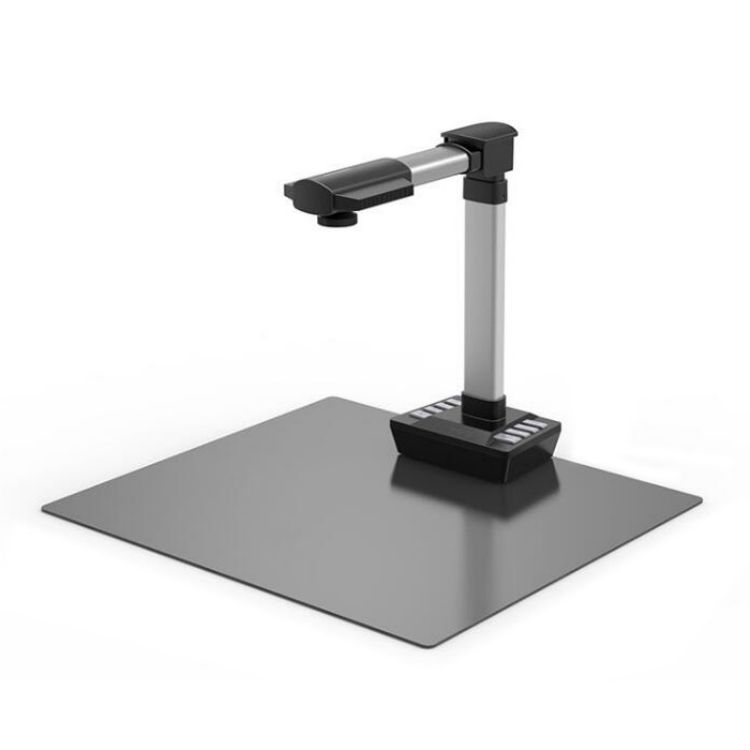
High Resolution Portable A3 Library Book Scanner with Foot Controller USB Interface Automatic Document Scanner Stock Product
- Foot-pedal hands-free capture
- USB interface and automatic scanning
- Portable A3 library workflow
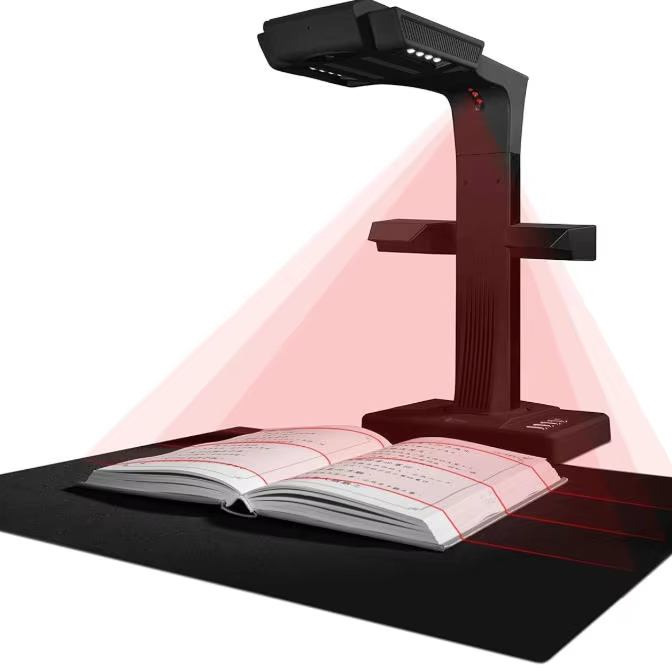
18MP A3 Book Scanner Overhead Document Camera Auto Curve Flattening OCR 180+ HDMI Visual Presenter for Office Library
- Auto curve flattening for bound books
- OCR and HDMI visual presenter output
- Office and library digitization
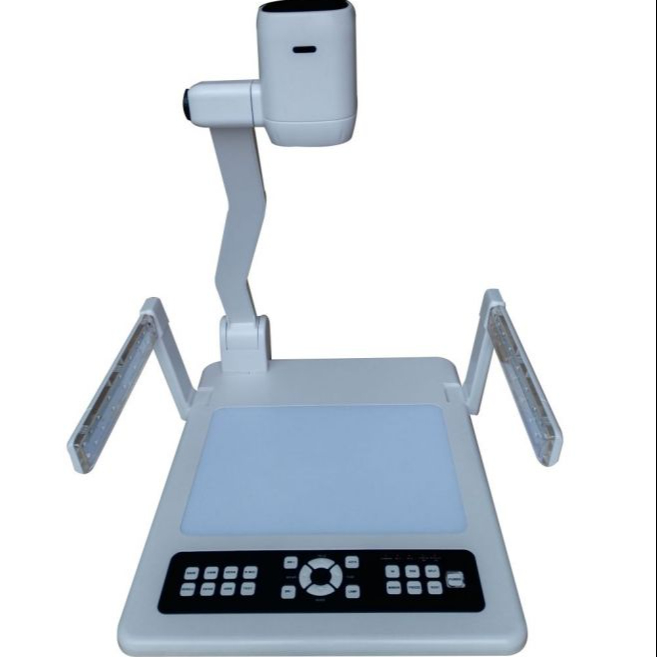
Factory Desktop Document Camera Visualizer 22X Optical Zoom with HDMI RS232 Audio Mic Video
- 22X optical zoom for fine detail
- HDMI and RS232 control interfaces
- Audio, microphone and video output

Online Training Portable 10MP A4 Document Scanner USB Interface Visualizer-in-Stock for Wall Version Black+Silver 1-Year
- 10MP A4 portable visualizer
- USB interface for online training
- Stock black and silver version
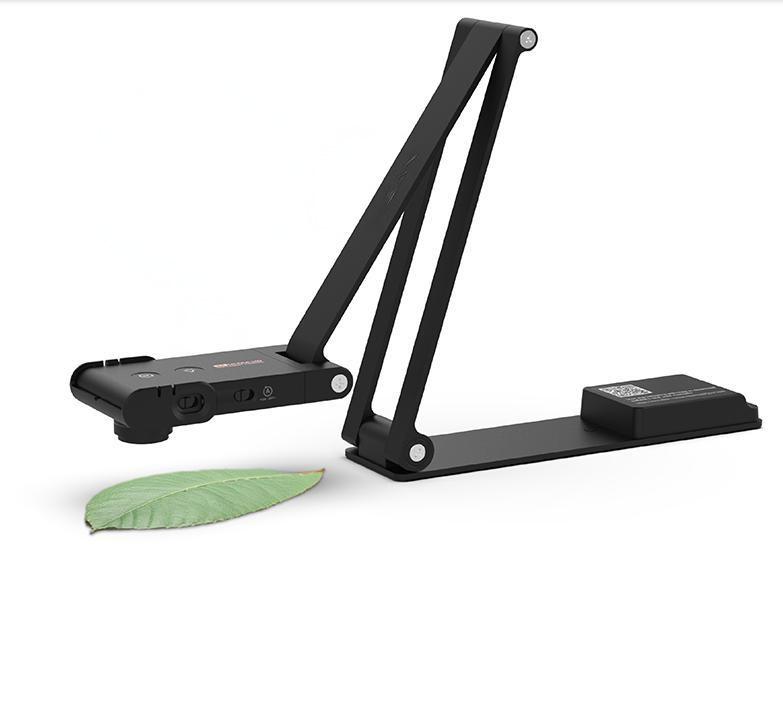
4K 2-in-1 USB 13MP Document Camera Visualizer AI Noise Cancellation 20X Macro Lens Foldable Design Microphone A3 Max 1-Year
- 4K 2-in-1 USB document camera
- AI noise cancellation and microphone
- 20X macro lens, foldable A3 design
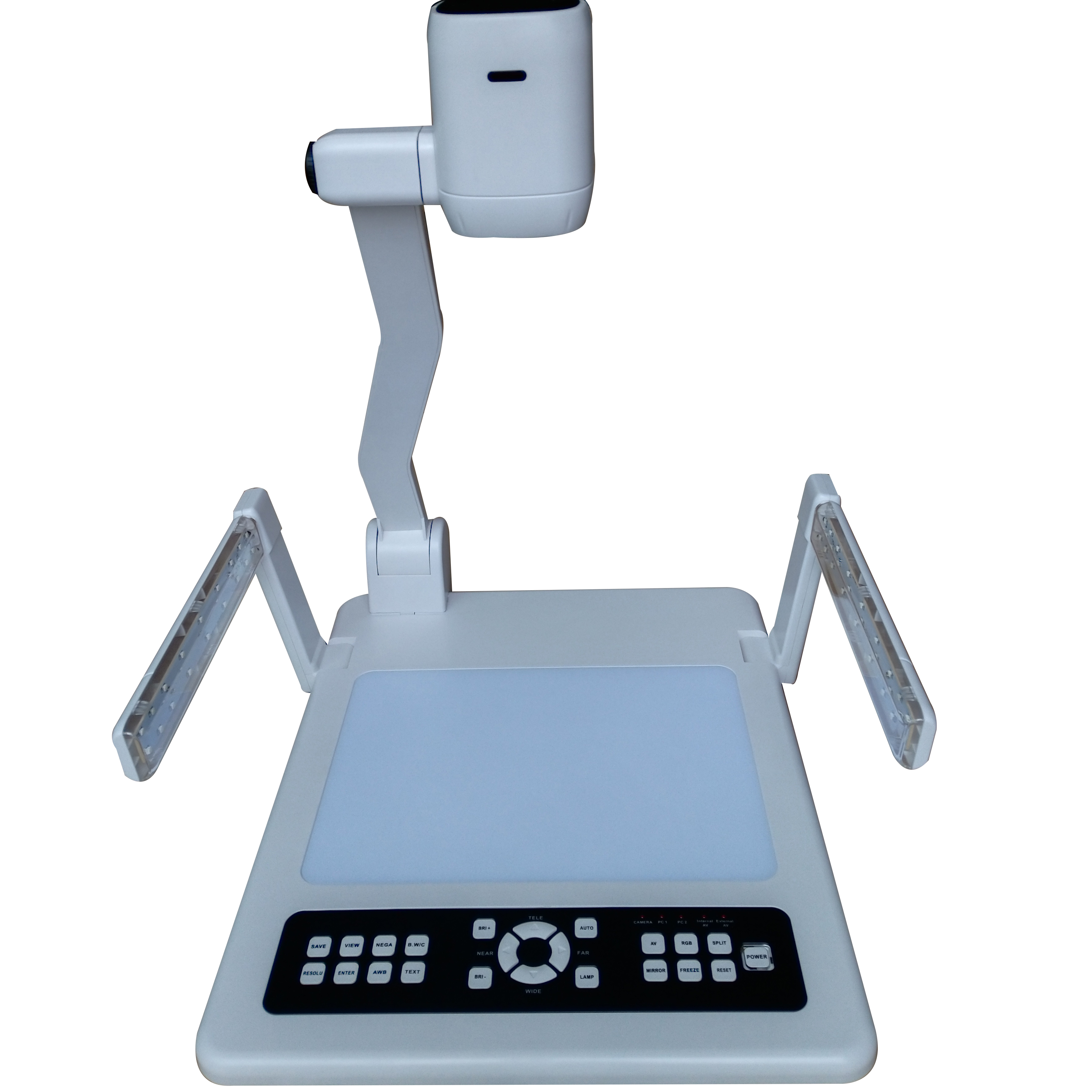
Modern Foldable Flexible Ultra HD Desktop Document Camera for School Video Output HDMI VGA Visualizer
- Ultra HD desktop document camera
- HDMI and VGA visualizer output
- Foldable design for schools
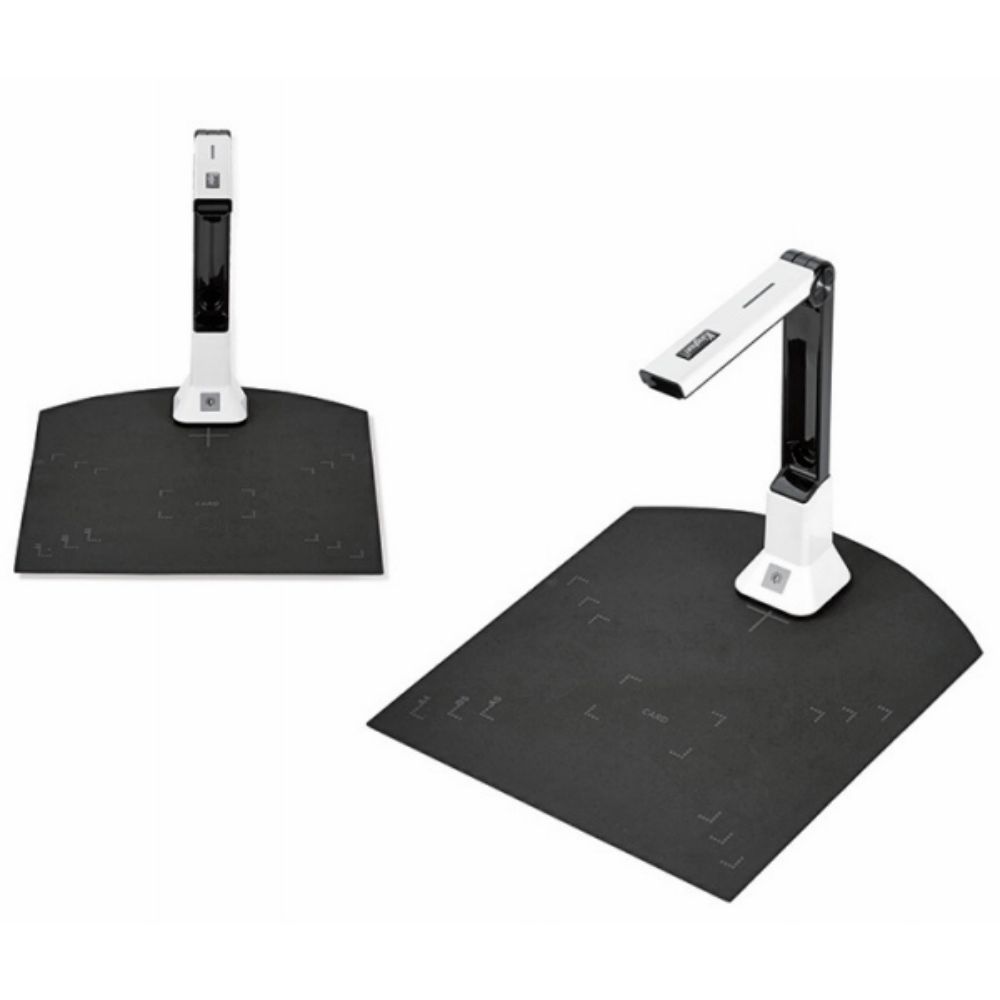
Wholesale 5MP USB Light CMOS A4 Document Scanner Portable Smart Handheld High Resolution 1-Second Scan CE Certified Stock Black
- 5MP USB light CMOS sensor
- 1-second scan for quick capture
- Portable, CE-certified stock model
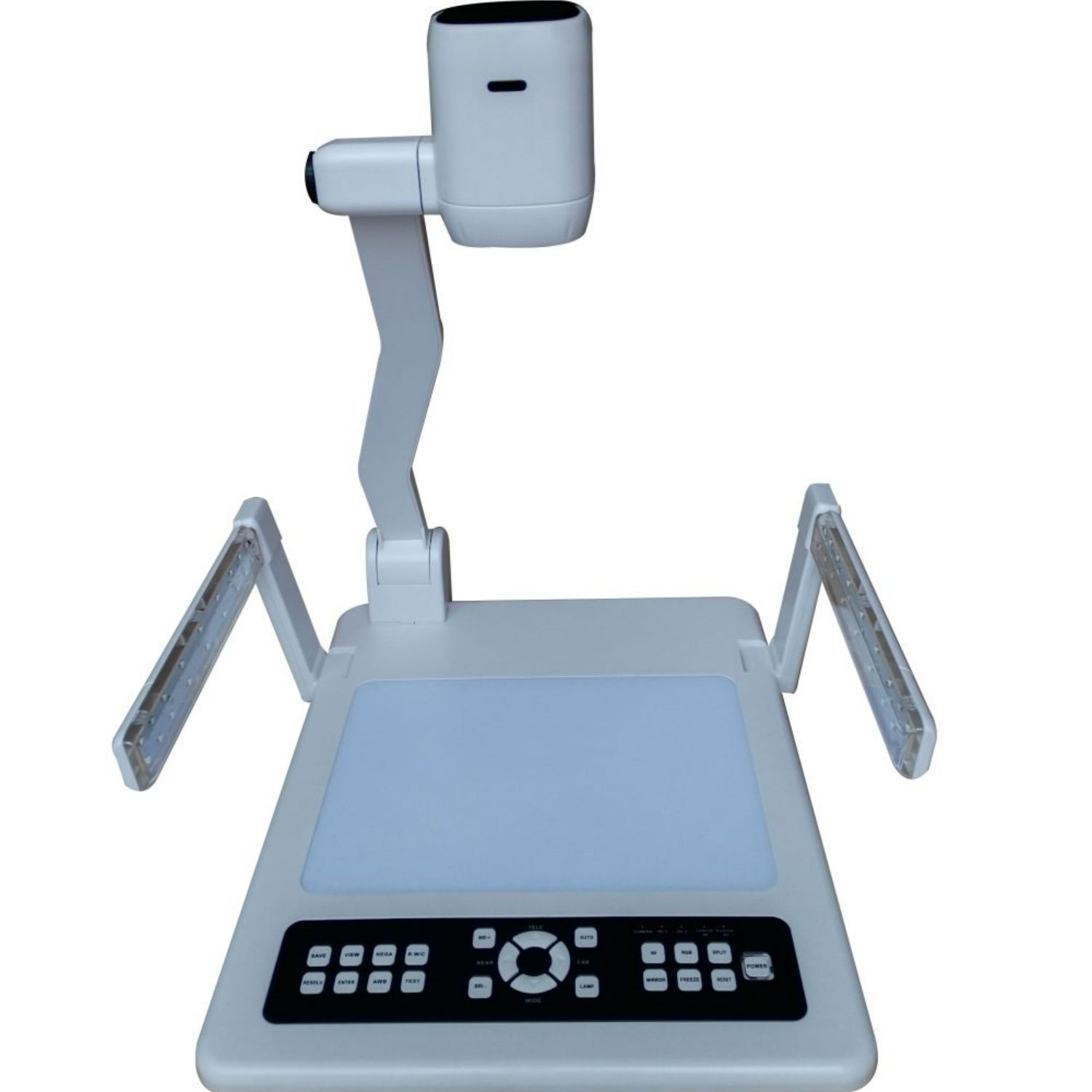
22x Optical Zoom 10x Digital Zoom VGA/USB Interface 2MP CMOS Sensor Resolution A4 Document Camera Foldable Digital Presenter
- 22x optical + 10x digital zoom
- VGA and USB interface options
- 2MP CMOS foldable A4 presenter
Need an A2 large-format, flatbed or ADF model?
Tell us the document size, daily volume and OCR output you need. We will recommend a suitable stock model or OEM/ODM configuration.
Custom OEM OCR Book Scanner Manufacturing: What Serious Buyers Evaluate
The phrase custom OEM OCR book scanner manufacturer and supplier describes more than a hardware catalogue. For libraries, archives, universities, government service centres, newspaper groups and system integrators, an OCR book scanner is part of a digitisation chain that includes capture, image correction, OCR, indexing, storage and long-term access.
A low-cost device that produces soft, skewed or glare-heavy images can slow an entire workflow. A well-specified platform reduces rescanning, protects fragile originals and creates searchable files that remain useful for years. This page explains the engineering and procurement factors that matter, then maps them to our current OCR book scanners, A3/A4 overhead scanners and document cameras.
Buyers often begin with megapixels. Megapixels matter, but they are not the first question. The first question is document format and handling risk: are you capturing A3 bound books, A2 newspapers, loose A4 forms, ID cards, 3D objects or live classroom material? The second is output quality: do you need a preservation master, a readable access PDF, searchable text, or all three? The third is integration: USB, HDMI, VGA, RS232, SDK access, Windows or macOS compatibility, and local OCR requirements. Answering these three questions before comparing prices prevents the most expensive mistake in digitisation: buying a scanner that is technically capable but operationally wrong.
Three checks before quotation
Capture format: A3 overhead capture suits bound books, files and classroom material. A2 large-format platforms are required when a single image must cover newspapers, maps or engineering drawings. A4 portable scanners and visualizers are appropriate for individual users, counters and mobile training.
OCR outcome: Searchable PDF is the minimum. For archives, ask for image quality suitable for preservation, OCR in the required language, and export to PDF/A or TIFF when needed. For service counters, ask for fast capture, auto-crop and integration with existing software.
Integration readiness: Confirm the interface before ordering: USB for desktop capture, HDMI/VGA for classrooms and meeting rooms, RS232 for control systems, and SDK support for independent software vendors.
Protect the original
Non-contact overhead scanning is often the safest option for tight bindings, rare books and newspapers. The capture path should avoid pressing the spine or forcing a 180-degree opening.
Measure usable output
A sharp 18MP image with even lighting and auto-flattening can outperform a poorly implemented higher-resolution camera. Test the OCR result, not only the raw image.
Plan the workflow
Page naming, folder structure, OCR language, file format and metadata rules should be decided before hardware arrives. A scanner is one component of a repeatable digitisation process.
CIS, CMOS or CCD: Match the Sensor to the Document, Not the Brochure
Every imaging platform has a job. CIS sensors are compact and efficient for sheet-fed paths; CMOS area sensors capture a whole page in one shot for bound books; CCD linear sensors tolerate depth and support bookedge flatbed designs. The right choice depends on the original’s shape, the required resolution, the daily volume and the software workflow.
Contact Image Sensor
A slim linear sensor that reads the page at close range. It is compact, power-efficient and fast on sheet-fed paths, making it suitable for high-volume office batches, invoices and contracts.
- Best for
- High-volume ADF scanning, loose forms, office digital archives
- Procurement note
- Confirm paper-path reliability and driver stability before volume deployment.
Area Sensor
A CMOS area sensor captures the whole page from above, so books do not need to be pressed flat. Software can flatten curves, correct perspective and remove fingers from the field of view.
- Best for
- Bound books, newspapers, live teaching, counter services
- Procurement note
- Ask for sample scans near the gutter and confirm OCR performance after flattening.
Linear Sensor
A moving optical carriage with greater depth of field and stable colour, tolerant of slightly raised originals. This architecture supports bookedge flatbed designs that reduce spine shadow.
- Best for
- Photos, artwork, fragile volumes, zero-margin bookedge scanning
- Procurement note
- Check optical resolution, warm-up behaviour and glass-surface wear over time.
Resolution engineering: A3 and A2 at 300 dpi
Resolution should be calculated at the document plane. At 300 dpi, an A4 page needs about 2,480 × 3,508 pixels (8.7MP); an A3 page needs about 3,508 × 4,961 pixels (17.4MP); an A2 sheet needs about 4,961 × 7,016 pixels (34.8MP). For OCR, 200–250 dpi can be sufficient when the image is sharp and evenly lit, but archival masters and fine print often justify 300 dpi or higher. A 48MP A2 model provides headroom for cropping and deskewing while preserving detail.
| Document size | Pixels at 300 dpi | Recommended sensor | Typical product direction |
|---|---|---|---|
| A4 210 × 297 mm | 2,480 × 3,508 ≈ 8.7 MP | 10 MP or higher | 10MP portable A4 visualizer |
| A3 297 × 420 mm | 3,508 × 4,961 ≈ 17.4 MP | 18–24 MP | 18MP OCR overhead book scanner |
| A2 420 × 594 mm | 4,961 × 7,016 ≈ 34.8 MP | 48 MP for ≈300 dpi plus headroom | A2 overhead or 48MP archive scanner |
| Photos & art | 600–2400 dpi optical | Flatbed, 48-bit colour | A3 flatbed or bookedge flatbed |
Procurement scorecard
Megapixels do not fix curved pages, uneven lighting or unstable drivers. A practical evaluation should weight the whole workflow, not only the sensor specification.
Application-Based Recommendations: Which Scanner for Which Workflow?
Use the following starting points to narrow a procurement shortlist. Final selection should be confirmed with sample scans, software testing and a review of daily volume.
Libraries & Archives
Start with an A3 overhead OCR book scanner for bound volumes and fragile records. For newspapers, maps or large periodicals, move to an A2 large-format platform. Non-contact capture protects bindings, while auto-flattening reduces manual correction.
Universities & Training
Use an HDMI/VGA document camera visualizer with optical zoom for live demonstration. Confirm projector compatibility, lighting control and zoom range when showing textbooks, experiments or 3D objects to a classroom.
Government & Banking
At service counters, use a high-speed document camera or dual-lens capture platform for forms and ID documents. Verify SDK access, OCR language support and operating-system compatibility before a pilot rollout.
Newspapers & Publishers
A2 large-format and 48MP capture cover broadsheets in one shot. OCR and consistent file naming are essential for back-issue archives, so test headline accuracy and column segmentation on real pages.
Enterprise Offices
Use an A3 OCR overhead scanner for bound contracts and an ADF/flatbed unit for loose batches. Compare total throughput, driver stability and searchable PDF output rather than unit price alone.
Distributors & Integrators
Choose OEM/ODM models with stable firmware, SDK availability and spare-part planning. Localisation, packaging and after-sales support often matter more than a small hardware price difference.
Future Procurement Trends and Product Development Trends
Public tenders and B2B buyers are changing. The question is moving from “How many megapixels?” to “Can this device deliver a measurable OCR outcome with acceptable total cost and verifiable support?” The following trends are relevant to 2025–2030 procurement cycles, particularly for library, archive, education and government projects.
1. Outcome-based specifications
Buyers will increasingly require sample-based acceptance tests: OCR accuracy on real books, page throughput, reject rate and driver stability. Suppliers that can provide benchmark scans and transparent test reports will have an advantage.
Procurement action: add a sample-scan acceptance clause.2. Computational imaging
Auto-flattening, finger removal, colour enhancement and AI noise cancellation are becoming standard expectations, especially for overhead book scanners. Hardware alone is no longer enough; the software pipeline determines usable output.
Procurement action: test OCR after flattening, not before.3. Local AI and privacy
Institutions may require on-premise processing or controlled data flows. OCR language packs, offline activation and no-cloud capture options will matter in government and archive procurements.
Procurement action: confirm local processing and data retention rules.4. Mixed-fleet workflows
No single device solves every format. Buyers will combine overhead scanners for bound books, ADF/flatbed units for loose pages and visualizers for live training. Suppliers who can advise on the mix will win larger projects.
Procurement action: map formats to devices before tendering.5. SDK and integration readiness
USB, HDMI, VGA, RS232 and SDK access are not niche details. They decide whether a scanner becomes part of a records system, classroom display or counter application. Integration support should be priced and documented.
Procurement action: request SDK notes and driver test logs.6. Lifecycle and verification
Procurement teams are checking onsite assessment, trade history, warranty terms and spare-part availability. A verified supplier profile and a clear remote support process reduce perceived risk.
Procurement action: review third-party records before award.Across these trends, the strongest competitive advantage is not a single feature. It is the ability to translate a document problem into a tested capture configuration, then support that configuration through deployment, OCR tuning and after-sales service.
Why Quibow Is Built for Custom OEM OCR Book Scanner Projects
Guangzhou Quibow Electronic Co., Ltd. is a technology-driven company focused on image data acquisition and conversion. Established in 2020 and based in Guangzhou, Guangdong, China, we develop and supply photoelectric information equipment including high-speed document cameras, book scanners, flatbed scanners and ID card recognition high-speed cameras. Our work covers CIS, CMOS and CCD imaging platforms, product design and development, production coordination, export sales and after-sales support. We are an onsite-checked supplier serving Eastern Europe, North America and South America, with a 5–10 specialist team and annual revenue of US$1M–US$2.5M. This scale is intentional: it keeps communication direct, allows engineering input at the quotation stage and gives OEM/ODM projects a clear point of accountability.
OEM/ODM customization
Logo printing, packaging, housing colour, capture software branding and SDK integration on selected models. Quantities and customisation scope are confirmed per project.
Multi-platform engineering
CIS, CMOS and CCD options let us match the sensor to the document: ADF efficiency, overhead book capture or bookedge flatbed depth.
Product breadth
A3/A4 OCR book scanners, A2/A3 large-format scanners, flatbed and ADF scanners, 4K visualizers, portable document cameras and ID recognition cameras.
Quality inspection
Units are checked for focus, lighting uniformity, driver installation and capture speed before shipment. Listed models carry a 1-year warranty with remote technical support.
Commercial flexibility
Many stock scanners start from 1 piece or 1 set; several document cameras start from 2 pieces. We accept T/T, L/C, PayPal and Western Union in USD, EUR, HKD or CNY, with FOB, EXW and DDU terms.
Verifiable performance
Supplier Assessment, Credit Overview, Ratings & Reviews, Trade Capacity, Transaction Level and Trade History are available through the company profile. Current metrics include ≤1h average response time, 100% message response rate and 27% buyer reorder rate.
Supplier Assessment
Onsite check confirming business premises and legal status.
View assessmentCredit Overview
Platform credit profile and trading reliability indicators.
View creditTrade Capacity
Export markets, trade terms and logistics capability.
View capacityRatings & Reviews
Verified buyer feedback after completed orders.
Read reviewsFrom Brief to Bulk Shipment: The OEM/ODM Workflow
A transparent process helps procurement teams understand exactly what happens after the first inquiry, from sample validation to export packing.
Requirement Review
Document size, volume, operating system, output formats, OCR language and interface requirements are confirmed, usually within one hour.
Model Matching
We recommend the sensor platform, resolution and capture software, with sample scans provided on request.
Sample & Customisation
Logo, packaging, housing colour, software branding, OCR languages and SDK integration are reviewed before bulk production.
Quality Inspection
Focus, lighting uniformity, driver installation, capture speed and packaging checks are completed before shipment.
Shipping & Support
Export packing and remote setup support, with a 1-year warranty on listed models and clear after-sales communication.
Payment Methods
T/T, L/C, PayPal, Western Union
Payment Currency
USD, EUR, HKD, CNY
Delivery Terms
FOB, EXW, DDU
Custom OEM OCR Book Scanner Procurement FAQ
Practical answers for B2B buyers, distributors, system integrators, libraries and procurement teams comparing OCR book scanner suppliers.
What is the minimum order quantity for Quibow scanners and document cameras?
Most stock book scanners, A2 large-format scanners and flatbed scanners start from 1 piece or 1 set. Several document camera models start from 2 pieces. OEM/ODM quantities are confirmed per project based on customisation and packaging requirements.
Do you support OEM and ODM orders?
Yes. We support OEM/ODM projects including logo printing, packaging, housing colour, capture software branding and SDK integration on selected models. For custom software or integration work, share the operating system, interface and OCR output requirements at the inquiry stage.
Are the scanners compatible with Windows and macOS?
Many models, including the A2 large-format scanners and the 1200 DPI A3 flatbed scanner, support Windows and macOS, and some are verified on Apple M1 Macs. Compatibility should be confirmed for each model before shipment, especially when OCR software or an SDK is part of the project.
Which resolution do I need to scan A3 or A2 documents at 300 dpi?
An A3 page at 300 dpi needs about 3,508 × 4,961 pixels, or around 17.4MP, so an 18MP or 24MP scanner is suitable. An A2 sheet at 300 dpi needs about 4,961 × 7,016 pixels, or around 34.8MP, so a 48MP A2 scanner is recommended for archival masters and cropping headroom.
What payment and delivery terms do you accept?
We accept T/T, L/C, PayPal and Western Union in USD, EUR, HKD or CNY, with FOB, EXW and DDU delivery terms. Final terms are confirmed with the quotation and order.
What warranty do your products carry?
Listed models such as the A3 flatbed scanners, A2 overhead scanners and the S2060W ADF scanner come with a 1-year warranty, backed by remote technical support. Confirm the warranty terms for your selected model and destination before order confirmation.
Can you provide sample scans or a pilot before purchase?
Yes. For serious projects, we can provide sample scans using representative pages and confirm capture settings. For OEM/ODM orders, a sample or pilot order is the practical way to validate OCR language, software branding and interface requirements before bulk production.
How do you protect image quality when scanning bound books?
Use an overhead CMOS scanner with auto-flattening and deskew, even lighting and a non-contact capture path. Avoid pressing spines or forcing fragile books flat. For very fragile volumes, a bookedge flatbed with zero-margin design can be considered, followed by OCR testing on representative pages.
Send Your Document Samples and Target OCR Output
Share your page sizes, daily volume, book type, OCR languages, operating system, interface requirements and target budget. Our team will match the project to an A3/A4 overhead scanner, A2 large-format model, document camera or OEM/ODM configuration, and advise on sample testing before quotation. For custom projects, include artwork, packaging requirements and SDK expectations so the engineering review can start immediately.
Send an Inquiry