Eight Recommended High Resolution Book Scanners, Document Cameras & Visualizers
Start with the document format, binding condition, target resolution and downstream workflow. The eight products below cover A4 office capture, A3 overhead book scanning, A2 archival master capture, live teaching and OEM visual presenter projects.
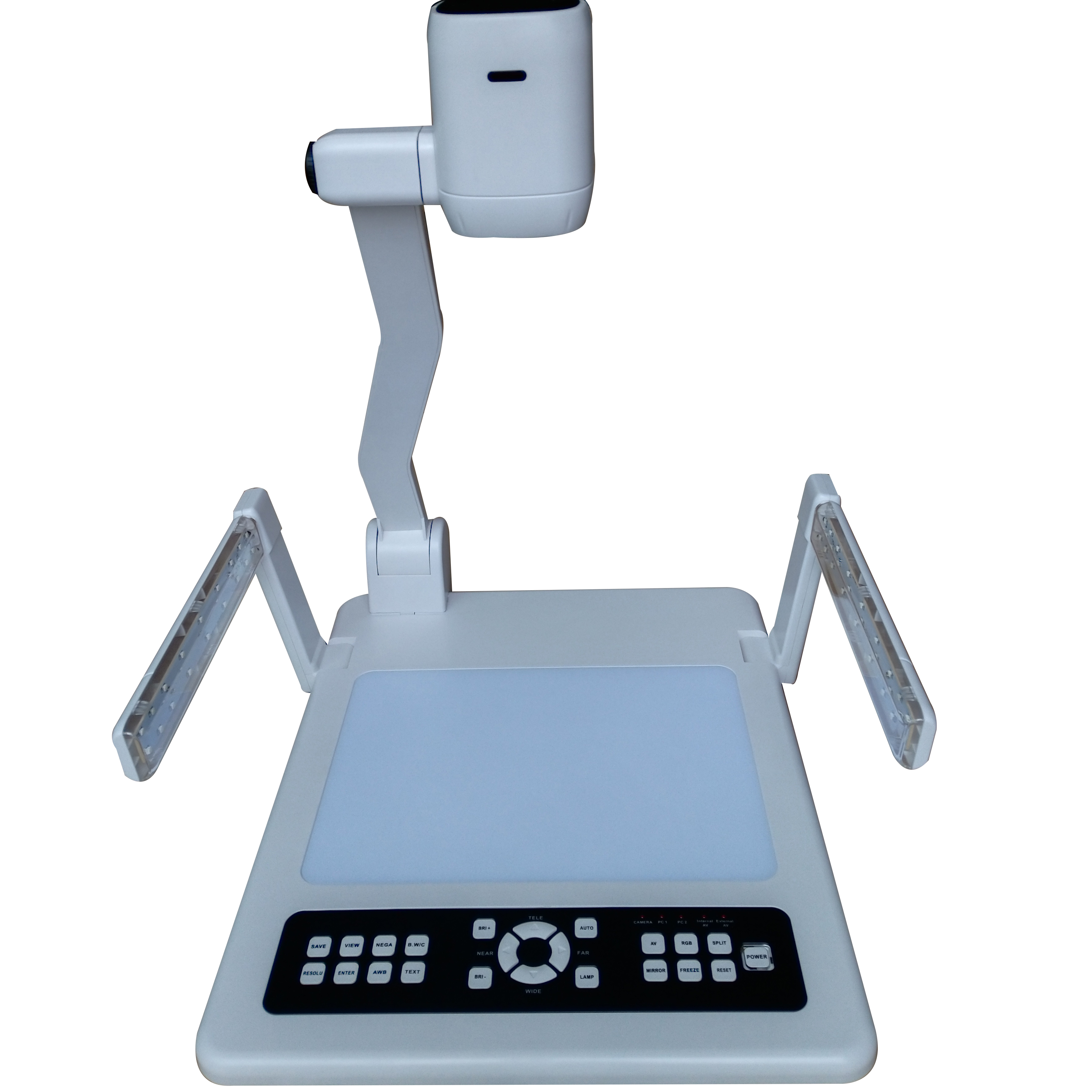
Modern Foldable Flexible Ultra HD Desktop Document Camera for School Video Output HD MI VGA Visualizer
A flexible Ultra HD document camera for live lessons, training rooms and service counters. HDMI/VGA output keeps it compatible with existing classroom displays.
- Ultra HD visualizer
- Foldable flexible arm
- HDMI/VGA video output
- School and meeting use
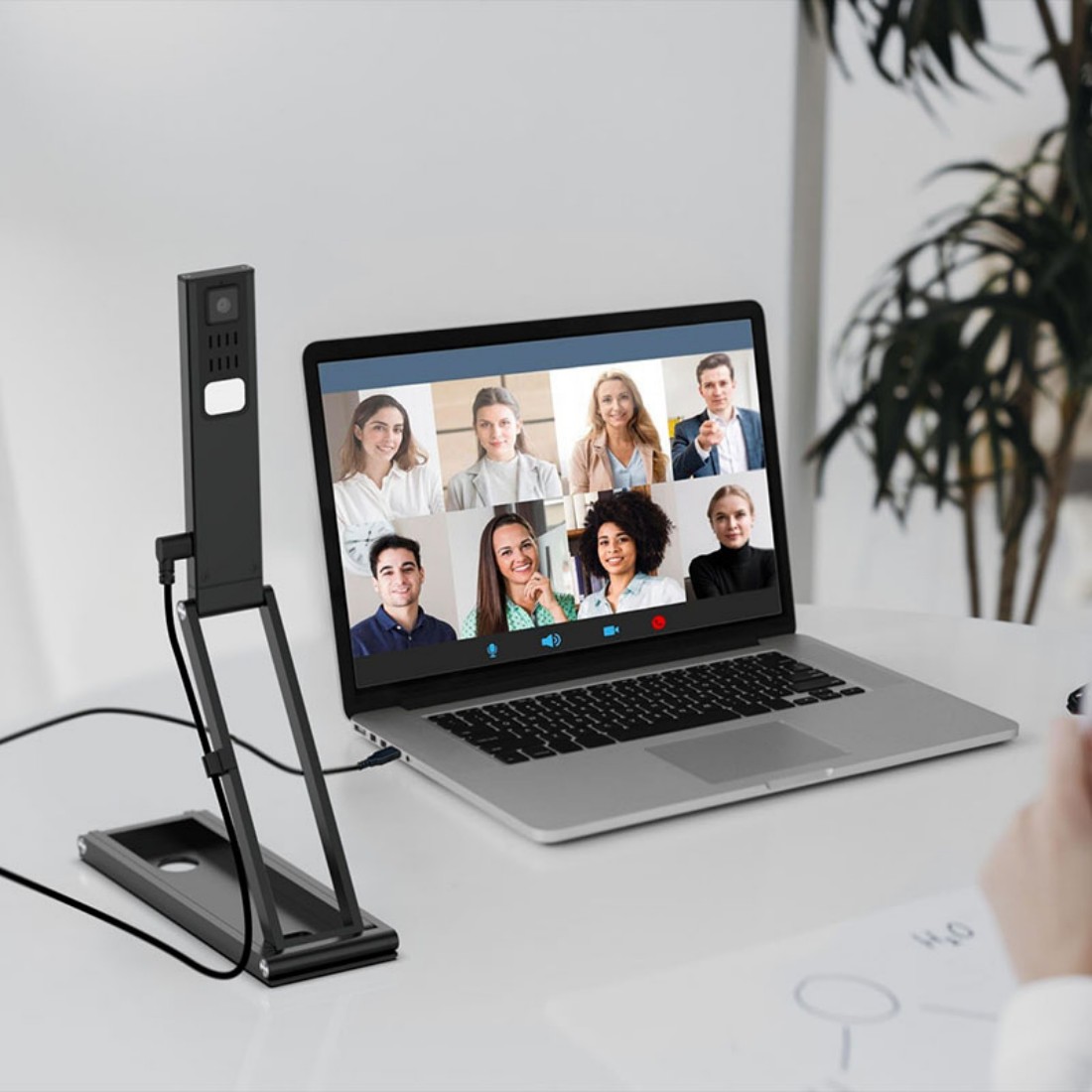
A3 4K Visual Presenter Document Camera with USB Interface for School Training Teaching Meetings Featuring Webcam Function
A3 4K visual presenter with USB webcam function for hybrid teaching and meetings where both projector output and conference software capture are required.
- A3 4K capture
- USB interface
- Webcam function
- Training and teaching use

USB Document Camera Scanner 10MP CMOS Visualizer A4 Scanner for Office Education
A practical 10MP CMOS USB document camera for everyday office, education and counters. Suitable for OCR, ID capture and on-screen document sharing.
- 10MP CMOS sensor
- A4 document area
- USB plug-and-play
- Office and education
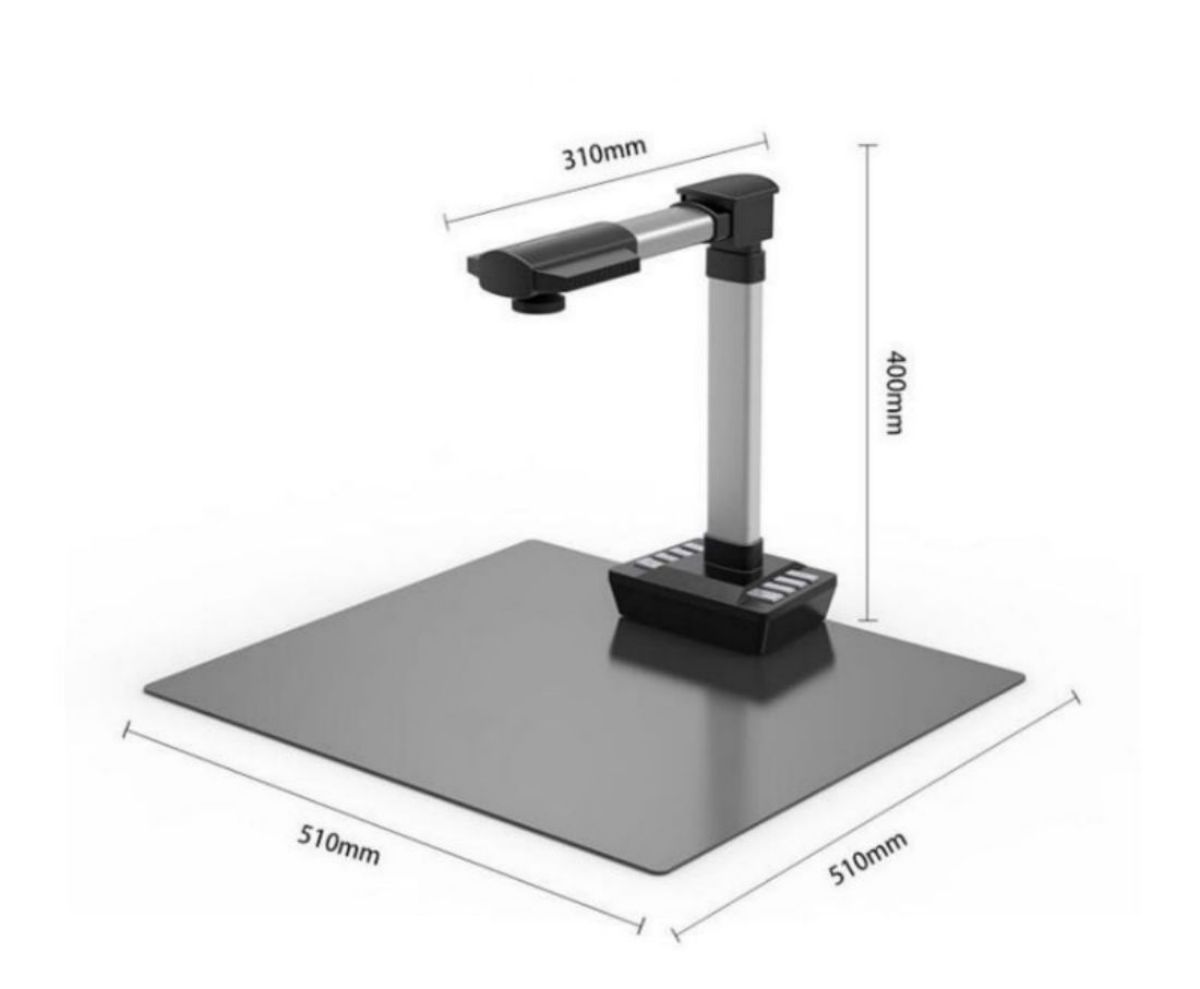
Portable 20MP High-Speed Wireless A3 Document Scanner Professional Book Scanner Foot Pedal USB Interface 24-Bit Color Stock
Portable A3 book scanner with wireless capture, 20MP resolution, foot pedal and USB. Built for field digitization, mobile archives and assisted scanning.
- 20MP high-speed capture
- A3 document and book use
- Wireless + USB
- Foot pedal included
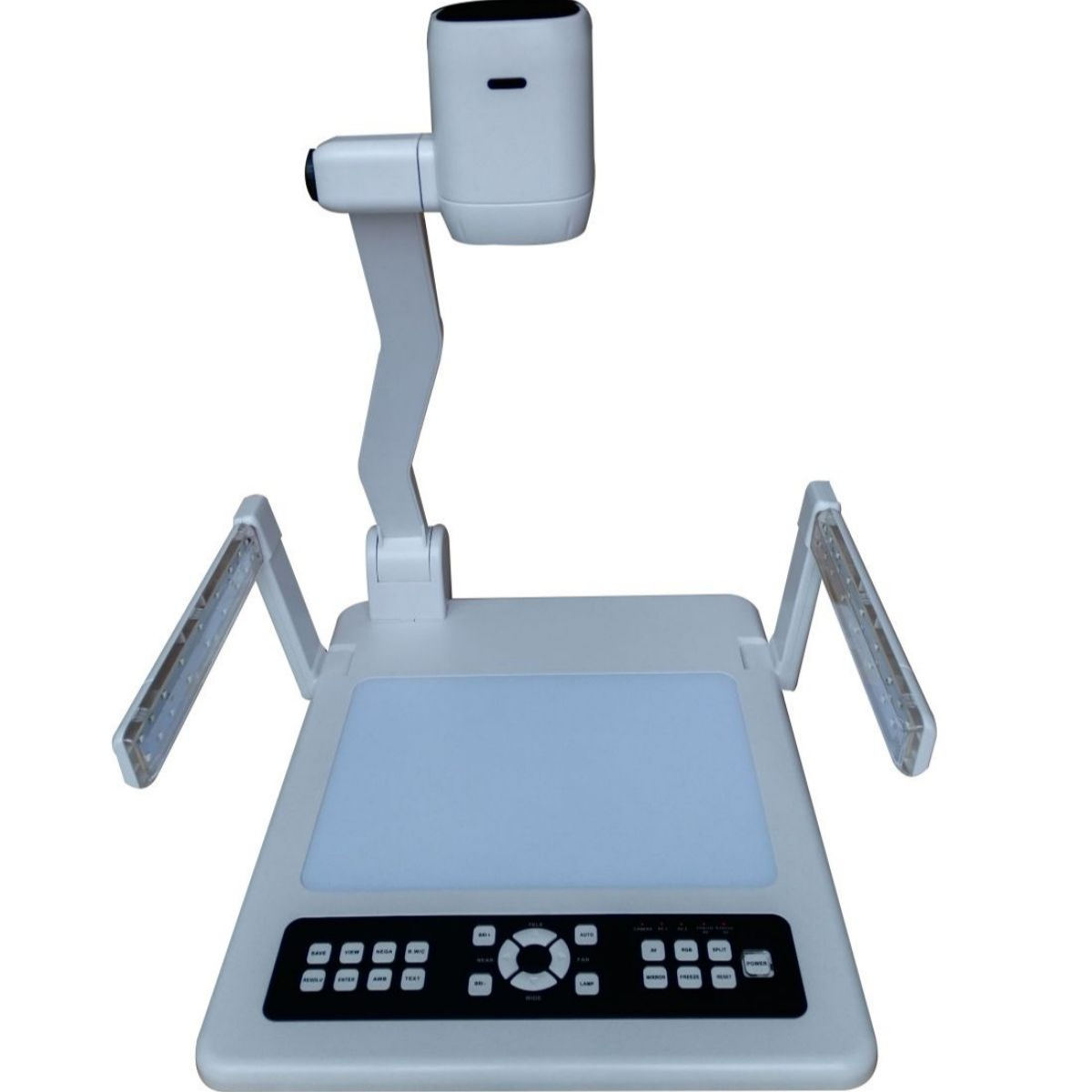
HD Optical Zoom Visual Presenter 1/3" CMOS Sensor 1-Year Warranty OEM Brand GUA Origin Professional Document Camera VGA RS232
HD optical zoom visual presenter with 1/3-inch CMOS, VGA/RS232 control and OEM branding options for fixed-install presentation environments.
- HD optical zoom
- 1/3" CMOS sensor
- VGA / RS232
- OEM brand availability
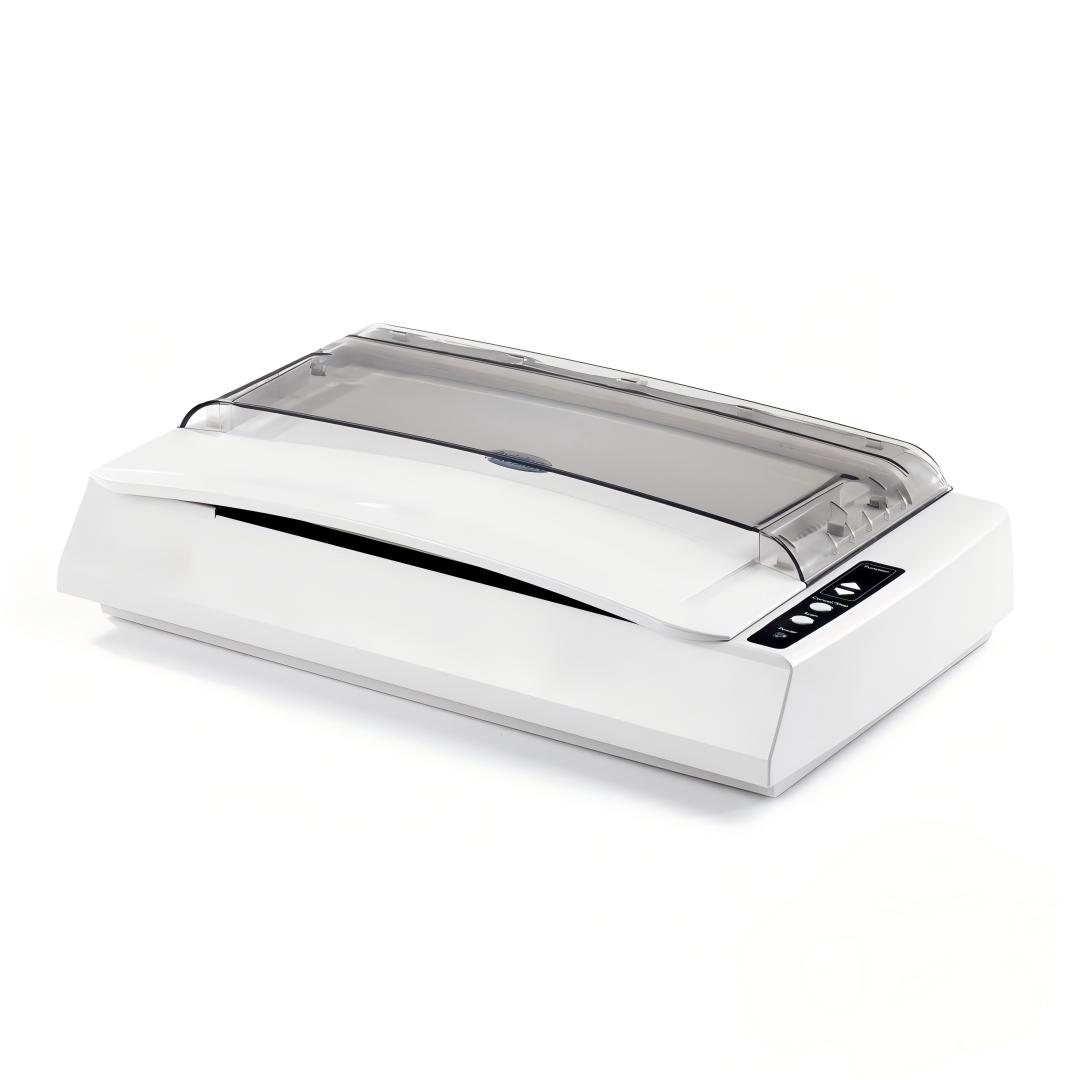
CCD Zero Margin Bookedge Flatbed Scanner A4 600dpi USB Bound Book Scanning No Spine Shadow Library Archive Digitization
CCD bookedge flatbed scanner for bound books and archive pages where spine shadow must be avoided. A4 600dpi USB capture for library workflows.
- CCD imaging platform
- Zero-margin bookedge design
- A4 600dpi capture
- No spine shadow
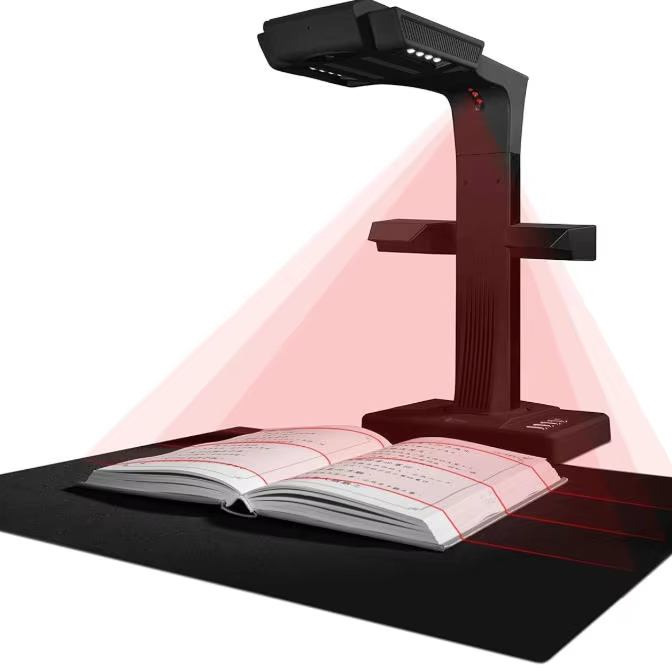
18MP A3 Book Scanner Overhead Document Camera Auto Curve Flattening OCR 180+ HDMI Visual Presenter for Office Library
18MP A3 overhead book scanner with auto curve flattening, OCR and HDMI visual presenter output. Strong fit for libraries, offices and hybrid teaching.
- 18MP A3 overhead capture
- Auto curve flattening
- OCR and searchable output
- HDMI visual presenter mode
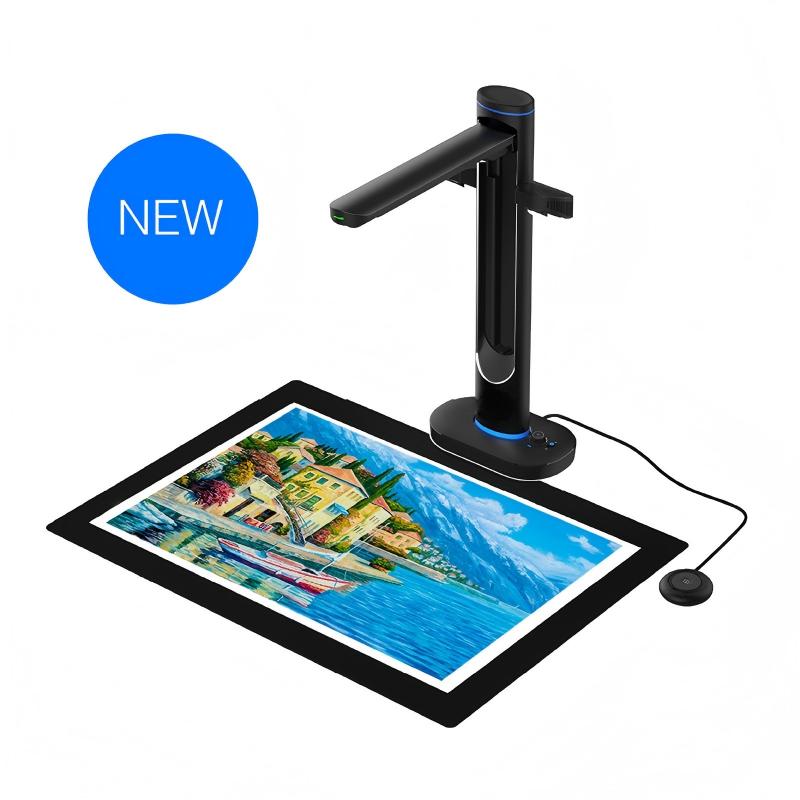
A2 Large Format Book Scanner Dual 48MP CMOS Sensors High-Speed Desktop Overhead Scanner for Windows & MacOS
A2 large-format desktop overhead book scanner with dual 48MP CMOS sensors. Engineered for newspapers, maps, bound volumes and archival masters.
- A2 large-format capture
- Dual 48MP CMOS sensors
- High-speed desktop scanning
- Windows and macOS support
What OEM Buyers Actually Need from a High Resolution Book Scanner Supplier
High resolution is only one part of a successful scanner project. Buyers also need preservation-safe capture, repeatable color and geometry, OCR-ready output, software integration and a supplier who can answer technical questions before the purchase order is issued.
Preservation-first capture
Bound books, newspapers and fragile records should not be pressed flat. Overhead CMOS scanners and bookedge CCD flatbeds reduce stress on the binding while software corrects page curvature and removes unwanted artifacts.
System-ready output
For most institutional buyers, searchable PDF, OCR accuracy and predictable export matter as much as megapixels. Confirm operating system, file format, SDK access and interface requirements before selecting a model.
A supplier who can be verified
Ask for business registration, platform assessment, warranty terms, spare-parts policy, sample scans and reference projects. A transparent supplier will separate what is standard, what is optional and what must be confirmed by model.
Resolution Planning: Match Megapixels to A4, A3 and A2 at 300 DPI
Megapixels become meaningful only when they are connected to page size. Divide the sensor’s pixel dimensions across the document area to estimate true scanning resolution. Lens quality, lighting uniformity, camera distance and software correction also affect final image quality.
Use resolution math before the RFQ
An A3 page at 300 dpi needs about 3508 × 4961 pixels, or roughly 17.4 MP. That is why an 18MP or 24MP model is normally appropriate for high-quality A3 book scanning. An A2 sheet at 300 dpi needs about 4961 × 7016 pixels, or roughly 34.8 MP, so a 48MP A2 scanner is the safer choice for archival masters.
A 21MP camera covering a full A2 sheet usually delivers roughly 225–240 dpi. That may be sufficient for reading, OCR and internal access copies, but it may not meet a tender requiring 300 dpi at A2. Specification writing should state both the page size and the required resolution at that page size—not only the sensor’s megapixel count.
For photos, artwork and special collections, optical flatbed resolution and bit depth become more important. For high-volume loose sheets, ADF speed and duty cycle are usually more valuable than maximum camera resolution. The right answer depends on the workflow, not the brochure headline.
| Document size | Pixels at 300 dpi | Practical sensor choice | Matching product direction |
|---|---|---|---|
| A4 210 × 297 mm | 2480 × 3508 ≈ 8.7 MP | 10 MP or higher | 10MP USB document camera; CCD bookedge for bound A4 |
| A3 297 × 420 mm | 3508 × 4961 ≈ 17.4 MP | 18–24 MP | 18MP auto-flatten overhead book scanner |
| A2 420 × 594 mm | 4961 × 7016 ≈ 34.8 MP | 48 MP for ≈300+ dpi | A2 dual 48MP CMOS overhead book scanner |
| Photos & art | 600–2400 dpi optical | Flatbed CCD, 48-bit color | CCD zero-margin bookedge; 1200/2400 dpi flatbed options |
Product Development Trends: What the Next Generation of Book Scanners Will Include
Book scanner development is moving from “capture an image” toward “deliver a reliable, searchable and integration-ready record.” The strongest product roadmaps combine optics, embedded processing and software workflows.
AI-assisted page intelligence
Auto page detection, curve flattening, finger removal, deskew and OCR are becoming standard expectations. The next step is better exception handling for damaged pages, mixed layouts and multilingual archives.
On-device processing and privacy
Institutions often prefer capture and OCR to happen locally rather than in a public cloud. Edge processing reduces data exposure, improves responsiveness and supports projects with strict data-governance requirements.
Dual-sensor A2 resolution
Newspapers, maps and engineering drawings are pushing demand for A2 capture at archival resolution. Dual 48MP sensor designs help buyers reach 300 dpi class output without moving to a larger floor-standing system.
SDK-first and UVC integration
OEM buyers increasingly need UVC webcam modes, HDMI/VGA presentation output, RS232 control and SDK access. Hardware that cannot integrate with existing software creates hidden engineering cost after delivery.
Human-centered ergonomics
Foot pedals, adjustable LED lighting, low-glare surfaces, fast page-turn rhythm and clear operator feedback reduce fatigue. In digitization projects, ergonomics directly influence daily throughput and error rates.
Modular OEM customization
Logo printing, packaging, housing color, software branding and model-specific firmware are becoming part of normal OEM programs. Modular customization helps distributors build a differentiated product line without changing the core imaging platform.
Procurement Trends: How Institutional Buyers Will Source Book Scanners Through 2030
The strongest procurement trend is a shift from component buying to outcome buying. Buyers are specifying the document format, binding condition, OCR language, output format, integration method and support level before comparing price.
Outcome-based specifications
HighRFQs increasingly define required DPI at the page edge, OCR accuracy expectations, cycle time and export formats rather than only sensor type.
Relative procurement priority signal: 92
Non-destructive heritage capture
HighLibraries and archives are prioritizing overhead and bookedge scanning so fragile bindings are not pressed flat during digitization.
Relative procurement priority signal: 89
A2 archive and dual-sensor demand
RisingNewspaper, map and broadsheet projects are moving toward A2 overhead scanners with enough resolution for both access copies and archival masters.
Relative procurement priority signal: 83
AI-ready OCR and searchable output
HighSearchable PDF, structured text and multilingual OCR are becoming standard requirements for digital libraries and records programs.
Relative procurement priority signal: 87
UVC, SDK and mixed-fleet integration
RisingSystem integrators want hardware that fits existing capture software, presentation systems and workflow platforms with minimal custom engineering.
Relative procurement priority signal: 80
Total cost of ownership and support
CriticalWarranty, spare-part availability, remote diagnostics, installation support and operator training now weigh heavily in supplier selection.
Relative procurement priority signal: 94
Note: the bars are directional project-priority indicators for procurement planning, not market-size statistics or third-party forecasts.
Applications: Where High Resolution Book Scanners Deliver Measurable ROI
Quibow’s main markets include Eastern Europe, North America and South America, serving distributors, system integrators and end users. The right scanner depends on the material being digitized and the output the institution must deliver.
Libraries and archives
Overhead and bookedge scanners digitize rare books, periodicals and records without stressing the binding, with OCR and searchable output for catalogues.
Education and training
Visual presenters with optical zoom show textbooks, experiments and 3D objects live on projectors, displays and hybrid meeting platforms.
Government and banking
Dual-lens high-speed cameras capture ID cards and forms at service counters, with OCR and SDK integration for secure verification workflows.
Enterprise offices
ADF and flatbed scanners convert contracts and invoices into searchable files for paperless workflows, compliance archives and shared service centers.
Newspapers and publishers
A2 large-format scanners capture full broadsheets and maps in one shot for digital back-issue archives, research and rights-management programs.
Distributors and integrators
OEM/ODM branding and SDK access let resellers build their own digitization solutions on proven hardware platforms with predictable support.
Enterprise Advantages: Why Guangzhou Quibow Electronic Co., Ltd. Is Built for OEM Programs
Guangzhou Quibow Electronic Co., Ltd. is a technology-driven supplier focused on image data acquisition and conversion. Established in 2020 and based in Guangzhou, Guangdong, the company develops and supplies photoelectric information equipment including high-speed document cameras, book scanners, flatbed scanners and ID card recognition high-speed cameras.




Engineering support across CIS, CMOS and CCD platforms
Working across CIS, CMOS and CCD imaging platforms, Quibow covers the full cycle from product design and development to production coordination, export sales and after-sales support. For OEM buyers, that means direct engineering dialogue, fast response and project-based customization rather than a one-size-fits-all catalogue answer.
- Onsite-checked supplier status with third-party platform records available for review.
- OEM/ODM support for logo printing, packaging, housing color, capture software branding and SDK integration on selected models.
- Fast communication: average response time ≤1 hour and 100% message response rate.
- Main markets in Eastern Europe, North America and South America, with export experience for distributors and integrators.
- Quality inspection before shipment, remote technical support and a 1-year warranty on listed models.
- Flexible commercial terms: T/T, L/C, PayPal and Western Union in USD, EUR, HKD or CNY, with FOB, EXW and DDU delivery terms.
- Business type
- Onsite-checked trading company
- Location
- Guangzhou, Guangdong, China
- Established
- 2020
- Annual revenue
- US$1M – US$2.5M
- Team
- 5–10 dedicated specialists
- Main markets
- E. Europe, N. & S. America
Supplier assessment
Onsite check confirming business premises and legal status.
View reportCredit overview
Platform credit profile and trading reliability indicators.
View creditRatings and reviews
Feedback left by verified buyers after completed orders.
Read reviewsTrade capacity
Export markets, trade terms and logistics capability.
View capacityA Six-Step OEM/ODM Workflow with Clear Quality Gates
A transparent workflow helps procurement teams know exactly what happens after the first message—and where samples, approvals and quality checks are required.
Requirement review
Confirm document size, binding, daily volume, target DPI, OCR language, output format, operating system, interface and delivery schedule.
Sensor and model matching
Select CIS, CMOS or CCD based on the material and workflow; compare A3/A2 resolution, lighting, speed and software requirements.
Sample scan validation
Review sample images for geometry, color, curve correction and OCR quality before committing to a custom configuration.
OEM/ODM customization
Implement logo, packaging, housing color, software branding, language packs and SDK integration on selected models.
Inspection and burn-in
Check focus, lighting uniformity, driver installation, capture speed and accessories; confirm packing and labeling requirements.
Export and after-sales support
Prepare export packing, confirm shipping terms and provide remote technical support with a 1-year warranty on listed models.
MOQ
Most stock book scanners, A2 scanners and flatbed scanners start from 1 piece or 1 set. Several document camera models start from 2 pieces. OEM/ODM quantities are confirmed per project.
Payment
T/T, L/C, PayPal and Western Union in USD, EUR, HKD or CNY.
Delivery
FOB, EXW and DDU terms, with export packing and remote setup support.
Warranty
1-year warranty on listed models, backed by remote technical support and model-specific compatibility confirmation.
Frequently Asked Questions about Custom OEM High Resolution Book Scanners
Are you a manufacturer or a supplier?
Guangzhou Quibow Electronic Co., Ltd. is an onsite-checked trading company with product development and production coordination across CIS, CMOS and CCD imaging platforms. We develop and supply book scanners, document cameras, flatbed scanners and related image acquisition equipment, and we work with manufacturing partners to deliver OEM/ODM projects. This structure gives buyers direct engineering communication plus access to proven production resources.
What is the minimum order quantity for custom OEM book scanners?
Most stock book scanners, A2 large-format scanners and flatbed scanners start from 1 piece or 1 set. Several document camera models start from 2 pieces. OEM/ODM quantities are confirmed per project because customization scope, packaging, software branding and SDK requirements can change the production plan.
Which sensor type should I choose: CIS, CMOS or CCD?
Choose CMOS overhead capture for bound books, newspapers and live presentation because the original does not need to be pressed flat. Choose CIS when the priority is compact, high-volume sheet-fed scanning for invoices and contracts. Choose CCD flatbed or bookedge designs for photos, artwork and bound books where depth of field and zero-margin scanning without spine shadow are important. The best choice depends on the material and output requirement.
How do I calculate the resolution needed for A3 or A2 at 300 dpi?
An A3 page at 300 dpi needs about 3508 × 4961 pixels, or roughly 17.4 MP, so an 18MP or 24MP scanner is suitable. An A2 sheet at 300 dpi needs about 4961 × 7016 pixels, or roughly 34.8 MP, so a 48MP A2 scanner is recommended for archival masters. A 21MP camera covering a full A2 sheet usually delivers approximately 225–240 dpi, which may be sufficient for reading and OCR but not for a 300 dpi A2 tender.
Can you customize logo, packaging, housing color, software and SDK?
Yes. OEM/ODM support includes logo printing, packaging, housing color, capture software branding and SDK integration on selected models. For software-dependent projects, share the target operating system, interface, output format and integration environment early so compatibility can be confirmed before the order is placed.
Are the scanners compatible with Windows and macOS?
Many models, including A2 large-format scanners and selected flatbed scanners, support Windows and macOS, and some are verified on Apple M1-powered Macs. Compatibility is confirmed for each model before shipment. Presentation models may also offer HDMI, VGA, USB, UVC or RS232 control, depending on configuration.
What payment, delivery and warranty terms do you accept?
We accept T/T, L/C, PayPal and Western Union in USD, EUR, HKD or CNY, with FOB, EXW and DDU delivery terms. Listed models such as A3 flatbed scanners, A2 overhead scanners and selected document cameras come with a 1-year warranty, backed by remote technical support. Exact terms are confirmed in the quotation.
Can I request sample scans before placing an OEM order?
Yes. Send representative pages or describe the document condition, page size, target DPI, OCR language and expected output format. Sample scans help verify curve flattening, color fidelity, text sharpness, lighting uniformity and OCR readiness before a pilot order or customization commitment.
What information should be included in an RFQ?
Include document size, binding type, daily or annual volume, target DPI at the page edge, OCR languages, required output formats, operating system, interface requirements, software integration needs, branding scope, delivery country, warranty expectations and target schedule. This information allows a supplier to recommend the correct sensor platform and avoid over- or under-specifying the scanner.
Start a Custom OEM High Resolution Book Scanner Project
Share your page sizes, binding condition, daily volume, target resolution, OCR languages, output formats and branding requirements. Quibow will recommend a suitable CIS, CMOS or CCD model, confirm MOQ and commercial terms, and provide sample scans for evaluation.