Custom OEM Dual Camera Document Scanner Manufacturer & Suppliers
A procurement-focused guide to custom dual-camera document capture, overhead book scanners, A3/A2 visualizers, OCR software and SDK integration from Guangzhou Quibow Electronic Co., Ltd.
Eight Document Scanner Platforms for Custom OEM Dual Camera Programs
These eight catalogue models are a working shortlist, not a closed catalogue. Each image and product link below is preserved from the source content so buyers can verify specifications, stock status and model details directly.

USB Document Camera Scanner 10MP CMOS Visualizer A4 Scanner for Office Education
- Plug-and-play USB visualizer
- A4 office and education capture
- CMOS live demonstration workflow
Best fit: a practical entry SKU for distributors and education tenders that need simple deployment and low integration friction.
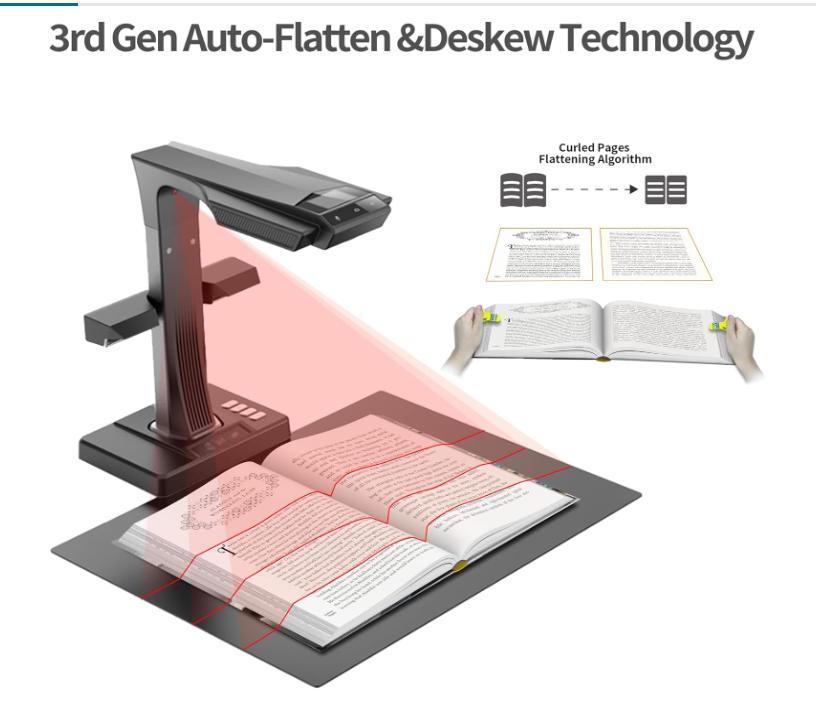
A3 24MP Book Scanner Auto Flatten Deskew CMOS Document Digitizer 4000x6000 USB Visualizer OCR Searchable PDF
- 4000 x 6000 pixel CMOS capture
- Auto flatten and deskew
- OCR to searchable PDF
Best fit: archive and library projects that require A3 book capture, curve correction and searchable output without pressing the spine flat.
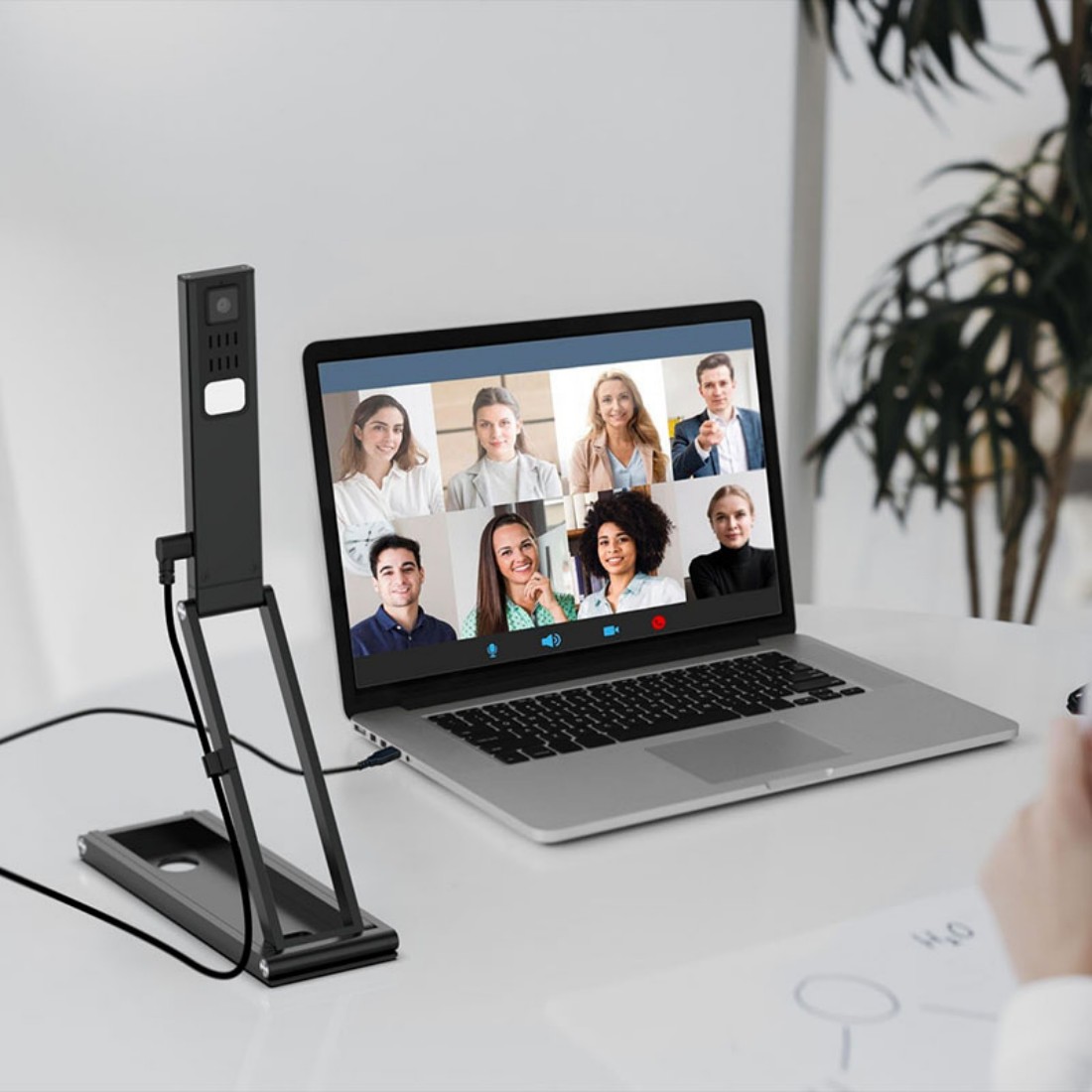
A3 4K Visual Presenter Document Camera with USB Interface for School Training Teaching Meetings Featuring Webcam Function
- 4K presentation clarity
- USB interface and webcam function
- School, training and meeting use
Best fit: hybrid classrooms, training rooms and meeting spaces where live demonstration quality matters as much as still capture.
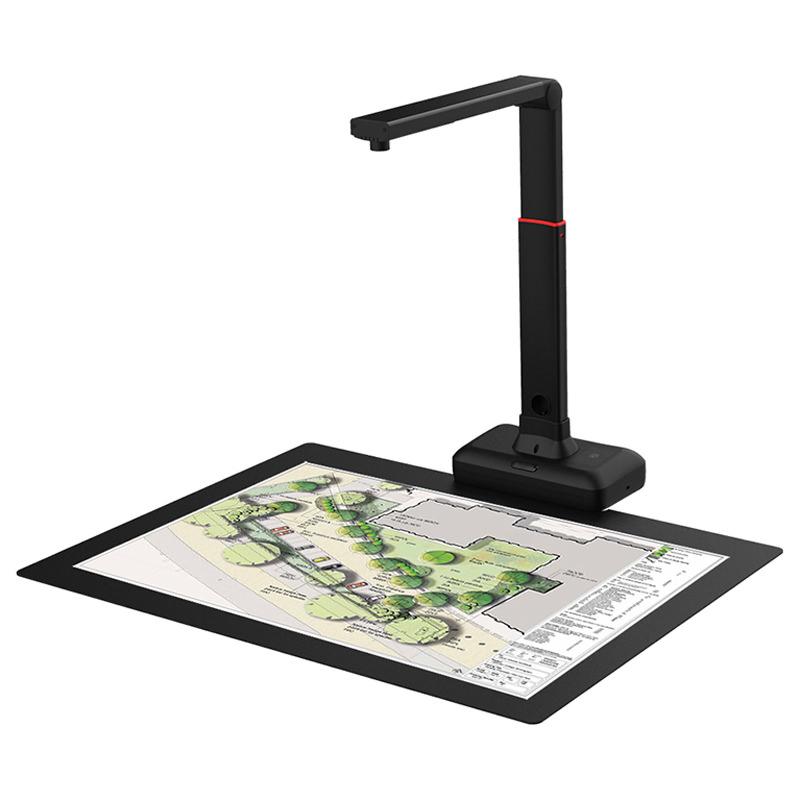
A2 Large Format Overhead Document Scanner 21MP USB Aluminum Text-to-Speech 1-Year Warranty in Stock
- A2 overhead capture area
- Aluminum body and USB interface
- Text-to-speech and 1-year warranty
Best fit: broadsheet, map and large-document workflows. For 300 dpi A2 archive masters, confirm effective dpi and consider a 48MP or dual-sensor configuration.
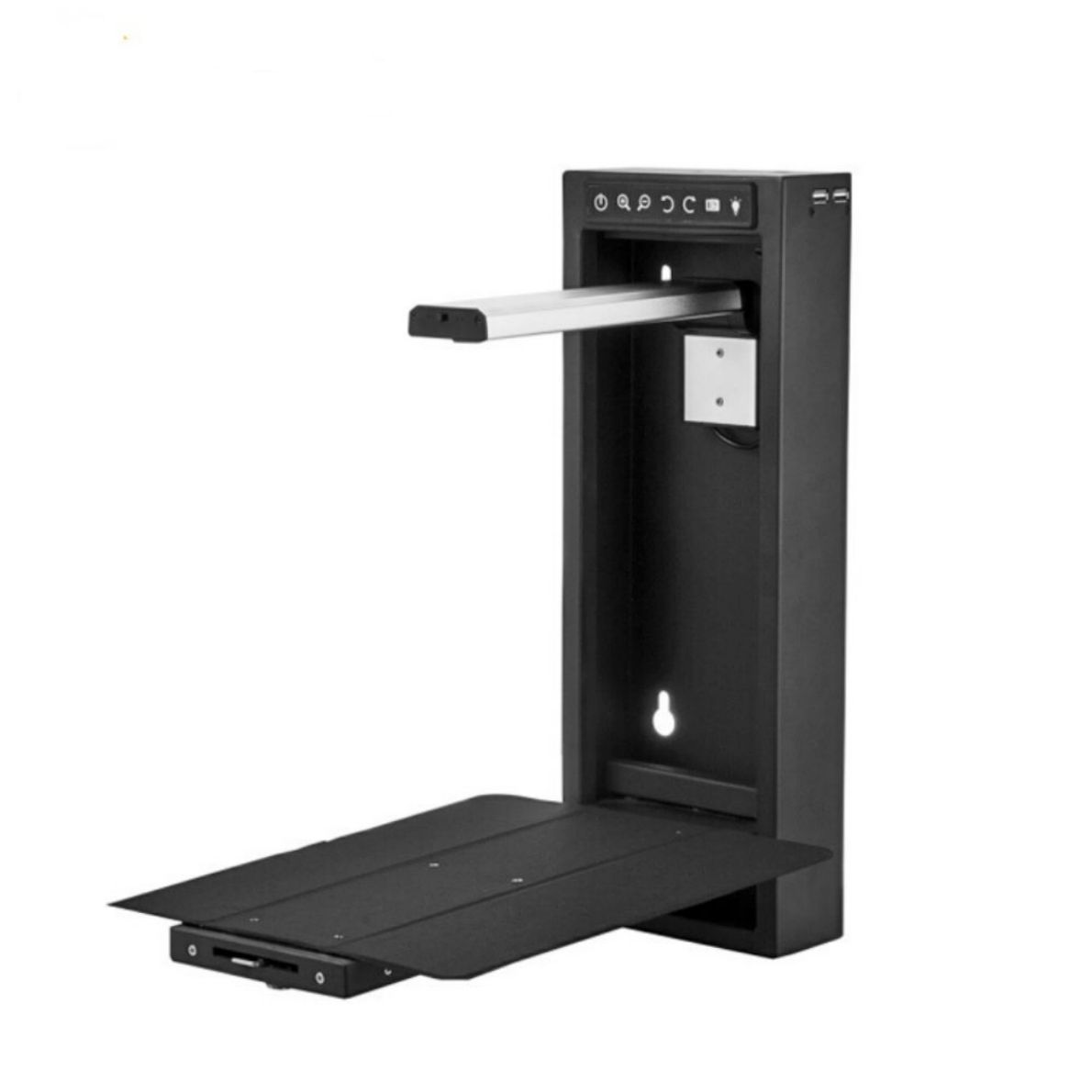
Factory New High Definition Wall Mount Document Scanner USB Interface Visualizer CE Certified 1-Year Warranty High-Speed A4 SDK
- Space-saving wall-mount visualizer
- USB interface and SDK
- CE certified model, 1-year warranty
Best fit: service counters, compact offices and kiosk-style capture where desk space is limited and SDK access is required.
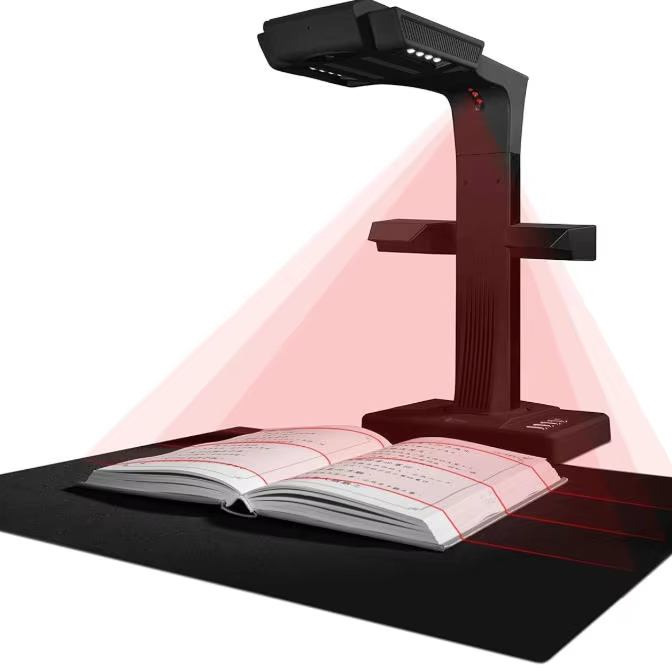
18MP A3 Book Scanner Overhead Document Camera Auto Curve Flattening OCR 180+ HDMI Visual Presenter for Office Library
- Auto curve flattening
- OCR and HDMI visual presenter
- Office and library applications
Best fit: buyers who need a balance between book-scanner productivity, live presentation and A3 document capture.
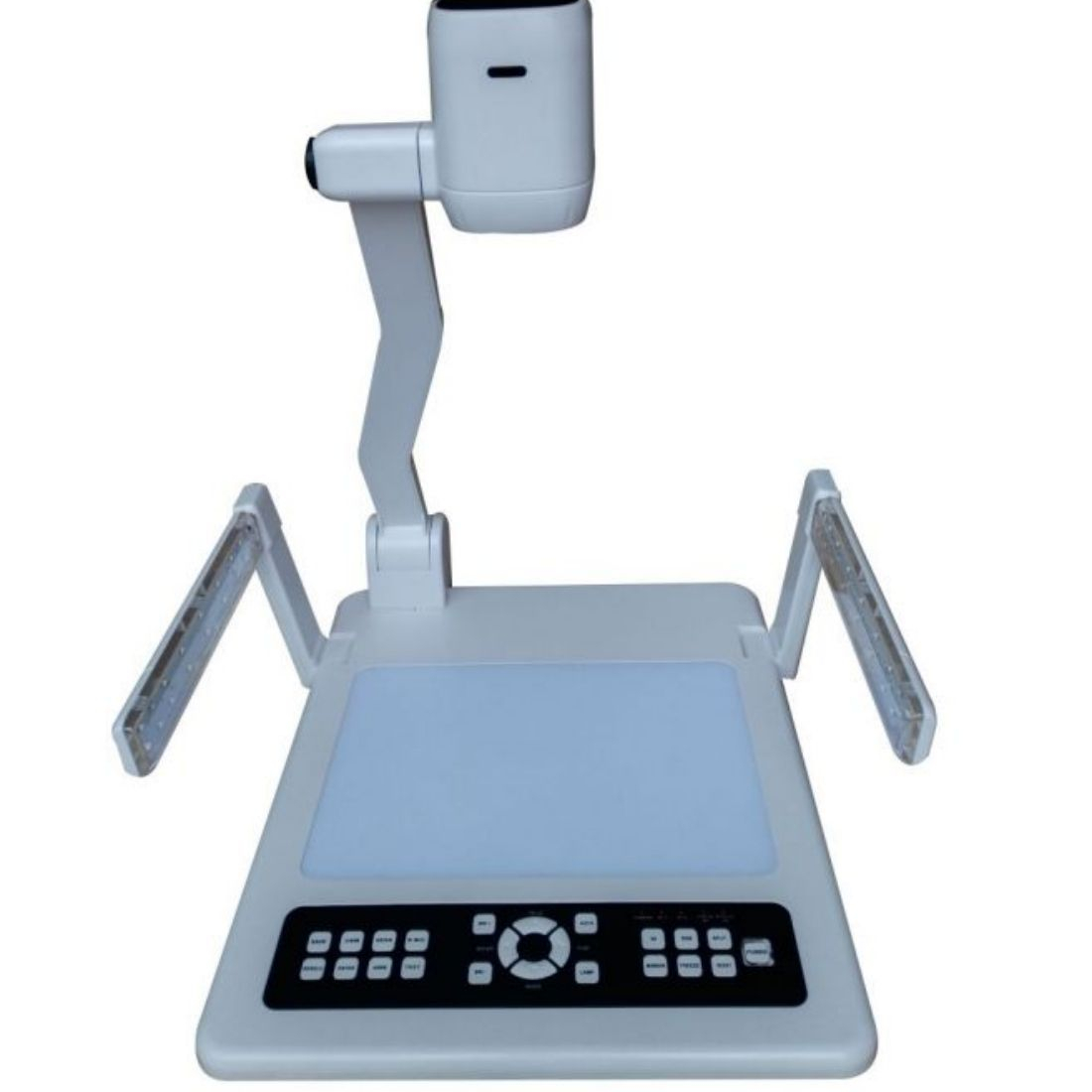
Factory 22X Optical Zoom Desktop VGA HD MI Audio Interface High Resolution Document Camera Visualizer
- 22X optical zoom
- Desktop visualizer form factor
- VGA and HD MI audio interface
Best fit: classrooms, auditoriums and detailed object demonstration where optical zoom is more valuable than a compact fixed lens.
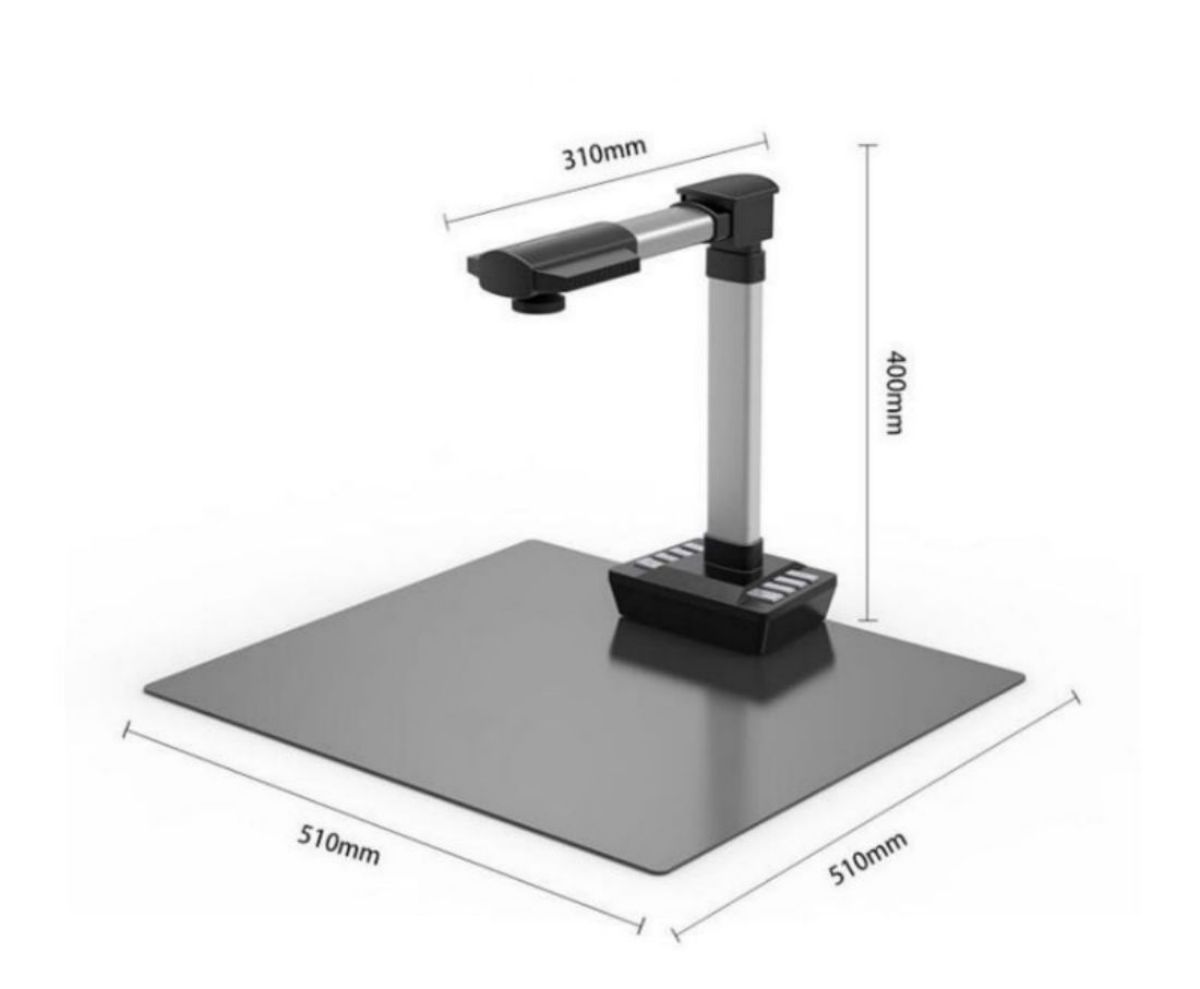
Portable 20MP High-Speed Wireless A3 Document Scanner Professional Book Scanner Foot Pedal USB Interface 24-Bit Color Stock
- Wireless A3 book capture
- Foot pedal and USB interface
- 24-bit color, portable design
Best fit: mobile digitization, field collection and compact book-scanning stations that need hands-free capture with minimal setup.
Custom OEM Dual Camera Document Scanner: Engineering and Procurement Reality
Search results for “custom OEM dual camera document scanner manufacturer & suppliers” often blend three different buying jobs: classroom visualizers, non-contact book digitization and counter-top identity/document capture. A credible supplier should separate those jobs before quoting.
Guangzhou Quibow Electronic Co., Ltd. works across CIS, CMOS and CCD imaging platforms and supplies document cameras, overhead book scanners, A2/A3 large-format scanners and visual presenters. The starting point for an OEM project should be the document, the daily volume, the output file, the operator and the integration environment — not the lens count alone.
In document capture, a dual-camera design usually means two imaging paths working together: a primary high-resolution lens for the page and a secondary lens for an ID card, presenter view, operator/evidence view or a second page section. On large-format products, two CMOS sensors can also be used to increase effective coverage or resolution. It does not automatically mean stereoscopic 3D depth sensing.
If a tender specifies “dual camera” for simultaneous face-and-document capture, evaluate synchronisation, privacy consent, ID OCR, audit logs and counter ergonomics. If it means “two sensors for A2 resolution”, evaluate stitching accuracy, colour consistency at the seam and the true dpi delivered across the full A2 area. Those are different engineering problems.
Sensor Platform
CIS suits compact sheet-fed paths; CMOS area sensors capture a page in one overhead shot; CCD offers stable optical carriage scanning for photos, artwork and book-edge originals.
Software & SDK
Auto flattening, deskew, OCR, searchable PDF export, driver support and SDK integration can matter more than a small hardware specification difference.
Mechanical Fit
A4, A3 and A2 formats, wall-mount, desktop and portable architectures all change the cost structure. Confirm space, operator workflow and service access before selecting a model.
| Document size | Pixels at 300 dpi | 400 dpi note | Recommended platform direction |
|---|---|---|---|
| A4 210 × 297 mm | 2480 × 3508 ≈ 8.7 MP | ≈ 15.5 MP | 10MP model for 300 dpi; step up if 400 dpi or tight OCR standards apply. |
| A3 297 × 420 mm | 3508 × 4961 ≈ 17.4 MP | ≈ 31 MP | 18–24MP platforms are the usual 300 dpi range; dual-sensor or higher-resolution capture for 400 dpi. |
| A2 420 × 594 mm | 4961 × 7016 ≈ 34.8 MP | ≈ 61.9 MP | A 48MP A2 platform provides margin for 300 dpi; 400 dpi requires a dual-sensor/stitching review. |
| Photos & art | 600–2400 dpi optical | Flatbed with 48-bit colour | Use a flatbed or book-edge platform when surface texture and colour fidelity are critical. |
Product Future Procurement Trends: What B2B Buyers Will Expect
Procurement is shifting from “a camera with high megapixels” to “a verified capture workflow with software, compliance and low integration risk”. These six trends matter most for custom OEM dual-camera document scanner programs.
OCR Becomes a Contract Term
Buyers increasingly require sampled OCR accuracy, language coverage and searchable PDF output. A scanner that captures a readable image but fails OCR is not a complete archive solution.
SDK and OS Compatibility Move Up
System integrators want SDK access, stable drivers, Windows and macOS support, and model-specific confirmation where Apple M1 compatibility is claimed. Ask for version numbers and test steps.
Privacy by Design
For ID and counter capture, procurement teams ask where images are processed, whether data stays local, how long files are retained and which privacy controls are available.
Resolution Inflation Meets dpi Scrutiny
An A2 sheet at 300 dpi needs about 34.8MP, so a 21MP overhead camera is not automatically a 300 dpi A2 archive device. At 400 dpi, the requirement rises to about 61.9MP.
Low-MOQ Replenishment
Distributors prefer to prove demand before committing stock. Many listed scanners start from 1 piece or 1 set, while several document camera models start from 2 pieces.
Warranty and TCO
Quotes are compared on total ownership, not just unit price. Confirm 1-year warranty coverage on listed models, remote technical support, export packing and delivery terms.
Where Document Capture Is Heading
The next buying cycle will reward suppliers who can prove workflow results, not only publish hardware specifications. For OEM buyers, this means the software layer, service model and configuration flexibility become part of the product.
- AI-assisted flattening, deskew, page detection and finger removal are moving from premium features to expected workflow tools.
- Wide-format capture is moving toward higher-resolution CMOS and dual-sensor architectures with verified stitching quality.
- Visualizers are becoming hybrid live-presentation and still-capture devices with 4K, USB, HDMI and VGA expectations.
- SDK-first procurement is rising because integrators need repeatable capture inside their own applications and audit trails.
- Repairability, export packaging and service response are becoming visible differentiators in public tenders.
Suggested Buyer Scorecard
Illustrative weighting for a custom OEM tender; adjust it to your own acceptance criteria. This is not market-share data.
Where These Platforms Fit
Quibow’s main markets include Eastern Europe, North America and South America, serving distributors, system integrators and end users. The practical application should drive the final model choice.
Libraries & Archives
Overhead and book-edge scanning protects bound books, periodicals and fragile records without flattening the spine under pressure.
Education & Training
Visual presenters with optical zoom show textbooks, experiments and 3D objects live on projectors, displays and video platforms.
Government & Banking
Dual-camera or dual-lens counter capture can connect document imaging with ID-card workflows, supported by OCR and SDK integration.
Enterprise Offices
Flatbed, ADF and overhead scanners convert contracts, invoices and bound reports into searchable files for paperless workflows.
Newspapers & Publishers
A2 large-format scanners capture broadsheets and maps in one shot for digital back-issue archives and rights-management libraries.
Distributors & Integrators
OEM/ODM branding, packaging, housing colour and SDK access let resellers build differentiated solutions on proven hardware platforms.
Why Quibow Is a Practical OEM Partner
Guangzhou Quibow Electronic Co., Ltd. is a technology-driven supplier focused on image data acquisition and conversion equipment, established in 2020 and based in Guangzhou, Guangdong, China. The company works across CIS, CMOS and CCD imaging platforms and covers product design and development, production coordination, export sales and after-sales support.
The business is an onsite-checked trading company with an annual revenue band of USD 1 million to USD 2.5 million and a team of 5–10 specialists. Its listed markets include Eastern Europe, North America and South America. For OEM buyers, the practical advantages are low stock MOQ, customization depth, responsive communication and a clear path from sample scan to export shipment.
OEM/ODM support includes logo printing, packaging, housing colour, capture-software branding and SDK integration on selected models. Commercial terms include T/T, L/C, PayPal and Western Union in USD, EUR, HKD or CNY, with FOB, EXW and DDU delivery terms. Many stock scanners start from 1 piece or 1 set; several document cameras start from 2 pieces; OEM project quantities are confirmed per project.
Model-specific claims should be verified before purchase: CE certification is listed on particular SKUs such as the wall-mount visualizer, and not every catalogue item necessarily carries every certification. Request the current certificate, test report, final warranty statement and compatibility confirmation for your exact SKU.

Original company video cover from the Quibow site assets. Product images above are preserved from the supplied catalogue content.
Questions Buyers Ask Before Ordering
These answers focus on the details that change evaluation, procurement risk and total cost of ownership.
What is a custom OEM dual camera document scanner?
It is a document capture device configured for an OEM/ODM buyer with two imaging paths or sensors. The second path may support ID cards, presenter capture, a second page area or wide-format resolution. It is not automatically a 3D depth-sensing camera; the software workflow and stated purpose must be confirmed in the quotation.
Can Quibow customize branding, packaging, housing and software?
Yes, on selected models. Support can include logo printing, packaging, housing colour, capture-software branding and SDK integration. Quantities and engineering feasibility are confirmed per project and per model.
What is the minimum order quantity?
Most stock book scanners, A2 large-format scanners and flatbed scanners start from 1 piece or 1 set. Several document camera models start from 2 pieces. OEM/ODM quantities are confirmed after the configuration and branding requirements are reviewed.
Which resolution do I need for A3 or A2 at 300 dpi?
An A3 page at 300 dpi needs about 3508 × 4961 pixels, or around 17.4MP, so an 18MP or 24MP scanner is usually suitable. An A2 sheet at 300 dpi needs about 4961 × 7016 pixels, or around 34.8MP, so a 48MP A2 platform is recommended for archival masters. At 400 dpi, an A2 sheet needs about 61.9MP and should be reviewed with a dual-sensor or stitching configuration.
Are the scanners compatible with Windows and macOS?
Many models support Windows and macOS, and some catalogue models are verified on Apple M1 Macs. Compatibility is model-specific. Confirm the exact OS version, driver or SDK requirement and test method before placing an order.
What payment and delivery terms are available?
Quibow accepts T/T, L/C, PayPal and Western Union in USD, EUR, HKD or CNY, with FOB, EXW and DDU delivery terms. Confirm the final terms in the quotation and sales contract.
What warranty and after-sales support do you provide?
Listed models such as the A3 flatbed scanners, A2 overhead scanners and the S2060W ADF scanner come with a 1-year warranty, backed by remote technical support. Warranty scope can vary by model, so the final statement should be included in the order documents.
How do I request a quotation or sample scan?
Send the document size, daily volume, target dpi, OCR languages, operating system, required output formats, destination country and branding requirements. For dual-camera projects, state whether the goal is simultaneous ID/document capture or dual-sensor large-format resolution.
Send Your Hardest Document, Not Just a Request for Price
Share the page size, daily volume, target resolution, OCR languages, operating system and branding brief. For dual-camera enquiries, clarify whether “dual camera” means simultaneous ID/document capture or dual-sensor large-format resolution. That single detail prevents the wrong quotation.