Eight Document Scanner and Visual Presenter Models for Evaluation
The models below are arranged for practical B2B evaluation rather than catalogue browsing. Each card preserves the original product URL and image, then adds a buying note: the document format, sensor class, workflow fit and specification details that usually influence a pilot order. Treat every performance claim—including “one-second scan”—as a specification to verify with your own pages, lighting and output settings.
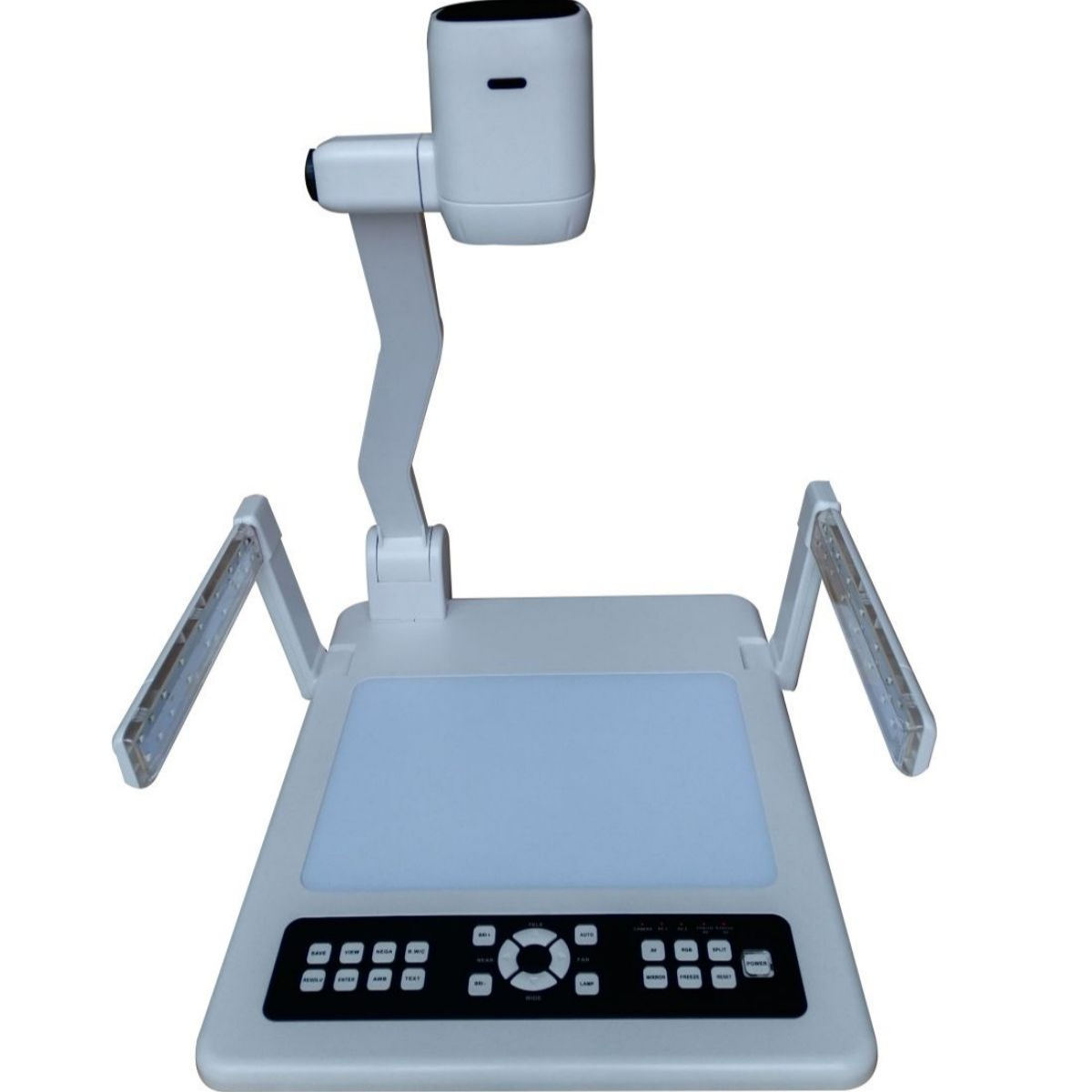
HD Optical Zoom Visual Presenter 1/3" CMOS Sensor 1-Year Warranty OEM Brand GUA Origin Professional Document Camera VGA RS232
Best fit for classrooms, training rooms and meeting spaces where VGA/RS232 control and OEM branding matter. Optical zoom helps tutors show fine print without moving the camera arm.
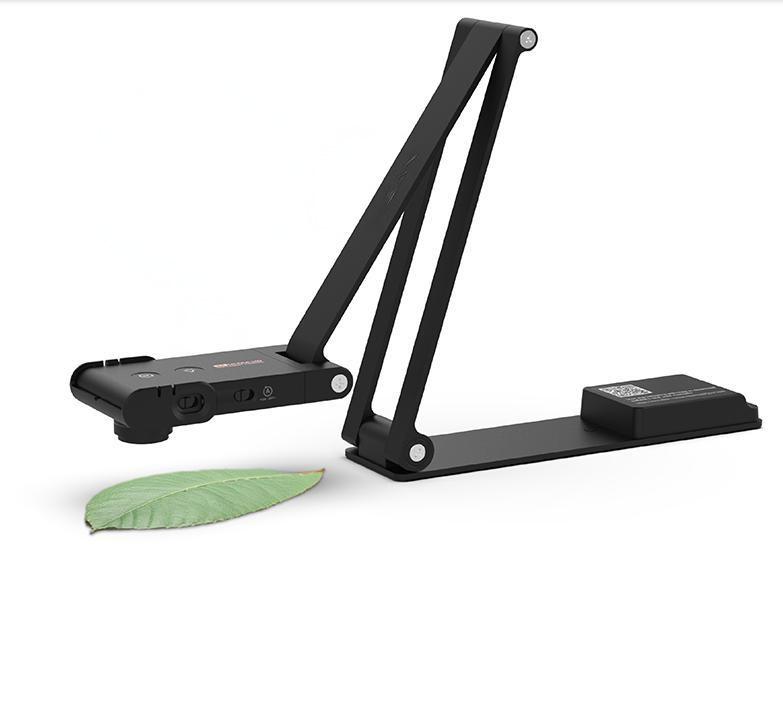
4K 2-in-1 USB 13MP Document Camera Visualizer AI Noise Cancellation 20X Macro Lens Foldable Design Microphone A3 Max 1-Year
Best fit for hybrid teaching, online training and video meetings. The 20X macro lens, foldable arm, A3 capture area and built-in microphone reduce additional AV hardware.
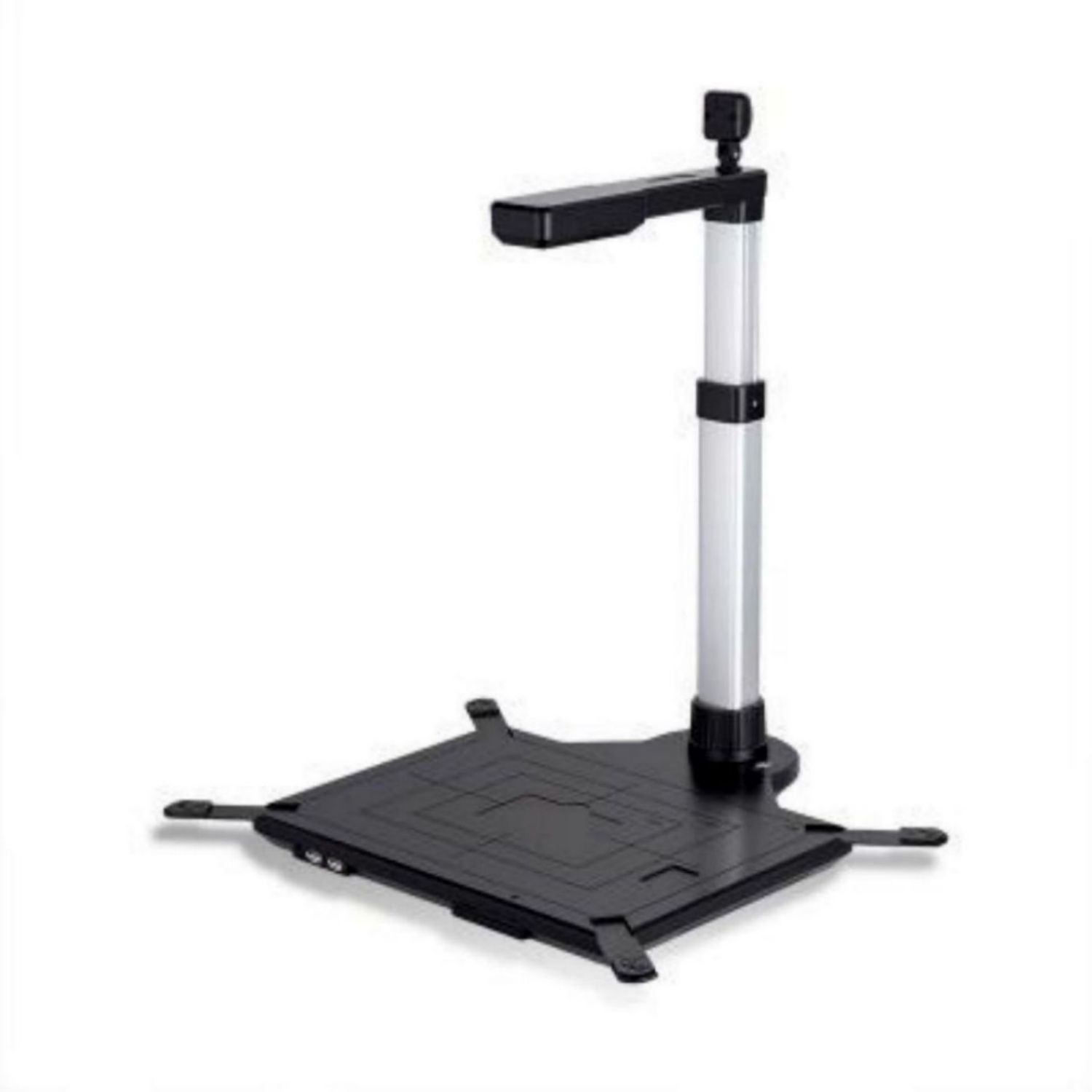
Professional USB Dual Camera Scanner for A3 Documents Supports OCR PDF Multi-Languages High-Speed 1-Second Scan 360-Degree
Best fit for registries, service counters and document-intensive offices needing fast A3 captures and OCR-ready PDFs. Validate the one-second claim against your own document mix.
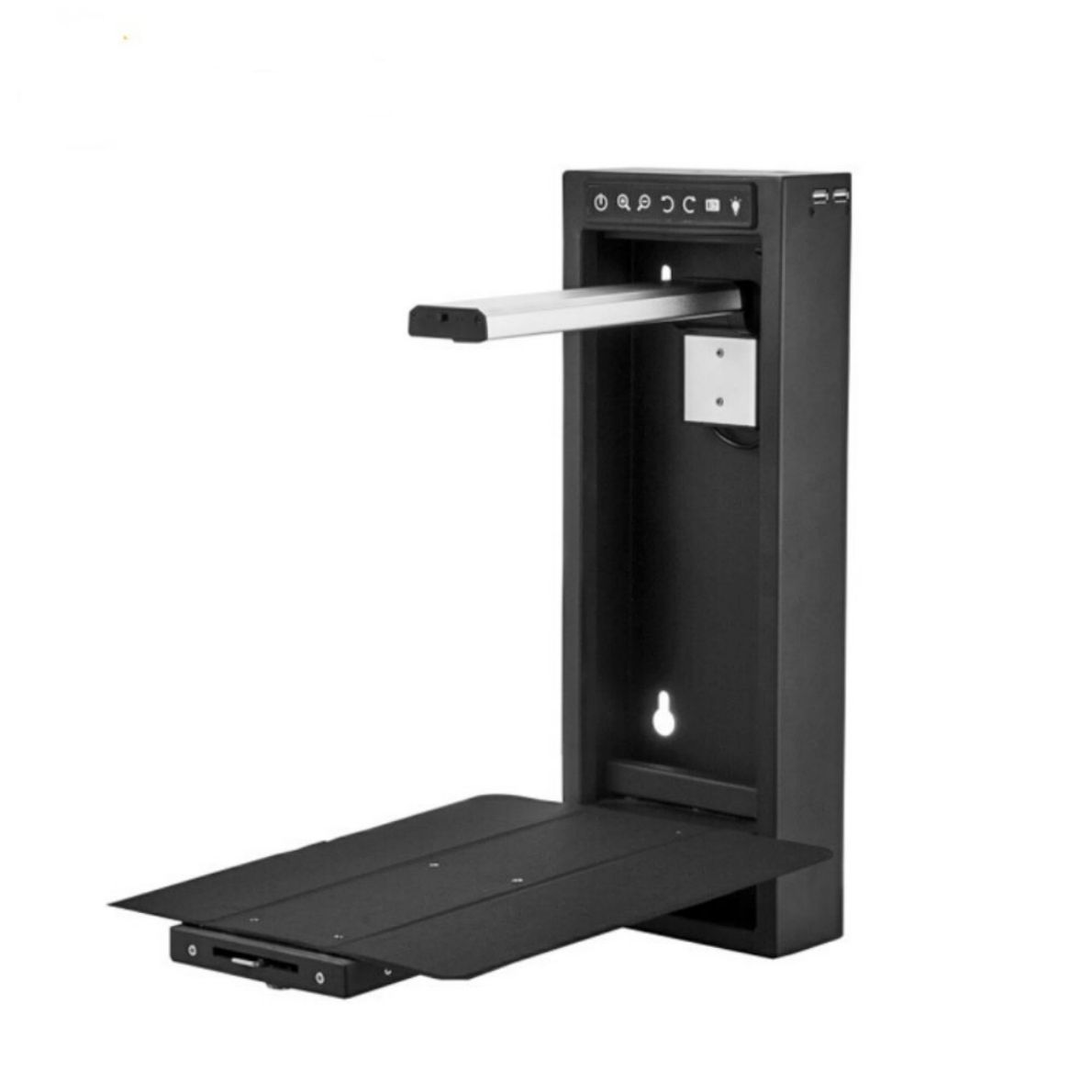
Document Camera A4 Visualizer Wall Version USB CMOS Sensor 10MP 1-Second Scan Document Scanner Stock for Classroom Smart
Best fit for fixed-position classroom or self-service capture where desk space is limited. Wall mounting enforces repeatable focal distance and simple operation.
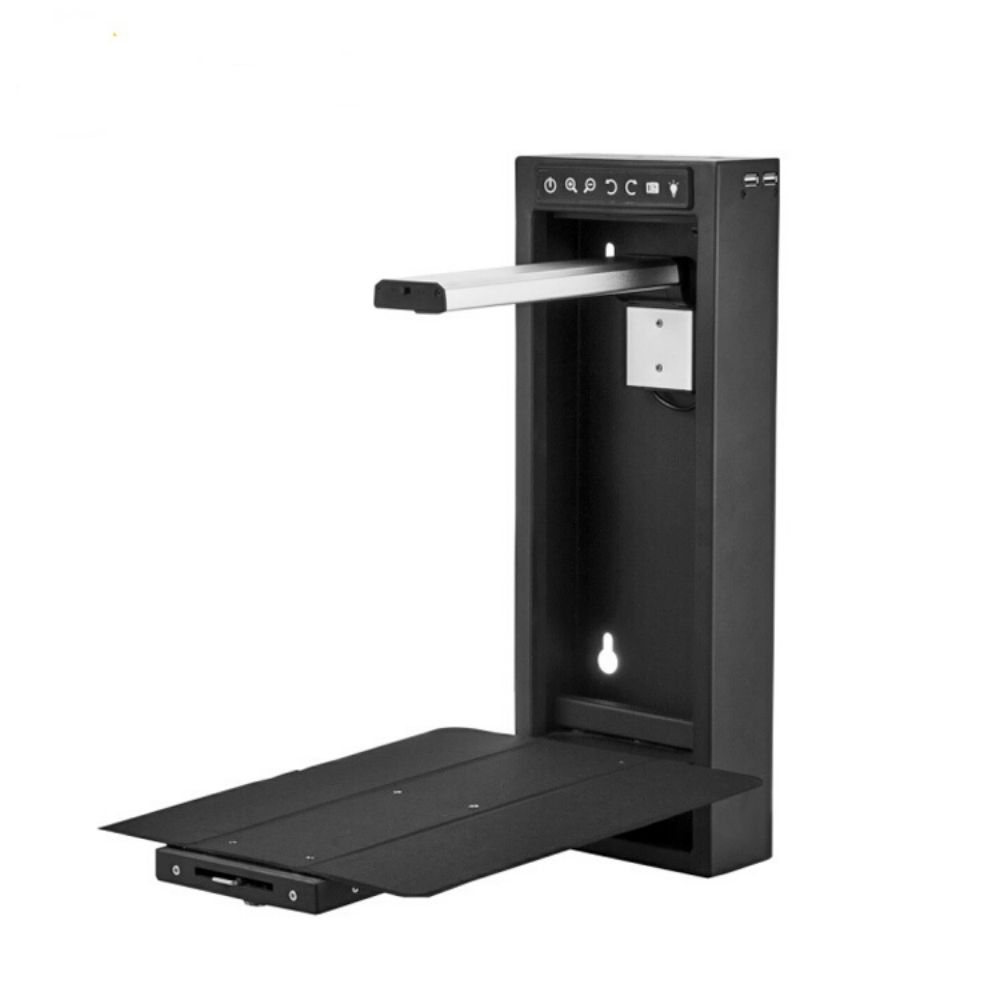
Online Training Portable 10MP A4 Document Scanner USB Interface Visualizer-in-Stock for Wall Version Black+Silver 1-Year
Best fit for travelling trainers, field agents and online training kits. Black+silver housing and USB interface simplify deployment; confirm driver and wall-mount compatibility before volume orders.
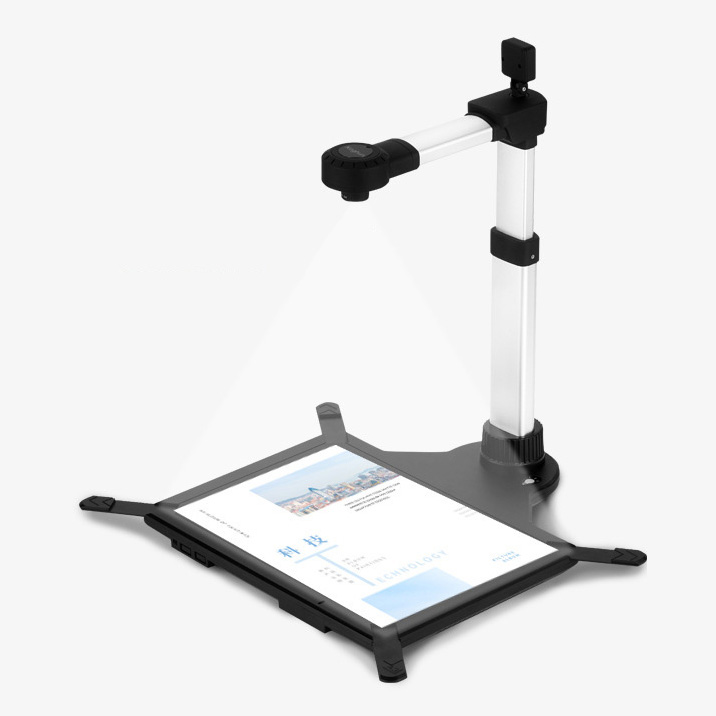
HD Dual Camera 16MP + 2MP Pixels Multifunction Stretchable Smart USB 60 Pages/Min A3/A4 Document Scanner 360 Rotation 180
Best fit for banks, government counters and registration desks that capture both documents and portraits or ID images. The stretchable arm supports 360-degree rotation and 180-degree adjustment.
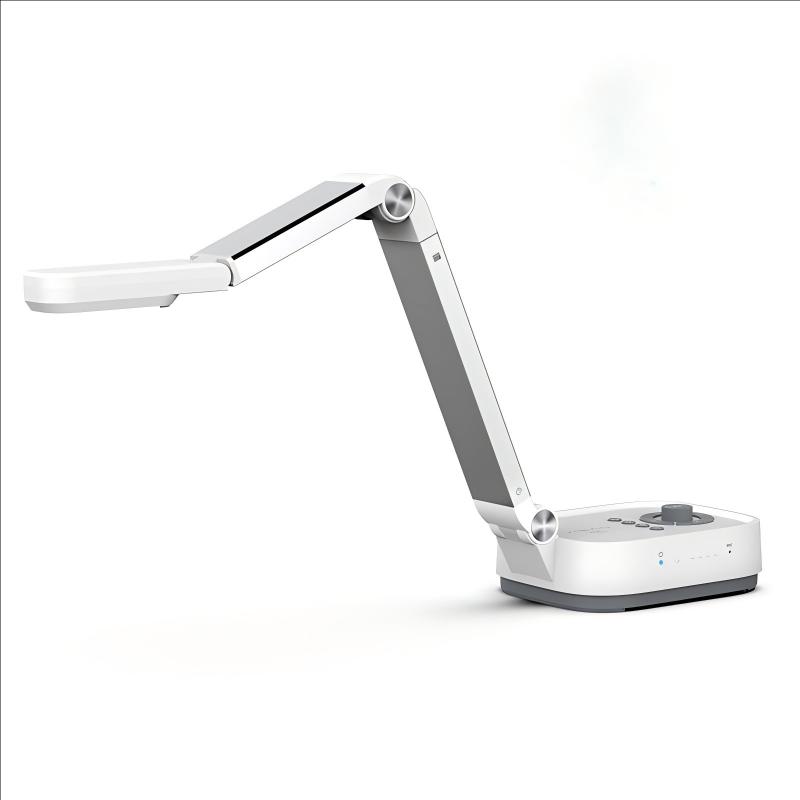
16MP 3D Desktop Visualizer Document Camera with Microphone 120X Zoom /VGA A3 Scan Size LED Light & Foldable for Education
Best fit for demonstrating 3D objects, textiles, components and textbooks. LED light, microphone and foldable design support live explanation; VGA and A3 scan size suit typical classrooms.
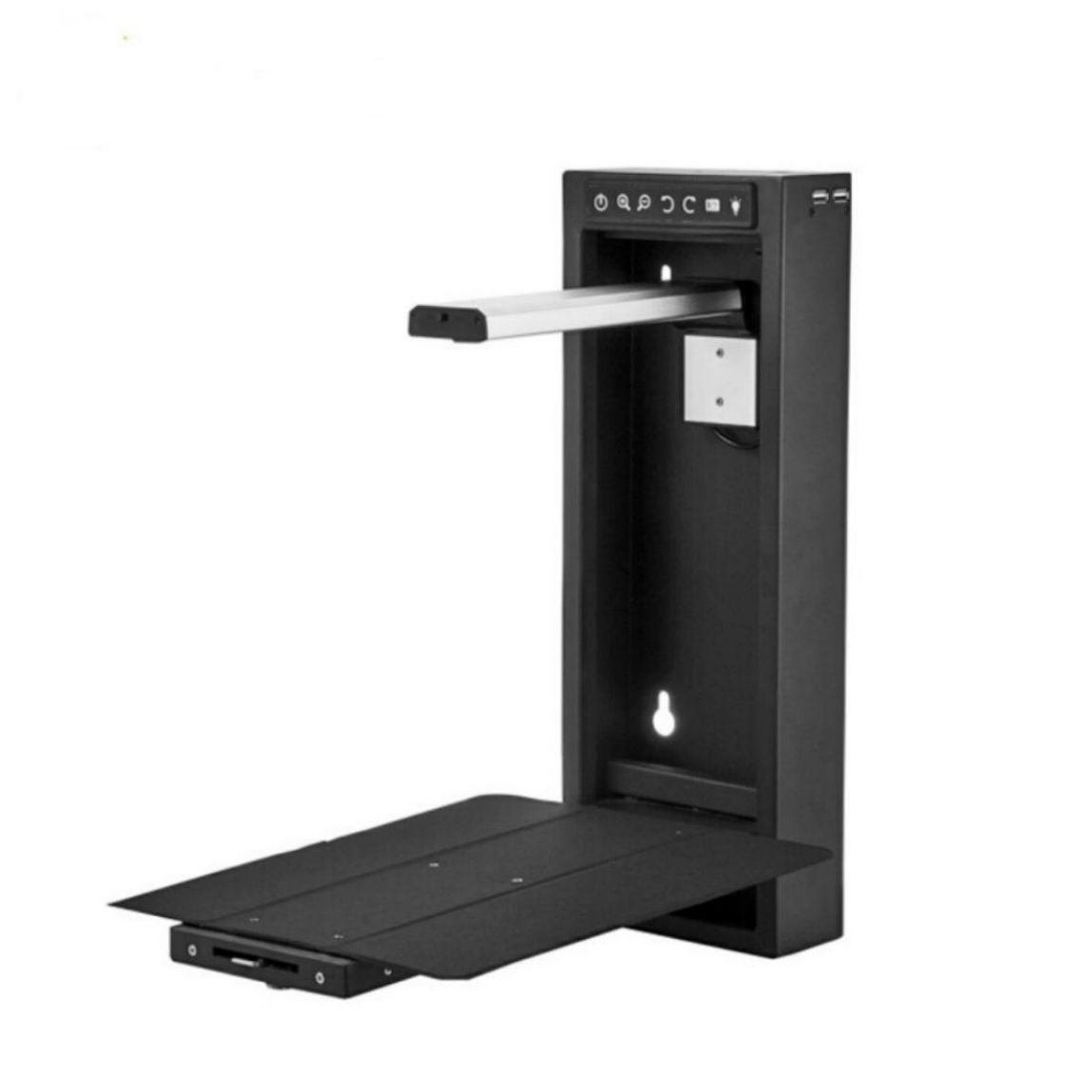
USB Interface Wall-Mounted A4 Visualizer OCR Document Scanner CMOS Sensor 10MP Resolution SDK Included Black 1-Year Stock
Best fit for integrators building OCR kiosks or fixed capture stations. SDK availability is the decisive feature when capture must feed a queue-management, student-records or document-management system.
Need a side-by-side sample scan comparison before choosing?
Inquire NowWhy “China Best” Should Mean Best-Fit, Not the Longest Spec Sheet
Buyers searching for China best document scanner manufacturers and suppliers are not usually looking for a decorative brand claim. They are comparing risk: document size, binding type, daily volume, OCR expectations, software integration, minimum order quantity, warranty support and the supplier’s ability to provide repeatable samples. China has a deep imaging supply base across CIS, CMOS and CCD platforms, so the real differentiator is rarely the number of megapixels alone. It is whether the supplier can match a model to the workflow and prove that match with evidence.
For an A3 archive project, a 24MP overhead scanner with auto-flatten and deskew may outperform a higher-resolution camera if the higher-resolution sample shows soft focus at the page edges. For a classroom, a fixed 10MP wall-mounted visualizer can deliver better return on investment than a dual-camera document scanner because it saves space, simplifies operation and reduces movement. For a system integrator, SDK availability, firmware stability and long-term supply can matter more than a one-second marketing claim. The correct specification is the lowest-cost configuration that reliably meets the final output requirement.
Ask for raw, unprocessed sample scans at the final output resolution using your own page types. Compare edge sharpness, spine shadow, color consistency, OCR accuracy and processing time before comparing unit price. A supplier that can explain where a model will fail is often more trustworthy than one that claims every model fits every project.
How to Read the Product Range Before Requesting a Quote
The shortlist above spans overhead visualizers, A3/A4 document cameras, wall-mounted capture stations and dual-camera counters. This range reflects how document imaging has diversified. A library may need non-contact book capture with curve correction; a school may need live projection with optical zoom; a bank may need a dual-camera counter device for documents plus portraits; an integrator may need a fixed A4 unit with SDK support. Same category, different jobs.
Before you request pricing, define four inputs: the largest document, the smallest detail that must remain readable, whether the original is bound or loose, and where the image goes after capture. Those four answers usually narrow the platform choice faster than a long list of camera features. The next section converts that into a resolution-first buying framework.
How Many Megapixels Do You Really Need for A3, A2 or A4?
Calculate pixels from physical size and target dpi, then add margin for cropping, deskew and curve correction. At 300 dpi, an A4 page requires about 8.7MP, A3 about 17.4MP and A2 about 34.8MP. That is why a 21MP A2 overhead scanner may be adequate for fast OCR but not always for 300 dpi archival masters.
| Document format | Approx. size | Pixels at 300 dpi | Practical sensor guidance |
|---|---|---|---|
| A4 | 210 × 297 mm | 2480 × 3508 ≈ 8.7MP | 10MP or higher; 13MP gives useful cropping margin |
| A3 | 297 × 420 mm | 3508 × 4961 ≈ 17.4MP | 18–24MP for OCR and archive workflows; check edge focus |
| A2 | 420 × 594 mm | 4961 × 7016 ≈ 34.8MP | 48MP recommended for 300 dpi archival masters; 21MP may suit OCR or preview |
| Books & bound media | Varies by opening | Add 15–30% margin | CMOS overhead with auto-flatten, deskew and finger removal; test on your binding |
| Photos & artwork | Small originals | 600–2400 dpi optical | Flatbed with controlled lighting and 48-bit color where detail matters |
What Global Buyers Will Ask For by 2027
Document scanner procurement is moving from “buy a camera” to “commission a capture workflow.” These four trends should influence your next tender, pilot or OEM project.
Outcome-based tenders
Buyers increasingly specify the deliverable—searchable PDF at 300 dpi, OCR accuracy on old print, accurate colour or complete book curvature correction—instead of simply asking for megapixels. Suppliers must demonstrate results on sample pages.
AI processing location and privacy
Auto-flatten, finger removal, noise cancellation and multi-language OCR are becoming expected features. Government and education buyers will ask whether processing happens on the device, on a connected PC or in the cloud, and whether offline mode is available.
Mixed fleets, space-saving formats
Institutions rarely buy one model for every room. A rollout may combine wall-mounted A4 visualizers, portable document cameras, A3 overhead scanners and A2 archive units, standardized through common software, accessories and driver support.
Total cost and supplier resilience
Procurement teams now compare sample costs, MOQ flexibility, 1-year warranty terms, spare-part availability, response times, payment currencies, FOB/EXW/DDU terms and public trade records. Price remains important, but supply continuity matters more.
From Capture Hardware to Workflow Infrastructure
Scanner development is converging around cleaner images, modular platforms and deeper integration. The strongest products are not necessarily the ones with the highest sensor count; they are the ones that remove manual steps from the workflow.
AI capture quality at the edge
Auto-flatten, deskew, finger removal, background cleanup, AI noise cancellation and OCR are moving closer to the device. Multi-language OCR and one-step export to PDF reduce the labour cost of digitization, especially for libraries, schools and registries.
Modular sensors and SDK-first design
CIS remains efficient for ADF paths, CMOS dominates overhead capture, and CCD still has advantages for bookedge flatbeds and depth tolerance. OEM/ODM buyers increasingly request SDK access, software branding, packaging customization and stable firmware documentation.
Integration over standalone scanning
Wall-mounted visualizers, dual-camera counters and USB/RS232/VGA/HDMI outputs are being designed to feed document-management, student-record, queuing and telehealth systems. The scanner becomes a data-entry node, not an isolated peripheral.
How to Audit a China Document Scanner Supplier Before You Issue a Purchase Order
A supplier questionnaire should generate evidence, not adjectives. Use these three audit areas to separate a responsive trader from a reliable imaging partner.
Technical and sample validation
Request raw images for at least three page types: fine text, mixed colour and a tightly bound page. Ask for driver versions, firmware notes, SDK documentation, supported operating systems and a short remote demo. Define “one-second scan” precisely—size, resolution, compression, OCR and output format.
Quality control and business identity
Confirm the business licence, production arrangement, QC process, aging test, packaging drop test and RMA policy. Where a supplier coordinates production rather than manufacturing in-house, ask for written responsibility for quality, warranty and spare parts—transparency is easier to audit than ambiguity.
Commercial terms and lifecycle
Compare MOQ, lead time, 1-year warranty conditions, spare-part availability, software update policy, product change notification and packaging customization. Also confirm payment methods and delivery terms in writing, including T/T, L/C, PayPal, Western Union, FOB, EXW and DDU where offered.

What Guangzhou Quibow Electronic Co., Ltd. Brings to an Imaging Project
Guangzhou Quibow Electronic Co., Ltd. is a technology-driven supplier focused on image data acquisition and conversion. Its range includes high-speed document cameras, overhead book scanners, A3/A2 large-format document scanners, flatbed scanners, visual presenters and ID-card recognition cameras. The company works across CIS, CMOS and CCD imaging platforms and covers product design and development, production coordination, export sales and after-sales support.
The published profile lists a Guangzhou base at Room 504, No. 5 Zitan Second Street, founding in 2020, main markets in Eastern Europe, North America and South America, a 5–10 person specialist team, annual revenue of US$1M–US$2.5M and onsite-checked supplier status. For buyers, these details set expectations for communication speed, customization depth and order size. The supplier performance information also reports ≤1-hour average response, 100% message response and 27% buyer reorder rate. Treat these as operational signals to verify alongside your own sample tests, not as substitutes for technical validation.
Commercial options support both trial and project orders: most stock book scanners, A2 large-format scanners and flatbed scanners start from 1 piece or 1 set, while several document camera models start from 2 pieces. OEM/ODM quantities are confirmed per project. Accepted payment methods include T/T, L/C, PayPal and Western Union in USD, EUR, HKD or CNY, with FOB, EXW and DDU delivery terms. Listed models generally carry a 1-year warranty backed by remote technical support. OEM/ODM support can include logo printing, packaging, housing color, capture software branding and SDK integration on selected models.
Many models support Windows and macOS, and some are verified on Apple M1 Macs; compatibility should be confirmed for each model before shipment. For public tenders that require a “manufacturer” rather than a supplier, ask Quibow to state production arrangements and quality responsibility in writing. A supplier that is transparent about its coordination role is often easier to audit than one that hides it.
Use independent records—Supplier Assessment, Credit Overview, Ratings & Reviews, Trade Capacity, Transaction Level, Trade History and Transaction History—alongside sample scans, a video call and written warranty terms. Verification should answer three questions: who is responsible, what exactly is shipped, and what happens if performance differs from the sample.
Where Document Scanners and Visual Presenters Work Every Day
The same hardware can create very different value depending on the environment. These six application areas reflect the most common procurement patterns for Chinese document scanner suppliers serving global distributors, integrators and end users.
Libraries and archives
Non-contact overhead capture protects bindings while auto-flatten, deskew and OCR turn fragile volumes into searchable records.
Education and training
Visual presenters with optical zoom display textbooks, experiments and 3D objects live on projectors, interactive panels and remote classrooms.
Government and banking
Dual-camera scanners capture forms and IDs at service counters, with OCR and SDK options for integration into registration or verification systems.
Enterprise offices
Flatbed and wall-mounted A4 scanners convert contracts, invoices and case files into searchable digital records for paperless workflows.
Newspapers and publishers
A2 large-format scanners capture broadsheets, maps and full layouts in one shot for digital back-issue and archive projects.
Distributors and integrators
OEM/ODM branding, SDK access and a mixed product range let resellers build solutions for education, archive, banking and office digitization.
Questions Buyers Ask Most About China Document Scanner Suppliers
These answers combine the published supplier information with practical procurement guidance. Ask for current confirmation for your exact model, destination and tender requirement.
What is the minimum order quantity for book scanners and document cameras?
Most stock book scanners, A2 large-format scanners and flatbed scanners start from 1 piece or 1 set. Several document camera models start from 2 pieces. OEM/ODM quantities are confirmed per project because branding, packaging, software and hardware changes affect the production plan.
Do you support OEM and ODM orders?
Yes. OEM/ODM projects can include logo printing, packaging, housing color, capture software branding and SDK integration on selected models. Provide your target market, language, software environment and estimated annual volume so the project can be matched to the right hardware platform.
Are the scanners compatible with Windows and macOS?
Many models, including A2 large-format scanners and the 1200 DPI A3 flatbed scanner, support Windows and macOS, and some are verified on Apple M1 Macs. Compatibility varies by model and software build, so confirm the exact operating system, driver version and SDK requirement before shipment.
Which resolution do I need to scan A3 or A2 documents at 300 dpi?
An A3 page at 300 dpi needs about 3508 × 4961 pixels, or roughly 17.4MP, so an 18MP or 24MP scanner is suitable. An A2 sheet at 300 dpi needs about 4961 × 7016 pixels, or roughly 34.8MP, so a 48MP A2 scanner is recommended for archival masters. A 21MP A2 model may be sufficient for OCR, preview or lower-dpi access copies.
What payment and delivery terms are accepted?
Published terms include T/T, L/C, PayPal and Western Union in USD, EUR, HKD or CNY, with FOB, EXW and DDU delivery terms. Final terms depend on order value, destination, product type and whether the project is stock or OEM/ODM.
What warranty do the products carry?
Listed models such as A3 flatbed scanners, A2 overhead scanners and the S2060W ADF scanner commonly come with a 1-year warranty backed by remote technical support. Ask for the warranty scope in writing: what parts are covered, what is excluded, who pays return freight and how firmware issues are handled.
How can I request sample scans before placing an order?
Prepare five to ten representative pages: fine text, mixed colour, a bound page, a form or invoice and any ID or object you need to capture. State the target dpi, output format, OCR language, operating system and maximum file size. Then compare edge sharpness, colour consistency, spine shadow, OCR accuracy and processing time—not just the image thumbnail.
What information should be included in an inquiry?
Include document size, bound or loose originals, daily or annual volume, required dpi, output format, operating system, software integration or SDK needs, branding requirements, estimated order quantity, destination country and required delivery term. This allows a supplier to recommend a model with the right sensor, lens, interface and warranty rather than sending a generic price list.
Request a Spec-Matched Recommendation
Send your document sizes, daily volume, target dpi, operating system, OCR or SDK requirements and estimated order quantity. A practical supplier should return a shortlist, sample-scan plan and clear limits—not a random quote or an unsupported “best” claim.
Suitable for distributor evaluation, tender preparation, classroom deployment, archive digitization and private-label development.