CE Certified Overhead Book Scanner Manufacturer & Exporters
Source A3/A2 non-contact book scanners, flatbed scanners, visualizers and document cameras from an export-focused supplier in Guangzhou, China. Confirm model-level CE documentation, resolution at your required dpi, OCR workflow and delivery terms before production.
Send an Inquiry8 Overhead Scanning and Document Camera Options for Global Buyers
Buyers comparing a CE Certified Overhead Book Scanner Manufacturer & Exporters shortlist usually need more than a megapixel count. They need to match page format, sensor platform, OCR output, minimum order, warranty and export documentation to a real workflow. The eight products below are drawn from Quibow's current catalogue and cover libraries, archives, education, service counters, distributors and field documentation teams.
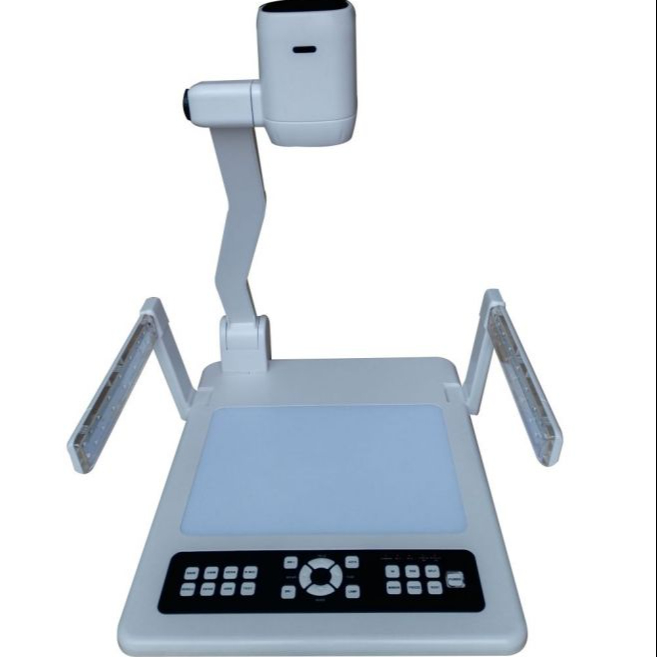
Factory Desktop Document Camera Visualizer, 22X Optical Zoom
A strong fit for training rooms, lecture capture and product demonstrations where smooth optical zoom and live audio/video matter.
View product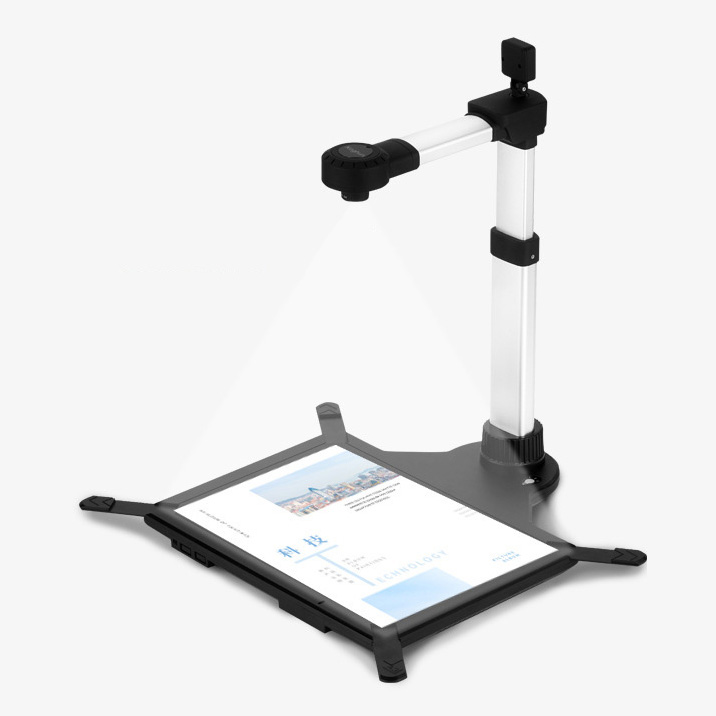
HD Dual Camera 16MP + 2MP A3/A4 Document Scanner, 60 ppm
A versatile dual-camera configuration for service counters, high-volume capture and mixed document, ID and portrait workflows.
View product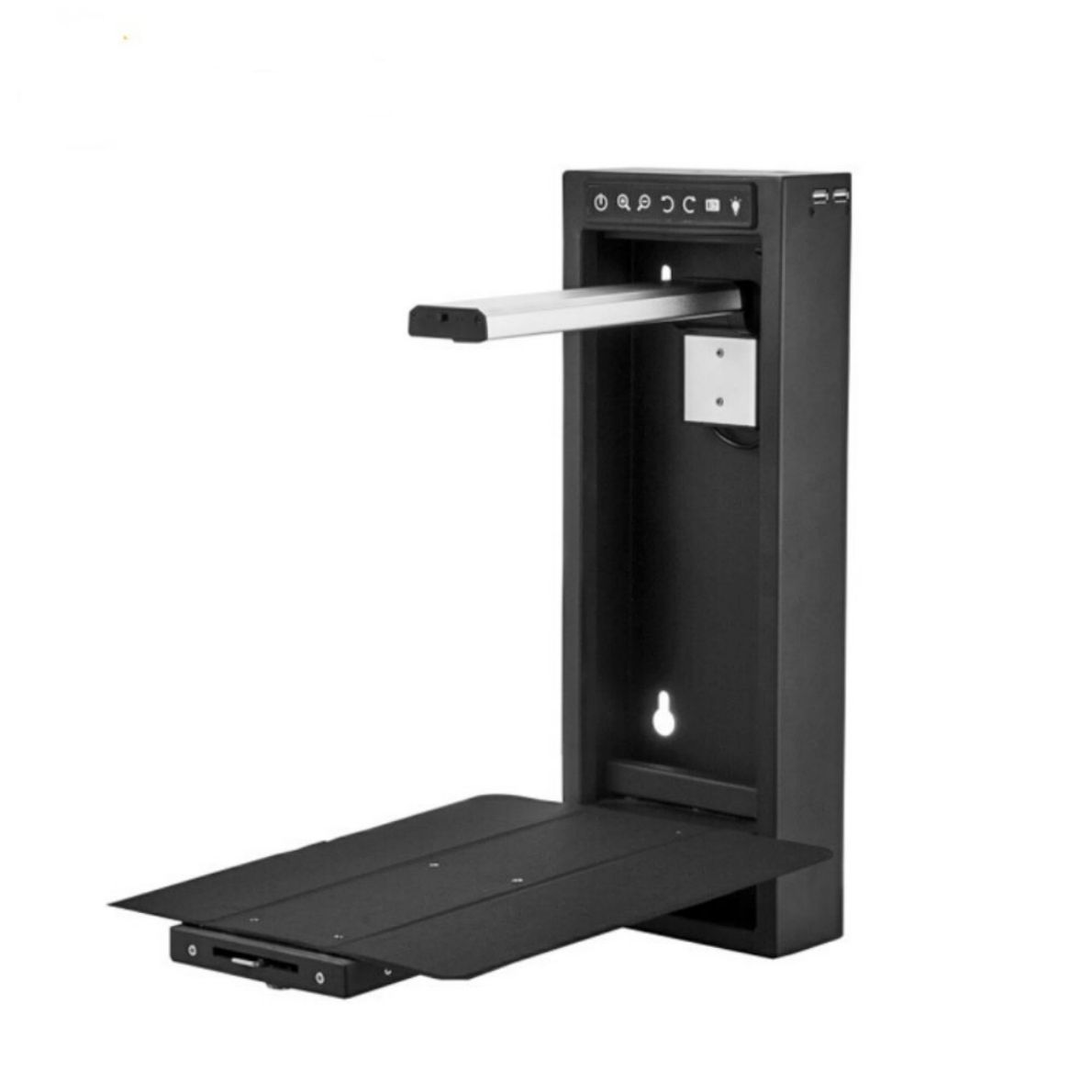
10MP A4 Document Camera Visualizer, Wall Version
Designed for classrooms and training rooms that need a fixed overhead viewpoint, fast capture and straightforward installation.
View product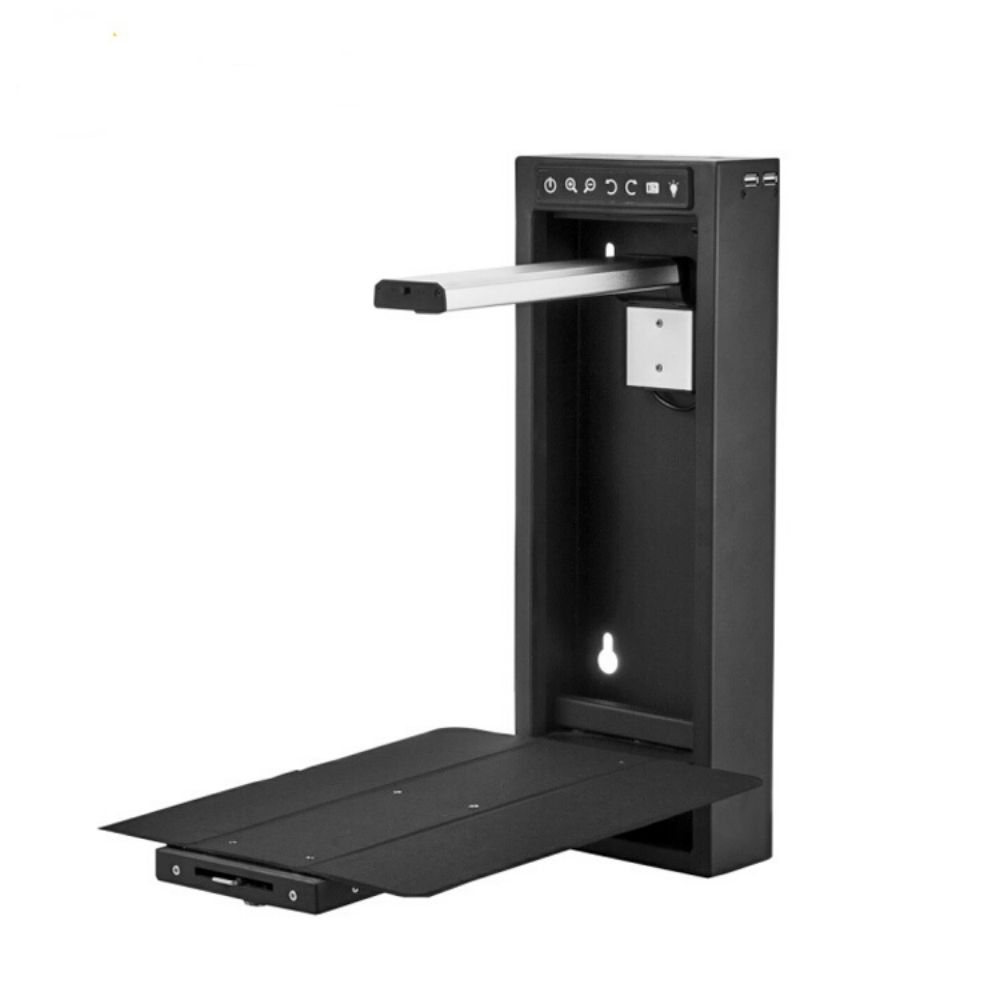
Online Training Portable 10MP A4 Document Scanner Visualizer
A practical option for remote teaching, field documentation and temporary workstations, with a compact black and silver housing.
View product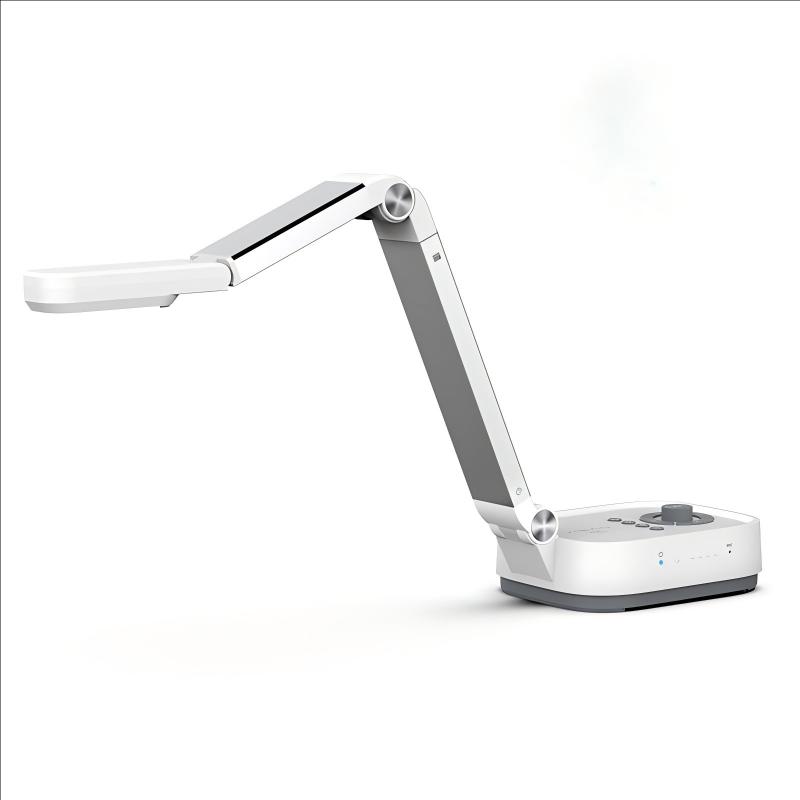
16MP 3D Desktop Visualizer Document Camera, 120X Zoom
Built for education and demonstration of three-dimensional objects, printed materials and detailed training content.
View product
USB Document Camera Scanner, 10MP CMOS Visualizer A4
A straightforward entry point for plug-and-play visual presentation, quick document sharing and routine digitization in offices and classrooms.
View product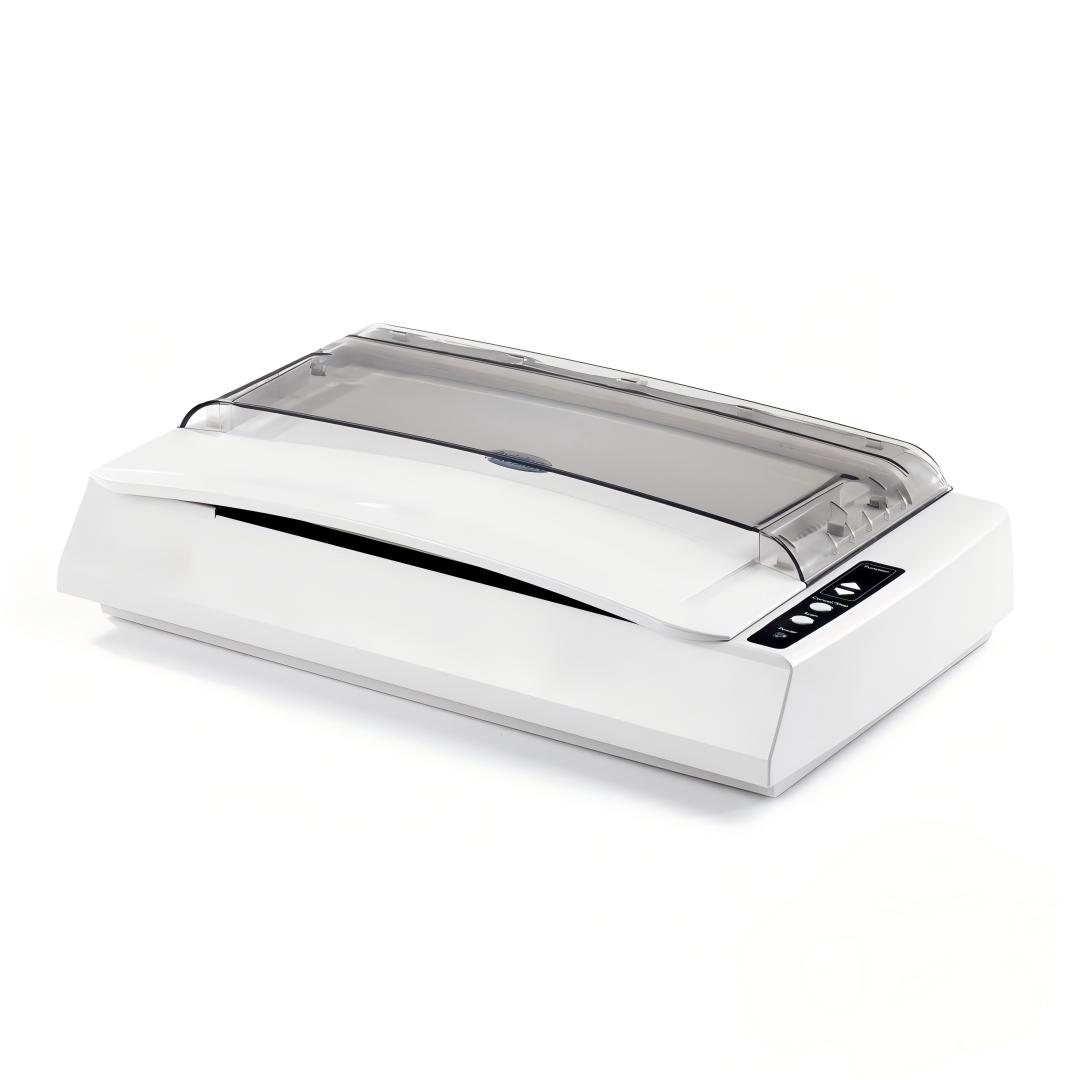
CCD Zero-Margin Bookedge Flatbed Scanner, A4 600 dpi
A focused solution for libraries, archives and record rooms that need to digitize bound books without pressing the spine flat.
View product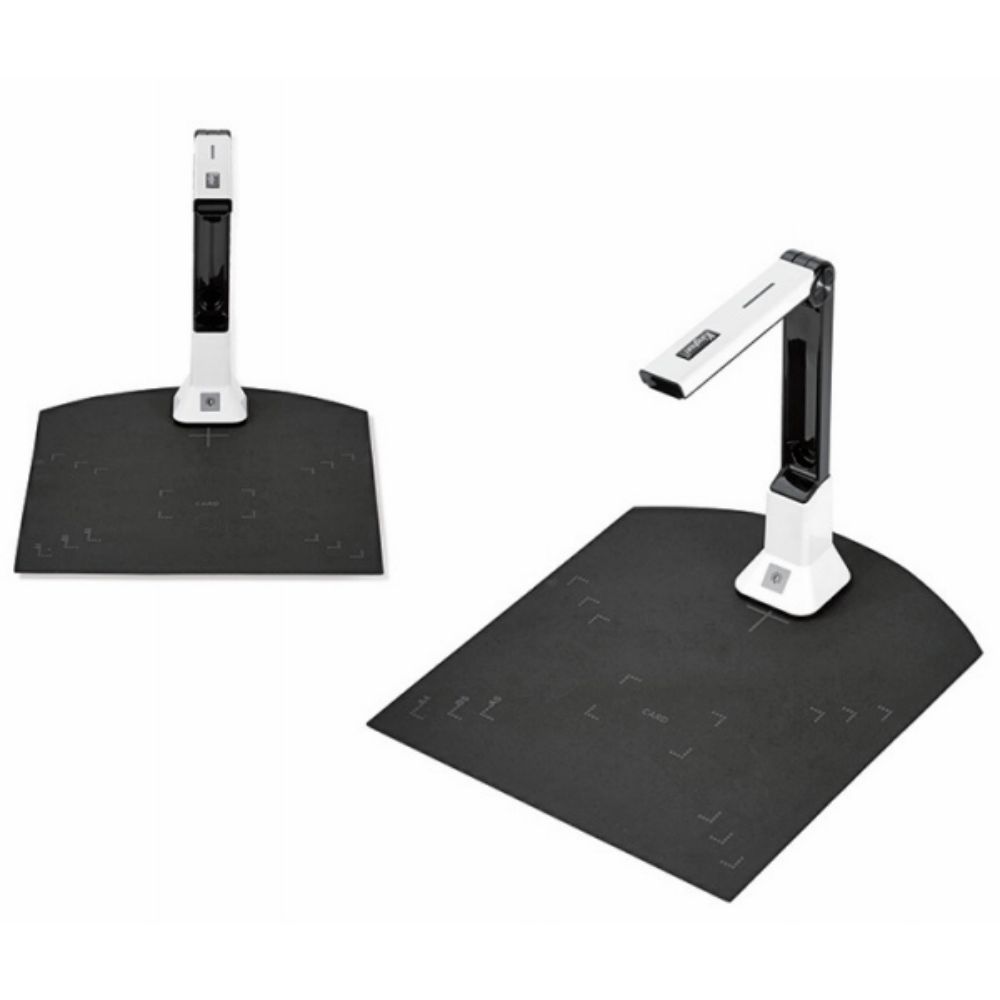
Wholesale 5MP USB A4 Portable Document Scanner
A compact, lightweight option for field documentation, stock allocation and rapid deployment. Final CE documentation is confirmed with the order configuration.
View productOverhead Book Scanner Procurement Trends Shaping 2025–2030
Public-sector tenders, university digitization programs, archive grants and distributor buying plans are becoming more specific. The strongest proposals will connect compliance evidence, capture resolution, software workflow and lifecycle support in one commercial package.
Compliance moves earlier
CE documentation is increasingly requested before a vendor is shortlisted. Procurement teams should ask for a model-level declaration, adapter specifications, label artwork and the exact bill of materials, not a generic family brochure.
Total cost beats lowest price
Buyers now compare OCR accuracy, operator training, spare-parts response, warranty coverage and software stability alongside the unit price. A lower-cost scanner that slows a digitization queue is rarely the cheaper choice.
Resolution is written in dpi
Tender language is shifting from megapixels to deliverable resolution. An A3 page at 300 dpi needs about 17.4MP, while A2 at 300 dpi needs about 34.8MP. This distinction prevents disappointing pilots.
Non-contact preservation
For rare books, newspapers and fragile records, overhead capture is replacing presses and platen-heavy workflows. Curve correction, finger removal and book-cradle compatibility are becoming practical tender requirements.
A2 and A3 converge
Institutions prefer one platform family for books, maps, newspapers and loose documents. Suppliers that can explain the trade-offs between A3, A2, flatbed, ADF and dual-camera configurations are easier to integrate into multi-site programs.
Software is due diligence
SDK access, Windows and macOS support, OCR languages, searchable PDF export and driver stability are now evaluated before purchase. The scanner is only one part of the digitization system.
What to Confirm Before You Approve an Overhead Scanner Order
Use this procurement matrix to separate a credible offer from a generic catalogue quotation. It is especially useful for distributors preparing a tender response or for archives that need a repeatable capture standard.
| Requirement | Why it matters | Confirm in writing | Quibow position |
|---|---|---|---|
| CE documentation | Marking must match the unit, adapter and intended use. | Declaration, test evidence, labels and bill of materials. | CE-oriented documentation is confirmed per model and order configuration. |
| Resolution at dpi | Megapixels alone can hide an A2 resolution shortfall. | Pixel dimensions for the exact page size and target dpi. | 18–24MP for A3-class capture; 48MP for A2 archival capture at about 300 dpi. |
| Sensor platform | CIS, CMOS and CCD serve different document conditions. | Book type, handling method, lighting and output priority. | CMOS overhead for books and live capture; CCD bookedge for spine-sensitive work; CIS for sheet-fed volume. |
| Software and OCR | Searchable output determines downstream value. | OS support, OCR languages, export formats and SDK scope. | Windows/macOS support on many models, OCR workflows, and SDK integration on selected products. |
| Minimum order | Sampling reduces distributor risk. | Stock MOQ versus OEM/ODM MOQ. | Many stock scanners start from 1 piece or 1 set; several camera models start from 2 pieces. |
| Warranty and support | Digital capture devices need fast remote diagnosis. | Coverage period, spare-part process and support channel. | 1-year warranty on listed models with remote technical support. |
| Payment and delivery | Finance approval often dictates the contract structure. | Currency, payment method, Incoterm and packing standard. | T/T, L/C, PayPal and Western Union in USD, EUR, HKD or CNY; FOB, EXW and DDU terms. |
Product Development Trends: From Capture Hardware to Workflow Platforms
The next generation of overhead book scanners will be judged less on a single specification and more on how reliably it turns a fragile page, a live lesson or a service-counter document into usable digital information. These are the development directions buyers should track.
Higher native A2 resolution
As archives standardize on 300 dpi masters, A2 capture is moving toward 48MP-class sensors and dual-sensor designs. Interpolation is not a substitute for native detail when OCR, fine print and map contours matter.
AI-assisted page reconstruction
Auto-flatten, deskew, finger removal and page-edge detection reduce manual correction. The procurement question is not whether a demo looks impressive, but whether the correction can be repeated across thousands of pages without damaging evidence.
Dual-camera and multimodal capture
One overhead platform is increasingly expected to capture documents, ID cards, portraits, 3D objects and live demonstrations. Dual-camera and dual-lens configurations address that requirement without adding a second workstation.
Unified connectivity
USB, HDMI, VGA, RS232, audio, microphone and foot-pedal control appear across different product families. Buyers should map every cable and control surface before installation, especially for classroom and counter deployments.
Local processing and privacy
Schools, banks and government agencies increasingly prefer local OCR or on-premise processing for sensitive documents. SDK access and stable driver behaviour become more important when capture is embedded into a secure workflow.
Modular compliance and serviceability
Adapter variants, replaceable lighting modules, label control and clear spare-part identification make it easier to maintain compliance across multiple shipments. Modularity also lowers the cost of supporting multi-country distribution.
How to Specify Resolution, Format and Sensor Without Overbuying
Overhead scanner specifications should start with the page, not the product name. At 300 dpi, an A4 page requires roughly 8.7MP, an A3 page about 17.4MP and an A2 sheet about 34.8MP. A 21MP A2 scanner can be economically attractive, but it delivers only about 225–240 dpi across a full A2 sheet. For an archival master file, a 48MP A2 model is the safer specification.
Sensor choice follows the same logic. CIS is compact and efficient for sheet-fed work. CMOS area sensors capture a whole page or object from above, which is why they dominate overhead book scanners, visualizers and document cameras. CCD linear sensors remain valuable for bookedge flatbeds, photographs and originals that benefit from depth of field and stable colour response. A supplier with all three platforms can make a recommendation based on evidence rather than inventory.

CIS, CMOS or CCD: Which Imaging Platform Fits the Job?
The right platform depends on whether the original can be fed through a sheet path, must remain untouched on a book cradle, or needs controlled optical resolution for art and photographs.
CIS · Contact Image Sensor
Best for high-volume office batches, invoices, contracts and ADF workflows where speed and compact dimensions matter. CIS is efficient in multi-page environments, but it is not the natural choice for fragile bound volumes that cannot be fed through a sheet path.
CMOS · Area Sensor
The workhorse for overhead book scanners, document cameras and visual presenters. It captures the page in one shot, supports live presentation and enables software correction. Well suited to A3/A2 books, newspapers, service counters and classrooms.
CCD · Linear Sensor
Useful for bookedge flatbeds, photographs, artwork and originals that need stable colour and greater depth of field. A zero-margin CCD bookedge scanner can reduce spine shadow without forcing the book to be pressed flat, which is valuable for archives and libraries.
Why Global Buyers Work With Guangzhou Quibow Electronic Co., Ltd.
Quibow is a Guangzhou-based export supplier focused on image data acquisition and conversion. The company combines product design, production coordination, export sales and after-sales support across CIS, CMOS and CCD imaging platforms.
Multi-platform imaging expertise
CIS, CMOS and CCD coverage allows a recommendation based on document format, handling constraints, OCR goals and lighting conditions rather than a single stock model.
OEM / ODM support
Logo printing, packaging, housing colour, capture-software branding and SDK integration can be discussed on selected models. Quantities and technical scope are confirmed per project.
Low-friction sampling
Most stock book scanners, A2 large-format scanners and flatbed scanners start from 1 piece or 1 set. Several document camera models start from 2 pieces, supporting distributor pilots and tender samples.
Responsive export coordination
Supplier profile information shows ≤1 hour average response, 100% message response, a 27% buyer reorder rate and onsite-checked status in Guangzhou, Guangdong, China.
For procurement teams, these facts matter because they shorten the distance between a first inquiry and a workable quotation. The company can discuss document camera visualizers, A3/A2 overhead book scanners, bookedge flatbed scanners and portable USB scanners in the same conversation, then prepare a model-level offer with the relevant warranty, payment and delivery terms. That combination is particularly useful for distributors serving several market segments and for institutions that need one supplier relationship across multiple capture stations.
Common Questions About CE-Oriented Overhead Book Scanner Purchasing
These are the questions most often raised by archives, schools, government buyers, system integrators and distributors before a quotation is approved.
01Does Quibow provide CE certification for every overhead book scanner?
CE status is configuration-specific. For applicable models, Quibow can prepare CE-oriented documentation covering the unit, power adapter, labelling and relevant test evidence. The exact standards and document set should be confirmed in the quotation because requirements vary by destination market and product configuration. A model-level bill of materials is more reliable than a family-level claim.
02What is the minimum order quantity?
Most stock book scanners, A2 large-format scanners and flatbed scanners start from 1 piece or 1 set. Several document camera models start from 2 pieces. OEM/ODM quantities depend on branding, packaging, housing colour and SDK scope, so those projects are confirmed individually.
03How do I choose between A3 and A2, and how many megapixels do I need?
At 300 dpi, A3 requires about 17.4MP, so an 18MP or 24MP model is suitable. A2 at 300 dpi requires about 34.8MP, so a 48MP A2 scanner is the safer choice for archival masters. A 21MP A2 scanner may be adequate for OCR or on-screen reference, but it should not be specified as a 300 dpi A2 archival solution without checking the actual pixel dimensions.
04Can you support OEM, ODM and software integration?
Yes, on selected models. Typical discussions cover logo printing, packaging, housing colour, capture-software branding and SDK integration. Buyers should share the target platform, output format, language requirements and expected volume so that the commercial and technical scope can be confirmed together.
05Which operating systems and interfaces are available?
Many models, including A2 large-format scanners and the 1200 DPI A3 flatbed scanner, support Windows and macOS, with some models verified on Apple M1 Macs. Interface options vary by product and may include USB, HDMI, VGA, RS232, audio, microphone and foot-pedal control. Compatibility should be confirmed model by model before shipment.
06What payment, delivery and warranty terms are available?
Payment methods include T/T, L/C, PayPal and Western Union in USD, EUR, HKD or CNY. Delivery terms include FOB, EXW and DDU. Listed models such as A3 flatbed scanners, A2 overhead scanners and the S2060W ADF scanner carry a 1-year warranty, backed by remote technical support.
Need a Model-Level Quote or Sample Scan?
Send us your document size, daily volume, target dpi, OCR language, operating system and destination market. We will recommend a suitable overhead book scanner or document camera, confirm the CE-oriented documentation package and prepare a quotation with MOQ, warranty and delivery terms.
Send an Inquiry Typical response time: within 1 hour. Share a sample page if you need a resolution or OCR evaluation.