Eight Scanner and Document Camera Configurations Ready for Evaluation
The shortlist below is drawn from the current catalogue and arranged for practical comparison: page format, sensor class, capture speed, software support and stock availability. For map, plan and archive projects, start with the largest original you must capture in one shot, then confirm the required dpi at that format before choosing megapixels.
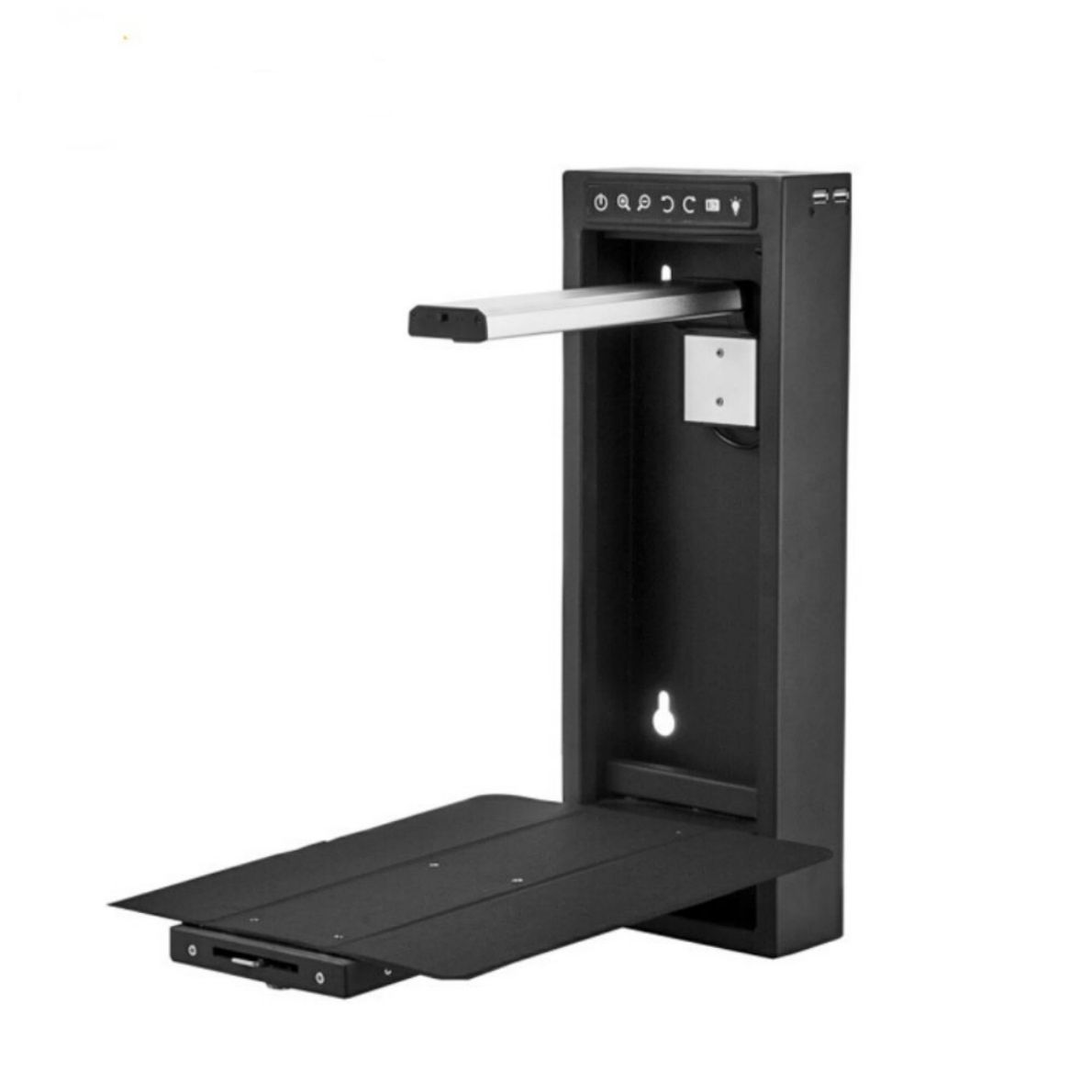
A4 Wall-Mounted 10MP Document Camera Visualizer
- 10MP CMOS sensor, 1-second scan
- Wall version for classrooms and service points
- USB visualizer, stock-ready for smart teaching
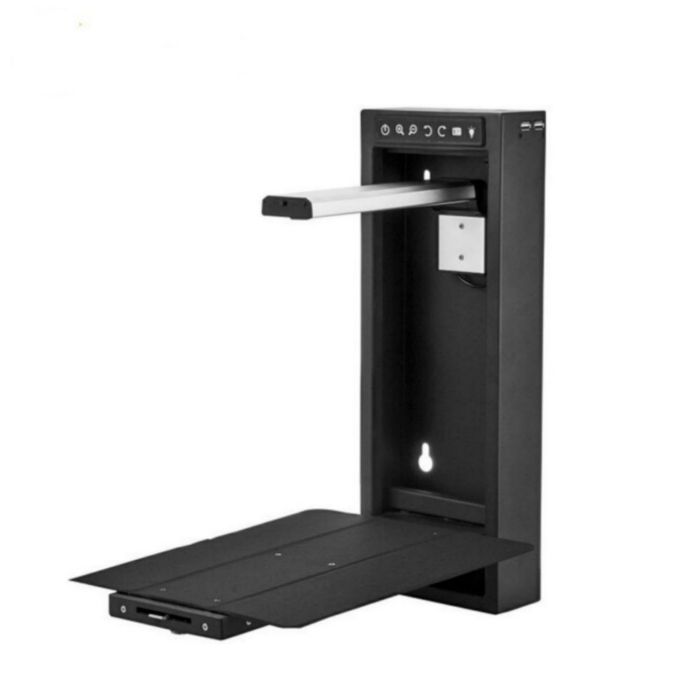
A4 Black USB 5V 10MP High-Resolution Document Scanner
- 10MP wall-mountable scanner
- 24-bit output, SDK for integration
- OEM support, education stock
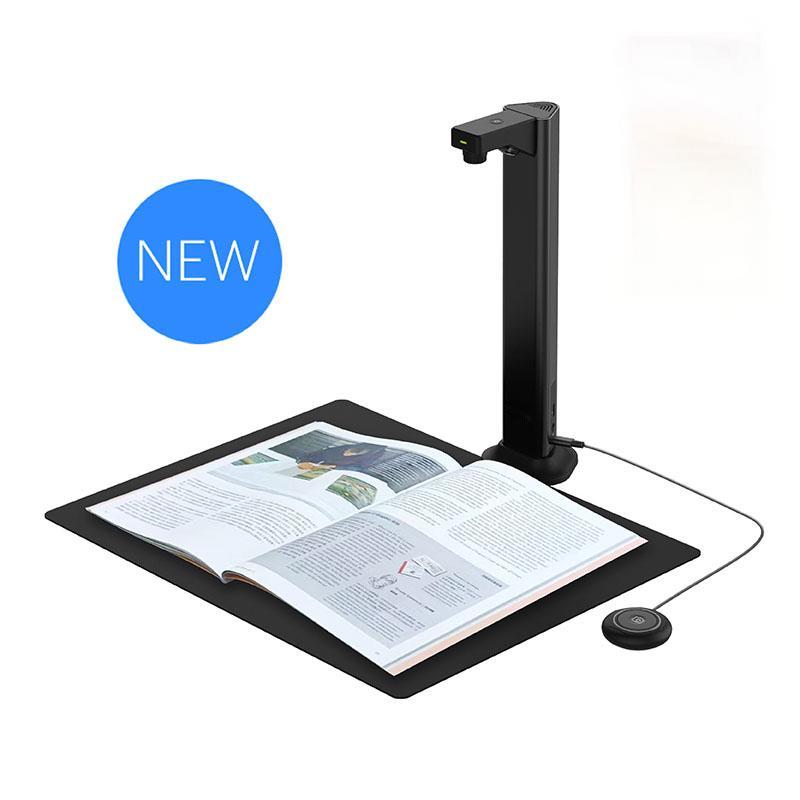
A3 18MP USB Aluminum Document Scanner with OCR
- 18MP UVC camera, 1-second scan
- OCR and text-to-speech features
- Aluminum body for frequent capture
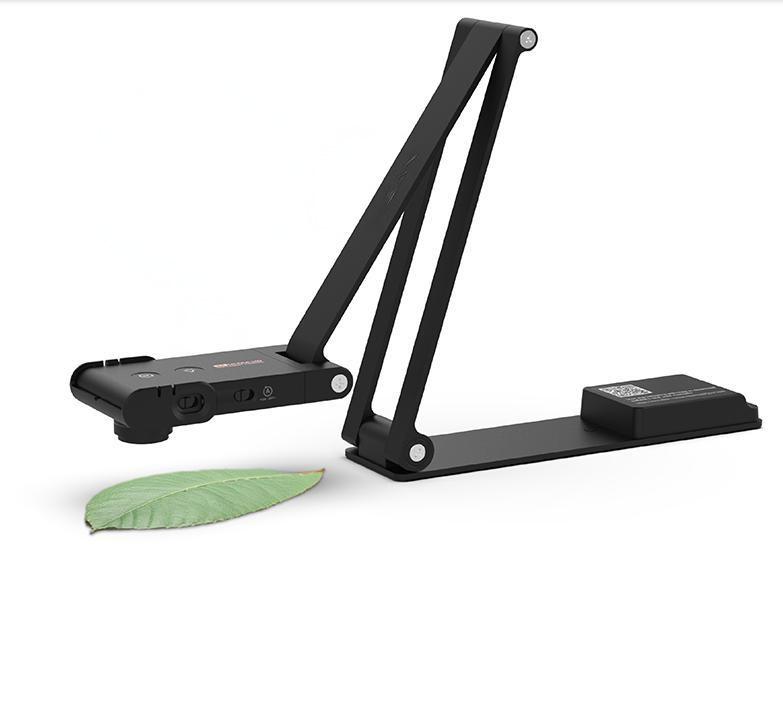
4K 2-in-1 13MP Document Camera with AI Noise Cancellation
- 4K output, 13MP imaging, 20x macro lens
- Foldable design with built-in microphone
- A3 maximum capture area, 1-year warranty
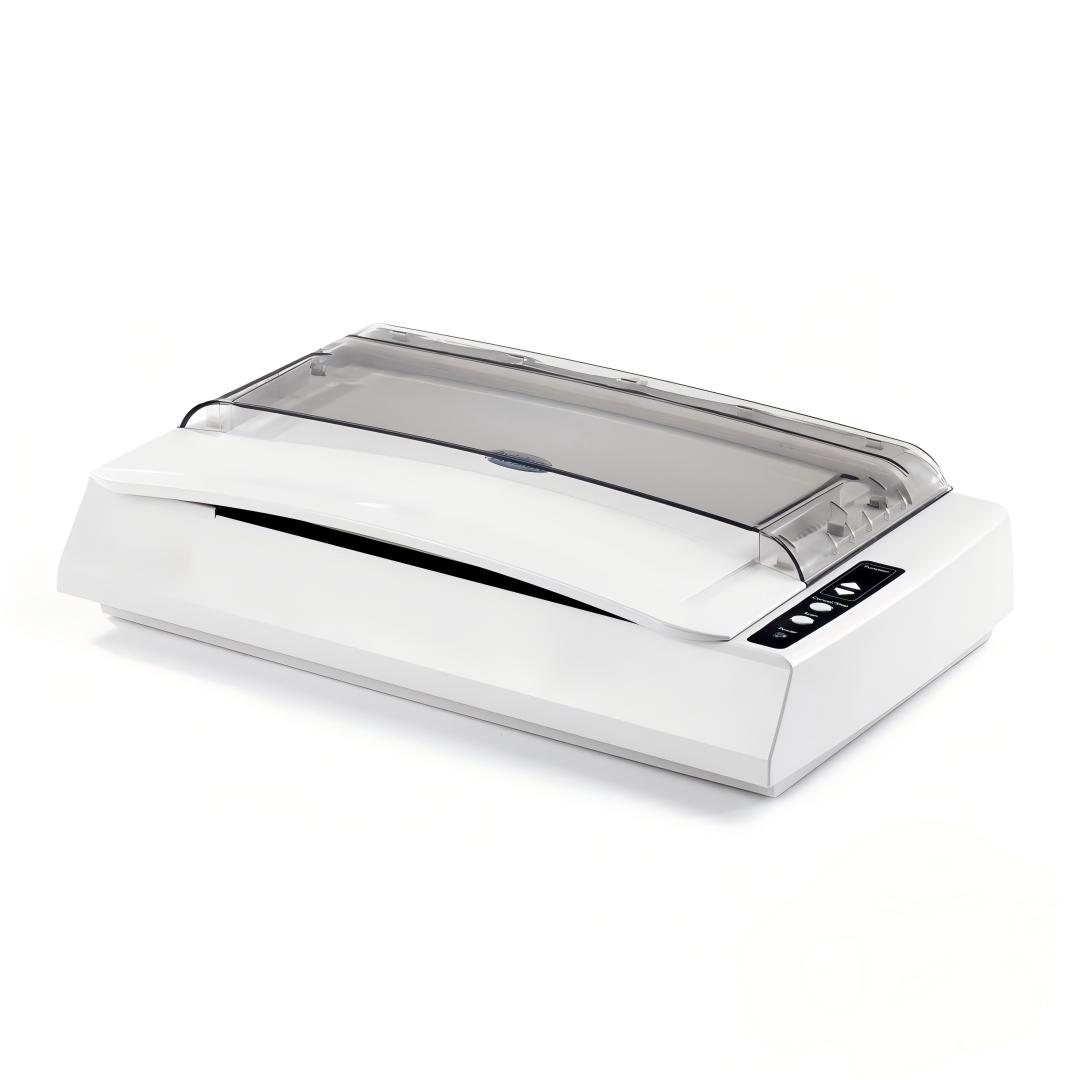
CCD Zero-Margin Bookedge Flatbed Scanner, A4 600dpi
- CCD imaging, 600dpi optical class
- Zero-margin bookedge design reduces spine shadow
- Library and archive digitization workflows
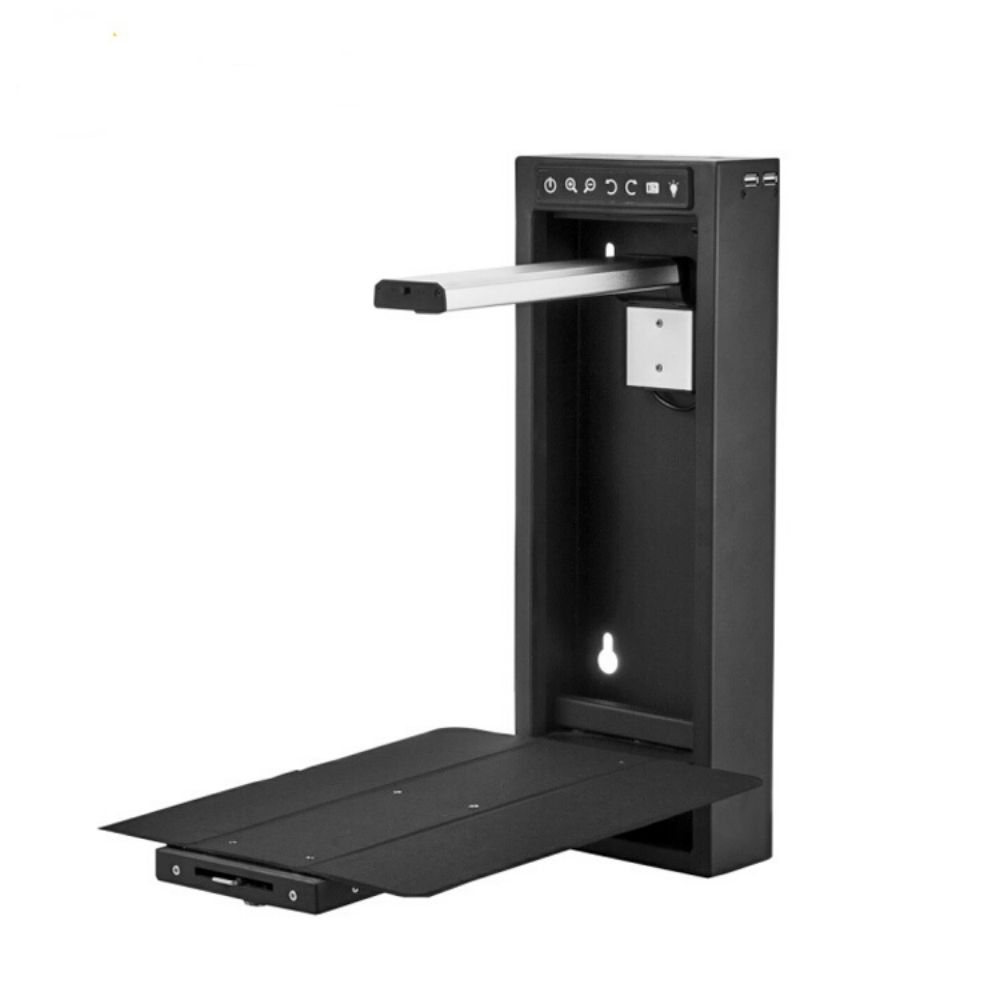
Portable 10MP A4 Document Scanner for Online Training
- 10MP A4 visualizer with USB interface
- Wall version, black and silver housing
- Suitable for remote teaching and demonstration
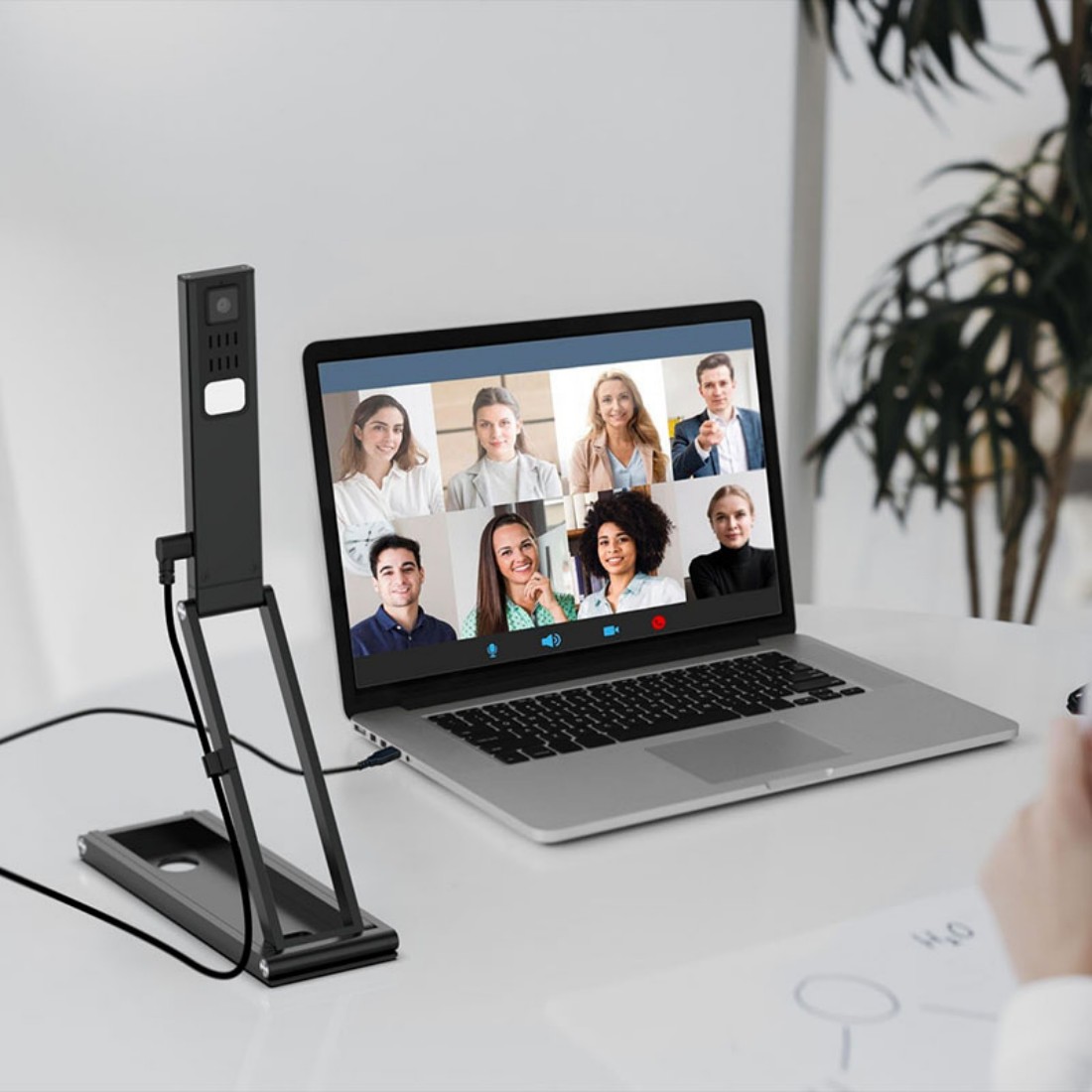
A3 4K Visual Presenter Document Camera
- 4K visual presenter with USB interface
- Webcam function for meetings and training
- School teaching and presentation use
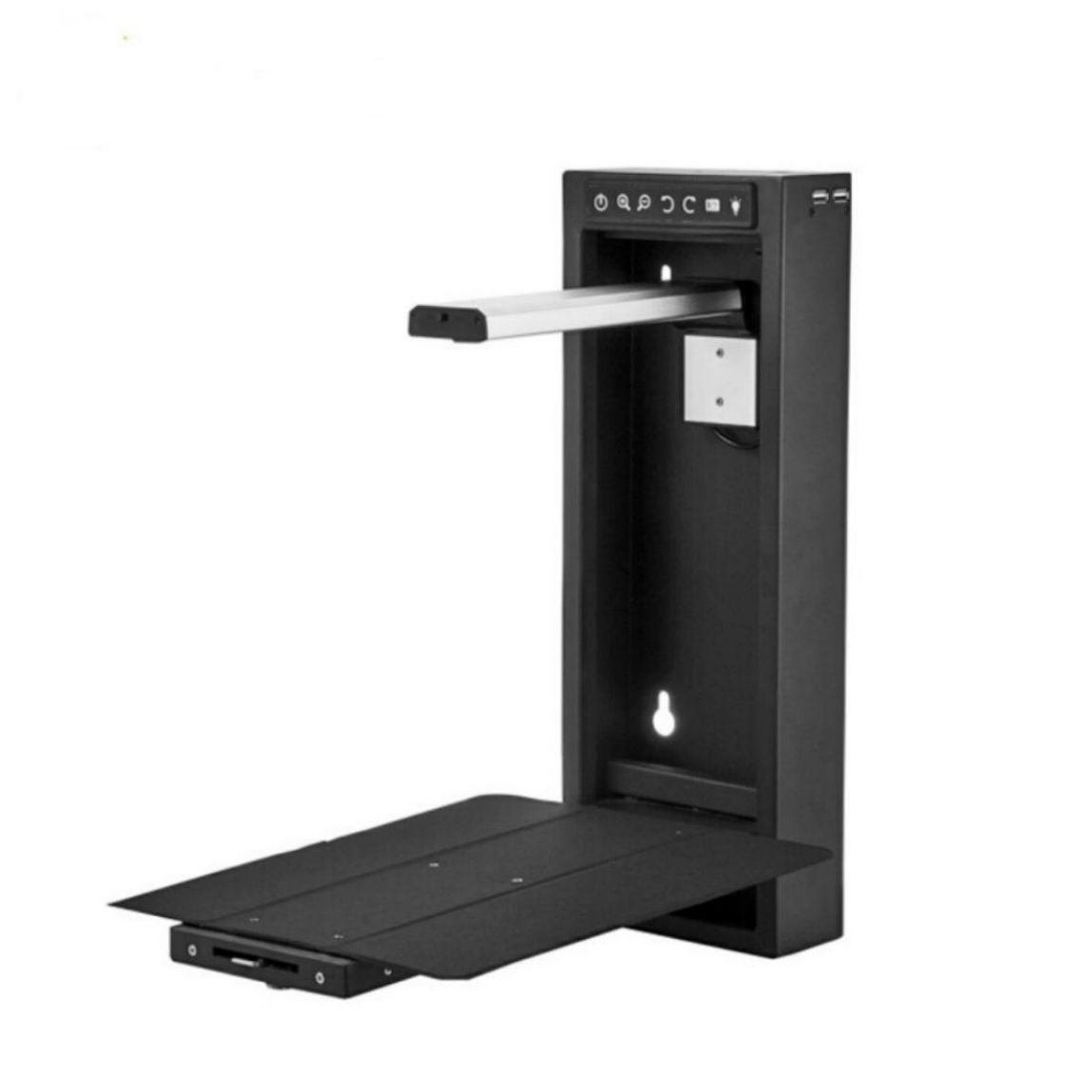
USB Wall-Mounted A4 Visualizer OCR Document Scanner
- 10MP CMOS sensor with OCR support
- SDK included for system integration
- Black housing, stock availability
Need to compare a map legend at 300 dpi or a bound book without flattening? Send the original size, daily volume and target resolution. We will recommend a shortlist and explain where a single-shot overhead scanner is sufficient and where a flatbed, bookedge or tiled-capture workflow is more honest for the specification.
What “CE Certified” Should Mean for a Map Scanner Factory or Supplier
CE marking is often presented as a badge. In a real procurement file it is a manufacturer’s declaration that a specific model complies with applicable EU legislation—most commonly EMC, LVD where mains voltage is used, RoHS, and RED if wireless connectivity is included. For a map scanner or document camera, the declaration must match the exact model, power supply, cable set and any wireless module. A generic “CE certificate” for the factory is not enough.
Ask for the model-linked EU Declaration of Conformity, test reports, RoHS evidence and, where relevant, the name of the EU responsible economic operator. Public tenders should also require label artwork, language requirements and a traceable change-notification process. Quibow treats compliance as a project-level document set. Before a purchase order, specify the destination country, installation environment, power input and whether the device will be sold under your own brand. If the final configuration or power supply changes, the declaration may need to be reissued; this is normal and should be planned, not treated as a surprise.
For map digitization programmes, compliance alone does not prove image quality. Pair the CE file with sample scans of a map legend, fine contour lines and a colour elevation key. The strongest supplier answer is not a folder of certificates but a reproducible test report: one map, one lighting setup, one calibrated output, and a clear statement of resolution at the document edge.
Procurement checklist before you approve a supplier
- Model-specific EU Declaration of Conformity, not a generic company certificate.
- EMC, LVD and RoHS test reports that match the offered power supply and cable set.
- EU responsible economic operator and correct label artwork for your market.
- Sample scans at the specified dpi, with edge sharpness and colour chart included.
- SDK, UVC, driver and firmware support terms in writing for integrators.
- Warranty, spare-parts policy and remote technical support route confirmed.
Map Scanner Resolution Math: Megapixels, dpi and Real Document Size
Resolution is not a marketing number. It is pixels across the physical document. To calculate dpi, divide the sensor’s pixel width by the document width in inches. A 48MP sensor can be excellent for A2 when mounted and calibrated; the same sensor positioned to cover A1 will lose effective resolution.
For maps, evaluate three zones rather than a single centre target: edge sharpness, symbol separation in dense legends, and colour differentiation in elevation or land-use keys. An 18MP scanner is a sensible A3 platform for 300 dpi class capture, while an A2 sheet at 300 dpi requires roughly 35MP. If your archive standard calls for 400 or 600 dpi at full A2, request a tiled-capture workflow or a scanner with stitching; single-shot overhead units are usually a compromise at that specification. This is where information gain matters more than brochure language—the supplier should state the tested format, lens coverage and actual output size.
| Original format | Pixels at 300 dpi | Pixels at 400 dpi | Practical sourcing note |
|---|---|---|---|
| A4 210 × 297 mm |
2480 × 3508 ≈ 8.7MP |
3307 × 4677 ≈ 15.5MP |
10MP class is suitable for 300 dpi documents; 13–18MP gives more headroom for cropping and service counters. |
| A3 297 × 420 mm |
3508 × 4961 ≈ 17.4MP |
4677 × 6614 ≈ 30.9MP |
18MP is a practical baseline; 24MP or dual-lens configurations improve margin and inspection tolerance. |
| A2 420 × 594 mm |
4961 × 7016 ≈ 34.8MP |
6614 × 9356 ≈ 61.9MP |
48MP A2 overhead scanners fit a 300 dpi class brief. For a mandatory 400 dpi A2 master, plan tiled capture or stitching. |
| Full A1 map 594 × 841 mm |
7016 × 9933 ≈ 69.7MP |
9356 × 13244 ≈ 123.9MP |
Use a large-format line-scan workflow or multi-tile capture with calibrated stitching; do not rely on interpolation. |
How Buyers Will Source Map Scanners and Document Cameras Next
Procurement is changing from unit price to evidence. Distribution partners now ask for sample data, model-specific declarations, SDK documentation and spare-parts longevity. Education buyers want wall-mounted visualizers that fit existing displays. Government projects request reproducible sample scans and clear warranty terms.
Evidence-led RFQs
Tender files increasingly require sample scans, CE documentation, UVC/SDK details, firmware update policy and a named technical contact. A supplier that cannot produce a reproducible sample will be excluded earlier.
SDK and DMS integration
Scanning hardware is becoming a component in document management, library and learning platforms. SDK access, UVC compatibility and stable drivers reduce integration cost across large deployments.
Hybrid scanning fleets
One archive may need an A2 overhead scanner for maps, a CCD bookedge for bound volumes and an A3 flatbed for photographic plates. Buying a mixed fleet with shared training and support is more efficient than sourcing each format separately.
Total cost of ownership
Warranty, spare parts, remote diagnostics and software continuity now count alongside the unit quote. A low-cost model that cannot be supported in year three rarely survives a public-sector budget review.
Where Scanner and Visualizer Technology Is Moving
The most useful innovations are not cosmetic. They reduce handling, improve the repeatability of capture and make the hardware easier to integrate into a modern digital archive.
AI-assisted image clean-up
Curve flattening, finger removal, glare reduction, page detection and OCR pre-processing are moving into capture software. The best results still depend on good optics, stable lighting and a correct pixel footprint. AI improves workflow; it does not replace physical resolution.
4K, USB-C and UVC simplicity
UVC cameras and USB-C connectivity reduce driver friction for schools, meeting rooms and system integrators. 4K visualizers can show fine text, material samples or small components without moving the object to a flatbed.
Archive-ready metadata and accessibility
OCR to searchable PDF, text-to-speech output and structured file naming help libraries and government teams publish material faster. Buyers should ask how the scanner outputs metadata—not only how fast it captures an image.

Guangzhou Quibow Electronic Co., Ltd.
Guangzhou Quibow Electronic Co., Ltd. is a technology-driven supplier focused on image data acquisition and conversion. The product portfolio covers high-speed document cameras, book scanners, A3 and A2 large-format scanners, flatbed scanners and ID card recognition cameras. The company works across CIS, CMOS and CCD imaging platforms and supports the cycle from product design and development through production coordination, export sales and after-sales service.
For overseas buyers, this matters because sourcing is not only a catalogue exercise. It is the ability to match a sensor, lens, lighting and software workflow to a real document. The company is listed as a trading company and onsite-checked supplier in Guangzhou, with main markets in Eastern Europe, North America and South America. Annual revenue is in the US$1M–US$2.5M range, supported by a focused team of 5–10 specialists.
- Location
- Guangzhou, Guangdong, China
- Established
- 2020
- Business type
- Trading company, onsite checked
- Main markets
- Eastern Europe, North & South America
- Revenue
- US$1M – US$2.5M
- Team
- 5–10 imaging specialists
Verifiable supplier records
Onsite assessment, credit overview, trade capacity and transaction history are maintained on the platform, giving procurement teams independent reference points before a deposit.
OEM and ODM flexibility
Logo printing, packaging, housing colour, capture-software branding and SDK integration can be discussed on selected models. This suits distributors, integrators and brands that need a distinct product without building a hardware team.
Application-first selection
We discuss document size, daily volume, operating system, output format and whether the page is flat, bound or oversized. The recommendation follows the original—not a generic “best seller”.
Fast response and warranty support
Average enquiry response is within one hour, message response rate is 100%, and listed models carry a 1-year warranty with remote technical support. Payment terms include T/T, L/C, PayPal and Western Union in USD, EUR, HKD or CNY, with FOB, EXW and DDU delivery terms.
Where Quibow Scanners and Document Cameras Work Every Day
Different originals demand different optical paths. Matching the hardware to the workflow protects fragile documents, reduces handling and gives more predictable output.
Maps and archives
A2 overhead scanners capture full sheets in one view; CCD bookedge flatbeds support bound atlases and fragile records without spine shadow.
Education and training
Wall-mounted visualizers and 4K document cameras display textbooks, experiments and 3D objects on projectors, interactive panels and video-call platforms.
Government and banking
High-speed cameras and OCR capture forms, ID cards and counter documents. SDK integration supports KYC, queue systems and digital record creation.
Distributors and integrators
OEM branding, SDK access and mixed-container supply help resellers build local digitization solutions on proven hardware and remote engineering support.
From Requirement to Delivery in Four Practical Steps
A transparent sourcing path helps procurement and technical teams align earlier, reducing rework before samples and mass production.
Requirement review
Confirm original size, daily volume, operating system, output format, network environment and target market compliance needs.
Model matching
Select sensor platform, resolution, lens coverage and software route. Where necessary, provide sample scans of your own document.
Customization
Discuss logo, packaging, housing colour, software branding, OCR language support and SDK requirements for selected models.
QC and shipping
Inspect focus, lighting uniformity, driver installation and capture speed, then pack for export with remote setup support.
Questions Buyers Ask Most About Map Scanner Factories and Suppliers
Clear answers help you prepare a better RFQ and compare suppliers on the same technical basis.
What does “CE certified” mean for a map scanner or document camera?
It should mean that the specific model carries a valid EU Declaration of Conformity for applicable directives. Ask for the model-linked declaration, test reports, RoHS evidence and the EU responsible economic operator. A generic factory certificate is not a substitute for model-level documentation.
What is the minimum order quantity for Quibow scanners and document cameras?
Most stock book scanners, A2 large-format scanners and flatbed scanners start from 1 piece or 1 set. Several document camera models start from 2 pieces. OEM/ODM quantities are confirmed per project after the model and customization scope are defined.
Do you support OEM and ODM orders?
Yes. We support OEM/ODM projects including logo printing, packaging, housing colour, capture-software branding and SDK integration on selected models. For tender projects, provide the target market, estimated annual volume and any label or language requirements early.
Are the scanners compatible with Windows and macOS?
Many models, including A2 large-format scanners and the 1200 DPI A3 flatbed scanner, support Windows and macOS, and some are verified on Apple M1 Macs. Compatibility should be confirmed for the exact model and software version before shipment.
Which resolution do I need to scan A3 or A2 documents at 300 dpi?
An A3 page at 300 dpi needs about 3508 × 4961 pixels, or around 17.4MP, so an 18MP or 24MP scanner is suitable. An A2 sheet at 300 dpi needs about 4961 × 7016 pixels, or around 34.8MP, so a 48MP A2 scanner is recommended for archival masters.
What payment and delivery terms do you accept?
We accept T/T, L/C, PayPal and Western Union in USD, EUR, HKD or CNY, with FOB, EXW and DDU delivery terms. Final terms are confirmed on the quotation according to destination and order size.
What warranty do the products carry?
Listed models such as A3 flatbed scanners, A2 overhead scanners and the S2060W ADF scanner carry a 1-year warranty, backed by remote technical support. Spare-parts and service terms can be discussed for fleet or OEM projects.
Can you provide sample scans or SDK information before purchase?
Yes. For serious projects we can discuss sample scans using your document type and target resolution, plus SDK, UVC or driver information for selected models. This is the most reliable way to verify edge sharpness, colour reproduction and OCR suitability before a purchase order.
Turn Your Map Scanning Requirement into a Verified Specification
Share your original size, required dpi, daily volume, operating system and destination market. Our team will recommend a suitable scanner or document camera, clarify CE documentation needs and discuss sample scans, OEM branding, SDK integration and delivery terms. For buyers comparing multiple factories, we welcome a technical checklist instead of a price-only comparison.
CIS · CMOS · CCD imaging · OEM / ODM · 1-year warranty on listed models