CIS · CMOS · CCD Imaging · OEM/ODM Export Support

CE Certified Automatic Document Scanner Suppliers & Exporter

Source overhead book scanners, A2/A3 document scanners, flatbed scanners and visual presenters from Guangzhou Quibow Electronic Co., Ltd. — with stock-friendly MOQs, fast engineering feedback and documented export specifications.

Stock from 1 piece · Response ≤1 hour · 1-year warranty on listed models
Average response time ≤
Message response rate
Buyer reorder rate
Warranty on listed models
Supplier & Exporter Due Diligence

What “CE Certified Automatic Document Scanner Supplier” Should Mean in a Real B2B Purchase

Search intent around this phrase is rarely limited to a certificate image. International buyers are usually balancing product fit, importer obligations, tender language, delivery terms and after-sales risk at the same time. A credible supplier-exporter should make those points easy to verify.

Supplier intent: can this model solve my capture problem?

Buyers need to compare page size, sensor type, daily volume, OCR output and software environment before discussing price. A useful supplier asks for document dimensions, binding type and target dpi, not only the order quantity.

Exporter intent: what happens after the PO?

Incoterms, packaging, warranty handling, spare-parts expectations and remote setup support matter. Quibow works with FOB, EXW and DDU terms, accepts T/T, L/C, PayPal and Western Union, and quotes in USD, EUR, HKD or CNY.

CE intent: which SKU and power supply are covered?

CE status is model-specific. Before a tender or import shipment, request the current Declaration of Conformity, applicable test reports, label artwork, power-adapter approval and technical-file summary for the exact configuration you intend to buy.

Information gain for procurement teams: the phrase “CE certified automatic document scanner” should trigger a document checklist, not a one-line supplier claim. Confirm the legal manufacturer, importer details, intended use, language requirements and any customer-specific adaptation that could change the compliance scope. Final CE marking responsibility remains with the party placing the product on the market; Quibow supports the documentation process for export configurations.
Recommended Product Set

Eight Document Scanners & Visualizers Recommended for Export Projects

These eight configurations reflect common B2B buying intents: bound-book digitization, A2 archive capture, classroom presentation, counter service, portable online training and OCR-ready office scanning. Product links are preserved so your team can verify specifications directly.

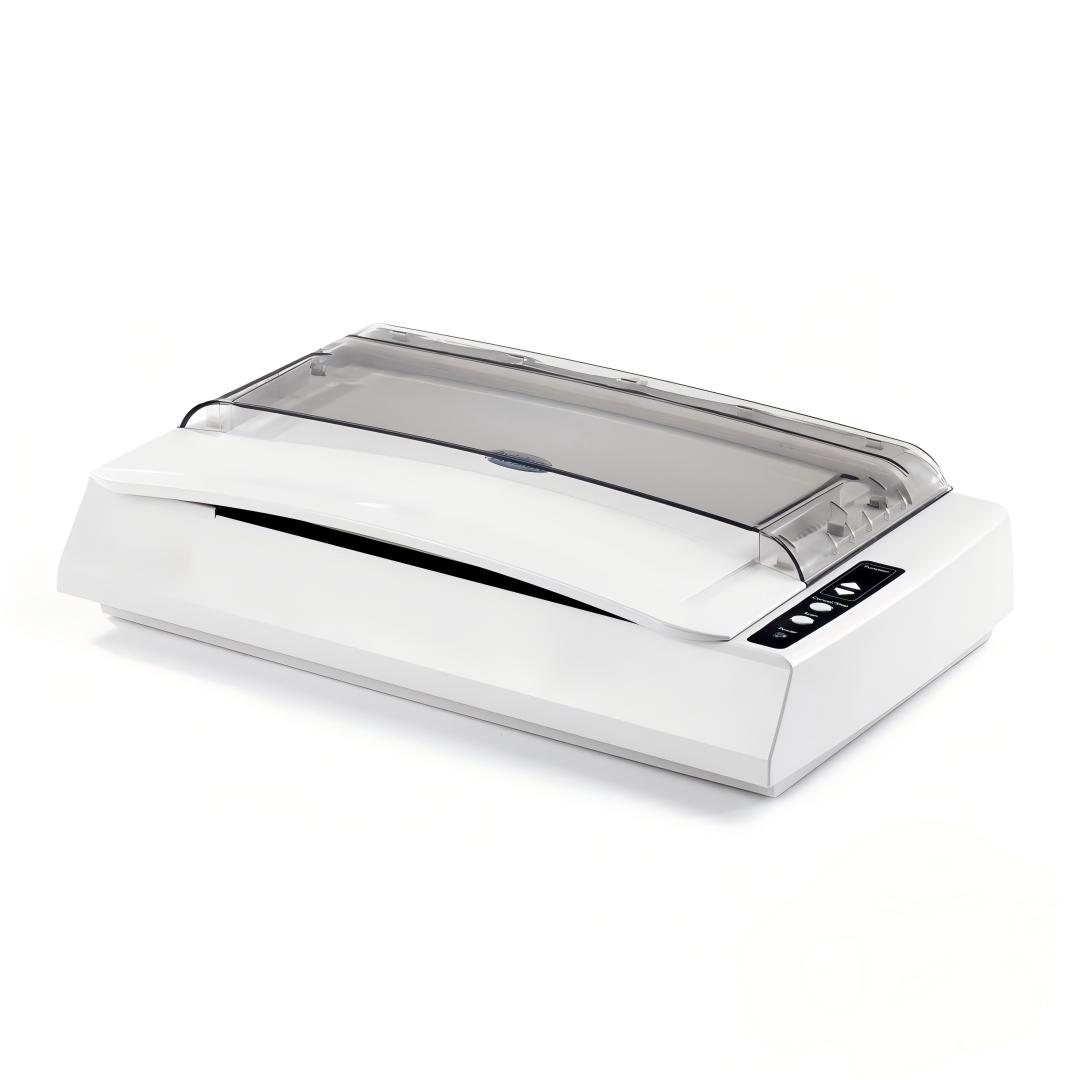
CCD zero margin bookedge flatbed scanner A4 600dpi for bound book digitization
A4 · CCD · Bookedge

CCD Zero-Margin Bookedge Flatbed Scanner A4 600dpi

  • Zero-margin bookedge design reduces spine shadow
  • 600 dpi OCR-ready capture for archive work
  • USB bound-book scanning for library digitization

Best fit: reading rooms, small archives and buyers who need controlled flatbed color without pressing the gutter of a bound book.

HD dual camera 16MP plus 2MP multifunction A3 A4 document scanner
A3/A4 · Dual Camera · 60 ppm

HD Dual Camera 16MP + 2MP Multifunction Document Scanner

  • 16MP main camera plus 2MP secondary camera
  • 60 pages/min workflow, 360° rotation and 180° use
  • Stretchable USB smart capture for counter services

Best fit: banks, government desks and mixed document/ID capture where staff need live preview and fast stills.

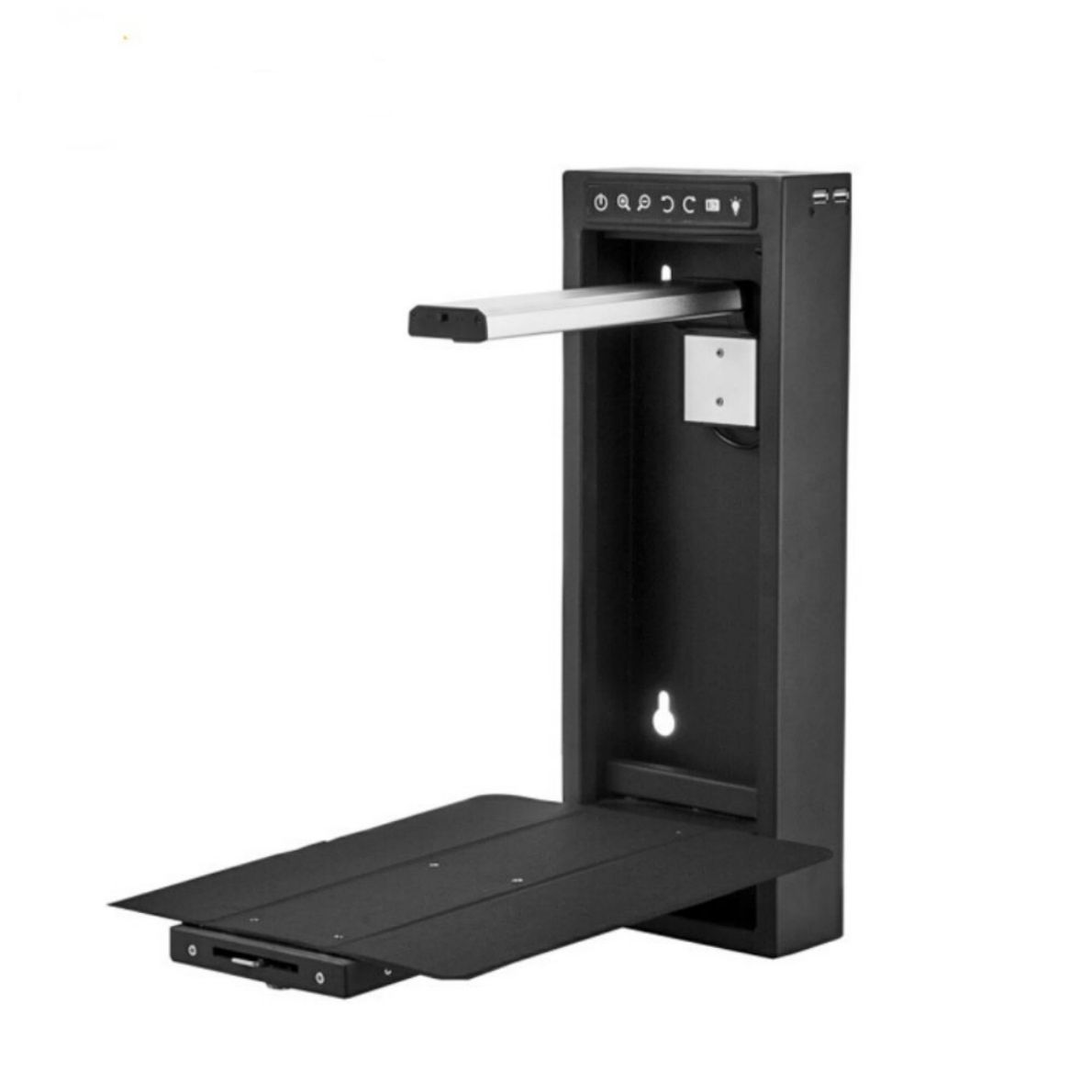
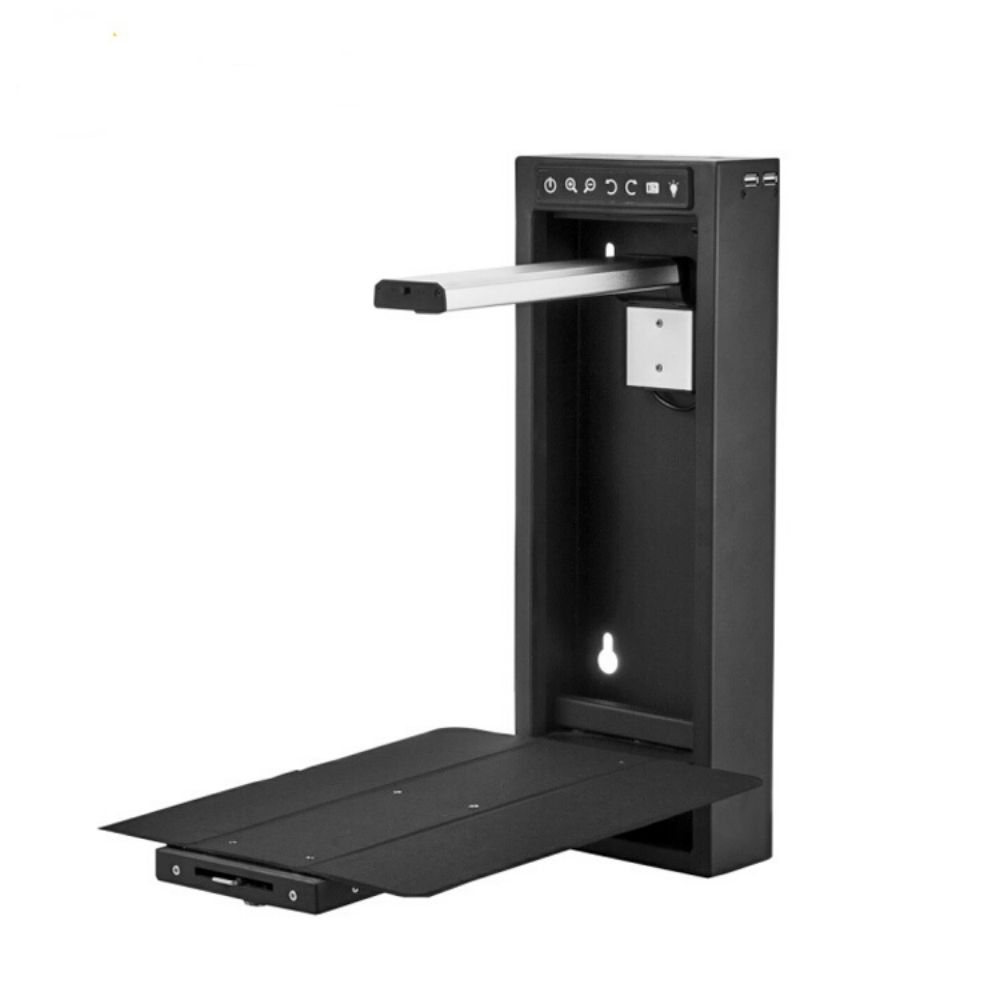
A4 document camera visualizer wall version USB CMOS 10MP scanner
A4 · Wall Version · 10MP

Document Camera A4 Visualizer Wall Version USB CMOS Sensor 10MP

  • 1-second scan claim for fast classroom capture
  • CMOS sensor and USB visualizer output
  • Wall-mounted format for smart classrooms

Best fit: teaching, remote training and space-constrained rooms where a compact wall-version visualizer is preferred.

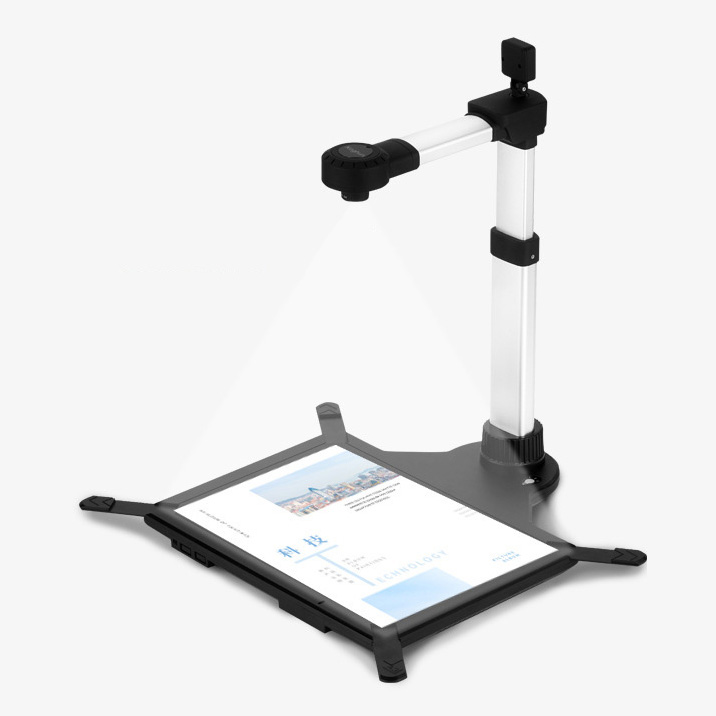
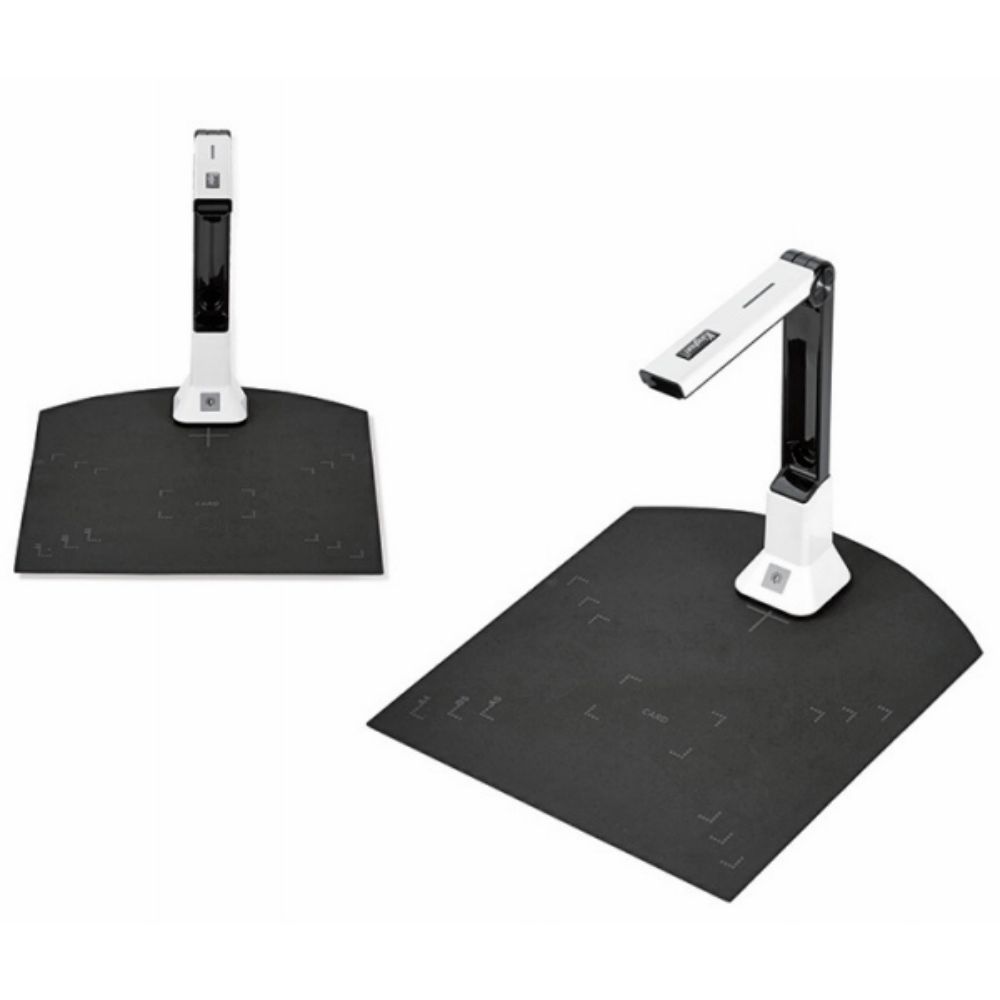
online training portable 10MP A4 document scanner USB visualizer
A4 · Portable · USB

Online Training Portable 10MP A4 Document Scanner USB Visualizer

  • 10MP A4 portable visualizer for field use
  • USB interface, in-stock wall version available
  • Black and silver housing with 1-year warranty

Best fit: online tutoring, field training and sales teams that need a portable visualizer with simple USB setup.

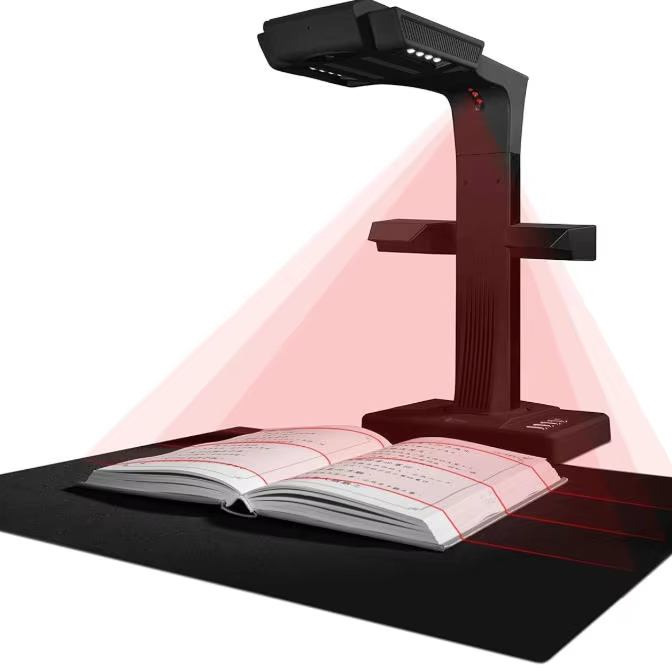
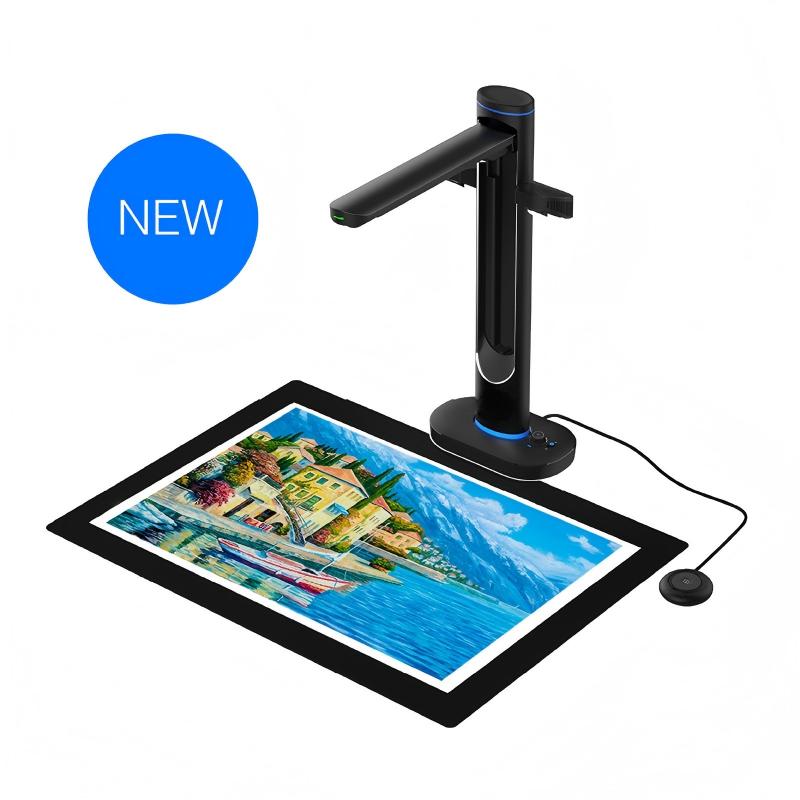
A3 18MP USB aluminum document scanner with UVC camera and OCR
A3 · 18MP · Aluminum

A3 18MP USB Aluminum Document Scanner with UVC Camera and OCR

  • 18MP A3 USB scanner with 1-second scan speed
  • UVC camera, OCR and text-to-speech features
  • Aluminum construction for frequent office use

Best fit: A3 office capture, accessible reading and OCR projects that need sturdy aluminum construction.

Model-level CE note: CE status can vary by SKU, power adapter, cable set, labeling language and software bundle. Ask for the current Declaration of Conformity and test-report scope for the exact product you plan to import. For tenders, include these documents in the technical envelope before the bid deadline.
Resolution Engineering

The Megapixel Math That Prevents a Failed Tender

Megapixels only matter in relation to page size. Divide the sensor’s pixel count across the document width and height to estimate true scanning resolution. Many library and archive programmes specify 300 ppi or higher for master files, while 200–250 dpi is often enough for OCR and on-screen reading.

A3 at 300 dpi needs about 17.4 MP. That makes an 18MP or 24MP overhead scanner suitable for most A3 book and document projects. A 21MP camera covering a full A2 sheet delivers roughly 225–240 dpi, which may pass a reading-room workflow but can fail an archive tender that explicitly requires 300 dpi at A2.

A2 at 300 dpi needs about 34.8 MP. For newspapers, maps and engineering drawings, a 48MP A2 scanner is the safer specification when the buyer expects archival masters, OCR across small print or future reprint quality.

Engineer’s procurement tip: if the tender says “300 dpi at A2”, do not substitute a 21MP model without written clarification. If the actual requirement is “200 dpi plus OCR”, a 21MP A2 device may reduce budget without reducing fitness.
Pixels required to scan common document sizes at 300 dpi
Document sizePixels at 300 dpiRecommended sensorQuibow match
A4
210 × 297 mm
2480 × 3508
≈ 8.7 MP
10MP or higher10MP portable A4 scanner, wall version or dual-camera model
A3
297 × 420 mm
3508 × 4961
≈ 17.4 MP
18–24MP18MP A3 OCR scanner, 18MP auto-flattening book scanner
A2
420 × 594 mm
4961 × 7016
≈ 34.8 MP
48MP for ≈340 dpiDual 48MP A2 large-format book scanner
Photos & art600–2400 dpi opticalFlatbed with 48-bit colorCCD zero-margin bookedge flatbed and A3 flatbed options
CE Evidence Checklist

What Importers Should Verify Before Calling a Scanner “CE Certified”

For public tenders, distributor onboarding and customs documentation, the CE file should be complete enough to survive a second review. This checklist is not legal advice; it is a practical way to structure supplier questions.

Declaration of Conformity

Check the legal manufacturer name, product model, applicable directives, signatory and date. The DoC should match the SKU and adapter you are buying.

Test reports and standards

Review EMC, safety and RoHS-related evidence where applicable. Confirm the report covers the exact electronics, power supply and cable configuration.

Power adapter approval

Scanners with external adapters can inherit compliance risk from the power supply. Match the adapter model, input plug, output rating and safety certificate to the destination market.

Labeling and language

Confirm importer details, model designation, voltage, warning statements and language requirements are on the rating label and packaging before mass production.

Technical file control

A coherent technical file should align product photos, schematics, bill of materials, risk analysis, test reports and label artwork. Ask how changes are version-controlled.

Software and data handling

OCR software, SDK integration and local storage can affect customer acceptance. For schools and government buyers, clarify data retention, network access and update policy.

Quibow supports export documentation for scanner and document-camera projects, including model specifications, packaging data and compliance-document coordination. The final CE marking decision and technical-file retention responsibilities should be confirmed with your importer or compliance adviser.

Imaging Platform Choice

CIS, CMOS or CCD: Choose by Failure Mode, Not by Hype

Quibow develops product solutions on CIS, CMOS and CCD imaging platforms. Each sensor family has a clear strength, and choosing correctly can save budget, reduce returns and prevent a specification mismatch during tender evaluation.

CIS contact image sensor

A slim linear sensor that reads at close range. It is compact, low-power and efficient for sheet-fed paths. Best for high-volume office batches, invoices and contracts where throughput matters more than live object presentation.

CMOS area sensor

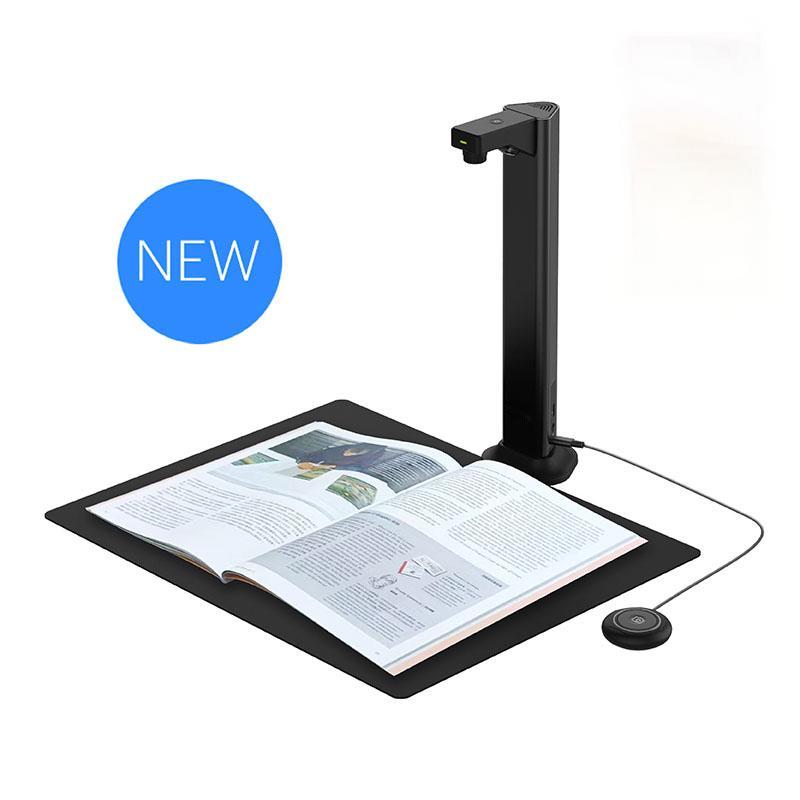
Captures the page in one shot from above, so books do not need to be pressed flat. Software can flatten curves, remove fingers and crop pages. Best for bound books, newspapers, live teaching and counter services.

CCD linear sensor

A moving optical carriage with greater depth of field and stable color, tolerant of slightly raised originals such as book gutters. Best for photos, artwork and bookedge scanning without spine shadow.

Future Procurement Trends

How Document Scanner Procurement Is Changing in 2025–2026

Public tenders and distributor specifications are becoming more explicit about output quality, software integration and total cost of ownership. These shifts affect which models are shortlisted, not just which price is lowest.

300 dpi at A2 becomes a hard filter

Archive and newspaper projects increasingly specify 300 dpi at full page size. A 48MP A2 overhead scanner or a dual-camera system is more likely to pass technical evaluation than a 21MP model justified only by interpolation.

SDK and OCR move into scoring

Buyers are asking whether the scanner can integrate with their document-management system, output searchable PDF, support OCR languages and expose an SDK for kiosk or counter workflows.

One device must serve hybrid use

Schools and offices want live presentation plus instant capture. Document cameras and visual presenters are being purchased as classroom tools and scanning devices at the same time, reducing the number of separate devices per room.

TCO and serviceability beat headline price

Procurement teams now ask about lamp life, driver stability, spare parts, remote troubleshooting and warranty handling. A slightly higher unit price with lower downtime is often the better public-sector decision.

Product Development Trends

Product Development Trends Buyers Should Expect in the Next Buying Cycle

Hardware differentiation is moving from raw megapixels toward workflow quality: how quickly a page becomes a clean, searchable, shareable file. These trends also create better questions for RFQ and sample evaluation.

AI-assisted flattening and page cleanup

Automatic curve flattening, finger removal, background cleanup, page splitting and deskew are becoming expected baseline features for overhead book scanners, especially in library and archive tenders.

Dual-sensor and 48MP A2 architectures

Larger sensors and dual-camera designs let one desktop device cover A2 newspapers, maps and bound volumes without stitching. This reduces handling risk for fragile originals and improves throughput.

4K, HDMI, USB-C and network readiness

Visual presenters are being specified for modern classrooms and meeting rooms. Buyers increasingly expect 4K or high-frame-rate live video, HDMI/VGA output, USB plug-and-play and remote control.

Searchable OCR and text-to-speech output

Scanners are no longer only image-capture devices. OCR to editable text, text-to-speech for accessibility and structured PDF output are becoming product-selection criteria in education and government projects.

Company Advantages

Guangzhou Quibow Electronic Co., Ltd.: A Lean Export Partner Built Around Imaging Hardware

Quibow is a technology-driven company focused on image data acquisition and conversion. The team develops and supplies photoelectric information equipment, including high-speed document cameras, book scanners, flatbed scanners and ID-card recognition cameras. Working across CIS, CMOS and CCD imaging platforms, Quibow covers product design and development, production coordination, export sales and after-sales support.

For distributors, system integrators and tender buyers, the practical advantage is a focused product conversation: page size, sensor choice, OCR requirement, SDK need, MOQ, packaging and compliance documents can be discussed in one technical thread. Quibow welcomes OEM/ODM projects, including logo printing, packaging, housing color, capture-software branding and SDK integration on selected models.

Business type
Trading company, onsite checked
Established
2020
Location
Guangzhou, Guangdong, China
Main markets
Eastern Europe, North America, South America
Annual revenue
US$1M – US$2.5M on platform profile
Team
5–10 dedicated specialists

Onsite-checked Guangzhou supplier

Independent platform records confirm business premises and legal status. Buyers can review supplier assessment, credit, ratings and trade capacity before the first order.

Fast English technical response

Average response time is listed at ≤1 hour, with a 100% message response rate. That matters when an RFQ, tender clarification or sample-scan request is running against a deadline.

OEM/ODM plus SDK support

Logo, packaging, housing color, software branding and SDK integration are available on selected models. This helps distributors build a local product line without developing hardware from scratch.

Commercial clarity

Most stock scanners start from 1 piece or 1 set, with several document cameras from 2 pieces. Payment methods include T/T, L/C, PayPal and Western Union; delivery terms include FOB, EXW and DDU.

OEM / ODM Workflow

From Brief to Export Carton: Our Five-Step Procurement Workflow

A transparent process helps procurement teams know what happens after the first message and what information is needed to move from quotation to shipment.

Requirement review

Document size, daily volume, operating system, output format and destination market are confirmed.

Model matching

Sensor platform, resolution and software fit are recommended, with sample scans on request.

Customization

Logo, packaging, housing color, OCR languages, software branding and SDK integration are scoped.

Quality inspection

Focus, lighting uniformity, driver installation, capture speed and packing checks are performed.

Shipping & support

Export packing, documentation coordination and remote setup support are arranged, with a 1-year warranty on listed models.

Verify Before You Buy

Trust Signals You Can Check Independently

Trust should be verifiable. These platform records help distributors and tender teams review supplier identity, trading activity and buyer feedback before requesting a quotation.

Procurement FAQ

Common Questions From Document Scanner Buyers

These answers reflect the questions that most often appear in scanner RFQs, distributor onboarding and tender clarification rounds.

What is the minimum order quantity for Quibow scanners and document cameras?

Most stock book scanners, A2 large-format scanners and flatbed scanners start from 1 piece or 1 set. Several document camera models start from 2 pieces. OEM/ODM quantities are confirmed per project after logo, packaging, software and compliance requirements are reviewed.

Do you support OEM and ODM orders?

Yes. Quibow supports OEM/ODM projects including logo printing, packaging, housing color, capture-software branding and SDK integration on selected models. For tender projects, share the required language, label artwork and accessory list early so the quotation reflects the full configuration.

Are the scanners compatible with Windows and macOS?

Many models, including the A2 large-format scanners and A3 flatbed options, support Windows and macOS, and some configurations are verified on Apple M1 Macs. Compatibility should be confirmed for each exact model, driver version and software bundle before shipment.

Which resolution do I need to scan A3 or A2 documents at 300 dpi?

An A3 page at 300 dpi needs about 3508 × 4961 pixels, or roughly 17.4MP, so an 18MP or 24MP scanner is suitable. An A2 sheet at 300 dpi needs about 4961 × 7016 pixels, or roughly 34.8MP, so a 48MP A2 scanner is recommended for archival masters.

What payment and delivery terms do you accept?

Quibow accepts T/T, L/C, PayPal and Western Union in USD, EUR, HKD or CNY. Delivery terms include FOB, EXW and DDU. For first orders, confirm the Incoterm, destination port, packaging requirement and document set in the quotation.

What warranty do your products carry?

Listed models such as the A3 flatbed scanners, A2 overhead scanners and the S2060W ADF scanner come with a 1-year warranty, backed by remote technical support. Consumables, accidental damage and third-party software issues are handled according to the agreed order terms.

What should a CE buyer verify before placing an order?

Request the current Declaration of Conformity, applicable test reports, power-adapter approval, label artwork and technical-file summary for the exact SKU. Confirm the legal manufacturer, importer details, intended use, language requirements and any customization that could change compliance scope. Final responsibility for CE marking rests with the party placing the product on the market.

How do I choose between an overhead scanner, flatbed scanner and document camera?

Choose an overhead A2/A3 scanner for bound books, newspapers and non-contact capture. Choose a flatbed for photos, artwork and originals that benefit from controlled lighting and high optical resolution. Choose a document camera or visual presenter when live demonstration, classroom projection, counter service or portable training is the primary workflow.

Start Your Export Project

Planning a CE-Focused Digitization or Classroom Rollout?

Send your page sizes, daily volume, target dpi, operating system, OCR languages, destination market and tender deadline. Our team will recommend a scanner or visualizer configuration, confirm stock and MOQ, and prepare the specification details your procurement team needs for review.