Eight A4/A3 Scanner and Visualizer Options for Buyer Evaluation
These are not generic catalogue placeholders. Each model below is positioned around a real procurement need: bound-book capture, classroom presentation, wall-mounted A4 scanning, high-resolution archival work, webcam-style training, or compact education digitization.
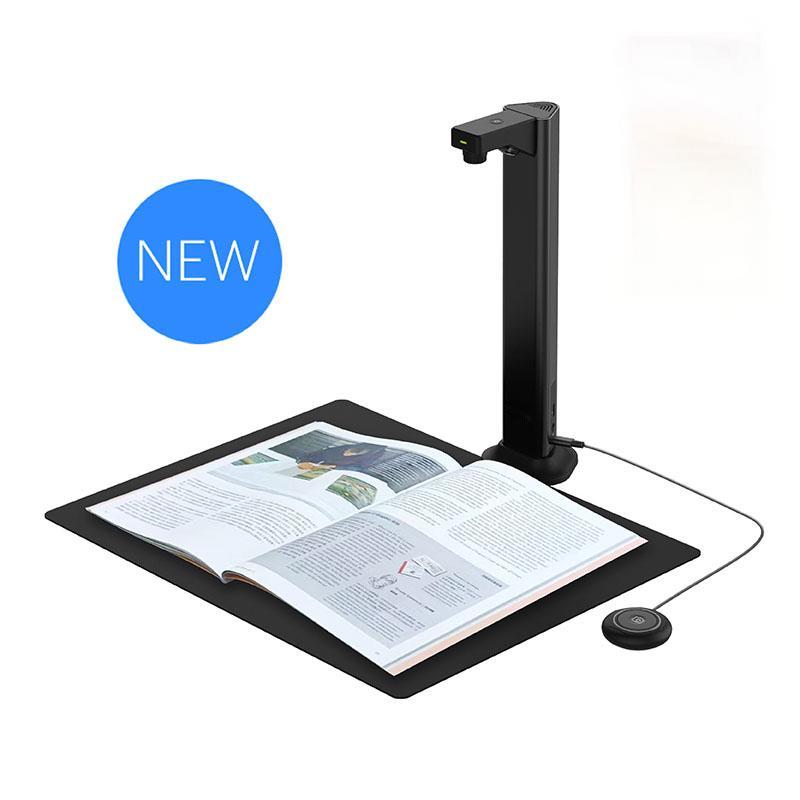
A3 18MP USB Aluminum Document Scanner with UVC Camera
- 1-second scan speed claim
- OCR and text-to-speech features
- Aluminum body, stock availability
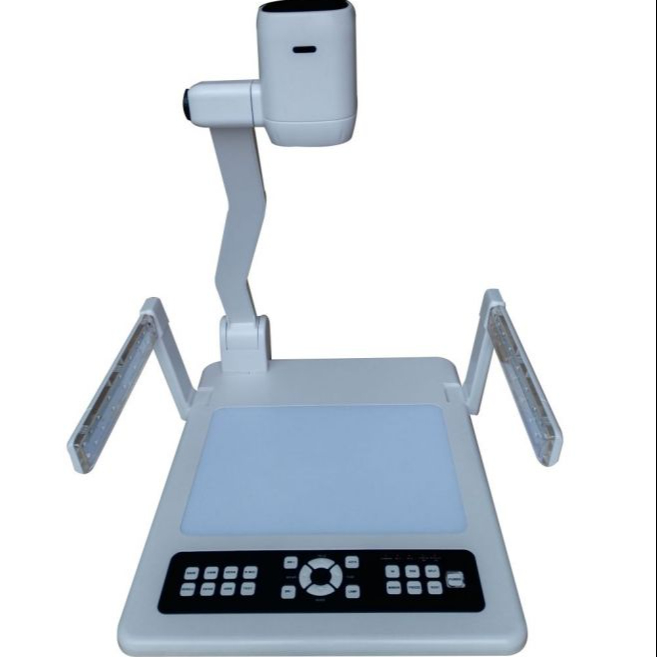
Factory Desktop Document Camera Visualizer, 22X Optical Zoom
- HDMI, RS232, audio and video interfaces
- Presentation, teaching and meeting use
- Optical zoom for fine detail
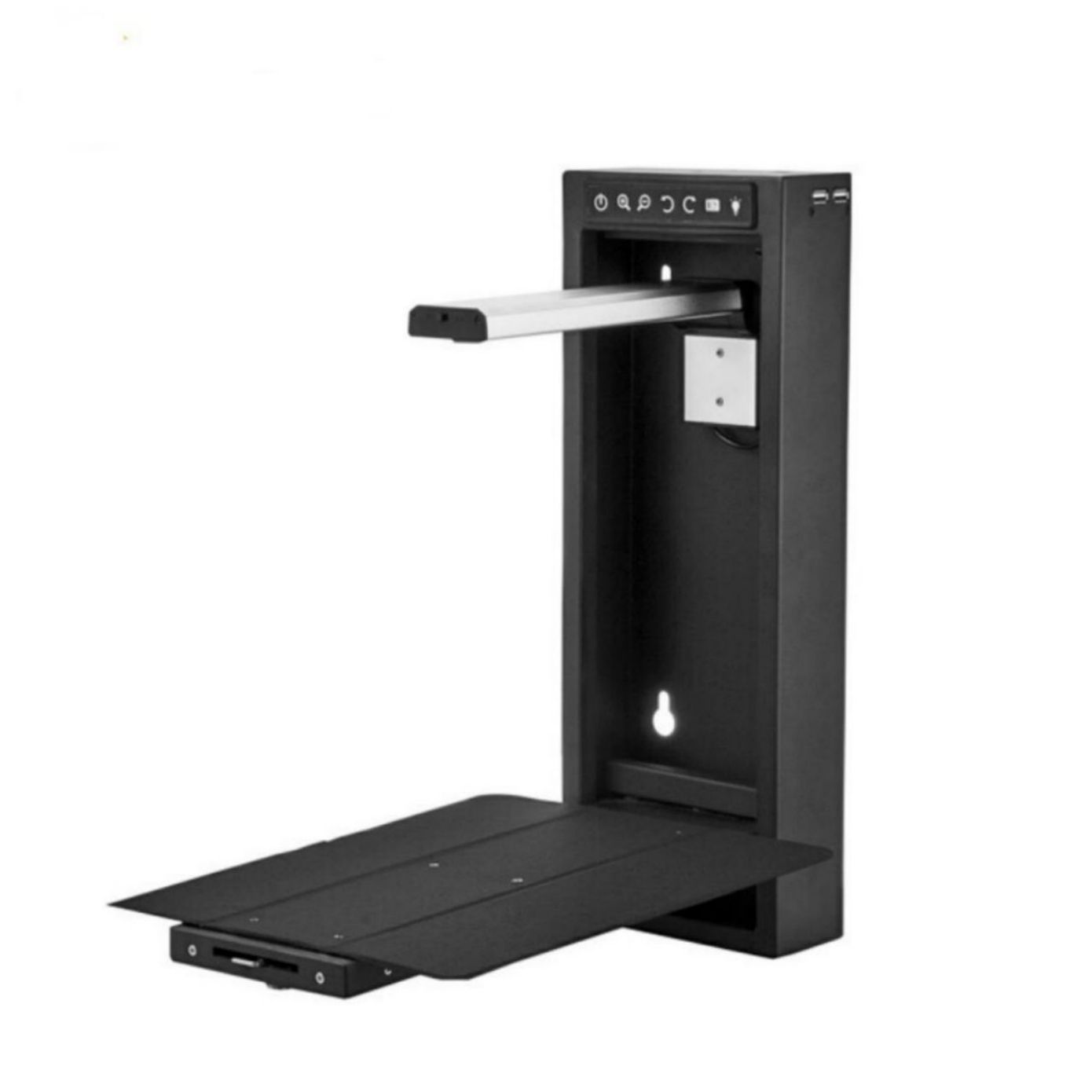
10MP USB CMOS Wall-Mount Document Camera
- 1-second scan speed positioning
- Classroom education and A4 capture
- SDK support and stock availability
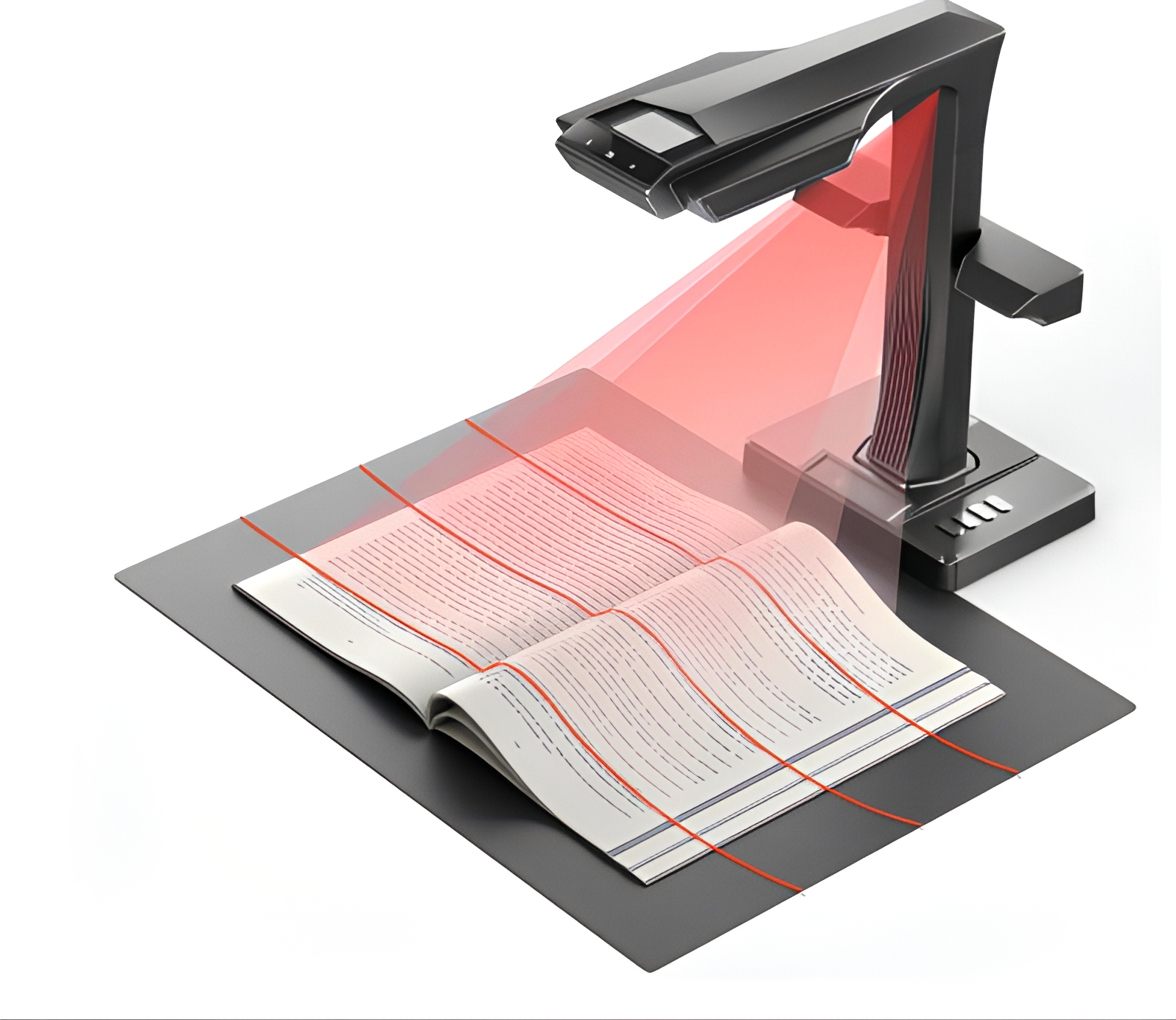
38MP A3 Overhead Book Scanner with Auto Curve Flattening
- Auto curve flattening assistance
- High-speed overhead book capture
- Library, archive and office work
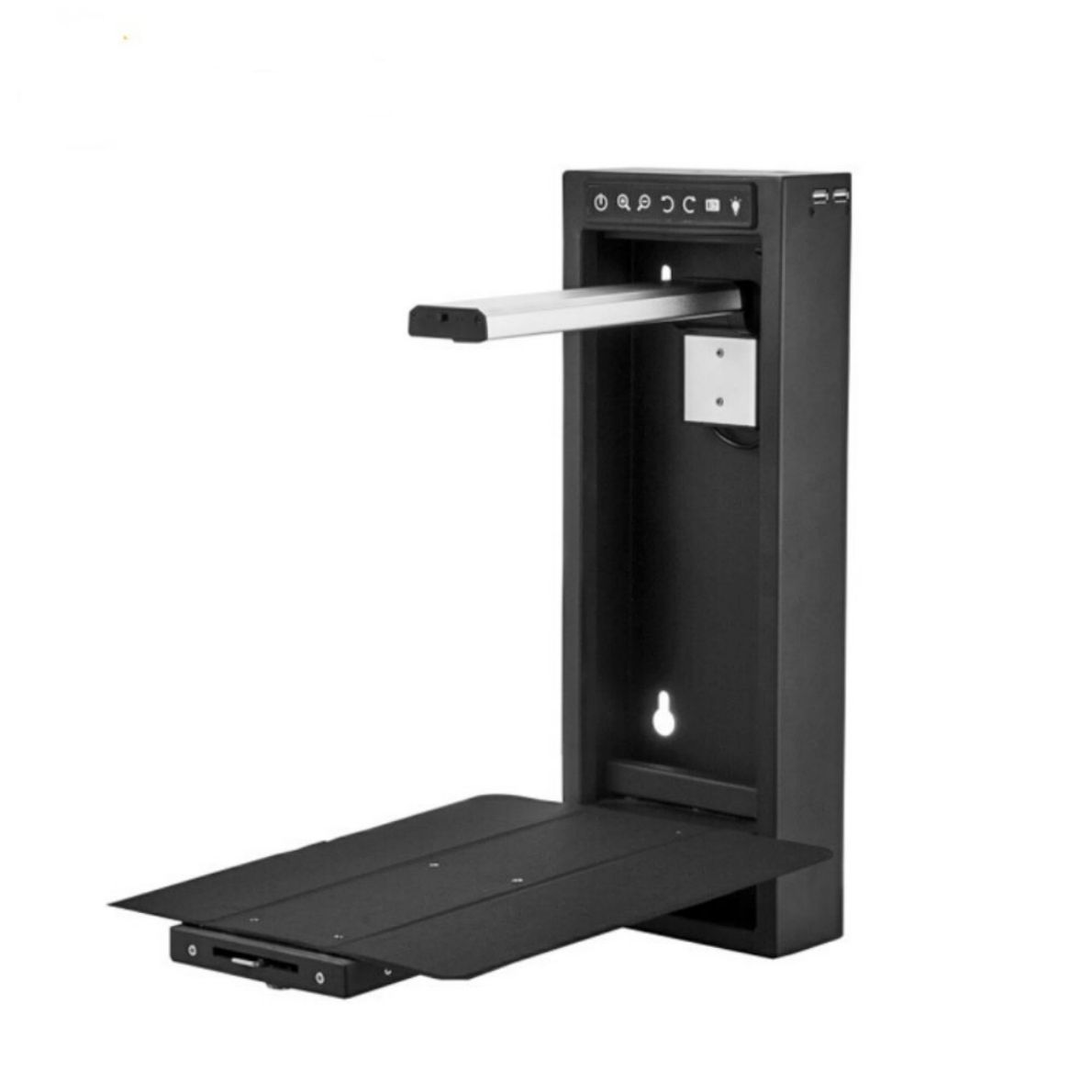
10MP A4 Visualizer Wall Version, USB CMOS Sensor
- 1-second document scanning
- Smart classroom and stock use
- Space-saving wall installation
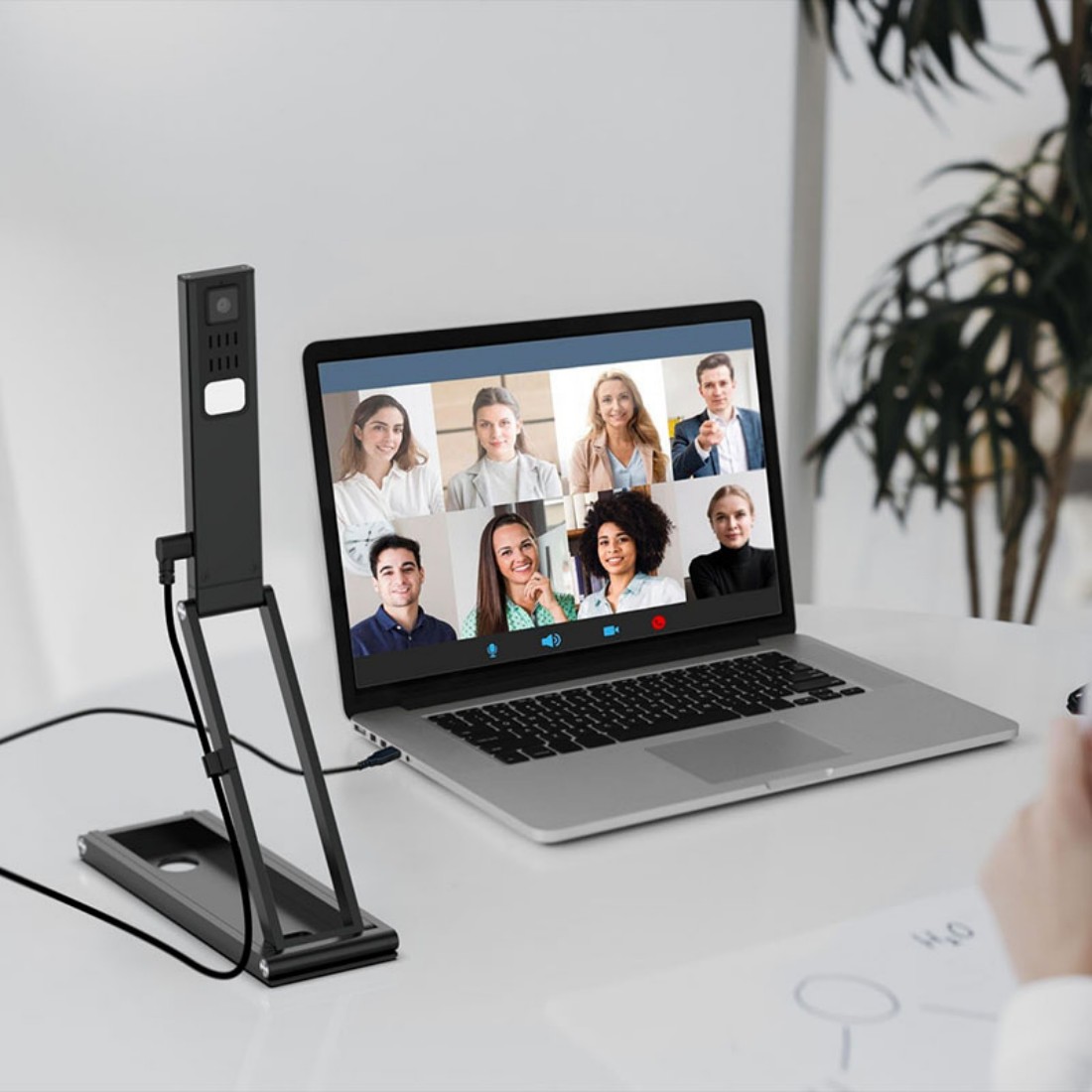
A3 4K Visual Presenter Document Camera
- USB interface with webcam function
- School training and teaching meetings
- A3 presentation area
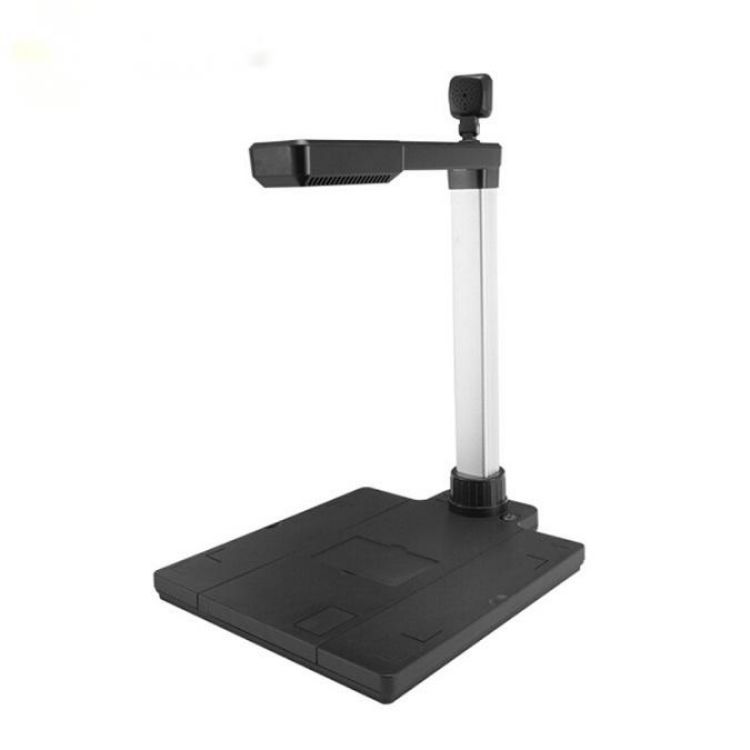
10MP Education Visualizer Scanner for Document Management
- Book and document management focus
- USB document camera workflow
- In-stock education configuration
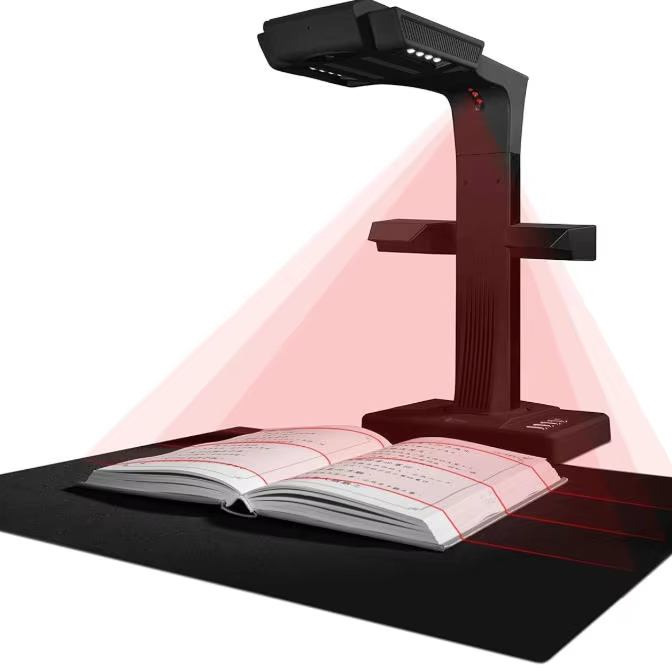
18MP A3 Auto-Flattening Overhead Book Scanner
- OCR and auto curve flattening
- HDMI visual presenter workflow
- Office and library applications
What “CE Certified” Should Mean to an A4 Book Scanner Buyer
In B2B procurement, a CE logo is not a substitute for due diligence. The useful question is not “Does the supplier have CE?” but “Can the supplier connect the exact scanner model, power supply, firmware and label artwork to the correct conformity evidence?” This is where experienced exporters create real information gain.
A declaration, not a decorative badge
CE marking is tied to an EU Declaration of Conformity, applicable directives, test evidence and a responsible economic operator. For electronic scanners and document cameras, buyers should verify model-specific safety, EMC and RoHS documentation rather than accepting a folder of unrelated certificates.
The scanner, adapter and firmware matter together
A change in power adapter, LED driver, camera module, wireless module or firmware release can affect the technical file. A responsible A4 book scanner supplier should be able to confirm the exact configuration being quoted, including the model label and instruction manual language.
Exporter support continues after the factory gate
Importers and distributors have their own obligations. A practical exporter prepares the technical file, label artwork, packing information and model traceability needed by customs, market surveillance authorities, tender reviewers and after-sales teams. Ask for the evidence package before the purchase order, not after.
Evidence to request before you compare price
Use a document matrix rather than a single “CE certificate” attachment. The matrix should show what is covered, what is excluded and which SKU is being shipped. This protects the buyer, the importer and the end user.
- EU Declaration of Conformity naming the product family and responsible person.
- Safety, EMC and RoHS test reports with issue date and laboratory information.
- CE label artwork and importer details for the exact packaging version.
- Firmware or software release note when capture functions are customized.
| Procurement evidence | Why it matters | Practical buyer action |
|---|---|---|
| EU Declaration of Conformity | Connects the product to the applicable legal framework. | Check model, standards, signatory and date. |
| Test reports | Shows the technical basis behind the declaration. | Confirm reports cover the quoted adapter and hardware version. |
| Label and manual file | Supports customs, retail and end-user requirements. | Request final artwork in the target language. |
| Firmware/software note | Custom SDK or branding can change the delivered configuration. | Lock the release version in the order specification. |
Future Procurement Trends for A4 Book Scanner Suppliers and Exporters
Public tenders, school groups, library consortia and distributors are becoming more specific. They are not only asking for megapixels; they are asking for evidence, integration, lifecycle support and predictable delivery. The six trends below should shape your next RFQ.
Evidence-led sourcing
Buyers increasingly score suppliers on traceable compliance files, test reports, model labels and document control. A generic certificate image is less persuasive than a clean SKU-to-document matrix.
Ask for: model-specific document packTotal cost ownership
The purchase price is only one line item. OCR licenses, capture software, spare lamps, adapters, training time, failure rates and technical support can change the five-year cost dramatically.
Ask for: lifecycle cost sheetSDK and software integration
System integrators need capture control inside their own applications. TWAIN, SDK, browser-based capture or local APIs are becoming evaluation criteria, especially for identity, banking and archive projects.
Ask for: SDK scope and OS supportPrivacy and edge processing
Schools and public offices prefer document capture that can work locally. Software that depends on a remote cloud service may trigger privacy, data residency or network approval questions.
Ask for: local capture optionsHybrid classroom continuity
Visual presenters must serve in-room teaching and remote meetings. HDMI, VGA, USB webcam mode, microphone input and stable frame rates now matter alongside raw scanner resolution.
Ask for: interface compatibility listSupply continuity
Distributors need repeatable lead times, spare parts and alternate models. A strong exporter explains what is in stock, what is built to order and how changes are controlled across repeat shipments.
Ask for: stock and lead-time evidenceHow to Size an A4 Book Scanner Without Overbuying
Megapixels are useful only when they are tied to the physical document size. A scanner sensor that covers a full A3 page has fewer pixels per inch over A3 than the same sensor has over A4. This is the most common source of tender mistakes and disappointing image quality.
The resolution formula buyers should use
At 300 dpi, an A4 page needs roughly 2,480 × 3,508 pixels, or about 8.7 megapixels. A 10MP A4 document camera can therefore produce a useful 300 dpi master when the page fills the frame correctly. An A3 page needs about 17.4 megapixels at 300 dpi, so an 18MP or 24MP model is the sensible starting point. An A2 page needs about 34.8 megapixels, which is why 38MP and 48MP models exist.
For bound books, resolution is only one variable. Curvature, gutter shadow, page flatness, focus depth and software correction affect readability more than a small megapixel difference. A 10MP A4 scanner with good flattening and OCR may outperform an unoptimized higher-resolution camera in real daily use.
- For A4 office documents and OCR: 10MP is often sufficient.
- For A3 books, maps and mixed documents: 18MP to 24MP is a safer baseline.
- For full A3 with cropping reserve: consider 38MP models.
- For photographs and artwork: prioritize optical dpi and a flatbed architecture.
| Document size | Pixels at 300 dpi | Recommended class | Suitable Quibow path |
|---|---|---|---|
| A4 210 × 297 mm | 2480 × 3508 ≈ 8.7 MP | 10MP or higher | 10MP A4 visualizer or 10MP education scanner |
| A3 297 × 420 mm | 3508 × 4961 ≈ 17.4 MP | 18MP to 24MP | 18MP overhead book scanner or 38MP A3 model |
| A2 420 × 594 mm | 4961 × 7016 ≈ 34.8 MP | 38MP to 48MP | 38MP A3 overhead model for larger layouts and reserve |
| Photos & art | 600–2400 dpi optical | Flatbed, 48-bit color | Separate flatbed scanner line for reflective originals |
Which Model Fits Your Real Capture Environment?
A product recommendation should begin with the document, the user and the workflow. The same A4 book scanner can be a poor choice in one room and an excellent choice in another if mounting, lighting, software or operator training are different.
Libraries & archives
Prioritize non-contact overhead capture, auto curve flattening and OCR. For fragile A4 books, a wall or desktop overhead model can reduce spine pressure; for larger formats, the 38MP A3 overhead model offers more cropping reserve.
Best fit: 38MP overhead or 18MP auto-flattening scannerSchools & training rooms
Look for live output, zoom range, HDMI/USB compatibility and simple operation. A 4K visual presenter with webcam mode can serve classroom display and remote training without a separate document camera purchase.
Best fit: A3 4K visual presenter or 22X optical zoom visualizerGovernment & banking counters
A compact A4 wall-mounted camera can capture forms, identity documents and customer records while preserving counter space. SDK and USB integration should be confirmed before the pilot because counter software is often locked down.
Best fit: 10MP A4 wall version with SDK confirmationEnterprise offices
For office paperless projects, OCR accuracy, searchable PDF output and network restrictions matter. A USB document camera can be deployed quickly, while A3 overhead models suit contracts and bound manuals that cannot be fed through an ADF.
Best fit: 18MP USB scanner or 10MP education visualizerNewspapers & publishers
Broadsheets, proofs and layout sheets require a wider field of view and higher pixel count. Use the megapixel table above to specify the correct A3/A2-class resolution, then request sample scans at production size.
Best fit: 38MP A3 overhead for high-resolution mastersDistributors & integrators
OEM/ODM buyers need more than a product photo. Ask for packaging control, logo approval, software branding options, SDK documentation, spare-parts planning and a clear escalation path for field issues.
Best fit: mixed container program with OEM/ODM brandingWhere A4 Book Scanners and Document Cameras Are Heading
The next purchasing cycle will reward suppliers who can explain trade-offs clearly. Hardware specifications will still matter, but software quality, repairability, compliance documentation and workflow integration will increasingly decide which product wins.
Resolution right-sizing
Buyers are moving away from “more megapixels is always better.” They want a documented match between sensor, field of view, page size and required dpi. Clear resolution guidance will become a sales advantage, because it reduces returns and failed tenders.
AI-assisted flattening and OCR
Curve correction, finger removal, page boundary detection, deskew and OCR cleanup are becoming practical differentiators. The winning products will make these features predictable and auditable rather than hiding them behind vague “AI” claims.
Software-defined workflows
USB-C, HDMI, webcam mode, local SDKs and browser-based capture are turning hardware into a workflow component. Integrators want devices that can fit existing lesson platforms, archive systems and counter applications without custom drivers for every deployment.
Modular and serviceable design
Public-sector buyers increasingly consider repairability, spare-part availability and long firmware support. Modular lighting, replaceable adapters, accessible documentation and stable software releases can lower lifecycle risk and strengthen an exporter’s position in repeat tenders.
Why Quibow Is a Practical A4 Book Scanner Supplier and Exporter
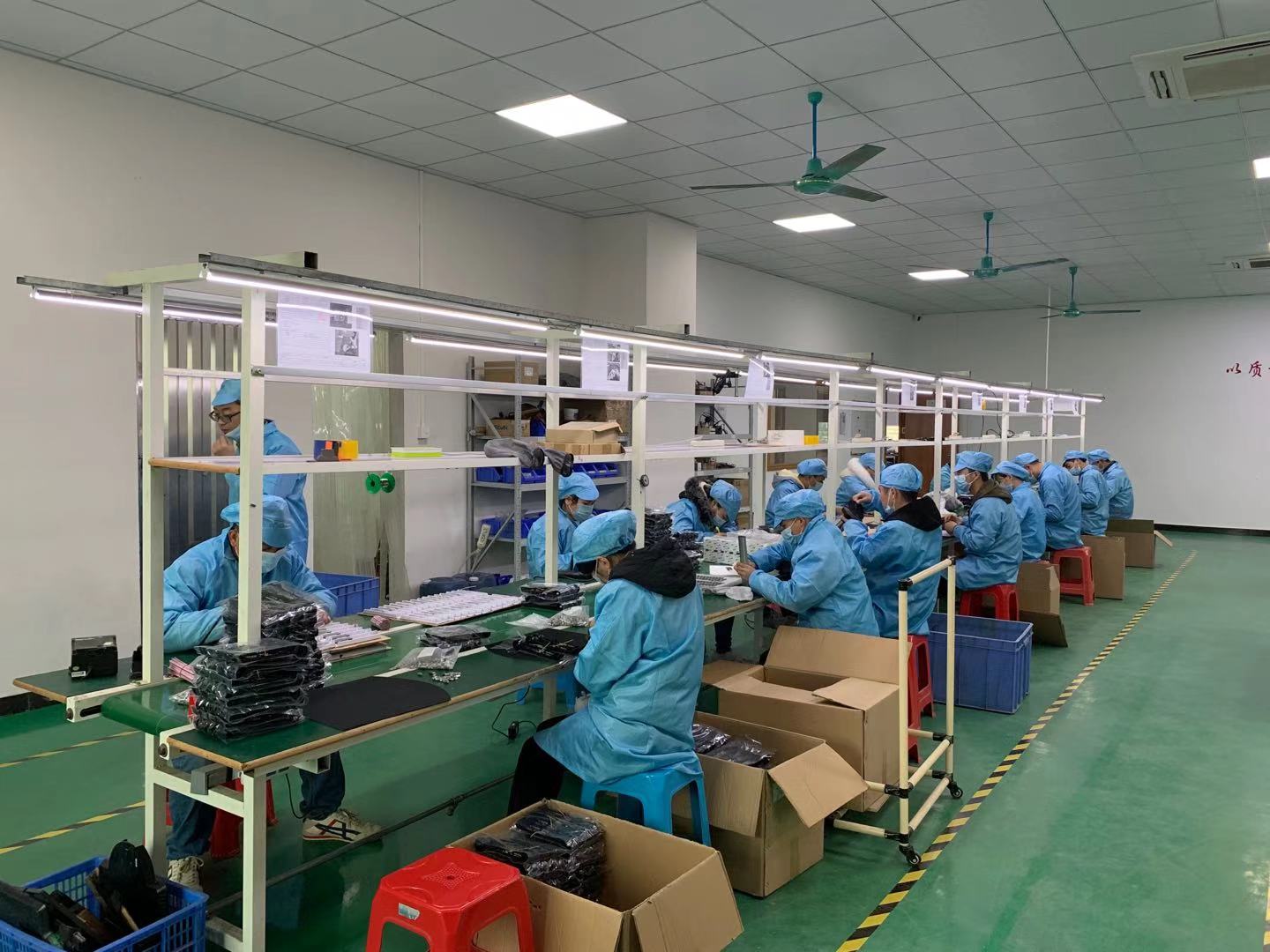
Guangzhou Quibow Electronic Co., Ltd. works across CIS, CMOS and CCD imaging platforms and supports buyers from product selection through export coordination. The value is not a slogan; it is the ability to match a document workflow, prepare practical documentation and keep communication clear.
Transparent trading and export profile
Quibow is an onsite-checked trading company based at Room 504, No. 5 Zitan Second Street, Guangzhou, Guangdong, China. The company was established in 2020, operates with a focused team of 5–10 specialists and reports annual revenue in the US$1M–US$2.5M range. Main markets include Eastern Europe, North America and South America, with worldwide support for suitable projects.
Product activity covers high-speed document cameras, book scanners, A3/A2 overhead scanners, flatbed scanners, visual presenters and ID-card recognition cameras. Because the team works across CIS, CMOS and CCD platforms, it can discuss sensor trade-offs directly rather than forcing every use case into one hardware design.
Export support includes OEM/ODM coordination for logo printing, packaging, housing color, capture-software branding and SDK integration on selected models. Payment methods include T/T, L/C, PayPal and Western Union in USD, EUR, HKD or CNY, with FOB, EXW and DDU delivery terms available for quotation.



Application-led model matching
Share document size, daily volume, binding type, operating system, OCR languages and output format. The recommendation can then separate “good enough for OCR” from “suitable for archival master files,” preventing unnecessary spend.
OEM/ODM with documentation control
Branding projects need more than a logo on the box. Quibow can discuss label artwork, packaging, software naming and SDK scope on selected models, helping distributors prepare a repeatable product configuration.
Export terms for real procurement
Quotes can be structured around FOB, EXW or DDU, with common payment methods and currencies. For tender or distributor programs, confirm the warranty scope, spare-parts plan, lead time and required compliance file before order release.
A Practical RFQ Scorecard for CE Certified A4 Book Scanner Suppliers
Use the same scoring sheet for every supplier. A low price from a supplier that cannot connect the exact SKU to the CE technical file is not a lower-risk purchase. The scorecard below gives procurement teams a defensible way to compare offers.
| Evaluation area | Evidence to request | Suggested weight |
|---|---|---|
| Compliance and traceability | EU Declaration of Conformity, test reports, label artwork, model-to-document matrix. | 20% |
| Optical and capture fit | Sensor resolution, field of view, lens type, frame rate, lighting, sample scans at target document size. | 20% |
| Software and OCR integration | Windows/macOS support, SDK/TWAIN scope, OCR language list, export formats, local processing options. | 15% |
| Durability and service | Warranty terms, spare parts list, remote support process, firmware update policy, failure escalation route. | 15% |
| Supply and lead time | Stock confirmation, MOQ, production lead time, packing method, repeat-order consistency. | 15% |
| Total cost ownership | Unit price, adapter type, software licenses, training, shipping, duties, maintenance and replacement risk. | 10% |
| Repairability and ESG | Modular parts, packaging reduction, power consumption, documentation availability and end-of-life planning. | 5% |
A capable supplier should welcome this level of questioning. A vague answer about CE, resolution or SDK support is a useful warning signal before the deposit is paid.
From RFQ to Shipment in Five Practical Steps
The process should be transparent enough for procurement, technical and marketing teams to work from the same specification. This is especially important when a distributor needs its own brand, packaging and SDK integration.
Requirement review
Confirm document size, binding, daily volume, OS, OCR languages, compliance file needs and target delivery terms.
Model matching
Compare A4 and A3 fields of view, sensor resolution, lighting, mounting method and software capabilities.
Documentation check
Map the exact SKU, adapter, label, manual and firmware version to the requested conformity evidence.
OEM/ODM confirmation
Approve logo artwork, packaging, housing color, software naming and SDK scope where available.
Inspection & shipment
Check focus, lighting uniformity, driver installation, capture speed and packing before export coordination.
Payment methods
T/T, L/C, PayPal and Western Union are available for suitable orders. Confirm the chosen method and currency before order release.
Currencies: USD, EUR, HKD, CNYDelivery terms
FOB, EXW and DDU terms can be quoted according to the buyer’s logistics plan and destination requirements.
Confirm Incoterm and port in the quotationWarranty support
Listed models can carry a 1-year warranty with remote technical support. Keep the serial number, software version and installation photos for faster diagnosis.
Ask for the warranty statement by SKUA4 Book Scanner Buying Questions Asked Most Often
What does “CE certified” actually mean for an A4 book scanner?
It means the product is intended to meet the applicable EU requirements and is supported by a Declaration of Conformity and technical evidence for the configuration being placed on the market. Buyers should verify that the declaration and test reports match the exact scanner, power supply, label and firmware version being quoted.
Can Quibow provide an EU Declaration of Conformity and test reports?
CE-related documentation can be discussed for applicable models and configurations, subject to order review. Request the document matrix early, because the required evidence depends on the SKU, adapter, wireless module, labeling and destination market. Always confirm final availability in the quotation.
Which model is best for scanning bound A4 books?
For bound A4 books, a non-contact overhead or wall-mounted document camera is usually preferable to a flatbed because it reduces pressure on the spine. Look for a 10MP to 18MP A4/A3 field, stable lighting, auto curve flattening and OCR software. If pages open wider than A4, choose an A3 model for cropping reserve.
How many megapixels do I need for a 300 dpi A4 master?
An A4 page at 300 dpi requires about 2480 × 3508 pixels, or roughly 8.7 megapixels. A 10MP camera can be sufficient when the page fills the frame. Extra resolution is useful for cropping, double-page spreads, handwritten notes or archival quality requirements.
Do you support OEM and ODM orders?
Yes, OEM/ODM projects can include logo printing, packaging, housing color, capture-software branding and SDK integration on selected models. The exact scope, minimum quantity and approval process should be confirmed in writing before production.
What is the minimum order quantity?
MOQ depends on the model and whether the order is stock or OEM/ODM. Some catalogue scanners and document cameras can be discussed from low quantities, while customized branding, packaging or SDK work may require a higher project quantity. Confirm MOQ against the final SKU.
Are the scanners compatible with Windows and macOS?
Several models support Windows and macOS, and some configurations have been verified on Apple Silicon Macs. Do not assume compatibility from the product photo alone. Provide the exact operating-system version, application environment and output requirement so compatibility can be confirmed per model.
Can you provide SDK or TWAIN integration support?
SDK integration is available on selected models and should be scoped before purchase. Specify the operating system, development language, capture functions, image format and deployment volume. TWAIN availability, signing requirements and driver maintenance should be included in the technical agreement.
Can I receive sample scans before placing an order?
Sample scans are the most useful way to evaluate OCR accuracy, curve correction, color fidelity and lighting uniformity. Provide a representative page, target dpi, selected OCR language and output format. A sample scan is more reliable than comparing megapixels alone.
What lead time should I expect?
Lead time depends on stock status, model, quantity, customization and shipping method. Standard stock items may move faster, while OEM/ODM packaging, logo approval or SDK changes require additional production and inspection time. Confirm the lead time in the proforma invoice.
What warranty and after-sales support are available?
Listed models can carry a 1-year warranty with remote technical support. Buyers should retain the serial number, software version and installation photos. For distributor programs, discuss spare-parts planning, DOA handling and escalation contacts before the first shipment.
What payment and delivery terms can be quoted?
Common options include T/T, L/C, PayPal and Western Union in USD, EUR, HKD or CNY. Delivery may be quoted under FOB, EXW or DDU terms. Final terms depend on order value, destination, model availability and the agreed compliance documentation.
Send Your A4 Book Scanner RFQ With the Details That Matter
For a faster recommendation, include document size, binding type, daily scan volume, operating system, OCR languages, preferred interfaces, target market, approximate quantity and whether you need CE documentation, OEM branding or SDK support. Quibow can then respond with a practical model shortlist and next-step questions.
Inquire Now